
Training for alpinism is arguably one of the most complex physical and mental undertakings in mountain sports, because you have to be good at everything. Aerobic endurance, technical climbing ability, muscular endurance under load, the capacity to function in cold and at altitude, and the self-management skills to take care of yourself over multi-day efforts in serious terrain—alpinism demands all of these simultaneously.
This article outlines the physical demands of alpine climbing, how to assess your readiness, and how to structure your training to meet those demands. We use the 1938 route on the Eiger North Face as a reference point—not because every alpinist aspires to the Eiger, but because its demands illustrate the full spectrum of qualities alpine climbing requires.
What Are the Physical Demands of Alpine Climbing?
Every alpine objective has its own specific requirements, but the general physical demands cluster into four categories:
Aerobic endurance. Alpine climbing days routinely last 12 to 18 hours, sometimes longer. You need the aerobic capacity to sustain steady output across an entire day without breaking down. This is not about peak effort—it is about the pace you can sustain for hours while carrying a load on steep terrain. The bigger your aerobic engine, the more capacity you have to recover between hard sections, manage fatigue on the descent, and maintain decision-making quality late in the day when it matters most.
Muscular endurance under load. Alpinists carry substantial weight on steep terrain for hours. The ability to maintain muscular force output—in your legs, core, and upper body—across hundreds of repetitions of the same movement patterns is what separates climbers who move efficiently on big routes from those who grind to a halt. This is trained through progressive loaded uphill work (muscular endurance training) built on top of a well-developed aerobic base.
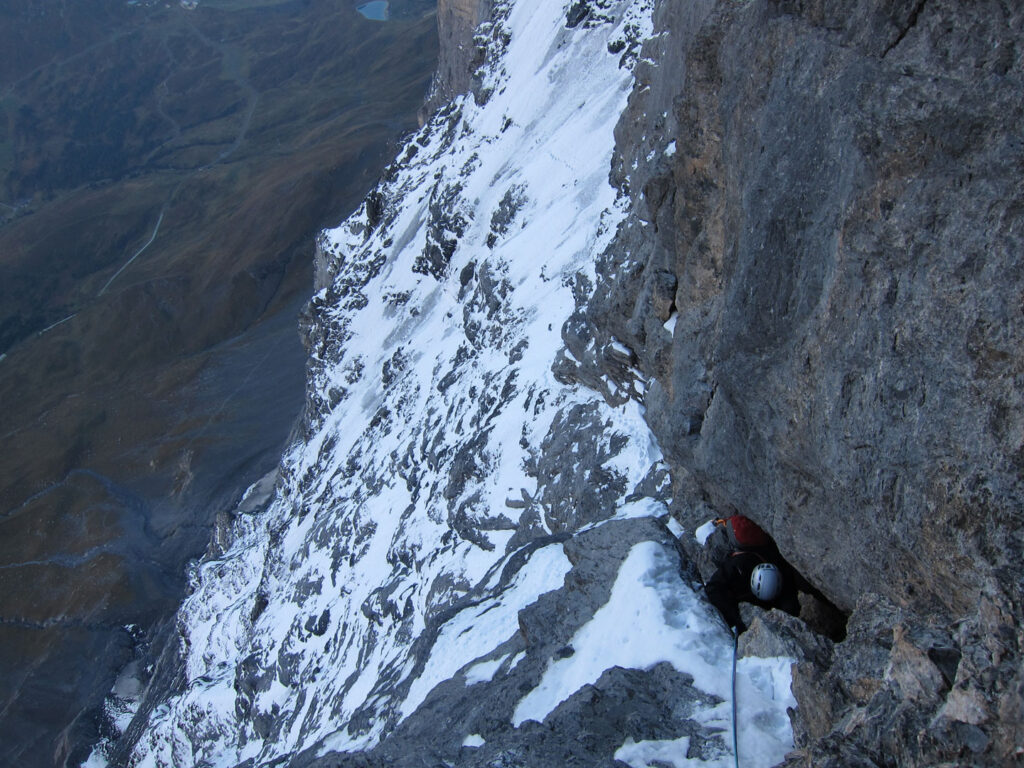
Technical climbing ability. You need to be able to climb at the grade your objective demands while wearing a pack, in mountain boots or crampons, in variable conditions, and while fatigued. The margin between your maximum technical ability and the difficulty of the route determines your safety margin. For a route like the Eiger 1938, every member of the party needs to be comfortable leading 5.6 in crampons without placing gear, and competent on grade IV–V ice. For easier objectives, the technical threshold is lower, but the principle holds: your comfort at the required grade must include a meaningful buffer above the route’s difficulty.
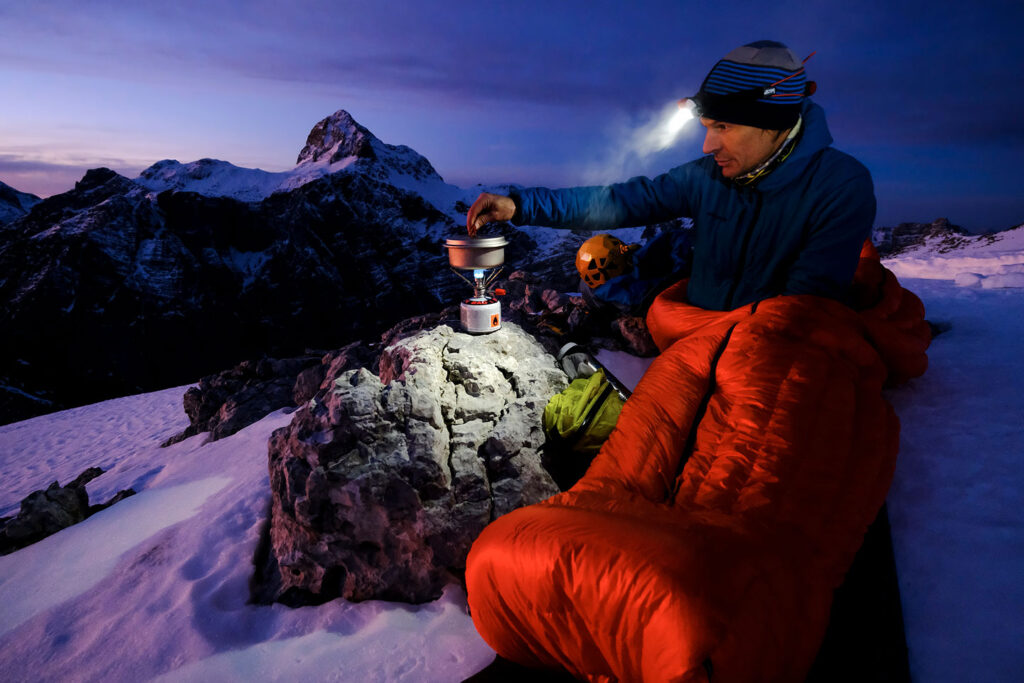
Self-management. Multi-day alpine efforts require the ability to eat, drink, sleep, and regulate your body temperature under difficult conditions. These skills are not trained in the gym. They are developed through progressively longer and more committing mountain outings. An alpinist who cannot take care of themselves on a winter bivouac is a liability to the team, regardless of their fitness level.
How Should You Structure Your Training?
The training framework for alpinism follows the same periodization model we use across all mountain sports at Uphill Athlete. The sequencing matters:
Build the aerobic base first. This is the longest phase and the one most alpinists underinvest in. High-volume, low-intensity training—hiking, running, ski touring at or below your aerobic threshold—builds the metabolic infrastructure that supports everything else. Without this base, harder training produces diminishing returns and increased injury risk. We recommend that your aerobic threshold be within 10 percent of your anaerobic threshold before moving to higher-intensity phases.
Add general and max strength. A general strength phase (multi-joint movements: squats, deadlifts, pull-ups, core work) builds the structural resilience that prevents injury under load. A max strength phase follows, developing the force production capacity that the muscular endurance phase will then convert into sustained output on steep terrain.
Layer muscular endurance. Once the aerobic base and strength foundation are in place, ME training—loaded uphill work at high aerobic intensity—converts those capacities into sport-specific performance. This is where alpinists see rapid, measurable gains. The progression targets loads and vertical that match or exceed the demands of the objective.
Add sport-specific intensity and technical work. In the final preparation phase, training becomes increasingly specific to the objective: route-specific terrain, altitude exposure if relevant, technical climbing at or above the required grade, and full rehearsal-type outings that test the complete system. This is the utilization phase—you are spending the capacity you have built.
How Do You Know If You Are Ready for Your Objective?
Readiness for an alpine objective is best tested by climbing progressively closer to the demands of the route itself. For the Eiger, that means climbing the mountain by easier routes first—learning the descent, experiencing the weather, building familiarity with the terrain. For any alpine objective, the principle is the same: test yourself on similar but less committing terrain before committing to the goal route.
If you are unsure whether your fitness and skills match the demands of a specific objective, an honest assessment from a coach who understands alpine climbing can save you time, money, and potentially your safety. The magnitude of your commitment must be equal to the size of your goal.