In January 2017, Jessica Flint, a 35-year-old New York–based magazine editor, climbed Africa’s Mount Kilimanjaro, in Tanzania. It was her first attempt at summiting anything, not to mention her first time camping. To prepare for the trek, she mostly participated in twice-weekly 45-minute, high-intensity treadmill classes at Manhattan’s Mile High Running Club, and ran three other times per week. Her training appeared to pay off: While the rest of her seven-person team had to dig deep to reach 19,341 feet, Jessica later told her guide from Summits Africa, Ake Lindstrom, that she felt like the effort she put in on summit night was a 6 on a scale of 1 to 10. “A 6 out of 10!” Ake said. “I’ve taken elite marathon runners up this mountain who have said this is the hardest thing they’ve ever done.”
A few months later, Ake (pronounced Orca) reached out to invite Jessica back to Africa in November and December 2017. He was participating in an expedition to climb seven of Africa’s tallest summits in seven weeks to bring attention to African mountaineering (yes, there are more mountains in Africa than just Kili!). But the nine-person team needed a journalist who could achieve the trip’s not immodest goal: Some 60,000 feet of vertical gain through habitats and geopolitical environments that were quite a bit more challenging than your typical alpine approach. Ake immediately thought of 6-out-of-10 Jessica.
A few months later, Jessica was discussing the trip with me, her new 36-year-old boyfriend whom she had convinced to join her for the trip. “What do you figure we should do to train?” I asked.
“Well, when I climbed Kilimanjaro in January, I did some running classes … that seemed to work,” she said. “But maybe we should do something more than that since this is seven mountains?”
Given that I work in publishing, I reached out to some book-world friends and learned that Training for the New Alpinism was the ultimate new text for preparing oneself for alpine endeavors.
Within days, I was on our couch with the book, geeking out over what I was learning: Namely that the training method that I’d used throughout my life to prepare for soccer games, marathons, or triathlons—i.e., beating myself up by working out really, really hard a couple days per week—had largely been pointless, as evidenced by the fact that I’d never seen major long-term fitness improvements. As the day progressed, I proceeded to drive Jessica nuts with a steady stream of fun facts about physiologic responses to stress, training, and altitude.
Given that Jess is a hard-charging magazine editor, what happened next should have not surprised me: It hadn’t even been a week after my reverie on the couch when Jess informed me that Scott Johnston was willing to train us.
Of course, Jessica, being the reporter that she is, had emailed Uphill Athlete and simply said that we’d been invited to do this trip and did the Training for the New Alpinism authors think it was humanly possible to do, and, if so, how should we train? As those of you who read this website regularly know, Scott and his business partner, Steve House, work with the best alpine athletes of all time and some of the fittest human beings alive. And we were asking them whether they had any tips for a team that includes the guy (me) whose proudest moment was carrying a case of Cold Smoke beer up 7,000 feet for a camping trip in Montana?

To our great fortune, however, Scott, who responded to Jess’s email, thought we could pull off the trip. But we would need to fully commit to training to do so, and right away. Both of us had competed in long-distance endurance events and assumed we were relatively fit human beings, especially given Jess’s previous Kili climb. However, Scott began his coaching with a real zinger: “I’m going to assume you’re both aerobically deficient,” he said. “Jessica’s high-intensity training classes haven’t been working her aerobic range and Patrick’s erratic workouts aren’t doing much either.” Ouch. But at least we knew where we were beginning: Ground zero.
Scott set us up with Uphill Athlete coach Maya Seckinger to oversee our training.
Our overall goal would be to increase our capacity for work because that’s what we would be doing: a lot of physical work. “You’re young and strong, so you could go out and do one event—youthful vigor allowed you to handle something like Kili,” Maya explained. “But what you are about to sign up for is a marathon effort. Fatigue makes cowards of us all.” She told us if we didn’t get our work capacity up, each time we’d come down from a climb, we’d be much more tired until we totally burned out.
Maya said right off the bat that Jess would have to stop Mile High because excessive high-intensity workouts inhibit a person’s ability to use fat. Our training regimen would revolve around accumulating a high volume of low-to-moderate-intensity work because that’s what we’d be doing on the mountains: sustaining 6 to 10 hours of daily low-intensity work that would test our ability to utilize fat. Plus, because we would be carrying a backpack and moving uphill, we’d need to develop a solid strength base. “The volume of work is way more important than intensity,” Scott said. “There is no training shortcut. A lot of fitness trainers don’t understand this. Intensity is never a supplement for duration, especially for the goal and event that you are training for.”
Uphill Athlete is filled with great summaries of the methods used to achieve fitness, so there’s no need to rehash our training program in great detail here. In short, however, as residents of Manhattan, we spent an inordinate amount of time climbing stairwells, slowly running by the East River or in Central Park, taking Metro North trains up the Hudson River to climb Mount Beacon and Breakneck Ridge, and learning the ins and outs of wearing a weight vest in public in one of the most security-conscious cities in the world. And then we left for an intense ramble across the Democratic Republic of Congo, Rwanda, Uganda, Kenya, and Tanzania.
It is no exaggeration to say that, without the methods outlined in Training for the New Alpinism, the trip would have been a bust. With the exception of the two professional mountaineers accompanying the trip (Sibusisu Vilane, who has achieved the Explorer’s Grand Slam, and Ake, who has summited Kilimanjaro nearly 70 times in 15 years), we were by far the fittest and the most resilient members of the group.
Jessica and I were able to successfully summit five mountains. Unfortunately, we had to descend from the Rwenzoris in Uganda without summiting two peaks when a foodborne illness swept through camp and hit Jess the worst. (“Don’t get sick,” Scott told us when we asked him for final advice prior to leaving for Africa.) However, we felt the real testament to our fitness was our experience on Kilimanjaro.
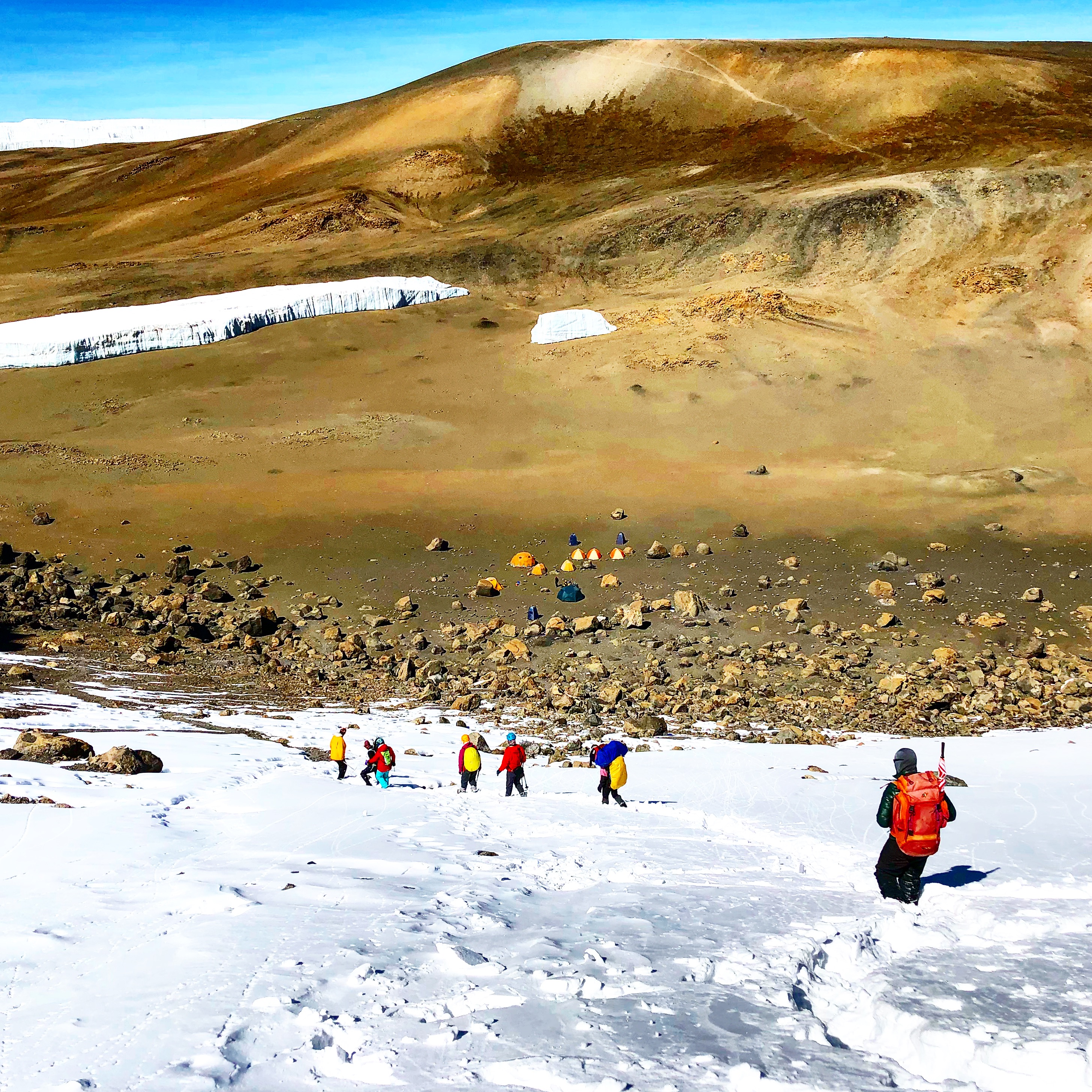
After nearly two months of traveling throughout Africa and accumulating nearly 41,000 feet of vertical gain, climbing to the roof of the continent was our final test. Following a five-night approach, we made an unconventional afternoon summit and then slept at 18,800 feet, in Crater Camp, taking advantage of how well-acclimatized we were. Ake, who was guiding the climb, gave our team the option to summit again in the morning or go down. Jess and I were the only two people who eagerly raised our hands to go back to the top—no one else had enough in their tanks to even attempt the double summit.
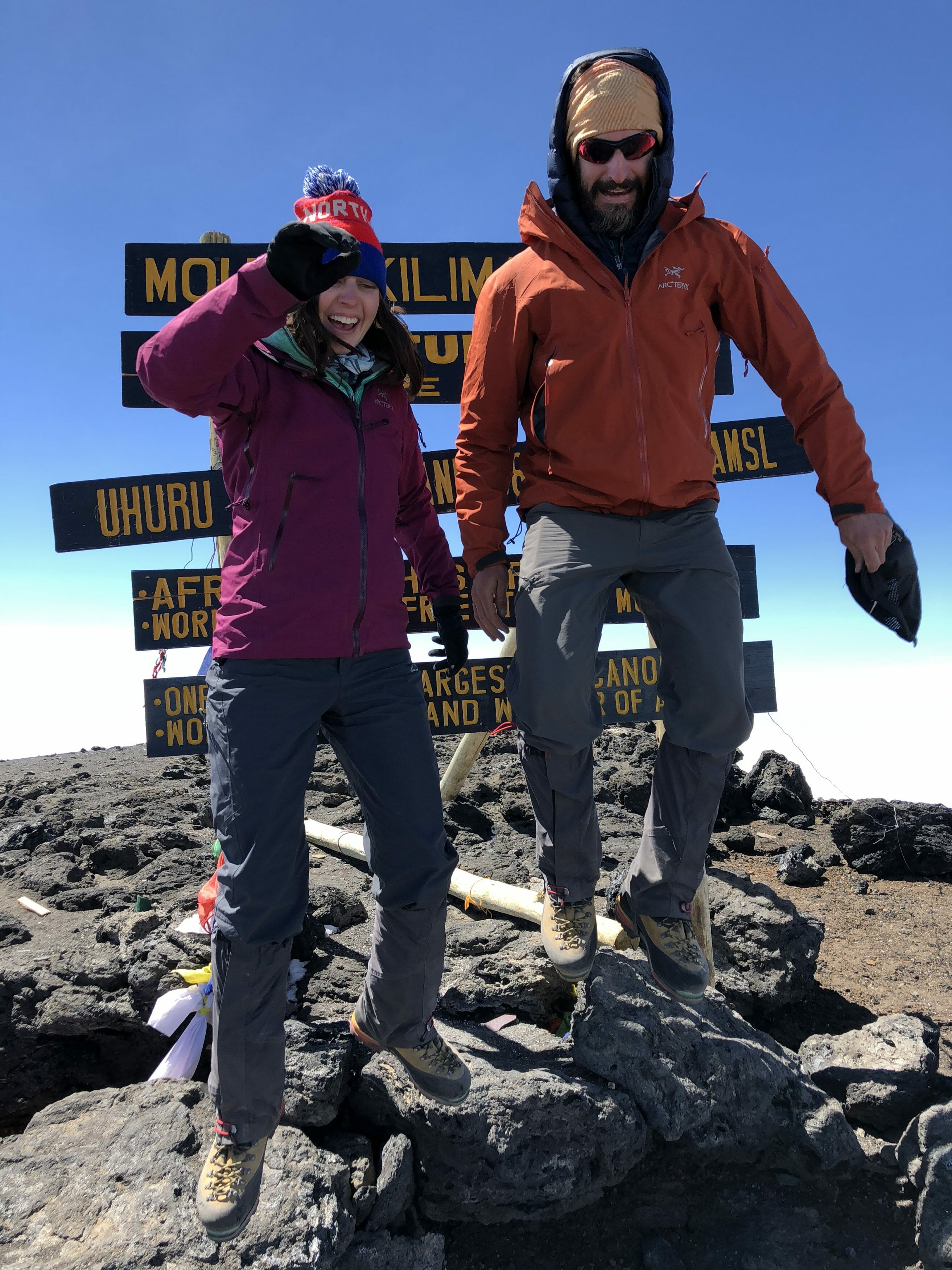
So, there we were the next morning, summiting Kili for the second time in a 24-hour period. And the thing was: We both felt like we could have kept going. Our vitals were normal, our energy levels were great, and we felt super strong. These results are even more striking when you consider that for seven weeks the two of us amateur alpinists never slept in the same place twice, ate countless varieties of unfamiliar food, stayed at or above 10,000 feet in a variety of tents and weathers, walked miles at altitude almost every day, and dealt with the stresses of travel in areas where political stability and safety standards were consistently iffy.
Last June, when I started training with Uphill Athlete, I could barely run a 12-minute mile for 30 minutes without my heart rate spiking far over my training threshold. Now Jessica and I run along Manhattan’s East River for more than an hour, talking about work, our upcoming move to California’s Bay Area, our next adventures, and, (you probably won’t be surprised) our engagement and upcoming marriage. We barely look at our Garmin watches until the end of our run, only to discover we stayed far below threshold at faster paces—around a 10-minute mile—than where we were at the beginning of our work with Maya.
Are we crediting Uphill Athlete with our future marriage and engagement? Well, probably not. But our Africa trip underlined in profound ways how dangerously deluded many people (including us, as of last year) are about training generally, and training for alpine endurance events specifically. Without Scott, Steve, and Maya, we never would have learned that, and we never would have completed our expedition. So, we will credit them with making the trip of our lives a resounding success.
-by Patrick Thomas
9 April 2018