
Why Rock Climbing Is Different from Other Sports
What do an NBA basketball player, a gold medal runner, and a professional tennis player have in common? They are each incredibly fit. And that fitness will not ensure they can climb well. Rock climbing is a skill-based activity, primarily. Fitness matters, but if you are a highly skilled rock climber who is reasonably fit, you can probably still climb at a high level. The opposite is not true. You probably cannot send 5.12 slab without good footwork technique, no matter how many pull-ups you can do.This is the fundamental reality of climbing that separates it from most endurance sports: to excel at rock climbing, you have to develop climbing skills. Physical training supports those skills, but it cannot substitute for them.
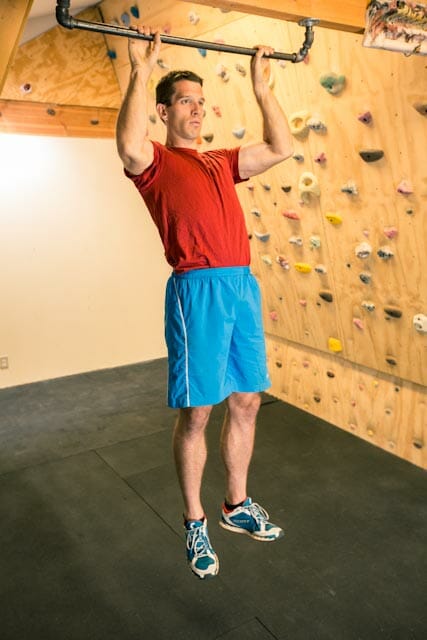
Where Do You Fall on the Skill-Strength Spectrum?
We get questions all the time that sound like this: “I’m an amateur powerlifter who wants to climb 5.12. Can I just do pull-ups?” Or the other side: “I’ve been stuck at 5.12 for years and I want to climb 5.13. Can I achieve this just by climbing more?”
The short answer to both is: possibly. If you can do 100 pull-ups, you can probably find some 5.12 somewhere that you can muscle your way through. If you are a 5.12 climber and you find a 5.13 where you can do all the moves, you may eventually send it by throwing yourself at it over and over for months. But there is a major difference between climbing one route at a grade and being a solid climber at that grade.
Whatever grade you are chasing, a systematic approach to training will get you there sooner—no matter how experienced or inexperienced you are. The key is understanding what you need:
Generally, beginner climbers benefit more from skill training. They have the most room for improvement in movement, footwork, body positioning, and route-reading. Physical strength is rarely what is holding a 5.8 climber back from climbing 5.10.
Advanced climbers benefit more from strength training. With very few exceptions, top-level climbers have to train strength in order to continue progressing. Their technique is already refined. What they need is more power, finger strength, or muscular endurance to push into harder grades.
But no climber fits neatly into one category. The same person might need more strength to climb overhanging 5.12 jugs and more skill to climb slabby 5.12 friction. There is no single answer. What matters is assessing your specific situation honestly.
How to Figure Out What Is Holding You Back
The strategy that yields the best results is simple in concept: get intentional about how you train. Here are the three steps.
Step 1: Assess your goals. What specific type of climbing do you want to improve at? There is a tremendous difference between a crimpy Red Rock 5.10+ like Fiddler on the Roof and a sustained hand crack like the 5.10+ Serenity and Sons in Yosemite. Be specific about the type of climbing you are training for.
Step 2: Assess your weaknesses. Ask your climbing partners to watch you climb and offer their honest input. Find a route in the gym that gives you trouble and then watch a more skilled climber on the same route. What do they do that you do not? Do they balance better? Breathe more deliberately? Move more dynamically? Simply pull through holds you can barely hang on to? The answers tell you whether your limiters are skill-based or strength-based.Step 3: Design training that reflects your specific needs. Do not conflate skill and strength training. Both are important. But rather than trying to force both into a single workout, isolate them so you can give individual, focused attention to each. By doing this, you will not only monitor progress more effectively—you will make progress more quickly.
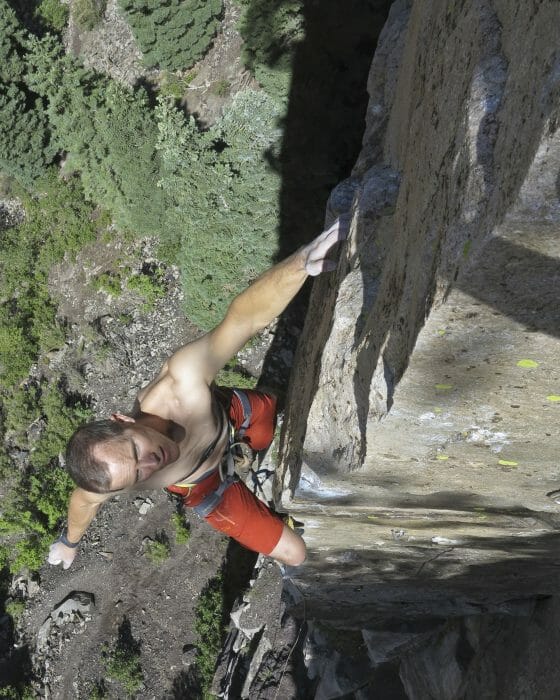
How to Train Climbing Skills
The good news for most climbers—especially those in the 5.8 to 5.11 range—is that the most important thing you can do is simply climb. Climbing skills can be studied and simulated, but the primary training ground is the rock itself, whether indoors or outdoors.
The critical distinction is what kind of climbing you do on your skill training days. This is not about chasing the next number grade. It is about training specific movement skills.
Choose Routes That Challenge Technique, Not Strength
On skill training days, do not pick routes that elicit heavy muscular fatigue. Instead, find routes that are technically challenging at a manageable physical effort. If you are trying to go from 5.9 to 5.11, do not spend your skill sessions on overpowering problems where the limitation is your finger strength. That is strength training, not skill training.
Find a slabby V2 with balancy moves, tough footwork, and a complex sequence. Do a series of 5 to 10 problems at V1 and V2 that challenge your route-reading. Look for routes that test your ability to flag a leg, turn a shoulder, hook a heel, or manage a delicate sequence—not your ability to hang on.
Be Specific to Your Goal Terrain
If you want to climb better on slabs, do not spend your skill sessions on overhanging jugs. If you are training for alpine rock, find routes with varied terrain, runout movement, and routefinding decisions. The type of climbing you practice should match the type of climbing you want to improve at. Specificity matters as much in skill training as it does in endurance training.
Use Bouldering Strategically
Bouldering is one of the most effective tools for skill development because it compresses many movement decisions into a short sequence. You get more practice reading routes, positioning your body, and solving movement problems per hour of bouldering than per hour of roped climbing. Just make sure your bouldering sessions on skill days are focused on technique-challenging problems, not power-dependent ones.
Watch Climbing Films and Record Yourself
The power of visualization should not be underestimated. Watch climbing films with friends of similar ability and discuss how the climbers move—why they flag a leg, turn a shoulder, or pause before a crux. By verbalizing the reasons behind movement choices, you begin to conceptually understand them, and that understanding transfers to your own climbing.
Even more powerful: use your phone to record yourself and more advanced climbers doing the same route or problem. Compare the videos side by side. The differences in movement efficiency are often obvious on video in ways they are invisible in the moment.

How to Structure Your Training Week
Most climbers would be well served by two days per week of strength training and two to three days per week of technique training. That sounds like a lot, but the technique days are just climbing—indoors or outdoors, at home or on a trip. What makes them training is the intentionality behind them.
Separate Skill Days from Strength Days
This is the single most important structural principle. On skill days, the routes should be technique-challenging, not muscularly challenging. On strength days, you are training physical capacity—finger strength, pulling power, core tension, muscular endurance. Mixing them into the same session compromises both: you are too fatigued to practice good technique, and too focused on movement to train strength effectively.
Put Skill Days Before Strength Days
Skill days are not entirely without muscular effort, so it is best to do them when you are fresh. A schedule that works well: Saturday skills, Sunday strength, Wednesday skills, Thursday strength. This follows the popular two-on/two-off structure but separates skill from strength. If you want three skill sessions per week, add one on Tuesday and keep Monday and Friday as rest days.
Adjust Rest Based on Your Level
Advanced climbers who are doing hard enough climbing on skill days to create heavy loads on joints and connective tissues will need 48 to 72 hours between sessions. Climbers who are starting out and working at lower grades can space skill sessions more tightly—24 to 48 hours is often sufficient. Listen to your body. If your fingers, elbows, or shoulders are not recovering between sessions, you need more rest or lower intensity on skill days.
The Throughline: Intentionality
The difference between climbing and training for climbing is intentionality. Going to the gym twice a week and having fun is a good thing. It is certainly not a bad idea. But if progress is your goal, you need to know what you are working on each time you tie in.
Assess your goals. Assess your weaknesses. Separate skill from strength. Train each one with focus. Measure your progress. Adjust as you learn. That is the approach that produces real, lasting improvement—regardless of what grade you are chasing.