
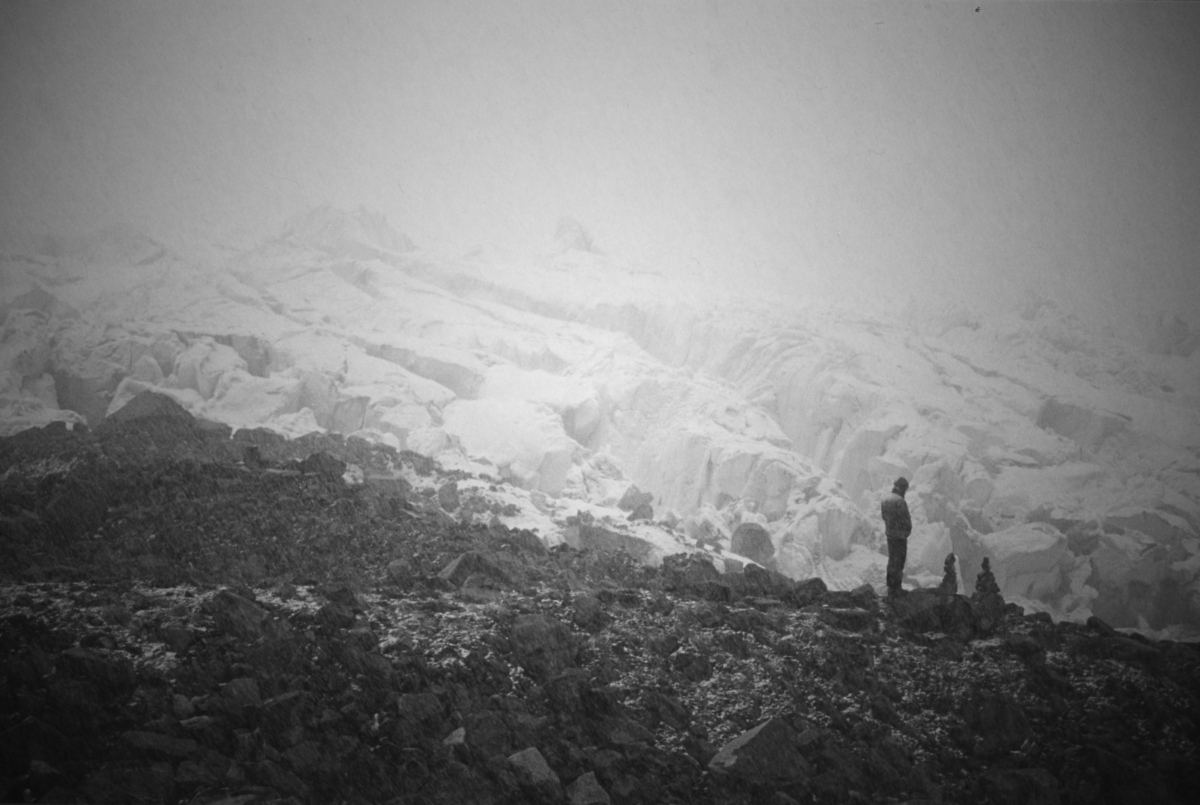
Longtime friend Kyle Lefkoff — alpinist and venture capitalist — turns the tables on host Steve House in a wide-ranging reflective conversation facilitated by producer Jamie Lyko. We are deeply grateful to Kyle for joining us: his rare combination of elite climbing experience and high-stakes business acumen made him the ideal interlocutor to draw out the season’s most resonant themes. The conversation moves fluidly between the episodes of Season 2, distilling through-lines that span risk tolerance, the explorer’s mindset, delayed gratification, childhood intensity, and what it means to successfully “make the turn” from elite athletic performance to a life of purpose and contribution. Steve reflects candidly on his own transition: the accident on Mount Temple in 2010 that forced a reckoning, the decision during COVID to cut the safety net of professional climbing income and go all-in on Uphill Athlete, and the parallel between committing on a big alpine route and committing to a business. Kyle offers a venture capitalist’s lens on these same themes — examining how mountain guides develop a risk management fluency that translates directly to high-stakes decision-making in business, and how figures like Greg Penner embody the qualities of deep listening, disciplined time management, and talent recognition that define elite leaders in any arena. The episode closes on an intimate note — three fathers of six boys between them — reflecting on how the intensity that set them apart in the mountains is something they now seek to pass on, not as a liability, but as the seed of something extraordinary.
Exploring the poetic soul of the mountains.
Voice of the Mountains explores the mental and emotional adventures found in discovering who we are and what we’re capable of. Here we engage in self-reflection, humility, and embrace the beauty and struggle of the alpine experience equally.
Jamie: Welcome to Voice of the Mountain. Clearly, I am not Steve House, founder and CEO of Uphill Athlete, but he is here. Say hello, Steve, so the audio listeners know you’re here. Um, my name is Jamie Lyko. I am the producer of the Voice of the Mountain Podcast, as well as the Uphill Athlete Podcast. Today, we also have with us Kyle Lefkoff who joined Steve earlier this season.
For those who don’t know, Kyle has spent nearly four decades as a venture capitalist in Boulder, Colorado, investing in 65 companies, including Array Biopharma, which he co-founded in 1990, until it was acquired by Pfizer in 2019 for $11 billion. But before that, Kyle was a climber and a mountain guy who tested himself around the world, including on the 1986 American expedition to the north face of K2.
He was the founding chairman of the board of the American Institute for Avalanche Research and Education, known as ARARI, the evidence-based avalanche education authority used by guides and snow professionals across multiple countries in North and South America to help keep our mountain athletes safe.
Besides being an accomplished businessman and guide, he’s an author, a devoted family man, and a believer in the explorer’s mindset. By his own admission, he lives in Boulder, Colorado because it’s the only place that his job and his pursuits can live side by side.
CTA: If you’re enjoying the show and want to take the next step in your training, join our newsletter and receive a free four week sample training plan. Head on over to uphillathlete.com/letsgo and once you sign up, you’ll instantly get a link to try out some of our most popular training plans. It’s a great way to get a feel for how we train our athletes for big mountain goals.
Check it out at uphillathlete.com/letsgo. That’s uphillathlete.com/letsgo.
Jamie: Kyle, welcome back.
Kyle: you, Jamie. I appreciate it. I, I was, I was resistant when Steve first asked me to, to, to be on the Uphill Athlete podcast because I’d never done a podcast before and
Jamie: You were great.
Kyle: I, I, I did my best. It was terrifying. But I’m really pleased today to be on the other side of the table and to interview Steve House as a follow-up to this excellent season of discussions that Steve and you hosted on the podcast with a group of really experienced alpinists and business people who crossed both of those worlds.
And those are really interesting discussions to me, uh, because they, they, they focused the conversation on a, on a set of topics that I think are really relevant and that, and that now we can turn the tables on Steve and get his feedback having led those conversations. Um, I’m pleased to introduce Steve House, my long-term friend and climbing partner and fellow mountain guide, you know, who is the greatest American alpinist of his generation.
Um, his record of his sense in the Alaska Range and the Himalayas in, uh, in various sub-ranges of North America, um, are in, it, as a songbook unparalleled amongst his, uh, amongst his peers. Um, his success in the mountains and his success now in the business he created Uphill Athlete gives him a really good perspective to interview the people he did, all of whom I know very well as it turns out.
And I, I have to say that I, it, it was not my idea, uh, Steve, that, that, that you talked to John Windsor and Randy Levitt and Greg Penner and, and Peter Metcalf as examples of people who have both industrial experience and successful Alpine, Alpine careers, um, but you did so. And some of the themes that emerged from those discussions were both consistent and consistently interesting, I think.
So I’d like to focus our, our talk today on the, on the takeaways from those discussions.
Steve: yeah, I’m so glad that you found those interesting. And th- this is the, you are in a way the, both the audience for the, for the interviews, but also for the listenership, because there’s so many incredible business people and entrepreneurs and professionals of every stripe out there in the uphill athlete community, whether they’re, you know, doctors running a general practice or, you know, venture capitalists or like all kinds of, all kinds of contractors, all kinds of, uh, people running all kinds of interesting businesses out there.
And there is so much, I think, that our, our community consistently sells itself short, in my opinion, on like the depth and breadth of skills and intelligence and agency that as a, as a community we, we possess and have and bring to the world.
Kyle: So I wanna turn the tables back on you then, Steve, um, o- from, from our, from our review of this year’s podcast, one of the things that you consistently asked everyone, including me, is what, what do the mountains give to you? What, what do the mountains give to you? If you look back a your career, both as an Alpinist now and as a business leader, you know, what did, what, what’s your key, what’s the number one takeaway that the mountains gave to you in your life?
Steve: You know, I just spent the weekend, last weekend with my parents and it, the topic came up that, you know, of course you’re with your, you know, mom who’s in her 80s, and she had the, for some reason, I don’t know how it got to this, but she brought out the baby book. And then like, you know, there’s the drawings I made when I was five and it was mountains.
So, you know, I’m not sure what the attraction was, but, you know, I was always a, a mountain person. Like that was my place, that was my peace. It was also became my community. And I, I, I found that just by sheer force of, I’d say, magnetism. I found that in high school with the, the friends I made that I started rock climbing and backcountry skiing with.
I found that when I went to college with a community of climbers and skiers there, I found it, you know, when I went abroad for the first time in a climbing club in Maribor, Slovenia. And so I, I’d say what mountains have given me is the, the through line to everything in my life. Like it’s what connects, you know, my profe- my professional climbing career.
It’s what connects my guiding career. It’s what connects up athlete. It’s what connects how I spend my, my, my free time. I just got back from an amazing two-week trip of ski touring in British Columbia in the mountains. Uh, there was never any thought of going to the beach or to, you know, whatever. Like, you know, I, I like to do that with my kids, but if it’s my time and I get to do what I want, then I’m gonna spend that time in the mountains.
Kyle: So mountains gave you community and they gave you identity,
Steve: Yeah, that’s right. I, yeah, absolutely. And they gave me a professional path.
Kyle: but it, but as Melissa Arnaud pointed out in her segment, they also introduce risk to your life and a level of risk that, that, that’s not typical of the way most people lead their lives. How do you think about her idea of this toxic risk that, that, that you have to be so comfortable for with putting your life at risk in the lives of others as a mountain guide, that it, that, that it’s almost a, it, it, it’s almost a liability to be that comfortable with risk.
Steve: Yeah, it is interesting. And you and I were just, as we were warming up here, talking about how we’ve both enjoyed being guided as well as guiding. And I mentioned how, uh, it’s really hard for me to be guided poorly, but I really enjoy being guided well, and that’s one of the main things that I’m noticing when I’m being guided, uh, as I was in British Columbia two weeks ago.
And it’s so interesting as a professional guide to watch and sort of almost read the mind of another guide, making those just … It, it’s not just one decision, right? Like, it starts days before, with knowing what the snowpack is. This is, in this case, we’re ski touring, so that’s the context. So avalanche risk is the primary hazard.
And, and there’s just like decision after decision after decision after decision, like down to the … It’s almost like having a really good mission statement for a company. Like the mission statement for the day of being in the mountains is to stay safe, and that defines so many decisions, and the, but, but what stay safe means to different people, you know, can be very, very different because we ha- do have different risk tolerances.
And I think that one of the jobs of a mountain guide, one of the things that I think we get, do get good at is that we get good at defining what that risk cap is and then getting right up cozy next to it. And, and not going over it. Like that’s the, that’s the magic, right?
Kyle: guides, to be successful, have to be good at client care, and they have to be good at risk management. Those are two different universes for most people. One of the things that came out in Melissa’s, Melissa’s podcast views it, you know, she, she has her own view of risk management. I have no sense of how sh- good she is a client here, you know, what it’s like to be in the mountains with her.
Same thing with Twight, that dude, you know, he’s, he’s great at getting Hollywood celebrities as buff as they can get, you know? You saw those guys on the movie he helped make, 300, you know, about the defensive Thermopoli, which I loved. I think it was
fantastic, right?
Steve: Henry Cav- Carv- Carville, Caville, like, and Wonder- Wonder Woman … No,
Kyle: ripped, you know, because of what, what Jim Jones did for them, right? So he’s really good at that, but how is he at client care, right? Did he, did he, did, did they come away with, you know, with, with a positive view of Mark Twite after their experience of getting ripped for 300?
Steve: I think they did because, you know, Mark’s approach is, you know, he has this sort of saying that I th- I’ve tried to figure out a way to rip it off without making it sound exactly like what he says, but his saying is the mind is primary. And f- if you look at it from that perspective, whether, you know, the, the, the trading of the gym is all based or training outside is all funneling into, like, h- how you, how you show up, what your self-talk is, what limits you set on yourself, what li- how you allow yourself to expand those limits or not, uh, how you show up for other people that you’re training or climbing or skiing with, how you show up for yourself, uh, how you’re honest or dishonest in all these relationships with yourself and with others.
I mean, so the mind is primary. And I think I’ve seen Mark work with, with athletes, you know, one-on-one and, and in groups and, you know, the, the, the public image of Mark is this tough guy, right? But he’s actually an incredibly compassionate, empathetic person, which is also what makes him an incredibly good artist because he just walks into a room and he can feel what other people are feeling.
He knows what other people are feeling just, just by almost looking
Kyle: he has empathy for the
Steve: He has empathy, which is not what people think of when they think of Mark Twite. And I think that to have good client care, you have to be empathetic. And in my 20s, I was a terrible mountain guide in the category of client care, because I had no empathy.
I was just like, I could charge all day, and if you wanted to be, like, go up a route and fast and safe, I was your guy, but, you know, we, we probably didn’t have a lot of laughs.
Kyle: It’s a tough, it’s a, it’s a tough line to hope. What was he like climbing with? ‘Cause you actually did a big route with him on, I think, the south face of Denali. You guys climbed together, you weren’t guiding each other, you were climbing partners. Was he, was he a good partner to have on a route like that?
Steve: And we were climbing partners a bunch, actually, um, uh, all, all in Alaska, but, uh, we climbed a l- uh, a number of times in Alaska together, including an attempt on the Slovak Direct the year before that where we didn’t even get on the route, but we spent a month trying. Um, so we spent a lot of time together in the mountains and, you know, f- our relationship is really easy, to be honest.
Like, we’re very different, um, but, and I, I, he and I were talking about this recently because he was trying to write something about one of our experiences together, and he was struggling with it, and I s- and I, and, and he was comparing it with trying to write about his experiences with one of his other partners who’s been on the Uphill Athlete podcast, Scott Backeyes, and he and Scott have this
They bring out the extrovert in each other, and they, like, you know, are really … So when he writes about Scott, he just has to remember the dialogue and write it down, and it’s funny, because those guys are funny together. And Mark and I are not funny together. We’re, we’re very different. We’re, we’re two introverts, and we bring out the introvert in one another.
So, you know, we would communicate … I remember after the Slovak direct coming down the next day, we just sat in the tent and he, and with the little speakers in the Walkman or in the CD, it was a, a mini disc player for, if you really wanna date us. And, uh, he just played music for, like, hours, like, three or four hours.
We didn’t talk. He just DJ’ed, if you will, just played song after song after song that was a form of communication, and a very deep form of communication, and it was an amazing experience, and I still like get goosebump thinking about it, but we weren’t, like, I don’t know, being, uh, bros or high fiving each other, or being, like, you know, loud.
We were c- we had our own way of
Kyle: you f- did you feel like his, his, his decision making under conditions of uncertainty and his risk management were, were on point in those, in those expeditions? Did you
Steve: yeah,
Kyle: in him?
Steve: he was more conservative than I am.
Kyle: Huh?
Steve: The reason is
Kyle: persona, obviously.
Steve: But I think the reason is that, and I think you would agree with this, at that point in his career, my career respectively, I was, I was a better climber, and so I could do things that he couldn’t do, um, safely. So that, you know, this is, this is where the intersection, and this is one of the things I wanted to get out of these topics with business leaders, and is, like, as you get better at something, you can control the risk more carefully because you can do things more precisely, uh, you know the outcomes, you’ve seen the, you’ve done the enough reps through this thing that you kind of like, okay, you, you know how close you can, you can go.
And I, and that’s one of the things that made it hard as getting a, becoming an older alpinist and, and seeing those debilities decline. I also had to decline, reduce my risk tolerance and it, and it felt like my world was crumbling in a way, if that makes sense, even though not, that’s, that’s being dramatic, but it, it wasn’t the sa- wasn’t ever the same as it had been.
And that’s, that’s, I think, another adjustment.
Jamie: I was wondering, uh, for both of you guys, um, you, to talk about being guides, you talk about, uh, risk management and how it changes, um, risk assessment, I should say. Were, did you guys both consciously, when you went into business, did you, did you feel that immediately that you had to step up on other people, because you could look at things that way, because you were taking into account client care, looking out for the people that work for you, but also wanting to take big swings in business?
Did, did that click as something like, “Oh, that’s something, that’s a, I already have that arrow in my quiver.” Or did it take time to realize, like, “Oh, this was … I really learned these really valuable lessons on the mountain that can apply.”
Kyle: Jamie, I think that when you’re a mountain guide, you can never turn it off, even when you’re being guided by somebody else. And the same’s true in business. You know, when you’re a mountain guide, you can’t not be a mountain guide, even if it’s a business meeting, you know? And, and it, it kinda, it kinda, that experience informs the way you lead your life. I don’t know how Steve feels about that, but that’s my, that’s my position.
Steve: Yeah. I, I had this experience a few years ago where I was, um, you know, as you said, Jamie, taking a big swing. I was trying to build my own AI model for building workouts for, for mountain athletes, and it was expensive, and it was terrifying. And I was, like, from the bus- and I, and I needed to … I wanted to bootstrap it.
I want, meaning that I wanted to just fund it from my own, like, revenue of the company, so I stopped taking a salary for a long time. I just put everything into this thing, lived off some savings, and it was really scary, and I had a lot of really sleepless nights, and ev- during every one of those sleepless nights, I would just think to myself, like, “Man, this isn’t as scary as being halfway up Nanga Parbat with no way to go back down, except going to the summit.”
This isn’t as scary as, like, I could come up with 50 examples because I, you know, I wasn’t gonna die. You know, I could, I could, I could maybe go bankrupt would be the worst thing, or I could not pay the next invoice to the com- s- computer scientists that were running the, the model building, but I wasn’t gonna die.
I was gonna lose my life. And so I was able to be comfortable with a lot, a large amount of discomfort that I think that most people wouldn’t be. And that actually, in a way, at the time, uh, you know, I don’t, I don’t remember if we talked about this, Kyle, but I, I thought of that like, man, this is actually kind of a competitive advantage because very few people are gonna be able to be this uncomfortable and the only other way to do this
Right, right. Yeah. So that, so that, that felt like I could, you know, good information, like I can push through this, it’s scary, but that also means that a lot of people are gonna peel off at this point and not compete with me beyond this point. Of course, that whole thing didn’t really work, but I mean, 90% of it didn’t work, but that’s kind of the way things, these things go, and we’re still here, and we survived, and we’re onto the next thing.
Kyle: Let me ask you about, uh, Windsor’s interview, because I thought that was one of my favorites and really interesting. And of course,
Steve: so good.
Kyle: you know, and, and, and John and I have been friends and climbing partners and ski partners for decades. And I served on the board of one of his publishing companies, uh, and his dad, John Windsor Sr.,
Who was a publisher himself, was an early investor in my venture capital fund. So, so there’s a, a long history there of the two of us. So I was really happy to, to see your, your, your, um, you know, your, your session with him. And it was also interesting because in recent years, John teaches, as you know, at the Harvard Business School, and he has this, uh, he has this role there.
And, and I’ve seen him speak in his role at the Harvard Business School, and he’s super pedantic in East Coast stuff he, you know,
the academic speak kind of stuff. That was not the case on your podcast. He, he, he elucidated some really interesting ideas, and he’s a very big, very clear thinker about the issues that he thinks about, which is the future of work and how AI impacts civilization, basically.
And one of the, one of the things that, one of the themes that came out of that was, was this idea that I hadn’t heard before because this, that he calls the explorer’s mindset where you, you, you, it’s kind of his job to look over the horizon, see something other people haven’t seen to go out there and get it, not just talk about it, but go out there and get it and bring it back and operationalize it in the context of, of, of, of his world, which I thought was a really interesting idea, you know?
And so I, I wanted to explore that with you a little bit, how, how that idea is, is maybe a, a common theme now for, for climbers or alpinists and business people that, that, that explores mindset.
Steve: Yeah. I wanna tell you a little story that you know who Chuck Pratt is, right?
Kyle: Very well.
Steve: Tell, tell the audience who Chuck Pratt was.
Kyle: Chuck Pratt was one of the four great rock climbers of the Royal Robbins, Yvonne Chenard, Chuck Pratt, Tom Frost and Eric in Yosemite in the ’60s, and the four of them made the first descent of the North American wall in, uh, 1966, I think, which at the time was the hardest big wall in the world.
It was the first time Americans had been, in the post-war era had been the best climbers in the world.
Steve: Yeah. That’s very well spoken. Thank you for explaining that on the spot with no prep. I worked at, uh, Exam Mountaineering as a mountain guide one summer, and I worked next to, uh, next to Chuck Pratt, and he was a huge character. This would’ve been 2000. He used to teach, he was in his 70s, I wanna say then, and he would only teach the basic rock climbing classes, which were pretty good money, but, you know, kinda boring.
And he would spice it up by asking the students all kinds of trivia. And one day he, I was just, I was just assisting him, and his question was, “Which of the four first ascensionists of the North American wall?” So your introduction was perfect, Kyle. “Is not a millionaire today.” And of course the answer, like, these people didn’t even know
First of all, they don’t know what a first ascent is. They don’t know what the North American Wall is. Like they, they don’t know, you know, Chuck, you know, Tom Frost’s name, you know, maybe they know Yvonne Chenard, and of course they, they, people would have … And the answer was him. And that idea kind of stuck with me and has part, been part of
You know, I think that in the … And I talked with John Windsor about this a little bit in, in your era, his era of climbing, there was no path to being a professional climber. It simply did not exist. And arguably, like, maybe the one generation ahead of me was the first generation, the Conrad Anchor and Lynn Hill generation was the first generation to kind of be able to make that happen. I think one of the great problems with people becoming professional climbers is you took, you know, this incredible energy that those types of people bring into the world and just kind of gave them an easy job. Let’s be honest, like being a paid alpinist was, like, the easiest job I’ve ever had in my life and, and will have.
And before that, it was like, you know, look at the things that you, your generation and Yvonne Chenard’s generation, Tom Frost, Royal Robbins, look at, like, Royal, Tom, and Yvonne themselves, like, those three people and, and started and, and ran incredible companies. The North Face, you know, with Doug, Doug Tompkins, is another one of those that came out of that same era, founded in that same time, like 1966, 67, 68, somewhere in there.
That, you know, you guys just crushed it. And I think that, I feel like my generation didn’t really do much, uh, in that way. And I think, I don’t know why, why that is, but I always thought, like, man, you know, who … ‘Cause I, I spent a lot of time with the Chenards and Yvonne is, you know, the more time I … He’s one of these rare individuals, the more I got to know him, the more he was my hero.
And I just thought, man, like, this guy I look up to so much, how can I ever do, like, how can you ever do what, what, what he did in his lifetime? It’s just incredible. And I started to realize that, like, the, the business is actually, uh, his business at Patagonia was by far his biggest lever in making, leaving the world a better place, which was kind of what it comes down to for most of us, is just trying to f- uh, you know, in life, like, how do we make, how do we leave the, how do we go through life making the, making the world better and ultimately leaving it a little better than we found it and, uh
Kyle: Chernard is a classic example of this explorer’s mindset, I think, of going out to the rise and seeing things that no one else could see. I mean, his, he was a visionary in tool making and in, in product, a product visionary is how I’d describe
Steve: 100%, 100%.
Kyle: and, and brought it back and actualized it and made a big business out of it.
Steve: Yeah. And spawn Black Diamond and … Mm-hmm.
Kyle: I have, you know, some, some experiences and some, and some knowledge and some expertise that, that are, that diverge from his practice at Patagonia. He built Patagonia in his image, and he and Melinda owned all of it.
And he, it was very important to him to control that destiny. He never, he’s a control freak, and he never wanted to give any of it to anyone, but he created this methos around, you know, let my people surf and how great it would be to be an employee at Patagonia. He was a billionaire on Patagonia.
Nobody else who worked for him was ever a billionaire. Nobody else spent any money at Patagonia, just Chenard, okay? Now, is that an indictment of him? In my opinion, yes, because in the venture capital world, our job is to not only build successful companies that produce products and services that, that, that, that improve the lot of everyone, but that everyone shares in that success.
Every single person in Array Biopharma had stock in the company when we sold it to Pfizer. That, that, those shares went all the way through the cap table and we were all partners and all shared in that success, and that was not true at, at Patagonia. So I think it’s, I think it’s, you know, it’s kind of the irony that he gets lauded as this great capitalist and this awesome creator of this environmental ethos.
Steve: I do think that capitalism is incredible. I do think that business is the best way to have a large impact in the world. Like, I don’t th- I don’t feel that I can have a large impact on the world through my vote as an American citizen. I, I, I wish, I wish I felt differently about that, but reality is, like, I’m one of 300 and whatever million people, some 40% of which actually vote, and, you know, I don’t feel like I’m swaying national policy.
Um,
Kyle: But you can have an impact through your business.
Steve: But I do, can and do. Once it gets to a certain level, I can absolutely do that. And I think it’s the same, like, with climbing, I tell young climbers this all the time, the rewards and the impact come after you’ve done all the things. Like, I didn’t start making money as a professional climber until after I climbed the RuPaul face of Dunga Parbat.
Like, I was 34 years old at that point. I’d been climbing hard for 14 years, live, you know, on $12,000 a year. That was the most money I ever made before I was 34 was $12,000. And then I started to be able to make a living, and I started being able to make a, a good living, and I never climbed anything remotely as amazing as K7 or, or Nanga Parbat, again, in my opinion, but I got all the reward on the back end.
And that’s, I think the way a lot of it works in business too, you have to build the business and it has to grow and be something that people are attracted to and aspired to and participate in and love as a brand. And then on the back end of that, you can, you can lever that into something that, you know, you wanna see in the world.
Kyle: Well, of course, the explorer’s mindset, going across the horizon, picking the, you know, picking the thing, bringing it back, operationalizing, it’s not generally recognized till later and rewarded until later. So that’s a, that’s a common experience both in your career as an Alpinist and your career as a, as a business person, you know?
Steve: Mm-hmm. Delayed gratification is key, uh, ability for … Yeah,
Kyle: Lead human capital doesn’t occur right away. It takes a long, long time. How many, how many decades of crack climbing experience does Alex Honold have to produce, you know, the, his one great moment in sport, you know, that’s now set him to, set him up to be the iconic climber of his generation?
Steve: Yeah. Yeah. Yeah. The 15-year overnight sensation story. Right.
Kyle: What did you think about his, his, uh, Netflix doc on the, uh, climbing the building in Taipei?
Steve: Uh, I didn’t really think about it, to be honest. I hope that he was paid some good money. Um, I, you know, I’m sure that he, that’s why he did it. Like that’s, that’s not a labor of love. He didn’t, you know, have a picture. My, my guess is that he did not have a picture of the Taipei tower taped to his bedroom wall for the last seven years, dreaming about it every night.
Um, so, you know, I, I think, I think that he’s earned it. I think he earned the right to do whatever the hell he wants, uh, off of his successes and his career. And he took massive risks and he applied maximum discipline and focus and toil and work to be able to do what he did. And, you know, he’s got a wife and kids now and he should be reaping the, reaping what he sowed.
Kyle: That human
Steve: He should monetize it, yeah, because yeah, he certainly wasn’t getting paid very much when he was living in his van in Yosemite climbing 300 days a year.
Kyle: I expected not to like it just because it’s silly and, you know, climbing this building and all these people and the whole made-for-television kind of thing. And I really enjoyed it because he was having fun. The joy that he takes in goofing around on this, you know, look what they’re letting me do here.
This is awesome, you know? The joy he had, I, I like that. I like that. That was authentic.
Steve: I haven’t seen any of it, and in real life, like Alex is kind of an introverted and somewhat goofy person, so I’m glad that he could be goofy and have that be himself and be rewarded for that. That’s, that’s fantastic. That’s all any of us can hope for.
Kyle: You know, in, in your episode with Randy Levitt, which I also loved, and I love Levitt, but Levitt’s got a different kind of spin. His spin is climbing doesn’t matter. Not that we do here matters. And I, I kind of get where he’s coming from, and it’s also part of his business life, because he’s a real estate guy, you know?
And he’s not Sam Zell or Donald Trump, or, or, or, you know, one of these captains of, of, of, of real estate. He built a nice personal real estate portfolio over time and monetized that human capital. He’s obviously really good at it, I think. Um, you know, and he was a great, great trad climber in my generation, absolutely one of the top trad climbers, you know?
But he morphed into a guy who set up hard sport routes and just sport climbed all the time. And, you know, sport climbing doesn’t matter in a climbing sense, you know? It’s, it’s kind of like bowling. You, you, you go, you, you take your family out and you have a, you have a great time and then you turn your smelly shoes in and, you know, go to, go eat pizza.
It’s not really, it’s not, it’s not actually, there’s actually nothing there, you know, to sport climbing. And, I think that’s kind of his perspective on climbing is, it’s informed by his sport climbing. Do you think that’s true? The, in contrast, you know, my favorite interview of the whole series was Greg Penner, who I don’t know, although I have fan, you know, high respect for in his position.
And,
Steve: Amazing guy.
Kyle: amazing guy. And, you know, the chairman of Walmart, the owner of the Denver Broncos, really transformed both in an era when either could have died as iconic businesses in someone else’s hands, you
Steve: Yep.
Kyle: And who really thinks deeply, I think, about his role in business, his role in life, and his role as an Alpinist, as exemplified by his decision-making under conditions of uncertainty in, on Everest.
I mean, there he was faced with an absolute splitter day in position, you know, with the right guides and the right stuff and, you know, ready to summit at 8,000 meters on the South Coal and headed up the hill and the regulators fail, you know? And he makes the decision to go down, right? That, you know, my life isn’t
I’m, I’m not gonna end my life here on the, on the South Ridge of Everest because my regulator’s not working. I’m going down. That, that’s real insight from a, from a guy who’s the chairman of Walmart.
Steve: Yeah. I think it’s, it’s, he’s, I think, just such an amazing guy and, you know, one of the most humble and, you know, you can’t find anything on Greg online. Like the, it, like the internet has been scrubbed of all mention of, of him or any of his accomplishments or anything he does. And I don’t think that’s actually on purpose.
I don’t think it’s been scrubbed per se. I think he just is not a person that needs, uh, external validation in any way, shape or form. He is just interested in doing things because of the process, processes that he’s engaged in, in doing those things. And I, you know, I, I think it’s re- one of the, one of the moments when I think you find out
I think one of the interesting things about climbing that I had to learn, and one of the interesting things in parallel about business that I had to learn separately of running a small business is that you kind of, you, it’s a, both are good ways to find out who you are and what your values are because they get tested and we often don’t know who we are, what our values are until we kind of come up against the limits of them.
And then we’re like, “Uh, that’s a little too far. That’s not far enough.” And in, I started off as, obviously, as a climber mountain guide and I felt like, I felt like I was prepared for everything. And then when I got into running a small business, I felt like I was prepared for nothing. Like I, you know, I was like, “What am I doing?
Like I have no idea like how to do X, Y, Z.” You know, just think of anything whether it was like what to say, how to fire someone, what to say that we, that, that needed to be exited or, uh, you know, how to hire someone that we needed to fill this particular position or how to train someone because we needed to bring in another coach.
Like there’s a million things I just had no idea how to do as a human being. And you find out very quickly kind of if you are with, with climbing, you can kind of fake it until you make it to a certain extent, right? Like, but then there’s those moments where your regulators fail high on Everest and you can’t, like, you can’t fake it until you make it.
You just have to decide and you have to know exactly who you are, exactly who your values are, and you have to know it like that. Like you’ve got two minutes to decide. You don’t have like all day. You can’t call a committee meeting, you can’t call like three friends,
Kyle: Can’t hire McKinsey to do a study for you,
Steve: Hire McKinsey to do a study.
No, none of that. Like you’ve got to know right now and if you don’t make the decision the next two minutes, a decision will be made for you and you’re going to die. So, uh, at some point
Kyle: That’s a good insight into Penner’s mindset and his decision-making under conditions of uncertainty. I think what came out for me, also, in that podcast, was that he must be a very good judge of talent and a manager of people. He must have a good eye for who to rely on and how to, and how to manage those relationships.
Did you get that from him?
Steve: and, you know,I’ve had the pleasure to get to know him a little bit because he’s worked with me as a guide and with my friend Vince Anderson as a mountain guide and I’ve been able to go skiing with him in Aspen and, and ski touring.
And, you know, one of the, when I’m around someone like that, like, I just try to keep my mouth shut and like listen and watch because I’m trying to figure out like, you know, I try, you know, it’s, it’s always so cool. It’s such an amazing experience. And this is one of the things that got really boring for me with climbing, and sounds arrogant, but here, I was never the dumbest person in the room in the climbing rooms.
And that got a little boring to just be kind of quote-unquote the smartest guy or the most experienced guy or one of them. And, you know, when I stopped learning, you know, I got, I found that a little, uh, not a lot of stimulation. And so with, with Greg, it’s hard because the guy actually doesn’t talk that much, right?
Like he’s a, he’s a pretty quiet, pretty soft spoken guy, um, and it’s hard to figure out actually what he does, but I think that that was ultimately what I realized is like he’s observing. He’s, he’s asking questions. The questions are only five words, seven words, 10 words long, and then he’s getting like 15 minutes of answer, and that’s the skill, right?
Like to, to like watch, figure out what to ask, and then ask and then get, like, get an answer that alludes to some aspect of the problem that he’s trying to solve or thinking about. And th- that’s a really, really cool skill to have. And I, yeah, he’s, he’s a, he’s an incredible, uh,
Kyle: When you spent time with him in the field, was he guidable? Was he,
Steve: He was, yeah.
Kyle: Client?
Steve: Yeah. Very, very good. Um, and like ve- 100, like one of the best, right? Like, listened, followed directions, didn’t not do what you s- said. Like if you said climb to the left side of the waterfall, not the right side, he did that. If he said, “Leave that screw because we’re gonna use it as a directional on the way down,” he did that.
Like it was, it was, uh, it was a, a joy, joy to climb, to
Kyle: really, he, he really listens. Maybe that’s the, the key takeaway. That guy, that guy has a, has a, has a keen ear for what people say to him.
Steve: The here’s something that I struggle with a lot in my day-to-day is staying organized and keeping my priorities sorted properly. And he, I think also has a superpower for that. He’s incredibly tightly scheduled. He’s, you know, I was late today, too, you know, by 15 minutes, you guys, because I was on another podcast and, and it went over, and I, that, Greg would have never done that, right?
Like that’s, and, and I know that. And when I, you know, and, and he, he would, he’s, when he says he’s gonna be there at 8:00, he’s there at 8:00. He’s not there at 7:55 either. When he says he needs to go at 2:30, he goes at 2:30 and his, it’s, he’s very well structured and it seems to be able to set, uh, his priorities really effortlessly,
Kyle: There’s a lesson in that for you, Steve, as a business person, yeah?
Steve: 100%, 100%.
And even as I was being late today, I was thinking about it like, oh God, like, you know,
Kyle: What would
Steve: would not, Kyle would not be late. Greg would not, uh, Penner would not be late. Like, I mean, like, uh, people who could perform it is they, they, they protect their time and they, they figure out how to get things done on time and on task and, and not mess around.
I think that’s his other thing. He’s incredibly efficient. He just gets a lot done in a short amount of time.
Kyle: One of the things that I, I, I, when j- before you showed up while you were late, Jamie and I were talking about some of the past episodes and my experience being interviewed for the podcast this year, and, uh, one of the things I was surprised about was pretty much in all episodes that certainly surprised me in our discussion, was how you immediately went to everyone’s childhood and your experiences as a child, and how that informed your growth and development as a human, and how it led to your climbing, and to your alpinism, and your guiding, and your business career, and whatever, right?
And you … Wh- why was that? What, what is it about childhood experiences that are interesting to you in this podcast that you think, you know, that, that, that you focused on, and what do you take away from those, you know, what’s the synthesis of those discussions?
Steve: Yeah, that’s a good question. I honestly didn’t do that, uh, on purpose. I mean, Jamie, maybe, maybe you helped create those questions. Maybe you had an idea there, but I didn’t necessarily realize that until you just said that.
Jamie: I, I might have. I, I mean, I am very, I mean, a few guests have talked about experiences in childhood and, you know, how they formed their resiliency and how that resiliency has helped them on the mountain in business. I, I think, um, and I’m not done, we only had men as guests, but I think being a father, like I’m very interested in like how people’s different childhoods can kind of create, you know, different kinds of adults and, you know, kind of also having to accept that there is no code to crack, like you never know.
But, um, yeah, I mean, being the father to two boys, I think maybe I wanna, to be honest, guide them maybe away from being an alpinist and being exposed to so much risk in some ways. But, um, yeah, I th- I, you, you do very much lean into those questions, whether I’m s- sliding them in there purposefully or not, um, the conversation Kyle, as Kyle observes, does often come back to that.
Steve: Yeah. And each one of us is a father to two boys. We have six boys between us, so that’s kind of a, a fun, uh, parallel. But I think one of the things that I’ve learned, because as an alpinist, and even as a mountain guide, uh, you know, I was often very focused on being efficient. And it’s like, you know, it’s like we’re burning daylight.
It’s that idea. Like as soon as the alarm goes off, it doesn’t matter if it goes off at 12:30 AM and you have a big objective for that day, you’re burning daylight. Like, you need to be like, “Go, go, go. ” And it was very hard for me to, uh, not … When, when uphill athletes started to get to this point that we had meetings, because there was more than one person, more than a couple people, we needed to align on various things or execute different projects or work on things together, I started off that way.
I just would, like, dive in like, “Here’s the, here’s the thing. We gotta decide this. What is, what do you think? What do you think? What do you think? Okay, we’re gonna make a decision done out. ” And one of the things I learned from is, and I, and, and you’re very good at this, Kyle, I’ve observed this in you for years, people who are good in business are good at connecting with other people.
And I think, uh, questions about people’s childhood and how they came to the mountains, for me, I think it was really a way to connect to the person, to the human, and like a little vulnerability going. Like, it’s vulnerable to talk about yourself as a kid, because, you know, not all of us had amazing childhoods.
I mean, I, I think I did, but not everybody did. And so, um, I think that was the purpose of, of those questions
Kyle: It was a connection. It was a connection. But it also highlighted, in most cases, in Metcalf and me, and Windsor, and, and, um, you know, and, and Levitt, y- you know, that we were intense kids. We were all intense kids.
Steve: Yeah.
Kyle: And the community you’ve built at Uphill Athletes, kind of a community for people who are too intense for the rest of the world.
You know? Is that, is that a fair statement?
Steve: I think that is a fair statement, you know, and I think I picked up on that in the first season, you know, I was just started looking at the guests we had in the first season when we were working on the second season. It’s like Vince Anderson and Barry Blanchard and Will Gadd, and I mean, all super intense people, and I often felt out of place in society due to my intensity.
And I have, particularly one of my boys is also really intense and a little ADHD and I see the other kids sort of like back off from him because he’s just like taking up all the space and all the energy and like people don’t know how to navigate around that. And I f- have often felt kind of ashamed of that and felt like I often held, like held myself back because I f- because I, well, because I felt like there was something wrong with me.
I was made at various points to make … I was in, here’s a story, there’s a personal story, I don’t know, maybe we can edit this out if we don’t like it, but, uh, I went to a public high school, but there were these, uh, AP classes, the advanced placement classes, and it was very competitive to get into these classes.
And I was in all the AP classes, and I had this really elderly, uh, English teacher in my AP English class, and one, at least one day a week, she would just have the class do we, strange exercises because she enjoyed seeing how smart the class was. And anytime there was one of the, one of the times it was mazes, and I’m very good with visual things, like I can just look at a maze, kind of defocus, and I see the thing, and I can just draw the front.
Like, I don’t know why. I’m, it’s also why I’m good at navigating in the mountains. I can visualize Terrain really well. That’s a part of my brain works, don’t know why. She got so mad at me, because she, and she made me do maze after maze after maze, and these other kids who were, you know, some, one of them was, you know, uh, you know, top, top in his class at Yale Law years later, like, these were some really smart kids.
Like, they were struggling to do these mazes, but, and she was like, she told me, “You’re so stupid.” Like, there’s a teacher telling me, yelling at me that I’m so stupid. Like, she, she was so mad that I could do the maze because she expected me to be the worst because she thought I was so stupid, you know?
And that got, that got, like, that was one of, uh, several things that happened in my developing life where, you know, I was made to feel like I was not okay the way I was. And it wasn’t anybody in my family. It was always teachers or in Boy Scouts or some of these other areas and activities that I was in.
And that was … So I learned to pull back. I learned to hold myself back.
Kyle: There … Weren’t there other exam- counter examples in your early childhood of people who celebrated your intensity?
Steve: My parents, for sure. Like, my mom being a school teacher, she, like, kind of would lesson-plan my days for me, uh, w- in a wonderful way, right? And got me involved in, like, saying, like, “Hey, you’d be, you’d really like the Boy Scouts.” And, like, that was amazing for me because I just had this, I just had these checklists, and I just had to go through and do one thing after another, and then I’d get these little rewards every once in a while and then I’d do the next thing.
Um, but, like, in things like, uh, individual sports was another place where, like, that intensity was rewarded because you’re just, like, intense for yourself. You’re not having to, like, pay attention to how everybody else is doing or feeling.
Kyle: Right. Well, you know, now, with your two young boys, parenting them into adulthood is really the only important thing you do, Steve. Everything else in your life, as you know now, is trivial. That’s the thing you do that’s most important in your life, you know? So, so what do you take away from that, having the intense boys that you would expect to have, being you, what do you take away from that experience that informs how you as a parent are gonna raise those boys into a successful adulthood?
Steve: Yeah, I think it’s, it’s really interesting because particularly for my older boy, he, I feel like he’s my carbon copy, and I’m so, I have so much empathy for him. I can, you know, like, with the younger one, it’s a little harder for me to read, um, but particularly Franci, like, like, whatever he’s feeling, I’m feeling in my own body.
Like, it’s just, that’s the way the connection is.
Kyle: And you recognize he’s watching you like a hawk. It doesn’t matter what you tell him; he’s emulating you, yeah?
Steve: And, yeah, and that c- that could, that has been, that has been, uh, such a test, right? ‘Cause, uh, you know, we’re human and we’re imperfect and, you know, we lose our, you know, I lose my temper. That’s part of being an intense person and I can get really angry and then I see him getting really angry and, you know, it’s like, oh God, he’s, he, you know, that was, that, I, that was me.
Like, I did that. Like, now he saw that, now he’s modeling that. Um, you know, and so I have to be better at, like, you know … Yeah, I’m the role model, but, and, and I have to, um … I’m very much a parent that is trying to raise my kids to solve their own problems too. Um, and, you know, there’s, you know, and if you can’t solve the problem, then come to daddy for help.
Like, if your brother’s bothering you and you wanna smack him, and you don’t know what else to do, other than just smack him, then, then come to me for help and I’ll work through it with you and we’ll find another solution other than smacking your brother.
Kyle: The big part of your parenting is, is giving them agency, you know? And allowing them to, to, to fend for themselves in, in every respect that they can. I, you know, I was, I, I, I was really in a, you know, in a mode where I, I didn’t really have, I think, a lot of the role models I needed. And I’ve lived, you know, I, I wanted to be raised by mountain guides in Boulder, Colorado.
I didn’t get that chance, you know? So I’m, in a way, I’m living vicariously through my children and my parenting of my two boys because I, you know, this is the model that I would’ve wanted to have been presented with, um, for me in my childhood that I had improved on to, to give to them. And I’m really, uh, I, you know, it’s the greatest thing in my life to see how they’ve turned out as adults now, you know, that they, they have agency and they’re, they’re, they’re good boys.
And that’s, that’s really the only important thing we do, honestly. All this other stuff is pretty trivial.
Steve: And helping them, uh, particularly Franci again, know how to channel his intensity in a positive way into something other than, I don’t know, video games or whatever, like, that would be the, the lowest comedy dominator thing. But, um, yeah, that’s, it’s pretty fun, actually. It’s mostly just a lot of fun, especially now that we can ski everything.
Like, I’m getting into that era where we can just ski everything now and it’s, you know, do things like that together that are just so much fun.
Kyle: The best period, because, you know, they haven’t gotten older … Well, they’re like, they’re like six and eight now, or, or
Steve: Seven and 10, yeah.
Kyle: Seven and 10, okay? They’re fully operational. They can get out on the hill with you and do everything you wanna do with them. They can enjoy that. They love you and they love hanging out with you, and you’re gonna have this period where you can do that stuff with them and travel all over the place and, you know, really have those adventures with them all the way till they get to their sort of mid-teens and start developing their own relationships that supersede your, your, your, you know,
Steve: And, and they get to s- I take … I try to really get them out with my friends. I have just, like, yourself. I mean, I have so many incredible friends. Like, this summer, we’re gonna go on a wilderness backpacking trip, and Mark Twite’s gonna come. Y-
Kyle: Nice.
Steve: You know, like, how … I mean, Mark’s a very particular … But, like, it’s
They’re gonna love Mark, and it’s gonna be really good for Mark too, by the way. Uh,
Kyle: Doesn’t have any kids, does he?
Steve: he has no kids,
Kyle: Yeah.
Steve: But he’s a, he’s a very … I, I l- he’s just a great person, and I want them, like, to, they can just, like,
Kyle: need to get used to the idea that there’s all of these dad’s friends who are also intense and also have these interesting lives, and they do cool stuff, and you have a chance to hang out with them. I mean, my kids grew up with their Uncle Strapo and their Uncle Stevie Haston, and their, you know, their Uncle Crusher.
They thought that was awesome, you know, to have these adventures with these guys. And they, they’re fully empowered now in their lives to just call those guys up and go ski and climb and do stuff. They don’t need me to go climbing with Strapo, you know? It’s pretty interesting.
Steve: That’s great.
Kyle: So let me, let me, let me finish our conversation with a, with, with, I think one of the key themes that, that came out of the, your discussion, not just with the athletes and business people this year, but also the first season with the, which was more of a season about super athletes, really, you
Steve: Hmm.
Kyle: world-class athletes, um, which is their ability to make the turn from the best in the world at what they were doing to the rest of their lives.
Steve: Hmm.
Kyle: You’ve made the successful turn from being America’s greatest alpinist of your generation to a successful business guy who’s actually giving something back to the next generation of athletes and helping them, helping bring them up and building a successful business, right? You made that turn.
It didn’t destroy your ego. It didn’t cause depression and anxiety. It was not always the case for most proac- for a lot of pro athletes, not all, a lot of pro athletes have a really hard time making that transition, right? What, what do you think informed your success at making the turn from the top to, the top athlete to a successful business person?
Steve: Well, I would say that it caused a- anxiety and depression. And I would just say generally that it was very hard, uh, and it took way longer than I thought, right? Like, I thought that I could do this in a co- do that in a couple of years, and I, you know, your description feels very generous to compared to what my actual experience was, because it was super hard, and also because there was a path to just sort of continuing to be on the dole, as I like to call it, with Patagonia, and Gravelle, and Las Portiva, and just sort of show up at some trade shows and some ice climbing festivals, and m- make a decent middle class income, and have, like, a really easy life. But, uh, it felt m- … So Twite and I used to have a rule when we were both active climbing that we could … If we did a slideshow, we couldn’t speak about anything that had happened more than two years ago, two years in the past. That was our cutoff. And so, as I was even, like, getting to 40 and I was still talking about Nanga Parbat, which had happened five years prior, and I wasn’t
There was really no more s- uh, not … Well, there were some small ones, but nothing of that magnitude in terms of stories that I had to tell. It started to feel, um, like I needed to do something else. And really, it comes down to this experience I had on Mount Temple in 2010. As you’ll remember, I had this really bad accident, I almost died, I had a couple of hours waiting for Steve and the, uh, Berks Canada rescue crew fly in and pl- and picked me off of there in this incredible long line rescue that was super risky, and they completely saved my life, and if they hadn’t done that, I would not be here.
And I had time to think about, if I die today, what am I happy about? What do I, what do I wish had been different? And there was three things. One thing I was happy with was the climbing I’d done. I hadn’t done everything I wanted to do, but I’d done a lot, I’d done more than most, and that was a box that was checked.
I had not had a family, and I had not given anything back to my community, uh, in my opinion. And so I, I’ve … Now it’s the time of my life where I’m checking boxes one and two, you know, or, or three and four, or two and three, or however you wanna count it. And that still is what wakes me, gets me out of bed every day, you know, both, both the things, like taking care of my kids, raising my kids, being a good dad, giving them good experiences, introducing them to amazing places, amazing people.
We were talking about, like, Revelstoke and earlier before the podcast started, like, if you had told me in 1990, the first time I rolled up to Rogers Pass and put skins on my skis, how many days of my life I would spend skiing in that little mountain range there, uh, I would’ve been blown away. Like, I don’t know how many nights of my life I’ve spent in Revelstoke
Kyle: Hundreds. I spent hundreds of days
Steve: Yeah. Yeah.
Kyle: of Canada.
Steve: 100%. And then hundreds in Shamani and hundreds in Canmore and,
Kyle: Right?
Steve: and, you know, dozens in and, uh, you know, I’ve spent two years of my life in the country of Pakistan, 24 months of my life I’ve spent in the Caracora mountains of Pakistan. And, you know, I didn’t know that that was how, you know
And, and now I’m gonna, like, I, I really wanna introduce my kid, and I’ll tell them now, like, “Hey, pay attention because this is a place you’re likely gonna be coming back to your entire life.” And the layout doesn’t really change. The, the church in Chamini is always gonna be over here, the Flaget lift is always gonna be here, you know, this is always gonna probably be, you know, uh, You know, where, uh, uh, what did, oh, I’m forgetting the name of that little, uh, hole in the wall, like burger joint, um, uh, is on the Rude Bacard.
That’s always gonna be there. Like, you know, and I, I think that that’s,
Kyle: It’s a metaphor for their lives because a lot of things in their lives are gonna change.
Steve: Yeah.
Kyle: But a lot of things that you’ve experienced and that you’re expert at that you’ve mastered are gonna stay the same and that’s what you wanna try to pass along to them, right?
Steve: Yeah. Yeah. Yeah.
Kyle: I think that’s, that’s really good. You know, having made the turn though, and having experienced your, your, having fallen off the North Face of Temple and almost died, right?
And, being heroically rescued, I know the CMH pilot who long lined you off of that thing is one of the best in the business is unb- guys unbelievable. I’ve fl- bailieskied with him a ton of times. The, the, the … Do you feel like that was the, the break with your past that enabled you to experience your future?
Steve: That was a break.
Kyle: Okay.
Steve: That was a break.
Kyle: Do you think that, do you think that your guests that you’ve, over the last two seasons, who’ve made the transition, who, who made the turn successfully, had a break like that?
Steve: I don’t … Well, so in season one, most of them didn’t, and most of them I think didn’t make the turn or were trying to make the turn and were in the middle of the turn. And I think in season two, it was people who, you know, integrated both. They integrated, like yourself, integrated the mountains and a business career, and in most cases, family as well.
And so I wa- that’s where I was, that’s why I was so interested in this group of people is the integration. And I think it’s really getting to the question of, like, I had this extracurricular stimulus that nobody should have to go through, and I wouldn’t wish on anyone, but yet for me, it was necessary.
And is there a scenario in which, or would there be … What would, what would my model be? And I don’t think I have a role model to make the turn. I don’t think Chenard or Royal Robbins or you had to make it in the same way that I did, because I was one of the early people that was able to be a professional climber.
And Codrad’s still a professional climber. He’s one generation ahead of me. You know, and that was the path. That was the path that was open to me. And I just, I just personally, for me, didn’t want to continue on that path. And it felt also very important for me at a certain point, um, to, to really just cut the rope, you know?
And, and what I mean by cut the rope is like, you know, there’s this idea in climbing that you can kind of fix ropes up the wall or up the face or whatever, and you could go up and down the ropes as much as you want, and you’re always safe. And when I was … For a long time, I was running uphill as an athlete, and I was a professional climber, and I sort of had these two things.
And the bigger uphill athlete got, the harder it was to manage, because I had a lot of free time, but I didn’t have infinite free time. I still had obligations. And at a certain point, it was like, I need to remove this safety net of these salaries that I get every month, and the funding my retirement plan gets every month s- and commit, because that’s how climbing is, right?
Like you have to, at some point, you have to cut the rope or pull the ropes or whatever the analogy is and just fully commit to the path in order to be a- actually on it. And that only happened, that happened during COVID, basically. That happened five years ago or so. And that was, uh, everyone … Again, like I looked at Chenard because he always
One thing about him is he always made big, took big swings and made big bets on things that at the time seemed like really bad ideas to everyone but him. And that felt like one of those to me. I was like, everybody hates this idea. My wife was completely against it. You know, everybody I talked to thought I was completely crazy.
Why would you do that? And I was like, “That’s the reason this is a good idea. Everybody thinks it’s a good idea. It feels right to me. I gotta do it. ” And I think it was the best, I think it was. I think that, that’s Uphill Athlete wouldn’t be what it is today if I hadn’t done that, that’s for sure. And I wouldn’t be helping as many people, and that’s really ultimately what I’m trying to do.
Kyle: Well, I’m grateful to you and to uphill apply for the community and the work that you’ve done, because it, it creates space for, for a group of people that otherwise don’t have a real, a, a real way to connect and voi- and, and a voice with each other. And I’m really grateful to you for this podcast series, which, which I thoroughly have embraced, as you can tell, um, because, because I, I hear the same themes that, you know, that, that are, are, have run through my life and have run through yours and have run through a lot of other people’s.
And, and that we, that we can then share with a generation that might pay attention to us, might not, but at least they hear those themes and can integrate them into their experience and don’t have to, don’t have to feel isolated or, uh, outside of it because of the intensity that they feel about the, the things that they do in their lives.
Steve: It’s about seeing the root or the path that nobody else sees and going through and blazing that trail, so to speak. And, you know, and that’s one of the things, like I was just saying, I didn’t have a role model to make that transition that I, I, I didn’t feel like I did, at least. And I would like to try to get, to create that.
And actually, one of the paths now is coaching. I think some of the coaches who are really adept, they make really good money and, you know, they can translate all the years of experience they have with running or climbing or whatever it is into answering questions about shoes and hydration and which running pack that people should use and all those things, plus be able to, you know, help them with the training and the programming and when to have the rest day and when to push and when to hold back.
And so that’s super gratifying to be able to do that. I think it’s also just really puts … I go back to this, and Jamie, you’ll remember these first conversations about what is Voice of the Mountains, and it really started off just as a creative project. I had no idea what it was really gonna become or do, but I just, I, I just
And it, and it really doesn’t serve any business purpose per se. Like, I mean, I don’t think this is a podcast that generates, like, leads for coaching. I just think that that’s not really what this is about. Um, and I had m- Mark Twite told me he thought it was, like, my most important work yet. Those were his words.
And I, I was really surprised.
Kyle: I think it could have ultimately as much or more impact. If you keep it up, keep it going. Don’t stop, Steve. Keep finding people, and I’ve got some suggestions for you and Jamie for next season, but keep it up. It’s a good, it’s a good series. I’m now … And I’m gonna, I’m gonna model Greg Penner and, and, and end the conversation because I have, I have my next appointment at exactly 12:30, so I was on a thought, right?
But thank you. Thank you. And thank you, Jamie, for your excellent production help and, and,
Jamie: Oh, thank you for doing, thank you for doing all the heavy lifting today. You were, uh, you, you might be the best interviewer on this podcast right now.
Kyle: way more comfortable doing that. I’m way more comfortable doing that than I was having, having Steve House root around my early life in Atlanta growing up as a kid. That was pretty uncomfortable. So, so I’m really glad to have this opportunity. And Steve, I hope to see you and the boys this summer in Boulder.
You’re always
Steve: Excellent. Well, thank you. Yeah. I’d love to come visit. Thanks so much, Kyle.
Kyle: All right. Thanks, guys.
CTA: One of the most common questions I get is, “How should I get started with training?” Well, they say the first step is the hardest, so let’s make that easy. We are offering three- to four-week samples of our most popular training plants for mountaineering, trail running, climbing, and more. Go to uphillathlete.com/let’s go to sign up for our newsletter, and you will not only get monthly insights on training for uphill athletes, but you’ll also get a sample training plan.
It’s totally free, so why wait? That’s uphillathlete.com/l-E-T-S-G-O.
