
Why can some alpinists ascend 1,000 meters in an hour with a 15-kilogram pack when others struggle with 1,000 feet? The answer is muscular endurance (ME)—the capacity to maintain a high percentage of muscle contractile force for many repetitions of the propelling movement. Famed Russian coach and researcher Yuri Verkhoshansky was one of the first to explore this quality and demonstrate its impact on endurance performance. His research showed that ME is the main determinant of an athlete’s maximum sustainable speed in efforts lasting more than a few minutes.
ME training is of critical importance for any athlete involved in cyclic sports (ones that use repetitive movements for locomotion) lasting more than 30 seconds. For alpinists and mountaineers, who must carry substantial loads for hours on steep terrain at altitude, improving muscular endurance is one of the highest-return investments in the training program.
In events that depend heavily on the aerobic system, the ability of the working muscles to make maximal use of the available oxygen is as important as the heart’s ability to deliver that oxygen. The limitation to your endurance when hiking or climbing steeply is not cardiovascular—it is the capacity of the working muscles to utilize the oxygen delivered to them.
This is the quality that determines your anaerobic threshold—variously called the lactate threshold, maximum lactate steady state, critical power, or functional threshold power. Despite the confusing array of names, they all describe the same fundamental quality: the ability to maintain high power outputs for extended periods, often hours on end. ME training directly improves this capacity.
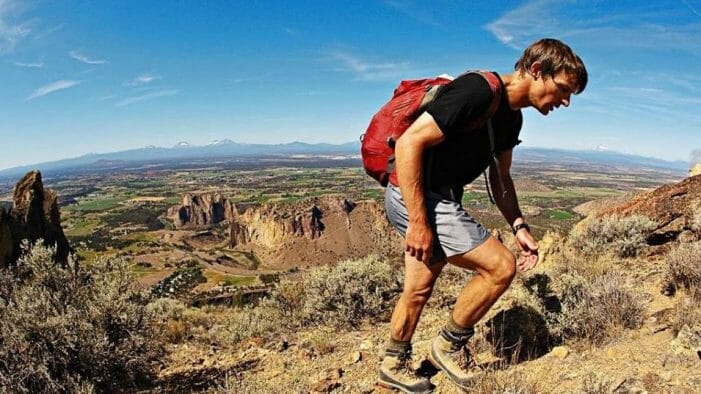
ME training is powerful and fast-acting. It works, and it works quickly—gains of 10 to 20 percent in only a few workouts are common. But those gains depend entirely on the aerobic base underneath them. The higher your aerobic threshold (AeT), the bigger the gains from ME training. This is why we emphasize aerobic capacity so consistently across everything we do.
We recommend that your AeT be within 10 percent of your anaerobic threshold (AnT), measured by heart rate, before beginning an ME program. If the gap is wider than that, you still have significant gains to make by focusing on your aerobic system—gains that will make your eventual ME training more effective.
There is a critical mistake to avoid: the excitement of rapid ME gains leads many athletes to replace their lower-intensity aerobic volume (Recovery, Zone 1, and Zone 2) with ME workouts. If you do this, the gains will be quick, followed first by a plateau and then by a decline in performance. You must maintain your aerobic base volume and add ME training on top of it.
The simplest and most effective method we have found is to add resistance while doing high-intensity (Zone 3–Zone 4) uphill workouts. We use water jugs in a backpack so the water can be dumped at the top, sparing your legs on the descent. (Some climbers benefit from carrying the weight down as well for the stability training it provides, but be aware that this increases knee stress.)
The theory behind this approach is what Verkhoshansky termed “hypergravity.” The extra weight forces your brain to recruit motor units that are not well endurance-trained. These fibers are exposed to an aerobic training stimulus they do not normally receive. Because of their relatively poor aerobic capacity, they become the limiting factor—which is exactly the point. You are targeting the weakest link in the chain.
We recommend doing these sessions in a sport-specific manner. For mountaineers and alpinists, that means hiking steep uphills at grades similar to what you will encounter on your objective. While you could do this on a bike or in a stairwell and see gains, steep uphill hiking maximizes the sport-specific muscle recruitment patterns.

Heart rate will not be a reliable guide during these workouts. The effort may feel like Zone 3, but your heart rate will likely be lower than your normal Zone 3 values, while the muscular effort feels much higher. That is exactly what you are looking for. You want the limitation to come from your legs, not from your breathing.
A practical gauge: you should be able to carry on a conversation while your legs are burning. The effort should feel sustainable but barely so—if you went any harder, your legs would give out within seconds. Finding this intensity requires adjusting the steepness of the hill and the weight on your back. It takes some experimentation, and everyone is different.
Weight. Start with 5 to 10 percent of body weight if you are new to this type of training and relatively new to hard aerobic work. Many fit climbers work comfortably in the 10 to 30 percent range. The progression goal is to reach loads at or above the weight you will carry on your objective.
Steepness. Steeper is generally better. We have had good results on slopes ranging from 30 to 100 percent grade (17 to 45 degrees). At roughly 60 percent grade, you can just reach out to stabilize yourself with your hand while bending slightly forward at the waist. Low-angle hiking trails are not steep enough for a meaningful ME stimulus. Ski poles can be helpful for balance.
Vertical. There is no universal prescription—what might barely register for one athlete could exhaust another. The progression goal is for your final workouts to encompass more vertical and more weight than the biggest day of your upcoming objective. If you are training at low elevation without technical terrain, this target is realistic. If you are training above 3,000 meters, adjustments need to be made.
Steve House used this method in his peak preparation periods on steep slopes and long third-to-low-fifth-class rock climbs where he felt comfortable climbing unroped. Before his attempt on Makalu, he hiked a 1,500-meter ridge near his home in Terrebonne, Oregon, three times in a single morning, each time with 40 pounds of water in his pack. David Goettler has done similar work front-pointing up steep slopes around Chamonix. David Roeske prepared for Cho Oyu and Everest (both without oxygen, within three weeks of each other) by doing laps in tall buildings in Manhattan. The most common barriers to effective training are motivation and imagination.
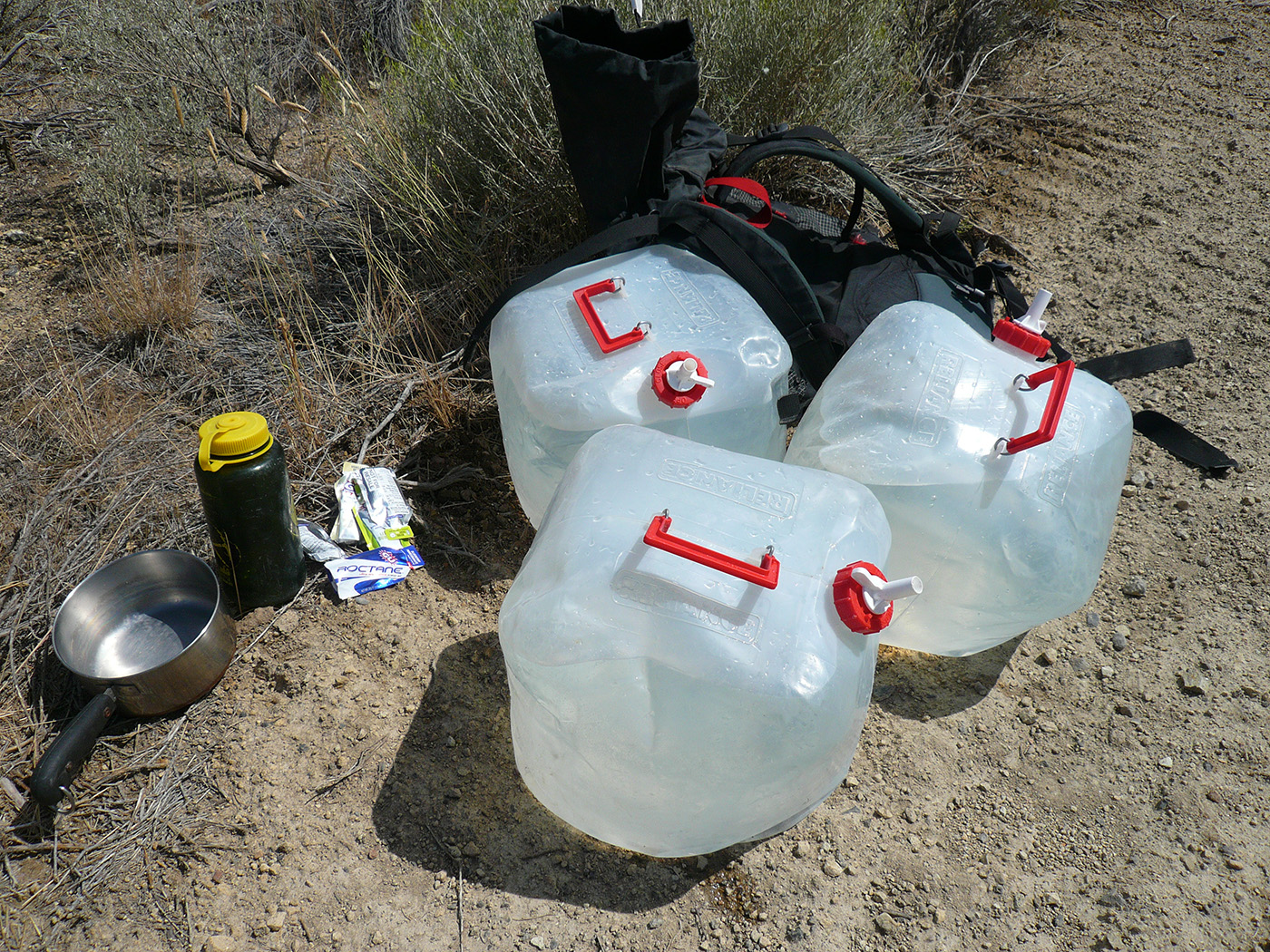
ME training should be used in a structured, progressive manner over the course of 6 to 10 workouts spanning roughly six to eight weeks. One ME session per week is typical. The training stimulus increases gradually as you adapt: progress either the weight or the total vertical in a stairstep fashion, but not both at the same time.
These workouts can be done as continuous Zone 3 efforts or as long repetitions in an interval format. The length of your available hill may dictate whether you do one long push or multiple laps. Both approaches are effective.
Allow at least three days of easy recovery workouts after each ME session as you learn how your body responds to the loading. Due to the duration and heavy muscular demands, fitting additional high-intensity training into the same week is only realistic for athletes with extensive experience in this type of work.
Beginners should be cautious. Athletes who have done this progression before can push ahead more confidently because they know their previous limits. The block is best placed during the late base period and into the sport-specific preparation period.
And once more: you must maintain your aerobic base volume throughout this block. If you replace aerobic training with ME training, you will de-train the system that makes ME gains possible. The aerobic base is the foundation; ME training is what you build on top of it.
Verkhoshansky, Y. Block Training System for Middle Distance Runners.
Kumagai, S. et al. “Relationships of the Anaerobic Threshold with the 5km, 10km and 10 mile Races.” European Journal of Applied Physiology (1982) 49:13–23.Ghosh, A. “Anaerobic Threshold: Its Concept and Role in Endurance Sport.” Malaysian Journal of Medical Sciences Vol 11 Num. 1.