
In his early 20s, Abe T. had much in common with motivated young alpinists: he’d climbed the Grand Teton, Mount Stuart, Pingora, Mount Rainier, and others. His imagination was caught up in stories of fast and light Himalayan expeditions by the likes of Doug Scott and Alex MacIntyre. He wanted to climb in the greater ranges one day.
Then Abe started medical school. He thought life would still offer the possibility of climbing often and maybe even a career as a climbing guide. But med school took over.
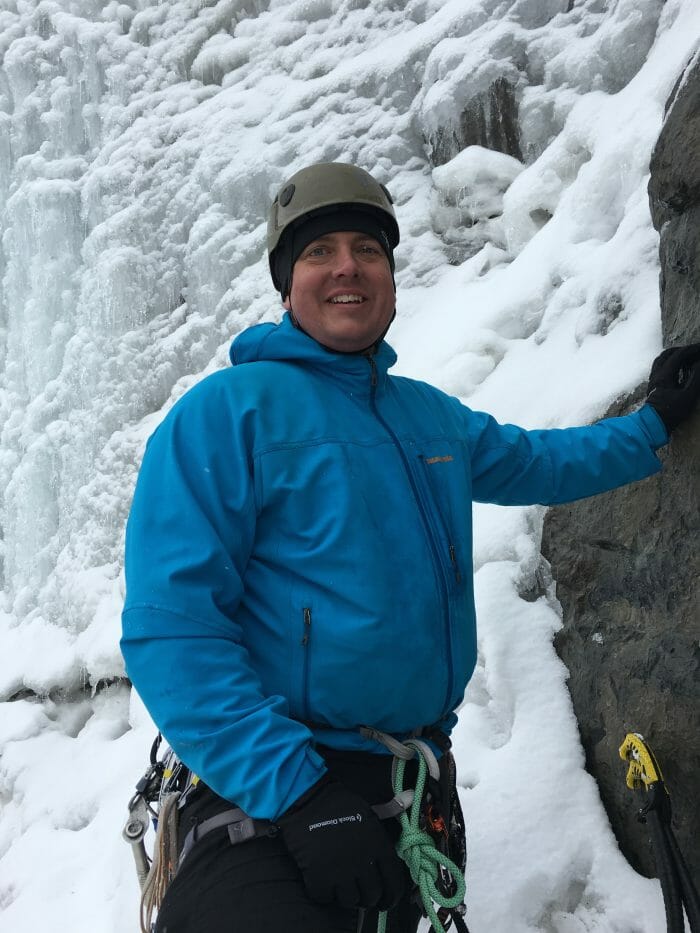
Abe says that each season got progressively worse for him until he had nothing left and was at “rock bottom.” He’d seen great success in his medical career but now weighed over 250 pounds and was getting pumped on 5.6 rock climbs. Abe lamented, “Every aspect of my life was affected by not being in shape. I felt like a beached whale.” The final kicker was when, he says, “I had a soul-crushing experience on Goldrush, an ice climb in Silverton, Colorado.” He called Steve and Scott that very same day hoping to turn his life around.
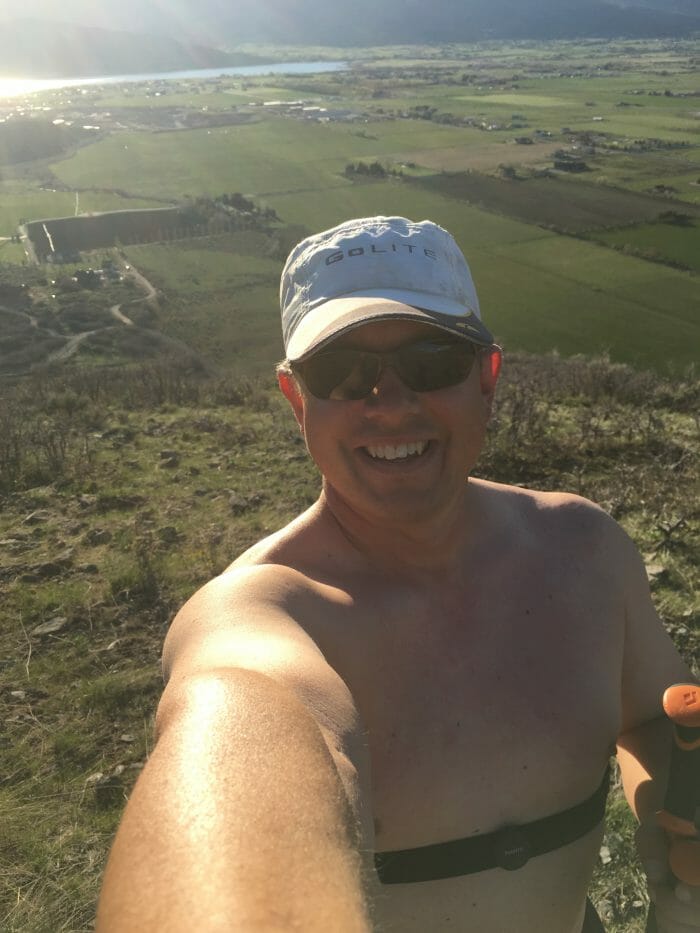
Abe is now 18 months into training with Uphill Athlete. The first year was dedicated to building himself back up and losing weight. Now, in the second year, he says, “It’s all about making climbing part of the goal process.” He says he’s only halfway back to being an “alpinist” but that he feels better now than when he was 23, the year before he started medical school—and, later, an intense residency. He’s especially proud of recent ascents of the Triple Couloirs on Dragontail Peak and the Beyer East Face on the Grand Teton, two alpine routes that were out of his ability until he started to put time into training.
At this point, he averages 14–20 hours a week of training, which involves long eight-plus-hour days out, off-trail hiking with 6,000 feet of vertical gain, thoughtful attention to building core strength, and rock and ice climbing that pushes his endurance and leading ability.
Living in Salt Lake City, Abe mentions that old-school 5.9 and 5.10 trad routes in Little Cottonwood Canyon used to shut him down. Now, those routes are on his regular weekday circuit. “I’ve doubled my performance,” he says, “My confidence has been renewed. I now know one hour into a 15-hour day what my body will do. There’s no fear about the unknown of accomplishing something. I can just focus on the beauty of the climb.”
Abe says the biggest mistake that people make when trying to get back in shape is that “they are all or nothing and burn out. I couldn’t have done it without a coach. I didn’t know how to apply training plans to life itself. I was in an overtrain-and-quit cycle.
Scott and Steve can actually tell you why you’re having good results based on science.
Abe T.
With such a major life turnaround, Abe’s goals are now big again, like they were 20 years earlier, and he’s built the skills to attain them, too—the Direct North Ridge of Mount Stuart, the Ames Ice Hose, Mount Slesse’s Northeast Buttress, Fitz Roy’s Supercanaleta, and a trip to Pakistan top his bucket list for the next two years. However, he adds, “What I really want is to climb 5.10 in crampons.”