
The point of climbing a mountain like Everest is to become the person that can climb Everest.
Training for a Mount Everest expedition demands a meticulous blend of physical, mental, and technical preparation. There is no simple answer to the question “How do you train for Everest?” because preparing for the highest peak on Earth is an extremely complex and individualized process. What we can tell you, from decades of coaching mountain athletes at every level, is that the training is the most controllable aspect of your preparation—and it is the single biggest determinant of whether you succeed safely.
This guide provides actionable advice grounded in endurance physiology and real coaching experience. Uphill Athlete coaches have prepared far more climbers for Everest than all other coaching services combined. This past year alone, our coach Martin Zhor worked directly with 10 Everest athletes and supported another 20 indirectly. What follows is what we have learned about getting people ready for the mountain.
What You Are Really Training For
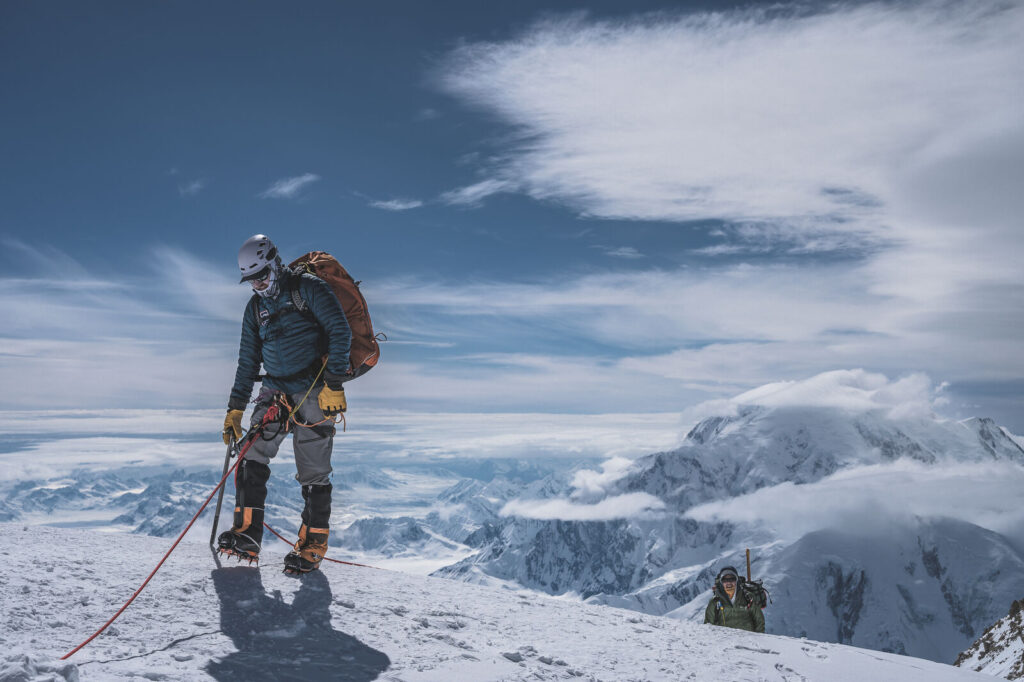
Mount Everest challenges climbers with extreme physical and mental stress over weeks, not hours. Unlike a race or a single-day climb, an Everest expedition involves repeated rotations between base camp and higher camps, each one draining, followed by recovery at a base camp altitude of 5,400 meters—high enough that your body never fully recovers between efforts. Then comes the summit push: a multi-day effort culminating in hours above 8,000 meters in the death zone, where supplemental oxygen only partially compensates for the brutal hypoxia.
Success and safety on Everest depend on a list of performance determinants that goes well beyond aerobic fitness. From our coaching experience, the key factors include: aerobic endurance, uphill speed, fatigue resistance, muscular endurance for the summit push, strength for carrying loads, acclimatization capacity, breathing efficiency at extreme altitude, nutrition and hydration strategy, technical skills, and mental resilience. Each one needs to be assessed, trained, and monitored.
Fatigue makes cowards of us all. On Everest, speed translates directly to safety—the faster you can ascend and descend, the less time you spend exposed to storms, extreme cold, and the death zone. Every aspect of your training should serve that goal.
When Should You Start Training for Everest?
The minimum effective training period for Everest is six months before the expedition starts. Eight to nine months is significantly better. Twelve months is what we recommend for most athletes. Three years is ideal.
These timelines are not arbitrary. Endurance adaptations—the aerobic base, capillary density, mitochondrial development—take months of consistent training to build. Strength training must progress through general, max strength, and muscular endurance phases, each requiring weeks. Hypoxic conditioning requires 8 to 12 weeks on its own, and in the final 6 to 8 weeks of pre-acclimatization, the simulated sleeping altitudes are high enough that physical training, sleep, and recovery are all compromised. That means your peak training volume must happen before the hypoxic conditioning phase begins, which pushes the training start date even earlier.
We have heard from long-time Everest outfitters that the fitness of climbers arriving at base camp has declined significantly over the past decade. Do not leave this to chance. The sooner you start, the more prepared you will be.
The Fitness Fundamentals
Aerobic Capacity
Everest climbing is predominantly an aerobic activity, relying on your body’s ability to use oxygen efficiently over extended periods. Building the capacity to go uphill for many hours—whether on trails or a treadmill—is by far the most determining aspect of Everest preparation. Do not call it “cardio.” It is endurance, and it is built through high volumes of low-intensity training over months.
Our coaches aim for athletes to achieve uphill speeds of 500 meters of gain per hour or more while staying in Zone 2. This is comparable to cycling power output as a benchmark—it tells us the athlete’s aerobic engine is strong enough to sustain the demands of the mountain.
Get a professional assessment of your aerobic fitness to establish your training zones. This is a small investment compared to the time and expense of an Everest expedition, and it will have an outsized impact on your success.
Strength Training
In mountaineering, speed is strength. From core stability to leg power, every aspect counts when you are carrying loads at extreme altitude for days on end. A well-structured strength program progresses through three phases: 8 to 12 weeks of general strength, a transition to low-rep, high-load max strength building, and then at least eight weeks of muscular endurance training. Periodization of strength training works, and you will want professional guidance through it.
Begin training without a weighted backpack and only introduce weight after building a base fitness level. Increase the weight progressively, never exceeding 20 to 25 percent of body weight for aerobic base training. The two most common mistakes we see are starting training too late and adding weight too quickly, causing injury.
Muscular Endurance
You can think of your entire training program as getting you in shape for muscular endurance training. These workouts are the specific preparation for what Everest actually demands: sustained steep uphill effort carrying weight that causes local muscular fatigue in your legs without overwhelming your cardiovascular system.
But if you skip the buildup and jump straight to heavy steep weighted carries, you will get injured. The minimum time we have seen athletes build up to be functionally ready for this type of training is 16 weeks. You will want at least eight weeks of dedicated muscular endurance work before your expedition.
Think you are fit enough for Everest right now? You should be able to complete the first workout in our muscular endurance progression with ease. If it was hard, start training.
Form and Technique
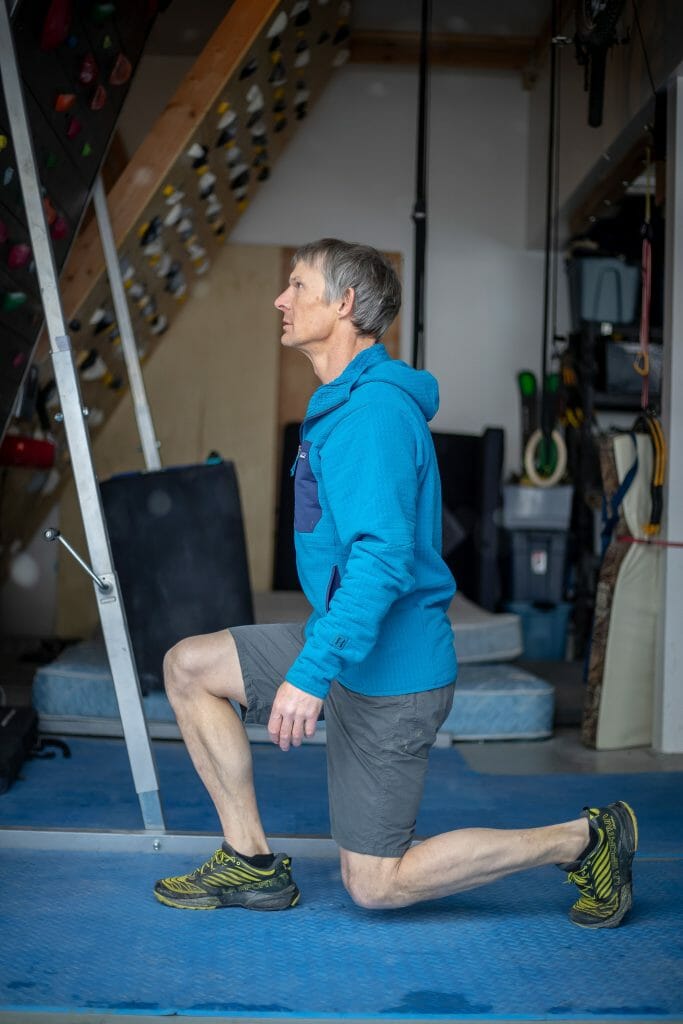
Efficient movement over rugged terrain conserves energy and reduces fatigue. This skill is honed only by spending time on similar terrain. Proficiency with crampons, ice axes, and fixed ropes must become second nature before you arrive at base camp. Efficient technique at altitude—when your brain is hypoxic and your coordination is degraded—depends on having automated these skills in training.
The Cardinal Principles of Endurance Training
Consistency. Train regularly without long breaks. This is the most important principle. You must be fit enough that you can train six days a week.
Gradual Progression. Increase training loads gradually. Building fitness takes time, and there are no shortcuts. Start early enough that you never have to rush the progression.
Modulation. Balance hard and easy weeks to allow recovery and adaptation. Every third or fourth week should be a lighter training week. A professional coach will use tools like TrainingPeaks to monitor both your training load and your recovery.
Individualization. Every athlete has unique strengths and weaknesses. Metabolic fitness precedes musculoskeletal adaptation—your cardiovascular system will be ready before your tendons and joints are. A coach must continuously assess your status and set realistic expectations about how much training you can absorb with the time you have. The golden question is always: will it be enough to climb Everest?
Acclimatization and Hypoxic Conditioning
Acclimatization is one of the most important success factors on Everest and it varies enormously between individuals. Some athletes perform well at altitude. Others struggle despite being highly fit at sea level.
Assessing Your Altitude Response
Before designing an acclimatization strategy, it is important to review your history. Past high-altitude experiences—Kilimanjaro, Aconcagua, other 8,000-meter peaks—provide valuable data about how your body responds. Hypoxia testing using hypoxic generators or chambers can give a more objective picture. Observing your recovery, sleep quality, and physiological markers at simulated altitude helps predict how you will respond on the mountain.
Hypoxic Conditioning
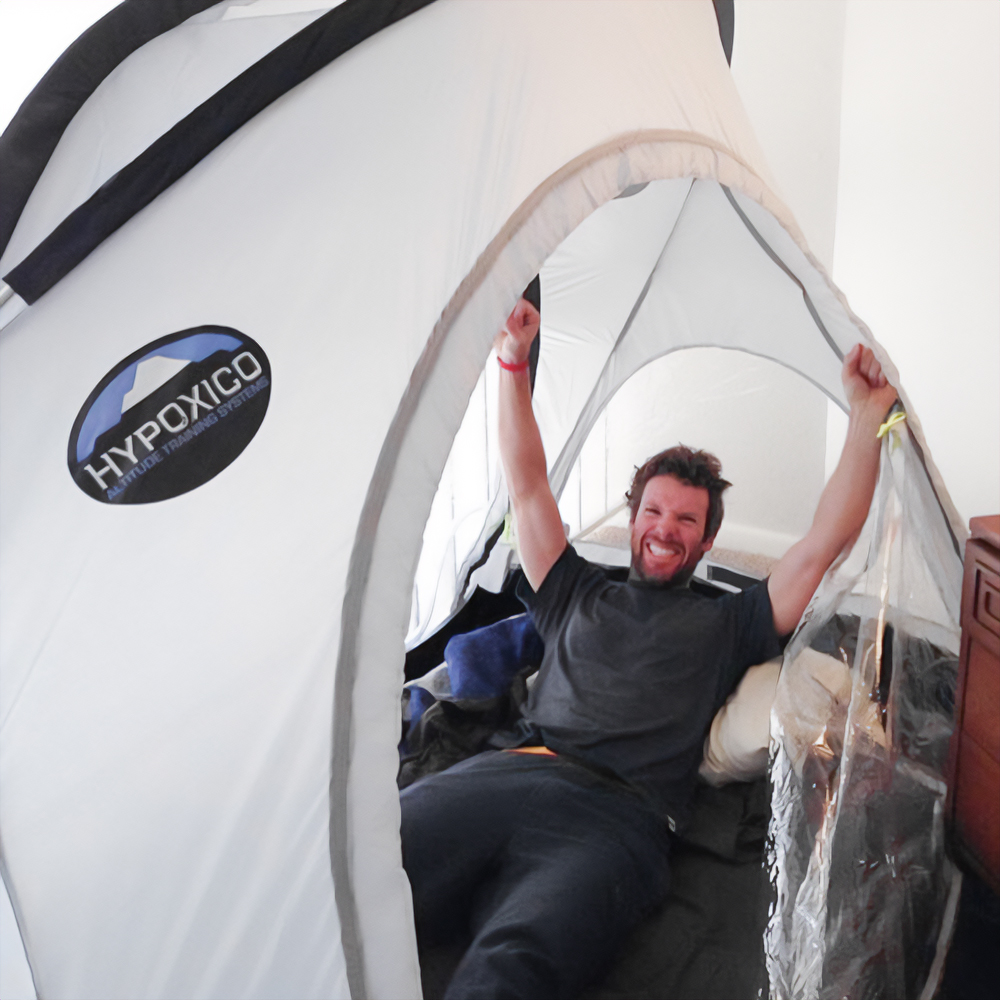
Current best practices call for a minimum of 400 hours of normobaric hypoxia via a mask and/or sleeping tent, building up to simulated sleeping elevations of 6,000 meters (18,000 feet). You need to factor in at least 12 weeks for this.
The science has consolidated in favor of normobaric hypoxia. While the adaptations are not entirely identical to real hypobaric hypoxia at actual altitude, pre-acclimatization allows for shorter expedition durations, faster and safer logistics, and a stronger ability to resist the infections and illnesses that frequently derail performance on Everest. It can support fast or flash ascent strategies that complete the climb in 3 to 5 weeks instead of the traditional 8 to 9.
The critical planning consideration: in the final 6 to 8 weeks of hypoxic conditioning, you will be sleeping at such high simulated altitudes that your physical training, sleep, and recovery are all compromised. This means your taper effectively begins much earlier than the traditional 10 to 14 days before departure. Our coaches have developed a system that adapts the taper period so you maintain fitness while sleeping at progressively higher simulated altitudes.
Acclimatization Strategies
Modern Everest preparation uses a combination of approaches: real mountain climbs prior to the expedition, home-based pre-acclimatization using hypoxic tents, and various combinations of live-high/train-low and live-high/train-high protocols. The impact of sustained hypoxia exposure is significant—it leads to reduced recovery capacity, poor sleep quality, and oxidative stress—but done correctly, it builds the tolerance to extreme altitude that you will need above 6,000 meters.
Breathing at Extreme Altitude
Breathing mechanics and respiratory muscle strength are often overlooked in Everest preparation, but they can be critical to performance and safety above 6,000 meters. At extreme altitude, lower atmospheric pressure means inhalation becomes harder and the muscles of respiration work significantly harder than at sea level.
Deep vs. Shallow Breathing
Deep diaphragmatic breathing uses the diaphragm to draw air into the lower lungs as the belly expands. This increases oxygen uptake and supports endurance, focus, and recovery. It is the breathing pattern you should be training as your default.
Shallow apical breathing uses the upper chest and neck muscles to draw air only into the top of the lungs. It is a less efficient breathing pattern that becomes the default under stress, fatigue, or poor posture. At altitude, where oxygen is already limited, shallow breathing compounds the problem.
Training your breathing mechanics before the expedition—practicing diaphragmatic breathing until it is automatic, building respiratory muscle endurance and strength—pays dividends when every breath matters.
Sleep Breathing at Altitude
One of the most disruptive aspects of sleeping at altitude is central sleep apnea—the brain intermittently pauses breathing during sleep because low oxygen triggers over-breathing, which drives CO2 levels too low. The brain responds by pausing respiration until CO2 rises again, creating a cycle of interrupted sleep that degrades recovery.
Breathwork techniques—slow nasal breathing, diaphragmatic breathing practice, and breath-hold training to improve CO2 tolerance—can help stabilize nighttime breathing and support better sleep quality at altitude. While not a replacement for medical intervention in severe cases, regular breathwork practice is a useful tool for acclimatization and recovery.
Mental Training for Everest
Consistency in physical training is the number one way to build mental toughness. Confidence in your fitness and skills is what allows you to handle the stresses of an Everest expedition—the cold, the fatigue, the uncertainty, the long stretches of waiting at altitude with nothing to do but think.
Martin Zhor, reflecting on his athletes’ experiences this past season, put it plainly: there is a lot of time on your hands when you are up there. Time to think, overthink, and sometimes spiral into anxiety or doubt. Most athletes he coached had to deal with some form of infection. The mental load of managing illness, uncertainty, and discomfort over weeks—while still needing to show up physically and mentally focused for the summit push—is enormous.
The ability to deal with adversity is absolutely critical. Being able to arrive at summit day mentally focused and emotionally grounded, without having drained your mental reserves through weeks of worry, is as important as arriving physically strong. Mental fatigue can be just as damaging as physical fatigue.
Developing coping tools, practicing visualization, and building emotional awareness should be part of your preparation. These are not soft skills. They are performance skills, the same way breathing technique and muscular endurance are performance skills.
Strategy and Pacing on the Mountain
As coaches, our influence on how the climb is organized is limited once the athlete is on the mountain. But we try to ensure our athletes go with outfitters that have reliable plans, especially around rotations and summit pushes.
The reality is that these climbs are not always predictable. Weather shifts, conditions deteriorate, and suddenly your summit window opens earlier than expected. That can mean going when you are not fully recovered, after a bad night of sleep, or in a compromised state. Sometimes pacing goes out the window because of crowding on the route.
Rotations up to the higher camps are demanding and very draining, especially when rest and recovery back at base camp is limited by the altitude. Everest Base Camp at 5,400 meters is high enough that your body is under stress continuously. After several weeks, this constant low-grade hypoxic stress accumulates. The entire process taxes body and mind.
This is why the preparation matters so much. You cannot control the mountain. You cannot control the weather. You cannot control the crowds. What you can control is showing up at base camp with the fitness, the acclimatization, the mental resilience, and the technical skills to handle whatever the mountain gives you.
What Does It Actually Take?
Your physical capacity must be at its peak. The earlier you begin your preparation, the better, because meaningful adaptations take time. There is no single number or metric that can tell you if you are ready. It is not that simple.
Instead, we use a set of key performance indicators that group the capacities needed to succeed: endurance, uphill speed, fatigue resistance, strength, recovery, nutrition strategy, acclimatization, breathing capacity, and mental resilience. We test and train these systematically. This gives us a realistic, actionable plan that maximizes your chances of success.
A practical training summary:
Aerobic self-assessment. Determine your heart rate training zones through proper testing.
Aerobic training. Four to five days per week of predominantly Zone 2 training, building volume gradually.
Strength training. A progressive, periodized strength routine twice per week, progressing from general through max strength to muscular endurance.
Hypoxic conditioning. 8 to 12 weeks of pre-acclimatization, accounting for the impact on your training taper.
Re-testing. Reassess your training zones every eight weeks.
Breathing training. Develop diaphragmatic breathing and CO2 tolerance before the expedition.
Mental preparation. Build coping tools and emotional resilience through consistent training and deliberate practice.
Embrace the Journey
Sometimes, despite your best effort, the summit does not happen. We want to mention this, because we mostly hear the success stories. But turning around and going home safely is not failure. Sometimes it is the bravest and wisest decision you can make. In mountaineering, there are no losers—only people who show up and give everything they have to a mountain that demands respect, patience, and humility.
The point of climbing Everest is to become the person who can climb Everest. Consistent, progressive training is the cornerstone of that transformation. Start early. Be patient. Build each phase. The better you understand your own strengths and limiters, the more clearly you will understand why you are training.
Everest is possible. But it demands your best. Our job is to make sure you are ready—not just to climb, but to endure, adapt, and come home safely.
Train smart, climb well, and embrace the journey.
For personalized coaching, reach out to us at coach@uphillathlete.com or explore our Everest preparation options.