
A successful high-altitude expedition depends on many factors. Fitness is the one factor completely under your control, and if you are reading this, you have likely invested significant time preparing for your climb. Congratulations. Now comes the part that training alone cannot teach you: how to manage yourself on the mountain so that all that preparation actually pays off.
Among the Uphill Athlete coaching staff, we have over 45 successful Denali ascents, more than twenty expeditions to 8,000-meter peaks, and many more trips to peaks of 7,000 meters and below. That experience has taught us that expedition success comes down to three principles:
Control what you can control. Your fitness, your hygiene, your pace, your attitude, your nutrition, your sleep. These are within your power. Everything else—weather, conditions, other people—is not.
Take the long view. Orient every decision toward being strong at the end of the trip, not the beginning. The hardest and most important days come last.
Work to be in the right place at the right time. Patience, pacing, and preservation of energy are what put you in position to take the shot when the weather window opens.
What follows is everything we have learned about putting those principles into practice.
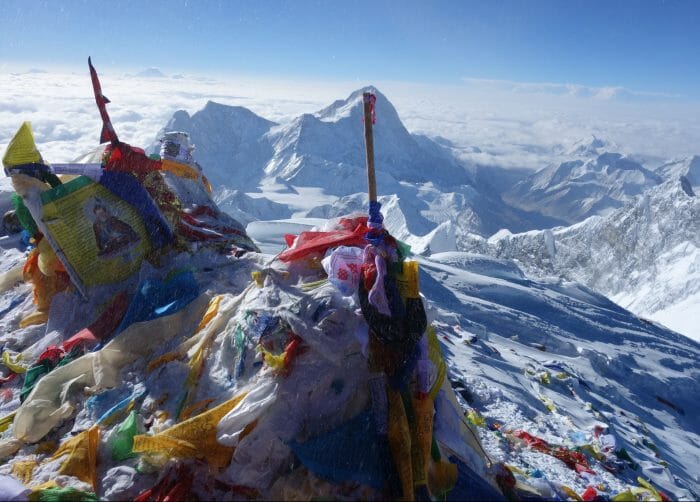
In the final two weeks before your trip, understand this: you are as fit as you are going to be. The training is done. The money is in the bank. There is nothing you can do in the last 14 days to meaningfully improve your fitness, and attempting to cram in extra workouts will only accumulate fatigue and suppress your immune system.
Stay active. Walk around. Do some gentle yoga and stretching. Get as much sleep as possible. Your body is accustomed to a daily dose of exercise, so light movement is fine. But do not try to build fitness during the travel phase, and especially not at altitude. The purpose of your prolonged training program was to make your fitness bank account as large as possible so you can make withdrawals from it for many weeks without bouncing any checks.
The journey to base camp is where more expeditions are lost than most people realize. Illness contracted during travel or the approach trek is one of the principal causes of failure to summit. The Khumbu especially is heavily traveled, with thousands of people from all over the world carrying all manner of germs, and sanitation may be poor.
Carry hand sanitizer and use it constantly. Minimize physical contact with other people. This is not paranoia—it is risk management. Deep fatigue from the preceding months of training will have depressed your immune system, making you far more susceptible to illness.
Consider wearing a mask when you are in tight spaces with a lot of strangers, especially if you notice anyone who appears sick. If someone asks, tell them you have a cold and do not want to get others sick.
This cannot be said enough times: do not push your pace during the approach to base camp. You will not gain fitness. You will jeopardize your health and your summit chances. We ask our coached athletes to wear their heart rate monitors during trekking days and to stay below their Aerobic Threshold. If you do not want to wear a monitor, simply keep to a comfortable talking pace. Do not look at David Goettler’s Strava segments and become tempted to compete with his times.
Resist the urge to carry a heavy pack. Carry the minimum weight necessary. The less you stress yourself during the approach, the easier time you will have acclimatizing and the better you will be setting yourself up for success later.
Have a plan for your mid-trek rest day. Gentle yoga, an easy stroll for 30 to 60 minutes, a crossword puzzle. Never run on your rest day.
The trek in is not just logistics. It is the most important mental transition of the expedition. In the modern era of fast travel, it takes time for your mind to catch up with your body. This is the big reason we are not fans of speedy approaches with helicopters and shortcuts.
Slow down. You are on mountain time now. Storms take days to pass. Conditions may take weeks to improve. Patience is one of the greatest virtues of an expedition climber, and it starts here, on the approach.
Connect with your partners. Spend time building trust and communication with the people you will be climbing with. Help them pitch a tent. Go out of your way to share in the collective work. These simple things have enormous effects on the outcome of your climb. The quality of your relationships with your expedition partners is as important as your fitness.
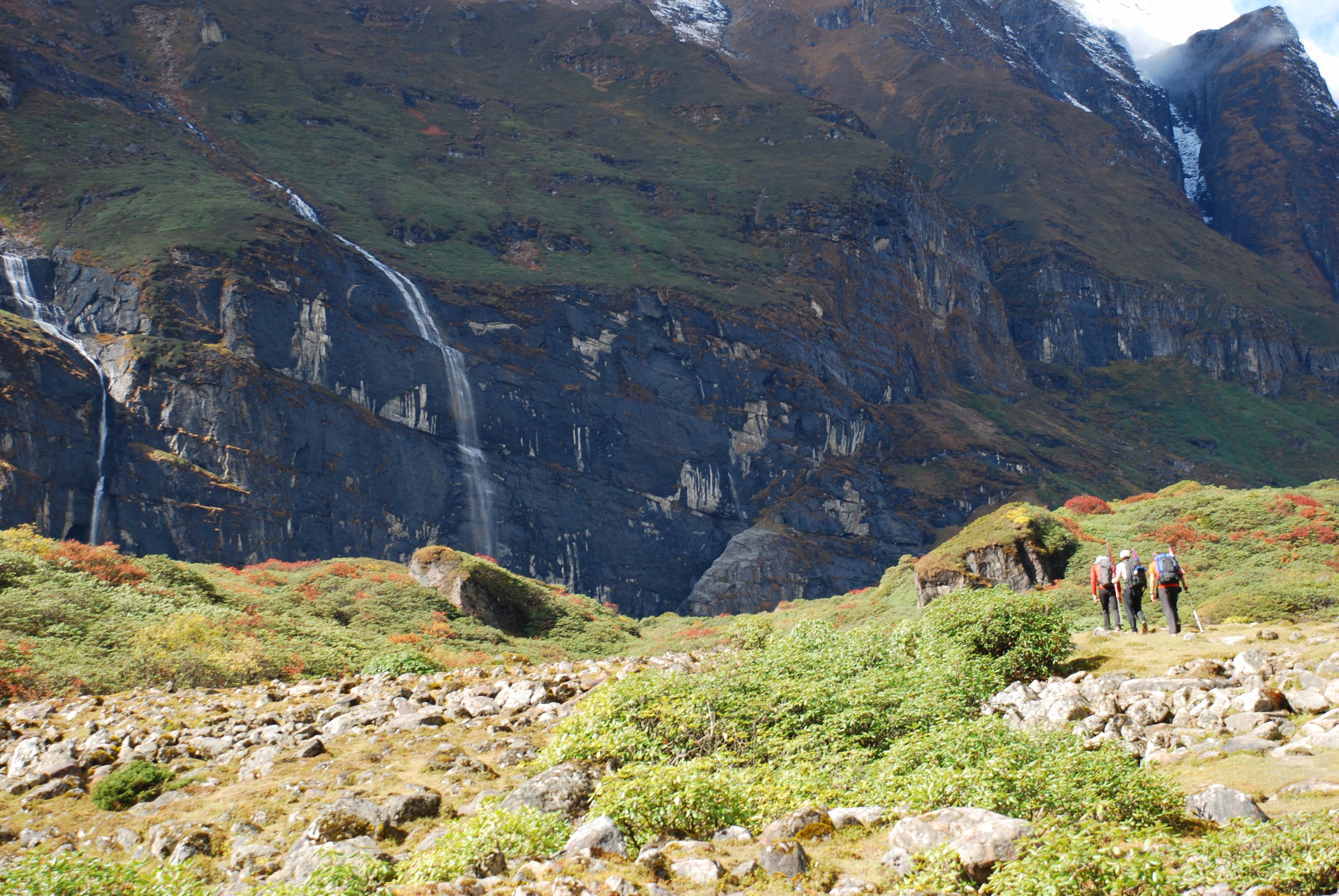
This is not the place to state the obvious, but knowing your gear well genuinely contributes to success. Every fumbled crampon strap, every unfamiliar layering decision, every moment spent figuring out a piece of equipment at altitude is energy you cannot afford to waste.
Be good on your crampons. Do not let the first time you put on crampons be day one above base camp. Practice until crampon movement is automatic.
Wear broken-in footwear. Never bring brand-new, unworn mountaineering boots to base camp. You will not know the right sock combination, the right lacing tension for balancing fit and circulation. New boots on a big climb are a recipe for serious foot problems.
Have a tested glove system. Three pairs is the minimum: light, medium, and mittens. Lose your hands and you lose your life. Gloves are among the most important pieces of equipment you carry.
Spend training time on steep, rough ground. During your preparation, get off trails and onto terrain that resembles what you will encounter on the mountain—scrambling, loose rock, uneven surfaces. Time in these places pays dividends in movement efficiency on the expedition.
Adopt a minimalist mentality. You have to carry everything. A good rule of thumb is that every piece of gear should serve multiple functions. Know every item you carry and how to use it without thinking.
High-altitude climbing is a game of preparation and patience. Or to put it another way: being in the right place at the right time, for the right reason. The only important days are the days leading up to summit day, summit day itself, and getting back down safely. The weeks leading up to the summit push are not critical in themselves—but they provide numerous opportunities to fail.
Your goal during the acclimatization period is to go as slowly as is reasonable. Stay at a conversational pace. You may experience competition among teammates to see who carries the most weight or who gets from Camp 1 to Camp 2 the fastest. Do not get drawn into this. It is a trap that has derailed more expeditions than bad weather.
Your goal is to fulfill your responsibilities to the team, conserve as much energy as possible, and have that energy available for the summit push. Higher-intensity effort at altitude results in dramatically longer recovery times than the same effort at sea level. Overexertion during acclimatization can doom your climb. The more energy you conserve early, the more you will have when it counts.
Your appetite will fluctuate significantly over the course of the expedition. This is normal. Eat well when you can. When your appetite is suppressed, force yourself to eat something—an energy bar, a gel, liquid calories like a sports drink or recovery mix. Some food is always better than none. As soon as you pull into camp, get water and food in your body before doing anything else. Dry roasted, unsalted cashews are a personal favorite.
Sleep is your body’s most important recovery mechanism. Create a healthy sleep routine and stick to it. Get on a schedule. Read. Breathe. Try to avoid checking on work or solving problems back home. Mental peace is the first step to relaxation, and relaxation is the first step to sleep.
Avoid sleeping pills that act as respiratory depressants, which includes most popular prescription sleep medications. Melatonin is a natural, proven, and safe alternative.
Your acclimatization and endurance capacity will benefit enormously from improved sleep.
There will be considerable inactivity on this trip. Much more than you are used to at home. That is part of high-altitude climbing. You cannot speed acclimatization, and you cannot improve your fitness once the expedition starts. Do not exercise vigorously on rest days in hopes of slowing the inevitable decay of your fitness. If you are restless, do gentle yoga or take a walk. The reason you invested in a prolonged training program is so your fitness bank account is large enough to sustain withdrawals for many weeks.
One of my favorite base camp practices: set up a large pot of hot water, place your face over it with a towel draped over your head, and breathe. Start by inhaling through your mouth and exhaling through your nose. The goal is to clean and moisturize your sinuses, which will be dry from the altitude. Above base camp, carry a small bottle of saline nasal spray for the same purpose. Keeping your sinuses clean and open helps prevent illness and improves both breathing and sleeping.
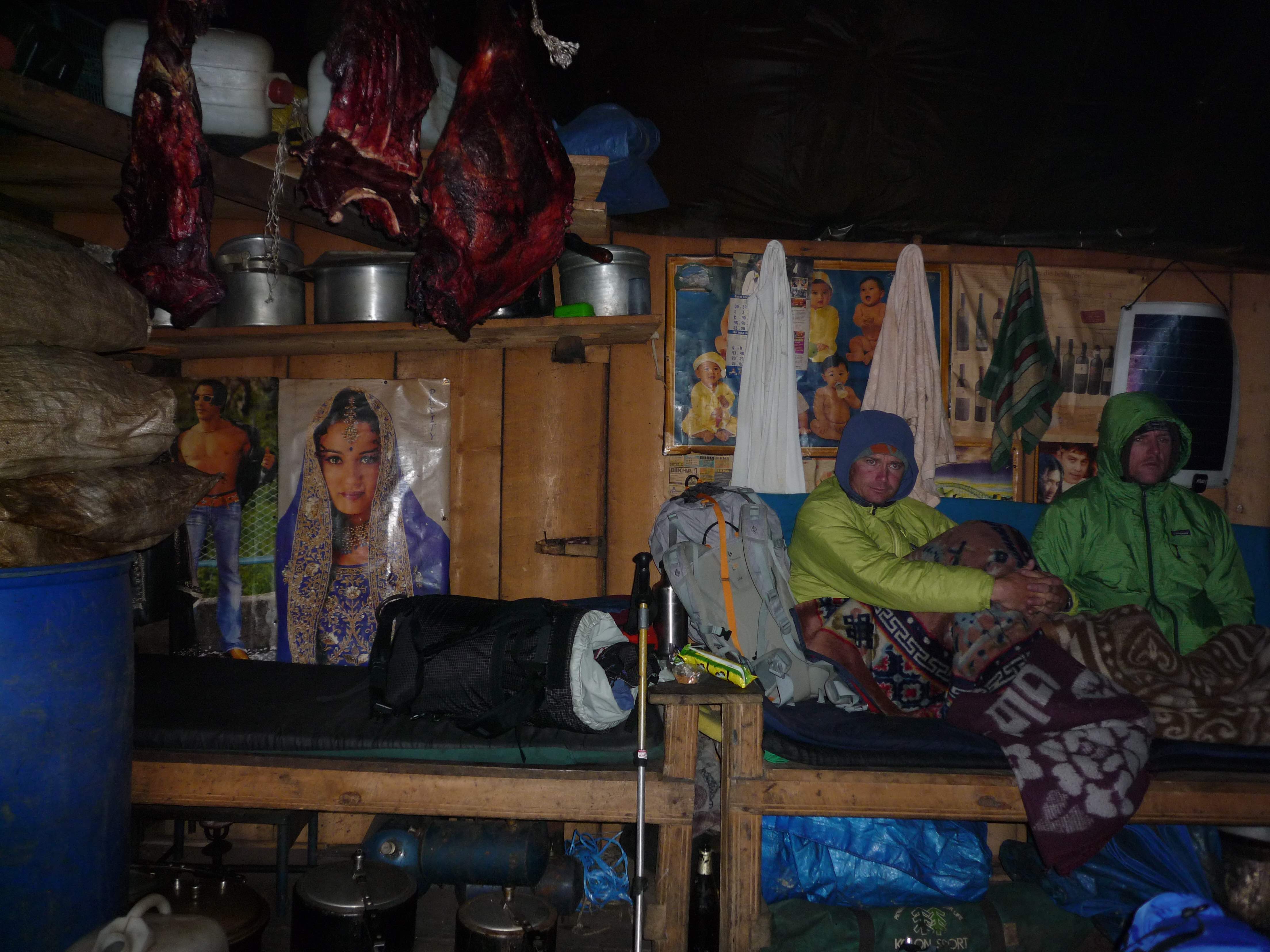
Our single biggest tip for expedition success? Cut the cord.
It is our observation that climbers who are constantly staying in contact with friends, family, and work while on an expedition are the least likely to succeed. You need to get your head in the mountain-climbing game and keep it there. That is very hard to do if you are texting and calling all the time.
Explain this to the people who feel they need more communication during your trip. Tell them—truthfully—that you are much safer if you can clear your mind of other concerns and concentrate on the risks and tasks at hand. If you need to communicate with someone, communicate with your climbing and expedition partners. They are vital to your success, and investing in those relationships has an immediate impact on your trip.
Keep in mind that the hardest and most important days come toward the end of your trip. Orient all of your decision-making toward being strong when those days arrive. This means focusing on pacing and recovery throughout—not just during the climb, but during every day of the expedition.
Go prepared to eat well every day. Go prepared to sleep well at base camp every night. Go prepared to stave off boredom—catch up on your reading list. Do not make plans to leave early. If you do, you will use them. Make plans to stay the entire duration. You are most able, and most likely, to summit in the final days. Leaving early because a weather forecast looks poor is not a good strategy. Mountain weather forecasting is unreliable at best.
Never forget that you miss 100 percent of the shots you do not take. Work hard to give yourself every opportunity to be in the right place at the right time. We have often seen climbers head up to high camp with a less-than-stellar forecast and succeed because they took the chance and did everything they could to be in position for a short weather window. And if the window does not materialize, you will have the lifelong satisfaction of knowing you did everything in your power.
Minimizing your chances of becoming ill, going slowly, sleeping as much as possible, and being patient are simple, tried-and-true ways to ensure that you get to put your hard-earned fitness to the test on your high-altitude climb.
Remember the time-tested maxim of successful expedition climbing:
First: Come back safe. Second: Come back friends. Third: Get to the summit.
Best of luck. We are pulling for you.