
A typical Mount Everest expedition takes approximately two months from arrival at base camp to return. After acclimatizing over several weeks of ascending and descending between camps, the final summit push and descent take 5 to 6 days. The length of the expedition is driven almost entirely by acclimatization—the slow, necessary process of adapting your body to function at extreme altitude where oxygen levels are a fraction of what they are at sea level.
This article walks through the camp-by-camp timeline on the South Col route, explains what is happening physiologically as you acclimatize, and covers the altitude-related risks that make rushing this process dangerous.
The path to the summit via the South Col route is divided into a series of camps at increasing elevations. After reaching South Base Camp (17,598 ft / 5,364 m), climbers spend several weeks ascending and descending between camps to acclimatize and move food, equipment, and climbing gear into position for the final summit push.
Base Camp to Camp I (~20,000 ft / 6,100 m): 2 to 4 hours. This leg requires navigating the Khumbu Icefall, the collapsed foot of the Khumbu Glacier, which is one of the most technically demanding and objectively dangerous sections of the climb.
Camp I to Camp II (~21,000 ft / 6,400 m): 6 to 8 hours, depending heavily on fitness level. Camp II marks the beginning of the final acclimatization phase. Food and equipment continue to be ferried between camps during this period.
Camp II to Camp III (~23,000 ft / 6,800 m): 2 to 3 hours of climbing. Camp III is the last point at which meaningful acclimatization occurs, because Camp IV sits in the death zone.
Camp III to Camp IV (~26,000 ft / 8,000 m): This altitude earned its name because the partial pressure of oxygen is so low that the human body cannot sustain itself for extended periods. Most climbers rely on bottled oxygen to survive and rest at this camp.
Camp IV to the summit (29,032 ft / 8,849 m): 4 to 8 hours, given the extreme altitude. This is the most physically demanding phase of the climb. After reaching the summit, climbers spend only a few minutes before beginning the descent. While it is possible to descend to base camp from the summit in a single push, most expeditions spend another night at Camp II or III before completing the descent the following day.
The descent is widely considered the most dangerous part of the climb. The cumulative physical toll of nearly two months at high altitude, combined with prolonged time in the death zone at extremely low temperatures, can cause climbers to become confused, delirious, and unable to reach shelter. After returning to the lower camps, the risk decreases significantly—by this point you are well acclimatized to the altitudes between Camp I and base camp.
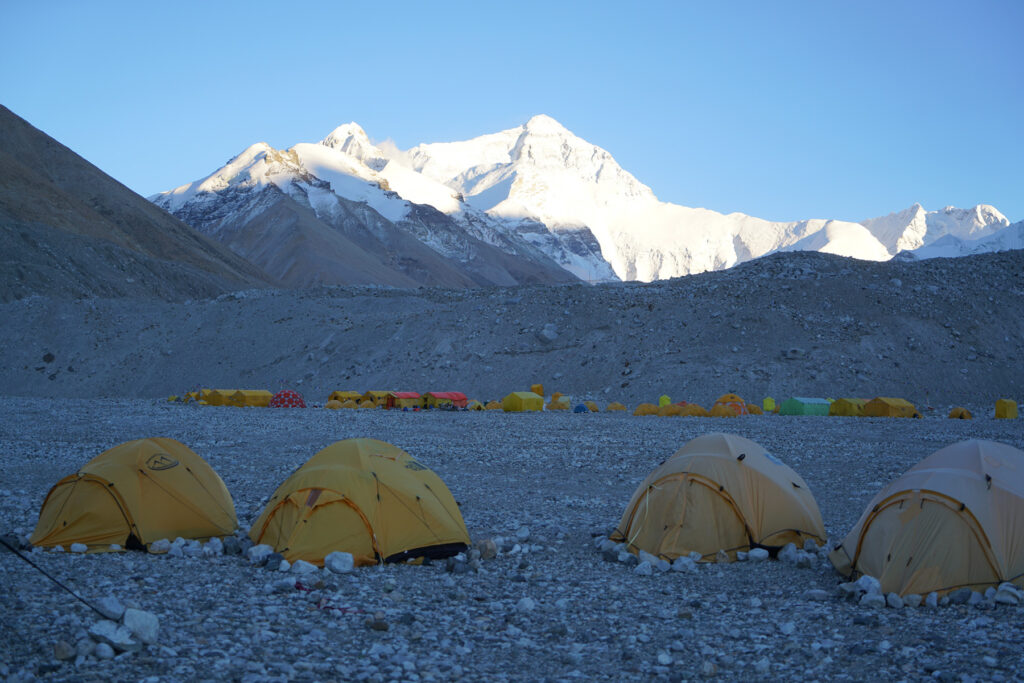
The length of the expedition is driven by acclimatization. To put this in perspective, both base camps sit above 16,900 feet (5,150 m). The vast majority of the world’s population lives well below what is considered moderate elevation (5,000–8,000 ft / 1,524–2,438 m). For many people, altitudes of 11,000 to 14,000 feet (3,350–4,270 m) are already physically challenging. Simply hiking to Everest Base Camp puts you well above the altitude at which altitude sickness symptoms can begin.
The weeks of ascending and descending between camps serve a specific physiological purpose: they give your body time to make the adaptations necessary to function at progressively higher elevations. This process cannot be compressed. Rushing it dramatically increases the risk of life-threatening altitude illness.
Physical fitness helps with performance on the mountain, but it does not prevent altitude sickness. A sedentary person might experience no symptoms while a trained marathon runner struggles to spend a night above 13,000 feet. Fitness and altitude tolerance are related but separate qualities. Slow, steady acclimatization remains the only reliable method for managing the possible onset of altitude sickness.
As you move higher, the partial pressure of oxygen in the atmosphere decreases. There is less oxygen available for your body and muscles to use. Your blood becomes less saturated with oxygen, and you move closer to your physiological ceiling—the point at which your body’s demand for oxygen outstrips what the atmosphere can supply. Without supplemental oxygen, most people on the summit of Everest would feel as though they have been asked to sprint without stopping, simply because there is not enough oxygen available to sustain normal function.
Your body responds to this oxygen deficit through a cascade of adaptations that occur over days to weeks:
Immediate responses: Your breathing rate increases involuntarily to take in more oxygen per breath. Your heart rate rises as the cardiovascular system works harder to circulate oxygen-rich blood. These responses begin as soon as you reach altitude.
Short-term adaptations (hours to days): Increased urination reduces blood plasma volume, which concentrates the red blood cells you already have, allowing more oxygen to be carried per unit of blood. This is often one of the first signs athletes notice at moderate altitude.
Longer-term adaptations (weeks): Your body produces more red blood cells, permanently enhancing oxygen transport capacity for as long as you remain at altitude. Mitochondrial density increases. Aerobic enzyme activity improves. Muscles adapt to use oxygen more efficiently. These are the deep adaptations your expedition guides are trying to develop before making a summit bid.
These adaptations are not permanent. Once you return to lower altitude, the gains begin to fade over the following weeks. A few populations, notably the Sherpa people of Nepal, are born with and retain high-altitude adaptations at sea level—the product of many generations of living at elevation. These genetic advantages cannot be replicated through acclimatization, but they are not required to climb Everest. What is required is enough time for your body to make the adaptations it can.
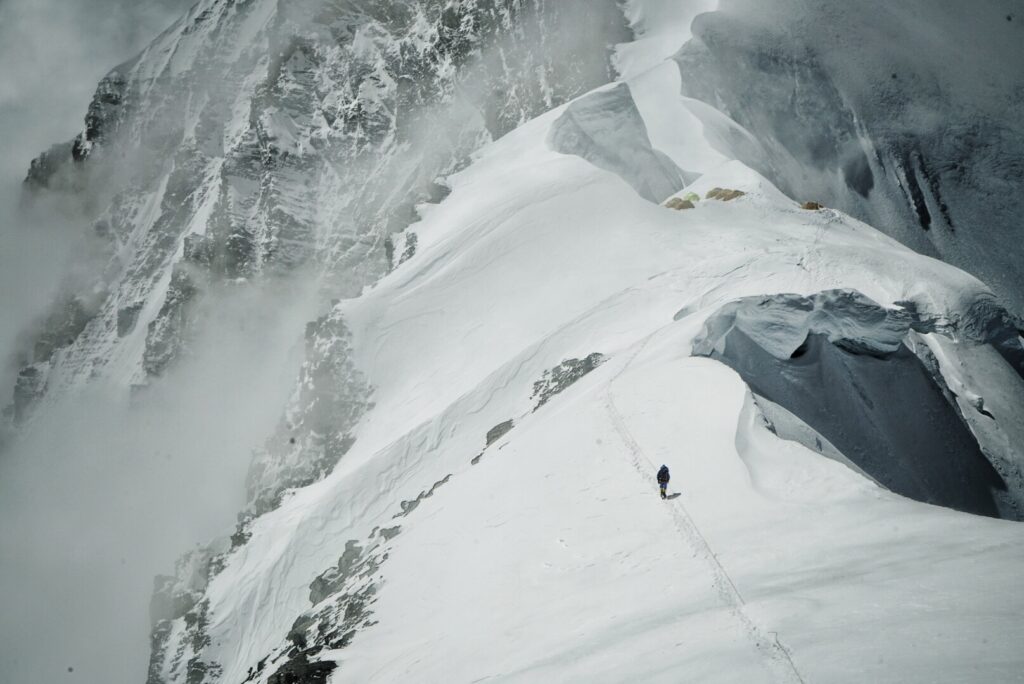
Failure to acclimatize properly can lead to two forms of acute altitude sickness, both of which can be fatal.
High Altitude Pulmonary Edema (HAPE) involves fluid buildup in the lungs. Symptoms include shortness of breath, persistent coughing (potentially producing fluid), and chest tightness. HAPE can occur at elevations as low as 8,200 feet (2,500 m). It is fatal if untreated. The only effective treatment is descent.
High Altitude Cerebral Edema (HACE) involves swelling of the brain caused by hypoxia. Symptoms include confusion, loss of coordination, and hallucinations. HACE generally occurs above 13,000 feet (4,000 m) and can be fatal within hours. Rapid descent and medical intervention are essential.
Altitude sickness affects people unpredictably. Previous experience at altitude does not guarantee the same response on a future expedition. The only reliable preventive measure is a slow, controlled ascent profile with adequate time at each elevation to allow adaptation to occur. This is why the expedition takes two months.
The two months on the mountain cannot be shortened, but how prepared you arrive at base camp determines how well you handle the demands of the expedition once acclimatization begins. There is a well-established correlation between aerobic capacity and the ability to perform at higher altitudes. A strong aerobic base allows you to sustain output during long climbing days, recover more effectively between efforts, and maintain the physical resilience needed across weeks of cumulative fatigue.
Beyond aerobic fitness, the physical demands of an Everest expedition include carrying heavy loads on steep terrain for hours (requiring muscular endurance), maintaining strength and coordination at extreme altitude (requiring a well-developed max strength foundation), and tolerating weeks of caloric deficit, poor sleep, and cold exposure (requiring overall physical resilience).
Training for Everest should begin at least 6 to 9 months before departure. A structured program that progresses from aerobic base building through general and max strength to sport-specific muscular endurance gives your body the foundation the mountain will test. Choosing the right training plan with appropriate lead time is one of the most consequential decisions you make before stepping onto the mountain.
