
Blood-oxygen saturation meters have become ubiquitous in high-mountain base camps, but the numbers they display are frequently misunderstood and misused. A low O2 sat reading at altitude is not, on its own, a diagnosis of anything. It does not tell you whether you are acclimatizing well or poorly, and comparing your number to someone else’s is clinically meaningless. How you feel, how you eat, and how you sleep are more reliable indicators of your readiness to continue climbing than any number on a screen.
This article draws on the perspectives of Steve House, who has extensive high-altitude climbing and guiding experience, and Dr. Monica Piris, who has served as expedition doctor on 25 Himalayan expeditions including 16 to Everest. Dr. Piris’s work on these expeditions ranges from monitoring team health and treating altitude-related illness to offering diagnostic advice over radio for climbers being rescued above 8,000 meters.
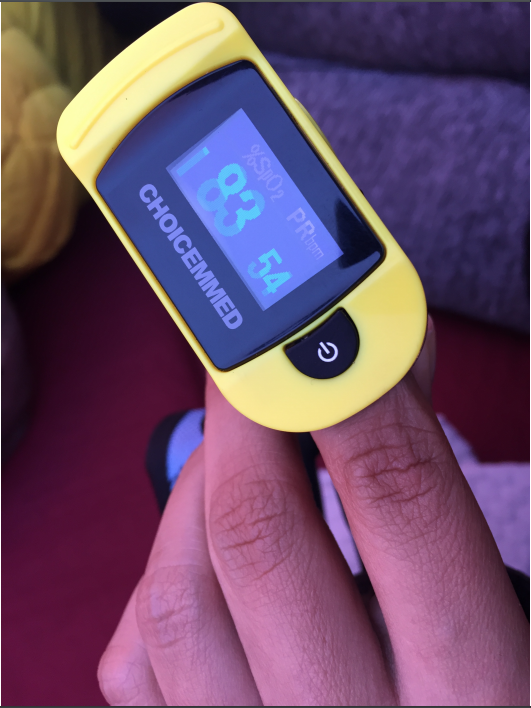
One of our coaching clients, Giselle, reached out after climbing in Ecuador. At 5,500 meters (18,050 ft) on Chimborazo (6,263 m / 20,550 ft), she checked her O2 sat meter and saw numbers that concerned her. But she was feeling great. She was sleeping well, had a good appetite, and was moving strongly—exceeding her guide’s time estimates on all her climbs. Her heart rate was not elevated. By every meaningful indicator, she was performing well at altitude.
Giselle’s experience is common. A reading in the low 70s at that altitude is not unusual for someone who has arrived quickly from sea level, especially if that person has a low resting heart rate and respiratory rate due to good cardiovascular fitness. The number looked alarming, but in context it was not a cause for concern.
A low O2 sat number is not a diagnosis of acute mountain sickness (AMS), high-altitude pulmonary edema (HAPE), or high-altitude cerebral edema (HACE). These are serious medical conditions that require separate attention and diagnosis. While a low O2 sat in conjunction with other symptoms can corroborate a diagnosis, the number alone does not constitute one.
Acclimatization is a complex process, and O2 sat is only one snapshot of one factor. Well-trained athletes often present with lower O2 sat readings when they first arrive at altitude, precisely because their low resting heart rate and low respiratory rate mean their bodies are not pushing as much air through their lungs at rest. Over time—roughly two weeks—fitter individuals tend to acclimatize well, because their bodies have more physiological reserve available to carry out the changes acclimatization requires.
As Dr. Piris notes, the O2 sat meter merely shows the percentage of total hemoglobin in the blood that is saturated with oxygen—and not particularly accurately. If your total hemoglobin is 150 grams and you are saturating at 50 percent, 75 grams of hemoglobin are delivering oxygen to your tissues. If another person’s total hemoglobin is 100 grams and they are saturating at 75 percent, they are delivering exactly the same amount of oxygen. Different-size people have different blood volumes and different oxygen requirements. The number on the screen does not capture this.
This is one of the most common and most damaging misuses of O2 sat meters on expeditions. Comparing your number to another climber’s and drawing conclusions about who is better acclimatized is clinically meaningless. Different people have different hemoglobin levels, different blood volumes, different lung capacities, and different oxygen demands. A lower number on your meter does not mean you are in worse shape to continue climbing.
Dr. Piris observes that Sherpas at similar altitudes almost always show lower saturations than Caucasian climbers—yet no one would argue that Sherpas are less well acclimatized. The number reflects a ratio, not a functional capacity. Using it as a comparison tool, or as the sole basis for a decision to ascend or descend, leads to wrong conclusions.
From Dr. Piris: “It’s my absolute pet hate when the O2 sat monitor comes out at the dinner table and I see people getting psychologically crushed before they’ve even started.”
The most important indicators of how you are doing at altitude are subjective, not numerical:
How you feel. This is the single most valuable indicator of your health at altitude. If your body were struggling with hypoxia, you would know it: headache, nausea, confusion, loss of coordination. How the client feels, as Dr. Piris puts it, is the most important thing.
Appetite. A good appetite at altitude is a strong positive signal. Loss of appetite can indicate the onset of AMS or other altitude-related issues.
Sleep quality. Sleeping well at altitude indicates your body is recovering and adapting. Poor sleep, especially combined with other symptoms, deserves attention.
Heart rate. If your heart rate is not elevated relative to your baseline, your body is not struggling to compensate for hypoxia. In Giselle’s case, Dr. Piris noted that the non-elevated heart rate was a key indicator that the low O2 sat number was not cause for concern.
If all of these indicators are positive and no significant AMS, HAPE, or HACE symptoms are present, it does not matter what the O2 sat number says. You will perform well.
O2 sat meters become useful in a specific context: when you are feeling unwell and need to monitor whether your condition is getting worse at a given altitude. If you develop AMS symptoms and your O2 sat is dropping while you remain at the same elevation, that is a meaningful trend that warrants attention and potentially descent. The meter is a monitoring tool for a deteriorating situation, not a screening tool for a healthy climber.
Use your own baseline, not someone else’s. Giselle now knows that at 5,500 meters her sats are in the low 80s and she feels great. She can use that as her personal reference point and only be concerned when her readings fall meaningfully below that baseline in conjunction with other symptoms.
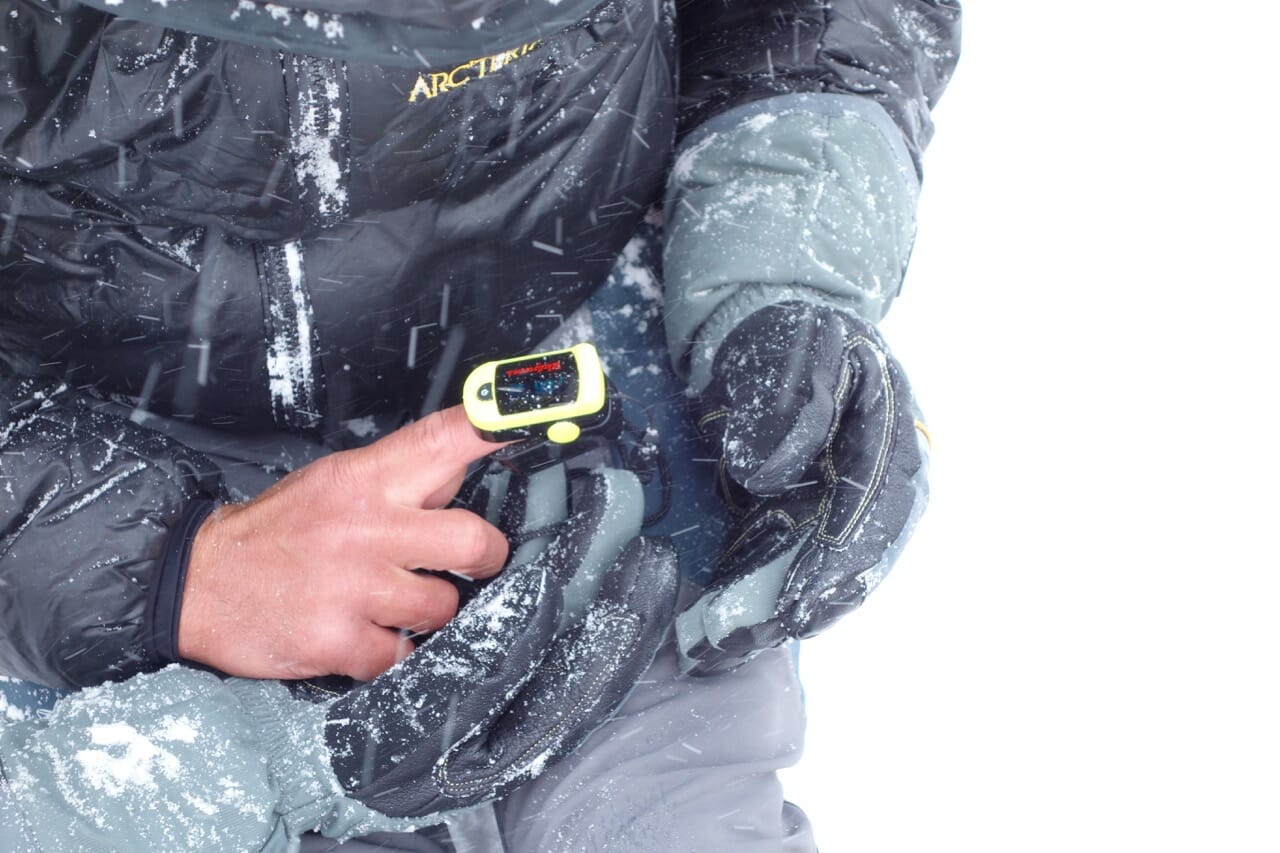
No. Dr. Piris notes that not all oxygen saturation monitors are calibrated well enough to accurately measure saturations below about 90 percent. Many consumer-grade devices on the market appear to have undergone little or no testing for accuracy at the readings most relevant to high-altitude use. If you purchase your own pulse oximeter, choose one from a reputable medical device manufacturer rather than the cheapest option available.
Do not judge your preparedness to ascend based on one number in isolation. Using the O2 sat meter out of context or to compare between individuals may lead to a wrong conclusion. How you feel, your appetite, and your sleep quality are the most important indicators of how you are doing. Fit athletes with low resting heart rates may initially appear to be acclimatizing less well on the meter, but they tend to acclimatize better over time because their bodies have more physiological reserve to allocate to the adaptation process.
In our extensive experience observing ourselves and others at altitude, we can state without hesitation: the fitter you are, the less of your aerobic capacity you need to utilize to climb high, and the more reserve you have to handle the additional stress of acclimatization. An O2 sat meter can be a useful tool in the right context. It should never be the thing that decides whether you climb or go home.
