
Most athletes train for one thing at a time. A race. A climb. A season. But some athletes do not have that luxury.
This is the story of an active-duty special operations soldier—a Ranger School graduate, experienced alpinist, and ice climber—who came to Uphill Athlete with a problem that did not have an obvious solution. He needed to pass one of the most demanding physical assessments in the US military. He also needed to keep climbing. And his work schedule made a mockery of any normal training plan.
He needed a coach who could hold both goals in the same program without one destroying the other. He found that at Uphill Athlete.
The Problem: Two Competing Demands
Special operations selection is not a single test. It is a multi-week gauntlet that cycles through anaerobic events—6-minute miles, max-effort pull-ups, push-ups, squats, deadlifts, obstacle courses, shuttle runs—stacked back-to-back over days and sometimes over 24-hour stretches. You need top-end power for any single event. But because the events never stop coming, you also need the aerobic recovery capacity to absorb the cumulative load and keep performing.
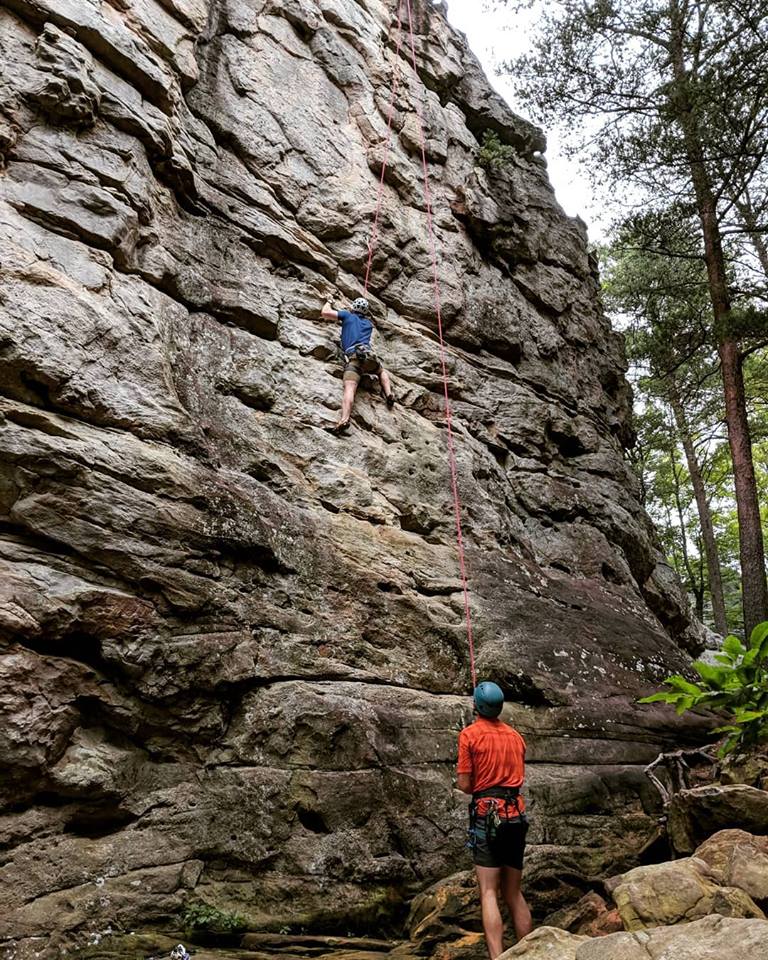
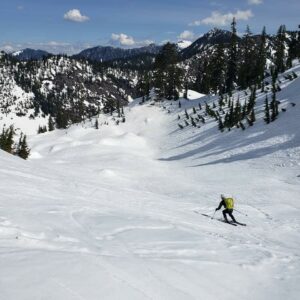
At the same time, this athlete had serious alpine objectives. Winter ice climbing in Wyoming. Ski touring in Washington’s North Cascades. These were not hobbies he was willing to shelve. They were core to who he is.
The conventional military approach to physical training—push-ups, sit-ups, a short run a few times a week, bodybuilding-style lifting—was not going to get him there. It is a high-intensity, strength-oriented regimen geared almost exclusively toward the specific demands of military testing. In the mind of someone who has never had structured endurance training, a 2-mile-run test is not something that merits a slow 4-hour run on the weekend.
The Approach: Aerobic Base First, Everything Else on Top
His Uphill Athlete coach started with six weeks of aerobic base-building. Four or five mornings a week he woke up and did a fasted 60- or 90-minute run. On weekends he got out in the mountains for 2 to 4 hours at a stretch. On top of this aerobic foundation, his coach layered as much upper- and lower-body strength endurance work as possible without compromising the aerobic piece—sessions like 45 minutes of pull-ups, which would destroy his upper body but leave his legs fresh for the next morning’s run.
By the end of the sixth week, he linked Mount Si and Mailbox Peak in the Cascade foothills—17 miles with about 7,000 feet of gain—and did not feel wrecked the next day. All of this just a few weeks after living in the utter flatness of the Deep South.
Rucking—carrying heavy loads over distance—was deliberately deprioritized. After six years of military service including Ranger School, where packs frequently run north of 100 pounds, he did not need a lot of stimulus to regain that capacity. It is similar to the aerobic training paradigm: if you build a big enough tank, maintaining it does not take much. But unlike aerobic work, too much rucking opens you up to injury. His coach programmed just enough, and it worked.
For the final three weeks before selection, his coach dialed up the intensity—fartlek runs, interval sessions on the track—layering speed and agility on top of the base they had built together.
The Result: Outrecovering Everyone
When the assessment began, the difference showed up almost immediately. He was able to recover between events better than most of his peers. He attributed that directly to two things: his aerobic base and his nutrition plan.
His coach had helped him map out exactly what to consume during and right after each test, including throughout the long multi-day events. If he was rucking, he ate energy chews and put carbohydrate powder in his water bottle. If he was going into a lower-output activity with more than 15 minutes between events, he shifted to almond butter or something with higher fat content. Where he fueled every chance he got, nearly everyone else ate the occasional handful of crackers and called it good.
He passed.
The Balance: Skiing Two Weeks Before a Military Test
The story did not end with selection. After returning to his unit, he learned that another round of recurring physical testing was on the calendar in a few months. One event would involve running several miles at roughly a 7:30 pace while wearing 30 pounds of body armor.
Rather than ramp up his running, he wanted to spend the two weeks before the test skiing in the North Cascades and ice climbing in Wyoming. He had the time off.
“Can we make this work?” he asked his coach.
Somehow, his coach managed it—sprinkling in just enough test-specific training to keep him ready. Even though he had averaged one run a week for the four weeks leading up to the test, most of which were slow recovery trail runs, he was as fast as ever on test day. He matched his best scores.
This is what proper periodization looks like in practice. Not grinding through the same program month after month, but being smart about when to build, when to maintain, and when to trust that the base you built is still there. His coach gave him the freedom to spend time in the mountains and still perform when it mattered.
Why Coaching Was Worth It
For this athlete, the biggest value of coaching was not the programming itself. It was sharing the mental burden.
Working in the special operations community, he has plenty to worry about day to day. Not having to expend mental bandwidth on the training piece of the puzzle—knowing that if he did what his coach told him to do, he would be physically prepared for whatever was next—was worth the price of admission.
His coach also went ice climbing with him twice and planned to help with his rock climbing technique. Having a coach who is also a talented alpinist with first ascents in Alaska meant that the guidance extended beyond the spreadsheet and into the mountains.
“Climbing appears to come more naturally to me than the physical fitness required for being a special operations soldier, which I really have to work for,” he said. “I’m excited to see what my body can do.”
What Tactical Athletes Can Learn from This
The conventional wisdom in the military is that you train specifically for the test. Push-ups for the push-up test. Runs for the run test. But the soldiers who consistently outperform their peers at these assessments tend to come from endurance backgrounds—not because they train harder, but because they recover faster between events. That recovery capacity comes from aerobic base development, the kind of slow, patient, low-intensity work that most military training culture ignores.
This athlete proved that an aerobic-first approach, combined with smart periodization and a coach who understood both the military demands and the mountain objectives, could produce better results than the conventional grind—with room left over to ski and climb.
If you are a tactical or occupational athlete trying to balance operational demands with mountain objectives, this is the approach that works. It is not about training more. It is about training smarter, recovering better, and having a coach who can hold the whole picture.