
(Originally released 2024, now with a new intro and a new companion essay from Steve House.)
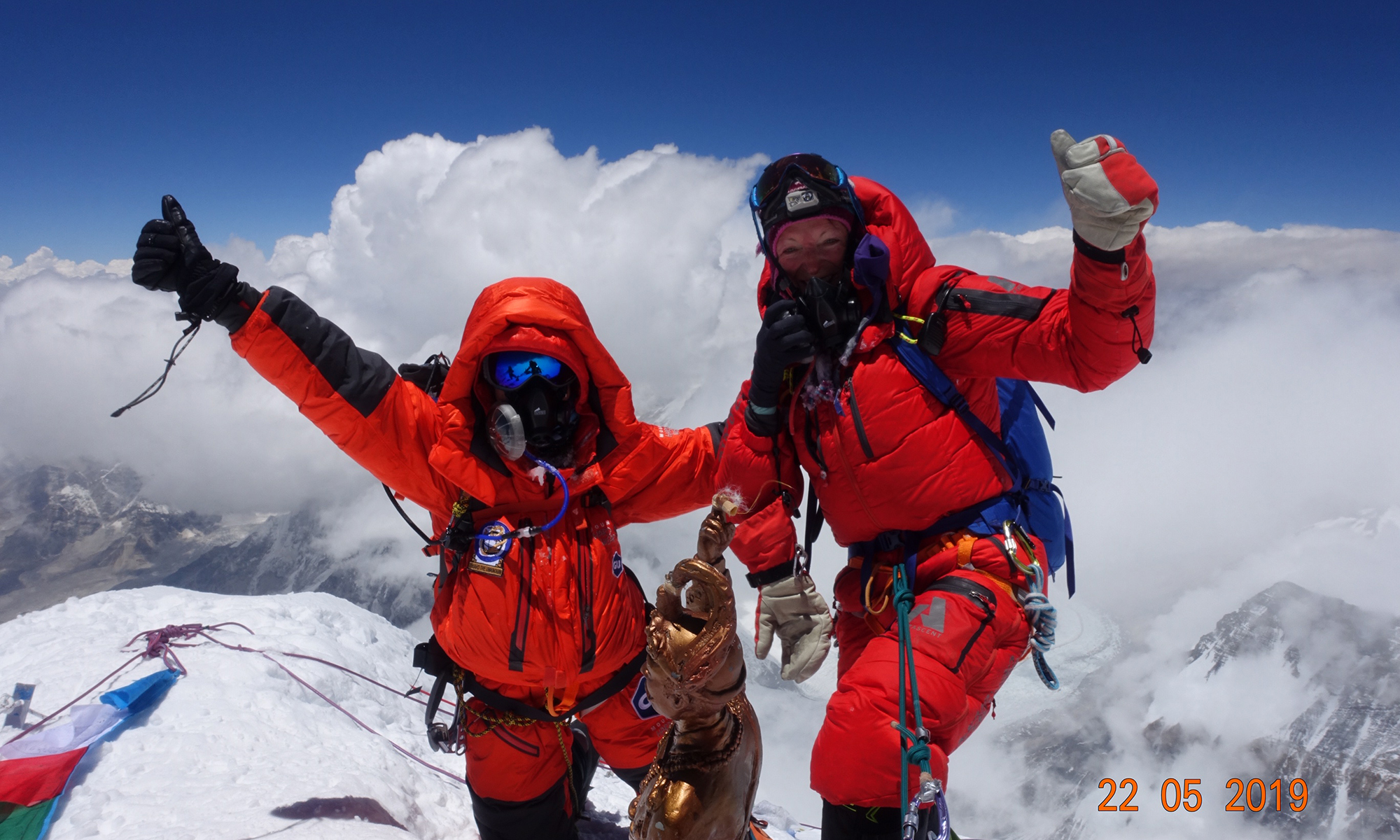
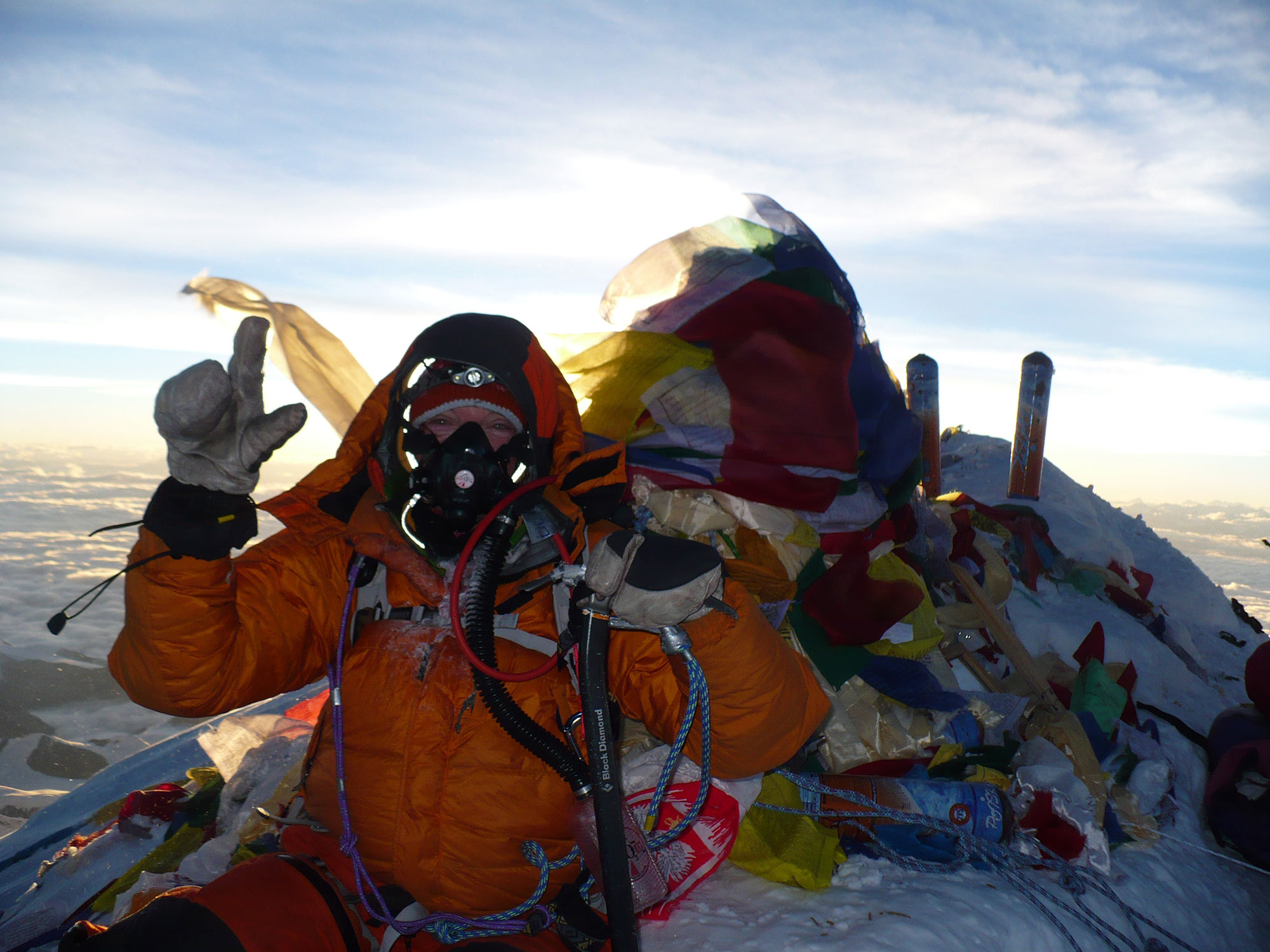
This episode revisits Steve House’s interview with Lydia Bradey, the New Zealand alpinist who in 1988 became the first woman to climb Mount Everest without supplemental oxygen and who would go on to guide six successful Everest summits, more than any other woman in history.
Their discussion centers on a single, deceptively simple distinction: the difference between doing what people say you cannot do and doing what people say you should not do. Bradey traces her path from a self-described “wild child” raised by a single mother in New Zealand, through formative big-wall climbs in Yosemite and a near-fatal, avalanche-riddled epic in the Indian Himalaya, to the slopes of Everest itself, where she describes climbing “super altitude” not with dread but with pure curiosity. She and House dig into the bitter aftermath of her ascent – when senior male climbers on her own expedition publicly called her a liar, and half her teammates died descending the mountain – and how she navigated the threat of a ten-year climbing ban while quietly building a new life and career.
Throughout, Bradey returns to themes of curiosity over fear, rejecting blame culture in favor of personal agency, and the idea that mastery of small, unglamorous tasks (sharp crampons, melted snow, a well-organized tent) is what earns a climber the right to take real risks. Asked how she wants to be remembered, her answer is unexpectedly modest: not for the summits, but simply as good company.
Exploring the poetic soul of the mountains.
Voice of the Mountains explores the mental and emotional adventures found in discovering who we are and what we’re capable of. Here we engage in self-reflection, humility, and embrace the beauty and struggle of the alpine experience equally.
Steve:
Two thirds of a person. That’s the line I missed the first time we ran this episode. Lydia got to talking an hour or so in about a near-death epic in the Himalaya. The year before, she became the first woman to climb Everest without bottled oxygen. She and her partner had been buried in six avalanches, and they had maybe 24 hours before the cold killed them. And in the middle of that, almost in passing, almost as if she didn’t know what she was saying, she described the thing that kept them alive. They did not blame. Not the storm, not the route 90 other. And because they did not blame, each of them could bring what was left of them selves to the problem.
Steve:
Two thirds of a person, plus two thirds of a person, she said, was enough to get down the mountain. I didn’t hear it at the time, and I hear it now. And that sentence is one of the through lines of this whole show. So what I want you to listen for on this rerelease isn’t Lydia’s every story. That story is well told, but it is not in the end. The most interesting thing she has to say, what I want you to listen for is the moment a young woman on the side of a giant Himalayan peak that is trying to kill her, decides that the only resource she has left is the choice not to collapse into blame.
Steve:
Listen, for the moment that decision becomes the architecture of an entire life. When we first recorded this, I thought agency was a gift the mountain gives you. I’m not sure that’s right anymore. What I’ve come to believe and what the rest of this season kept telling me in one voice after another, is that agency is not the mountain’s gift.
Steve:
The mountain is just a place where the agency you already had becomes visible to you. What you do with it after that, on the long descent that is the rest of your life. That is the actual work. And Lydia has been doing that work for 38 years, and I think she knew on the side of that mountain what I am only now beginning to understand.
Steve:
So listen for the moment and tell me, what did you hear?
CTA:
If you’re enjoying the show and want to take the next step in your training. Join our newsletter and receive a free four week sample training plan. Head on over to uphillathlete.com/letsgo and once you sign up, you’ll instantly get a link to try out some of our most popular training plans. It’s a great way to get a feel for how we train our athletes for big mountain goals. Check it out at uphillathlete.com/letsgo. That’s uphillathlete.com/letsgo.
Steve:
From Uphill Athlete, I am founder and CEO Steve House. And this is voice of the mountains, where we explore the philosophy and humanity of mountain sports. This is where we ask ourselves who we are, what we learn, and who we want to become as a result of our adventures. This is voice of the mountains.
Lydia:
Now. Another Highness is way too high.
Steve:
Is my great privilege to have Lydia Brady joining me today. Lydia is a world class climber and mountain guide who fell in love with climbing as a teenager in her native New Zealand. She quickly rose through the ranks and did a lot of first ascents worldwide, from Yosemite Valley to the United States to Pakistan, China and the Antarctic Peninsula. One of her crowning achievements came in 1988, when she became the first woman to climb Everest without supplemental oxygen. Lydia is a physiotherapist, an acupuncturist and an inspirational speaker, and a sought after ski and climbing guide. She has led groups in Europe, Kashmir and Kyrgyzstan, and she has guided and she has guided her, and she has guided her guests to the top of Everest, no less than six times more than any other woman in history. For her contributions to climbing, she was appointed an officer of the New Zealand Order of Merit at the 2020 New Year’s Honors. I don’t know, do you? Do you have a title I should use, Lydia? Or should I call you Lydia? Madame. Your Highness. I mean you from the top of Everest, I don’t know. It doesn’t get higher than that.
Lydia:
Well, I think you really know. I think we’ll work on that on the on the podcast.
Steve:
Okay, great. We’ll work out your title. Lydia published her book, Going Up Is Easy, in 2015, recounting her accomplishments and the challenges she faced in her several decades of climbing. Lydia, it’s really great to have you. Welcome to voice of the mountains.
Lydia:
Thank you. Thank you for inviting me to come and join you on this quite inspirational sounding podcast.
Steve:
Yeah, it’s a different kind of adventure. It’s a little bit more of an adventure in ideas and reflection and and vulnerability and sharing. And I think that I have a feeling that you have a lot to share with our with our audience. Before the I, before I ask the first question, I want to just sort of be honest right out of the gate. I’m I’m fast. The reason I had you here is that I’m fascinated by pioneers, and you have been a pioneer simply by how you’ve lived your life and but also how you’ve climbed over many years. I did hard climbs in my career, things that people thought were impossible. But there’s a huge difference between doing something that people say you cannot do and doing something that people say you should not do. And you have been a person that has sort of systematically seems like. And what I see from your career in your life dismiss the should not and just been more of a why not kind of gal. You know I think does that does that reflect or does that how does that land for you. Am I am I reading too much into your personality? I mean, we’ve only just met. We’ve never met in real life. But when I, you know, remember seeing you on the cover of summit Magazine in 1988, you know, with an article about your climb and so on. You know, I mean, I was a 17 year old kid really interested in mountaineering and climbing, and I was just like, you know, like you had gone to the moon for me.
Lydia:
Oh that’s amazing. Thank you. When you’re reading this out, I sort of feel as if you’re describing somebody else. I’ve not had the huge first ascent list that quite a lot of people have had, but thank you. Perhaps I’ve done a few things in the Himalayas in my early days that I maybe shouldn’t have done, but when I’m, I’m actually I’m going to riposte with a question so that I can answer your question was specifically and and that is when you say should not do you mean should not in social terms, like I didn’t have a permit to climb the route that I was on on Everest, for example.
Steve:
Well. I was I didn’t know about that. But I was thinking about was that you should not climb Everest without oxygen, you know, I mean, 1988 was only ten years after 1978, when Reinhold and Peter climbed it without oxygen for the first time, and they had been told that they were going to come down and be vegetables for the rest of their lives.
Lydia:
Right. Okay. Right. Gotcha.
Steve:
And, you know, I don’t know how many people had climbed Everest without supplemental oxygen between 1978 and 1988, but I bet it wasn’t very many. And, you know, that still feels very much like a place, you know. Yeah. I mean, let’s go back to 1988, for that matter. Like it was very different in these. And I think, I mean, I can say like I was there too as a young man, it was chauvinist.
Lydia:
Okay.
Steve:
And the attitude towards women was evolving. But it was it was better. It was different. I don’t want to make this about your gender either. I mean, I want to make this about your experience, but, you know, your gender is one dimension of your being and your personality and who you are. And you must have been having people tell you that you that you shouldn’t do these, these things like climb Everest without bottled oxygen.
Lydia:
Well, it was quite funny because on Everest, we were a joint New Zealand Slovak expedition. And as you say, the politics, the way of climbing, everything was quite different. For example, in the olden days or the golden days. Then, you know, you had a liaison officer always. You still have a liaison officer. But in those days, and you’ll know this, your liaison officer was there in case you couldn’t climb the route that you were wanting to climb. In Pakistan, these Americans changed the route on one because the the glacier below the beginning of the route of been mined because it was border disputes between Pakistan and India. And that’s a good reason. And so the liaison officer gave them permit like that. And so, you know, so the things were dynamic and actually decisions were made in that space. However, we did go to Everest with the ambition to climb it without oxygen. This is me and my New Zealand team and the joint. The Slovak team also had the intention to climb Everest without oxygen. They had a much greater heritage and climbing than we had, and a different route in mind. You know, the south west face of Everest. So the only the only to our face you shouldn’t climb Everest without oxygen was just the the sort of general. Well, good luck. But you know, it’s pretty hard. Who knows what’s going to happen. I hope she’ll be all right. I’m sure they people said that and discussed it, but, you know, we were pretty strong. I mean, in those days, you know, the French, everyone shared fixing of ropes on Everest. And so the French and another team, they they fixed the ropes through the icefall, which I support, was much smaller because there was more ice. So as I think it was as maybe at least half for of disrupted terrain. And we fixed largely fixed the ropes on the lots of face. So I was fixing the ropes on Lottie face for the final mail, a normal route with the Slovaks. And so we got strong. You know, people were carrying loads in those days. We were carrying loads up to one and camp two, and we had four Sherpas and nine climbers and two different routes. So yeah, you I think maybe it was more of a vibe of possibilities. And that’s not saying that the people who go to Everest now don’t have that. No, that’s not saying that the people in the world who are climbing don’t have that. It’s just that probably they go to other places where there’s more of a viable possibilities, which is now why you’re seeing, you know, people are turning up to Annapurna, you know, mean and women and climbing it in 15 days without oxygen, you know, just, you know, the vibe of possibilities shifted as it does in all climbing, whether it’s role for ice or ice skating or traveling to the moon.
Steve:
Interesting.
Lydia:
Yeah, that’s just human. And what I think drives us as curiosity. So everyone is a climber at base camp. In 1988 when I started guiding, and this is just a we sort of sortie into the future, if you like. When I started guiding and I was editor as base camp and I was like, I met a team and they were Italian, and they were there to try to climb Everest without oxygen or something like this. Or another team was there to try the West Ridge. And I was like really inspired. And I came back to my guiding guiding posse, my big expedition with quite a few guides, and there was a total disinterest. And I was like, how can you be disinterested? This is really exciting. This is people trying really, really hard and it’s going to be really interesting. But but there was a whole guiding world and they’re interested in other guides and how other guys are doing it, and the ethics of how they’re doing it, and the strategy of how they’re getting their clients up there, fascinated by that. But they weren’t engaged by climbers being audible. So there was this two different worlds, and I was kind of standing at the crosswords, going left and right, just going, this is amazing. So, you know, attitudes change. Yeah. And then at a micro level, you know, we these guys on my expedition, these Slovaks, you know I said oh when I met them I’m on the walk in to ever. So I funny and I go to Peter Bozak who had just put up the magic line on K2 in 80, 86, wasn’t it, when all those 50% of the people on K2 died in a big, bad year?
Steve:
That’s really interesting.
Lydia:
And and I said, I didn’t know that at the time. And I go, oh, hi. And have you been to the Himalayas before? And he goes, oh, we new route, south face, blah blah blah with all new route is a peak. Can we do new routes? And everywhere he’d gone to 8000 meter peaks. He’d done a first ascent. Yeah. And so, you know, the there they were experienced. Then as the expedition went by, they throw occasionally they’d throw out a line like, oh, you know, mountains are not a good place for women. Then they go, but you very strong, you know. And I’d be going. Yes, I’ve earned my place. And so it was super interesting that this very chauvinist dick, if you like, a cohort of men, there were four climbers, Slovak climbers, and two of them, they were kind of they were really nice and they were, but that was sort of quite. Chauvinist. Dick, if you like, as were my New Zealand team. But but the other two I made two of the best friends I’d ever made in my life. You know, it’s Peter Bozic or the magic lantern, K2. And this guy called Yarrow. Yasuko, much younger. And they were funny and they were curious. And this is what connected it.
Steve:
You.
Lydia:
And if you say what drove you to climb Everest without oxygen? People ask that, of course. And I just go, well, I’m a climber to begin with. So climbers are always curious about things. And could it go in the area which is your strength? And my strength was just the plod, plod, plod. You know, I’m a high altitude hiker. You know I can, I can plod my I could plod my way up and I could plod my way down and I could look after myself. And I steep snow slope and keep going and keep going and keep going. So there’s my strength. Technically, I’m not a whiz kid. I’m not, you know, super hardcore. I have to do things and not and sort of endurance, but not super techie. And so that’s my strength. And then I could explore the mountain world in that way. So they were curious about their climb. And I was curious about that climate. It’s this curiosity that that drives the whole that drives us. Questions of your podcast, you know, what are we? You know what? What do we learn and where do we want to go with our lives?
Steve:
Yeah. So I mean, thank you for that. I mean, for there’s a bunch of things that you just said that I’d love to follow up on. I want to start by, you know, by saying that the, the, the, the little line of, of prose, the muse, if you will, for our episode today is that good journeys end with your understanding of yourself shifted. And, you know, I think that this is one of the things that unites mountain people. I don’t care if you label yourself a plotter or a sport climber or a mountain runner or whatever it is is that, you know, you you, as you said, you’re you’re curious. And what is it? Do you think? What is it? Tell me more about that. Like, what is it that you’re actually curious about, do you think? I mean, curiosity is a broad thing that that, you know, you’re curious. You say you’re a climber, you just curious as to what you can climb and how much or what is the cure? What is the curiosity?
Lydia:
I think the curiosity is always shifting, and it’s a really dynamic. It’s a thing, you know. So one day if I well, when I go sport climbing, when I come to America, I’ll be curious about, you know, how I’ll do on that rock or it’s. And you know this. I mean, you’re curious. That’s why you have this podcast. Because you mean it gives you authority to ask people a whole lot of things. So it’s it’s it’s a it’s an approach. And I don’t think I’m telling you this. I’m just saying it, you know, because I know you already know it. But it’s an approach that I think is one of the biggest things that we can give people. If you’re if you’ve got children or people that your mentor or people who seek inspiration, it’s just like you have it. Just start with curiosity. And other people call it engagement and or in order to learn from your. In order to be curious, you need to engage and you just get so much more back. I to to take it down to like a microscopic level and to apply it to my ascent of Everest in 1988. I remember sitting at camp three on the face of Lozi, just going, looking up at the upper slopes of Everest above the South Pole, and I’d been to 8000m and getting to the year before, alpine style, but, you know, only going from about space. So I can’t say that I climbed the alpine style and and feeling really strong and I’m just going, look at this. You know, it’s just a simple mountain. It’s a simple New Zealand mountain. It’s this, you know, snow and rock and you walk up the snow and la de da. But there’s this big challenge up there and it’s invisible and it’s how hard can it be? And it’s not like, oh, how hard can it be? It’s like, well, it’s got to change. You know? It’s going to change. It changes when they get to 8000m. What’s it going to be like? How will I how will I react? How can I manage it. You know, what’s it going to be like. What’s it going to be like. What’s going to be like. So it was just this massive curiosity because I’d because I’d sit myself up really well, I wasn’t having to deal with. Oh, I haven’t drunk enough or oh, I’m not fit enough or I’m not a climate enough. Everything was pretty fat. I was I was feeling good and I was really strong. And so it was a luxury to be able to look up there and go, oh, how hard can it be? Not how hard can it be, but what’s it going to be like?
Steve:
I love that, but you know, what is it about your mindset that said, how hard can it be? Instead of how hard can it be? You know, like, what is it?
Lydia:
No, no, no, no I think I’m. Going hard. Can it be not so.
Steve:
Okay.
Lydia:
It’s that’s a really how. Yeah. It’s not like ha I can do this. I mean how hard can it be. Absolutely not that this, it’s, it’s this, it’s kind of going with the curiosity thing is what’s it going to be like. How hard will it how hard will it be. Gosh English language, you know. Yeah. How hard will it be?
Steve:
Right. Okay. Yeah. Right. Okay.
Lydia:
And then what’s it? Well, you know, I am lucky enough to grow up with somebody who encouraged my curiosity. And I’ve always seen it as a thing. We come back to this again? Yeah, I’ve always seen it as a thing. So I treasurer, you know, I value it as opposed to being there, going. I can’t think how hard I shouldn’t think. How hard will it be? I should just think I can do it. I can do it. Is there just different motivating factors? I mean, you’ve got to pull on, you know, you’ve got to pull on that drive of, I can do this or I can do this and get down, or I can get down from here. You know, you’ve got to draw on that anyway because it’s you need to motivate. There’s so much motivation and discomfort. Yes.
Steve:
Yeah, that that’s a good point. I mean, that was always that was very often something that I have said to myself and my climbing where it’s like, yeah, I can get down from here, so why can’t I just go a little bit higher, you know. And I think that that is one of those, one of those tricks. An analogy would be I’ve used this with in-person coaching in the in the weight gym before when I know what some what my or just with my training partners. In the past when I used to train a lot and I would I would they would be like, okay, put put such and such a weight on and it would be maybe close to their PR, but not over. And I would put put more on without telling them and it would be a personal record for them. But and they would do it because if they had known mentally that, oh, this is a personal record, it would have created all this anxiety and it would have reduced, you know, and they wouldn’t have they, they they would have self-sabotage. Right. So when you have that, that’s a great mindset to have where you’re like, yeah, I can. I’m okay right now and I can I can get myself out of the situation for the foreseeable future. Everything I can foresee happening up there, and then you can sort of it’s maybe it’s a trick, maybe it’s not, but you can sort of trick yourself into, like trying a little more when you, when you, especially when you’re at the end of your rope and you’re like, no, I’m still okay.
Lydia:
And.
Steve:
Like I’m into my rope. But you know, what difference does it make if I go 50m? More like, it’ll be fine. Like, it doesn’t actually means anything. I might as well go 50m more, and then you might as well go another 50m. I might as well go. And then, you know, and then you’re on top.
Lydia:
Yeah. Well, it’s it’s. More than a trick. It’s a method to stay alive. If you don’t keep checking that you can get down from here, then it’s more like you’re you are tricking yourself as well, aren’t you? It’s like, oh, everything will be all right. Can I get down from here? Yeah, I can get down from here. Okay. Let’s go. And then you’ve got your motivation.
Steve:
Right?
Lydia:
What’s going to drive you forward? But you’ve kind of got you’ve got your self-preservation and survival instinct. I think that too is key. If you if we encourage ourselves, if we encourage society or people or our children or whatever to be curious or moving forward, you also need to encourage them to that. It’s cool that it’s okay to make sure that you can get down. And then and this is where the craft of mountaineering or the craft of gardening, if you like, or the craft of being an athlete or even a writer is, you know, people who are great at something or people who are great craftspeople are really good at doing the monotonous, everyday things. Well, you know, they’re really good at checking their harness, you know, their their belay loop if you like, or they’re really good at buddy checking or they’re really good at making sure their crampons are sharp because, you know, when you get on terrain that the ice is very, very hard, you do need a sharp pair of crampons, those sorts of things, those kind of everyday things that can be seen as boring. But the people who are really good at the front end are often really, really good at those sorts of things. And they do them really quickly and they do them really well, and they don’t stop doing them because they’re number one. They just keep doing them and then they push their they do all their risk stuff at the at the top end.
Steve:
Yeah. That’s a great insight. And I think that that is that is so true. Yeah. Who you know, you said something that triggered my curiosity. Who was that person for you that encouraged your curiosity?
Lydia:
Oh my mother, because that’s all I had in my family. I didn’t have any brothers and sisters or I didn’t have a bigger brother. And I didn’t have a father. I mean, they my parents separated when I was being born. Yeah. So. Yeah. So yeah, she was really. And she. She brought me up to not she brought me up so I wasn’t the person she was because she didn’t have a very nice childhood. So in the end we’re very, very we were very, very different people. But she did a pretty good job, except that she knew I was a bit of a wild child. She thought I’d get into really, really big trouble when I was a teenager because I had, you know, I had I had a proverbial chip on my shoulder, whatever we have of us do and the other half don’t feel lucky or whatever.
Steve:
Yeah. Or unlucky, depending on the perspective. Right. Like. You know, one.
Lydia:
Come on, then you have to expose yourself a little.
Steve:
Yeah. Well, you know, one of the, one of the mutual friends that I called upon when I was going to new, I was going to talk to you was Guy Carter. And and this was exactly one of the things that guy said. He was like, he was a bit of a wild child in her youth. He didn’t he didn’t expound on that. And I didn’t ask him to. But you know, where the question that came to my mind and what I actually wrote down as a along with that note is if there’s if that’s part of why you seek these journeys, I mean, your journeys happen to be in the mountains and you’ve already alluded to, you know, these different kinds of crafts, whether it’s writing or or other other sports or whatever. Did this, did this chip on your shoulder? Did this wild inner wild child? Was that somebody who drove you to, to to do things like go to Yosemite? I don’t know when. When did you go to Yosemite, like paint, paint that for me. You were like 18, 19, something like that. You show up in Yosemite Valley and teach and find some people and go climb some big walls.
Lydia:
Yeah, that was the best thing to do when you were nine. I was 19, 19 and 20. Oh my God, so good. So so those days, of course, there wasn’t sport climbing and well, there may have been sport climbing. Oh, it was in 1981. Well, anyway, this certainly wasn’t a sport climbing in, in New Zealand. And I wasn’t as you, as you know, from reading my writing to me and reading my book, I was really bad at sports, so I kind of I wasn’t strong.
Steve:
100%, 100%. Yeah. What year was it? There was not sport climbing.
Lydia:
I mean, my legs were strong and the rest of me wasn’t very strong and I wasn’t gymnastic like I couldn’t do a handstand even against the wall and my hand, I, I didn’t really catch balls very well, and I didn’t learn fast in those areas either. And so, you know, failure, failure, failure. And so I.
Steve:
Whose voice was that? This failure. Failure? Failure? Whose voice was that either? Okay, okay.
Lydia:
Oh yeah. Yeah, yeah, yeah. Well my voice of course, but also, you know, you’re a kid, you know.
Steve:
Yeah.
Lydia:
It’s it’s. Not necessarily been a voice. It’s just an experience of being last and teased. Teased because I kind of walked funny. I was a little bit wonky and not wonky was stiff, whatever. And I was teased for walking funny and, you know, things like that. Formative moments.
Steve:
Yes.
Lydia:
And. However, by the time I had discovered the mountains or no, I should say when I had when I discovered mountains through what we call tramping, which is hiking, but off trail hiking. So it’s pretty full on hiking. And then I realized that there was other ways to achieve goals, goals that you may not even be able to describe because you were young in an experienced and but physical goals. So I could be a physical person in this new environment because I had other skills, and doing a handstand and catching a ball wasn’t that important, and people seemed to forgive me if I wasn’t very brave down climbing and things like this. And I got stronger and strong and I became better and better. And I also found out that so much of that as social, because when you go in the mountains, you are living with people you are managing. Your experience was, well, say I was with one other person or two other people or three other people, depending on who you are hiking or tramping or mountaineering with. And therefore it’s partly become social. And so you’re bringing other skills in. And those lessons are about, say, if you like, achieving a goal which might become a becoming a physical person or being or recognizing you can achieve a goal via a different route. Okay. So then this concept has opened a massive door. Go mountaineering, go to Alaska because everyone in New Zealand was going to Peru. So I decided to go to Alaska because it was more interesting. I didn’t know anything about it. And then come down through the lower 48 into your cemetery and I wasn’t I’d done a little bit of rock climbing as Squamish, and I wasn’t very brave, but one person had, if you like, taken me on a wall that was A1 and, you know, the Grand Wall, one of the routes was A1 or something like this, maybe A2. And I realized there was another way to be up there. And when I got to your cemetery and it was all about big walls and of course, and people would talk about being up there, and then they’d have the come down, they’d have these experiences and these stories and experiences and stories were really what drove me as well, and not stories so that I could tell, but stories that are inside of me. And so I realized that through a climbing, I could get up. There was just a different route, a different way to experience this and have these same experiences as my friends. Yeah. So I started applying and. Yeah.
Steve:
What’s the difference between a story and a journey and an experience?
Lydia:
Oh well, everything’s an experience, like having a wasabi ice cream could be considered an experience. Well, actually, it’s not a great.
Steve:
That’s definitely an experience. No. Sounds okay. Sounds interesting. Yeah, they got my. They got my $2.
Lydia:
Oh no. It’s actually not a very it’s not a particularly interesting experience. Sounds interesting, doesn’t it. But so what do you you know the. Yeah. No, I think you can. Yeah. That’s pretty boring actually. So, you know, you go say, oh, this will be an experience. I actually it’s not much of an experience. It’s the same as watching a movie, isn’t it? Oh, this could be. I really love watching this person’s movies. Oh, well, it wasn’t as good an experience. You know, that’s the whole way of.
Steve:
Yeah.
Lydia:
Well, hang on, what was the thing? Experience? What was. What were you what were your three, oh, journeys?
Steve:
Journeys and stories you were talking about. Like, people would go up on these walls and come back with experiences and stories like. And you wanted these stories within yourself and just trying to figure out if that’s the same thing that I’m talking about.
Lydia:
Yeah. Yeah. Don’t you think of a whole bunch of I, don’t you think a whole lot of experience as add up into a journey. And sometimes those journeys make good stories.
Steve:
Actually, most of the time.
Lydia:
Most of the time. Yes, most of the time. Well, it depends on who it’s honestly. It depends on to whom you’re speaking. Now, here we go to, situations. Where in the world where, say, climbing? Let’s use the, the, the parallel of climbing Mount Everest or the example of climbing Mount Everest. Climbing Mount Everest can be done in lots of ways.
Steve:
Maybe all the time. Sure.
Lydia:
You can either be unassisted, which means you don’t use fixed ropes. And and then you could climb and climb up without oxygen and you’re or climate by a different route, like all these different routes on Everest used to be climbed all the time North route. And then the pinnacles got done and, and and then all these different the south west face got climbed a couple of times or three times actually, isn’t it. I’m sure maybe, maybe more than that now, but.
Steve:
Yeah. There was the Australian route that, you know, those guys did on the north side. White limbo.
Lydia:
Oh yes, the white limbo. Yep, yep. I know all these people used to climb all these different routes and nobody’s not that many people climbing all these different routes anymore. So it’s there’s plenty of room anyway. Their experience climbing a different route or a new route or even repeating an old route without oxygen and without support would be really, really different. And when you go to some countries, like you go to Georgia. I went to Georgia last year, we have some Georgian friends we met and the tension. Wonderful, wonderful people and very good climbers. And when you go there or you meet these people in the tension or in the Pamir or something like this, and then and they’re from Poland or they’re from Georgia or something like that. They know what it means if you have climbed Everest without oxygen, but you go to a more Western type of place, less European. If you go to a place that’s less European, then the less European or Eastern European it is, the less do people differentiate and how you climb something that’s really big like that. Yeah, yeah. I don’t know where I am in or so you know, they won’t ask you about your journey and to them they won’t expect that you’ll have a story because they just want to know, you know what a like standing on top.
Steve:
Yeah, yeah.
Lydia:
Whereas a Euro or a eastern bloc or Eastern European person will go, oh, what route did you take? And you know, what were the conditions like and how long did it take you and how many people were you? And yeah, yeah, they dig into journey. Yeah. Exactly. Yeah. They see that there is a story there because there has to be.
Steve:
Yeah yeah yeah yeah. They dig into the story like they dig into the experience. Yeah. The journey. Yeah. Yeah.
Lydia:
Yeah.
Steve:
How did the journey of climbing Everest in 1988 shift your understanding of yourself?
Lydia:
Will slowly or quickly perhaps.
Steve:
Start with slowly.
Lydia:
Start with slowly. No. Maybe I should start with the short. The fast learnings were how I did at Super Altitude because that’s what I called it. No one called it the death zone. What a pessimist approach.
Steve:
Yeah. Can we can we can we please go back to super Altitude? I like that way better than the desk. So.
Lydia:
I know it’s super, super, super. Such a great word. Super altitude and the deaths on this for some people. But so so is the street. Might be like what? Yeah. So is being in your 90s.
Steve:
Yeah. Yeah.
Lydia:
So okay. All right. Sorry. There’s probably some is short learnings though. Yeah. Yeah the short learnings were things. And sometimes they’re learnings that you you don’t you reaffirm for example, what I was going to say way back was when I started tramping, hiking without trails. And when I started mountaineering, I realized that I could hang out with the people who were really experienced, and they were happy to spend time with me and give me their time, and therefore I could learn a lot from them and also achieve better than on my own if I pulled my share of the chores.
Steve:
So the short learnings were that you did well at super altitude.
Lydia:
So, you know, I’ll go and collect more snow because they are basically making the decisions. So you have to recognize what they bring, have to honor it, and you bring what you can. And I’m funny sometimes. Okay? I mean, and people like to laugh and they like to wake up and then goof off rather than wake up and then have seriousness and the tent and, and melting the snow. And, you know, it’s it’s cool to create stories. And so if you can give this to people, you can give your positivity to them, then they can give what they have. And it’s an exchange, you know, they realize you’ve gone outside and got more snow, or you’ve dug the tent out or you’ve melted more snow than anyone else because they’re better and they do their stuff. So you bring this to where where we are.
Steve:
But no. Can I, will we stop on that for a second. Because I think that that that is such a great analogy for so many things. Right. Like you could be talking about being a young mountain guide, you know, or you could be talking about being a junior doctor, working with a senior doctor that’s been practicing for 35 years, or physiotherapy if you’re a young physiotherapist or a veteran, you know, I think that I wish somebody had spelled it out for me like that when I was young, you know? I mean, I think that I mean, yeah, I know what you’re going to say, but I and maybe I wouldn’t have heard it. You’re probably right. But maybe I would have. Maybe I would have been like, you know what? That’s right. Like, I need to I need to bring more snow. I need to do more of the dirty work, because I need to realize that these people bring more of the experience of making the decisions. And you don’t actually realize that until later, right? Like, if I reflect on my first expedition when I was 20, I went to bat with a very experienced group of people, five of whom had climbed 8000 meter peaks. Maria Franta. I don’t know. Did you ever cross paths with Maria Francois? She climbed 5 to 8000 meter peaks, all without supplemental oxygen. She died on continuing in 1992, sadly. But, you know, she was leading our team, fixing the ropes, making the decisions. And I didn’t realize that until later, like, years later.
Lydia:
And what a moment. When you realize this, though, you were always going to realize it. And perhaps, you know, perhaps you were just gaining in so many other ways. You can only grow a certain amount, you know, and if maybe you’re going to be world class at something from zero, from doing a paper round to, you know, climbing super hard core, I mean, Nanga Parbat and your twin. That’s rad.
Steve:
Well, I mean, I was part of a 18 member. So this is actually a really a testament to the Slovenian Alpine Association and how they ran their expeditions for many, many years. And it’s another story, how I became a member of the Alpine Association. And, and I spent a year there as a student and I earned the alpinist status. And what that meant was that I got invited on all the expeditions that the Alpine Association put together, and the way they built teams was they deliberately I was one of 220 year olds, you know, and then we had five people who had climbed 8000 meter peaks like Makalu, Everest, can, you know, you know, big, hard mountains. And we were such a mix. Right. And that’s how they did. That’s how they mentored. That’s how they that, you know, that’s, you know, so much of what we learned was just around the cook stove, you know, and around the bowl of French fries and around the teapot. That’s where I actually learned the most on that trip.
Lydia:
That you are. You’ve put the nail on the head for me, for my Everest expedition and also for K2, and a lot because I hung out with some Slovenians, their search hard core. And then my Slovaks were so hard core. And yet you learned so much from them. But you had to really have a humble corner of your stroppy 20 year old brain to go. Yeah, I can learn a whole lot from these guys. You were probably so busy learning you didn’t quite put it into perspective of some things, but hey, you know, you’re you’re already so busy learning. Yeah. And you were being you got invited so you weren’t a totally boring person to be with. Or you could be, I don’t know.
Steve:
No. I was a kid.
Lydia:
What were you like when you were 20?
Steve:
You know, I think I was actually pretty quiet for the most part. And I was in awe of these people most of the time, and in awe of that place for all the time, and feeling very much like an imposter 99% of the time. And, you know, frankly, I mean, that is also a reason I did I did bring a lot of snow, you know, I did I never took the lead. I never did anything by the front of the team. I was always in the back carrying the load setting, you know, you know, doing that work. And I was completely happy. I was so honored to be able to do that. Like, please just let me carry a load for you like I don’t. You know, I never had any fantasy about going to the top of the mountain. It was just like to be there and to be with those people was what it was about for me. But, you know, I want to go back to the, you know, kind of digging in. So these were the short term. What you became after Everest was some of these things. What were and but you said there was also some long term I mean, is this what what we’re are we segueing into that.
Lydia:
Well, there was the the there was the fallout. No. Yeah. Yeah, yeah. But we.
Steve:
Yeah. So the fallout I mean I don’t want to so I didn’t want to make it. I and I would like you to just describe, you know, the fallout as you, as you put it very briefly because I don’t want to talk to be about that. I want this to be about. But that was certainly part of your journey. Part of your experience of of Everest was having especially the years to follow.
Lydia:
It was, it was a type for fun. You know, the, the never sounded like a good idea at the time. Wasn’t very good to deal with, but, Yeah. Stories make it’s formative. Yeah. Well, you know, I think the best thing, especially for people who don’t know the story. And. God, how many times have I been asked a story which I’m. This is not you, because you totally get it. But often Rob skewers the fact that, hey, I did a cool climb. I don’t just want to talk about the, but it was a hashtag meta. It was a hashtag MeToo situation. I set myself up. I was a bit of a wild child. I was the one who, you know, I didn’t sleep with the right people, and I slept with wrong people.
Steve:
Yeah. And.
Lydia:
And so. And I was a little bit of a rule breaker, you know, I climbed an 8000 meter peak without a permit because I had changed from Gasherbrum 1 to 2 the year before and just at the last minute with some Basques and so on and so forth. So I, I, and I was kind of upbeat and I made as Rob Hall a guy who Everest movie was made about, largely as he said, you know, I always hung out with the cool people. I didn’t see that. I just hung out with the people who had that really positive approach and opened the door for people who carried the loads. Exactly what you were talking about on Nanga Parbat. And I just I want to see way back to this. Not right now, but I’d like to touch back on on that, that doing the stuff in the background in order to learn the stuff in the foreground is what is what entitlement obscures the opportunity to do that. So if you feel that you’re entitled to be there or you’re entitled to have something, that whole concept of entitlement and second generation wealth, you know, there’s as we as mountain guides have seen a lot, it obscures your opportunity to be part of this learning and growing team. It’s actually a disability. But anyway, so the but the fallout was my team, my New Zealand teammates who hadn’t been successful on their final attempt on Everest.
Steve:
Sure does.
Lydia:
And I decided to base camp to sit out a storm. And remember, there was no weather forecasting in those days. So it was the storm going to be one day or five days. So by going back down to base camp, you know, it’s quite strenuous. Go to camp two to base camp, base camp to camp to less so in those days. Then nowadays, because the ice ball was shorter but still the same altitude game. Well then they had failed and they were really ambitious. They’d started this idea that they might open, you know, do the Seven Summits and. Yeah, in a year or whatever it was and or two years or whatever. And so and so they stated that it wasn’t possible that I had summited Everest. And of course, it’s a male dominated society, as it still is, of course. And and so things went really pear shaped after I got down from the summit to add to it, 50% of my expedition died, which are all the Slovaks. They died on the descent from down the normal route, from climbing the southwest face of Everest, alpine style and without oxygen. So yes, that was a formative few years.
Steve:
And the. Did they die? Were you were you party to that in any way or was that that that happened after you were already down and out. Yeah. I’m sorry to you found out several days later or.
Lydia:
So I got no. That’s right. Oh yeah. So I summited, so we all went up. New Zealanders were already kept to 6450m. Six, five. Then I went down. I decided when the storm started, we went up for our summit attempt. The storm started, remember? No weather forecasting. And then the next morning it’s still storming and I go, I’m going to decide, I’m going to go back down to base camp. And I was sharing a tent with one Slovak because there was no room in the New Zealand tent. I mean, we were all a shared expedition, but he didn’t really speak. He was it was Peter one, you know, this really good friend. But at the same time he didn’t speak much English. And so I had no idea what their decisions were.
Steve:
Yeah. Yeah.
Lydia:
But I knew their decisions were really sound because they were really Peter was he was graphing his assent and dissent, and he was really scientific in a, in a simple way, super scientific about his climbing. And I could learn so much from him. So I decided that I needed to go down. And I can’t stay healthy at 6500m. You know, it’s like cooking a little bit of water in your tent. And and then I made that decision myself. And then I found out that the Slovaks had decided that they would also go down. And I. Yes, I’ve made the right decision. You know, it’s a they confirmed my decision, which I remember just being a moment of just like, I’m getting there, I’m learning, I’m making sound decisions, you know, and and then the other New Zealanders stayed up there.
Steve:
Yeah.
Lydia:
So five days later, went down, had my 27th birthday, came back up again. Other New Zealanders were pretty tired. They probably weren’t hydrated enough. They didn’t have quite enough food. They attempted Everest via route we didn’t have a permit for turned around that day. They left. Even left camp really late, like nine in the morning or something. And by that time we got to camp two from base camp at ten, after just after 10:00 in the morning. I mean, we were we were going pretty fast in those days. I think my fastest time to camp to from base camp was for hours 20 or something. But that’s because that’s moving. Yeah, but it’s not today’s icefall. It’s a much faster. It’s only a third of the distance I reckon. So I mean the broken stuff. So. And anyway so they went down, they said we’re out of here.
Steve:
Yeah yeah. Yeah. That’s moving. Right. Yeah. Okay.
Lydia:
And so I was the day behind them. And then I left the next morning for the normal route Hillary route. And the Slovaks didn’t go up on the southwest face because it was too windy. So they were one day behind me. I summited, they were already on the mountain, their stove broken, and Doosan wasn’t very well in. The conditions were super hard. So Peter had said to me, if we spent two nights on the mountain on the southwest face, we are okay. If we spend three nights, we are in a problem. And they were having to spend three nights and then when they summited, one person summited. Peter turned around to help Yarrow, his team mate, and because Yarrow was getting hypoxic blindness and he turned around from the like above the Hillary Step or at the Hillary Step came back down. And then they all got hit by a storm and died. By that time, I was already between camp two and base camp. I talked to them at camp two on the radio and they said, congratulations. And I was just. And then by the time I got to base camp, everyone was peeking out because they hadn’t heard from them.
Steve:
And so you’re, you’re managing you come off of this climb, you’re, you’re managing first of all that you, you just climbed Everest without supplemental oxygen. I mean, that’s incorrect. That’s just an incredible achievement by any measure for anyone.
Lydia:
Without ropes from the South Col. No ropes on the. No ropes above the south. Oh, a little rope one one little tight rope on the Hillary. Step one little white, but not on the traverse around it. And and and a piece of parachute cord on this other.
Steve:
No ropes above the South call, either. Wow. So, so.
Lydia:
No, seriously, it was like, oh, but you know, on this like steeper section just above the balcony, but just, you know, like, yeah, it’s like, oh attached it. Yeah yeah yeah yeah.
Steve:
Yeah. You’re better off not touching that, right? Like. The. So you’re you’re you’ve just accomplished this, which is just all kinds of incredible. And then you are also managing that you, your friends that you’ve made on this trip that you are speaking very highly of, you clearly cared a lot for them. Go missing. They’re gone. You know, then you have people saying that you there’s no way you could have done what you say you did.
Lydia:
Yeah. And those people were Rob and Gary and Bill really. They. Then they went out the Slovaks that there was. Ivan Fiala who was the leader. They were dealing with a massive tragedy. I mean, he was investigated by the police in Slovakia because it was occupied by Russia. You know, it was a really big deal. And he’d lost his friends, you know, his really big friends.
Steve:
You know you don’t.
Lydia:
You know, it was just awful, awful for him for years. And he never really overcame that grief. And, and but they didn’t deny. They didn’t question my ascent. They were just so stoked. Let’s see. Yeah, but it was the New Zealanders, and then it was the reporters and then people, and then that’s where the ripple came from. Yeah.
Steve:
And this is all part of your journey. And this journey shifted a lot in you, I can imagine. I mean, any one of those things would affect someone indelibly, right?
Lydia:
Yeah. Yeah, yeah. No, I was pretty. Lucky that I mean, obviously, I guess, you know, terms. I went into a dark space. You know, I obviously got depressed if you like, but. And not but it was pretty. It was pretty horrible having people say that you’re a liar. There were two things going on is that, you know, I wanted to go back and climb. And in those days, you either got banned. How to say, remember I said, well, the pot. Well, you would know the politics were quite different, so that if you did a route without a permit, you either did it as part of the team, and then you and the leader of the team would get penalized. The rest of the team wouldn’t, and you would get fined, and the penalized would either be ten years of banning from climbing in Nepal or five years. And depending on how bad you are, that was at that time. That was my understanding, and it seemed consistent because we knew other people who’d done things like that. And, but if you. Left the team and this is I talked to my liaison officer before I’d gone up because I knew there was major consequences, and I didn’t want to impose this problem on Ivan Fiala, because this was the only opportunity he got to leave the country because it was occupied by Russia. And he was such a mentor, even though he could speak no English. Well, like three words. And he was amazing. Amazing. Mentor for me. And so I wrote it. You could leave the expedition and if you left the expedition officially, like you said, the leaders tried to stop you climbing, but you decided to leave the expedition and the leader couldn’t stop you climbing. And so the lift, the expedition. Then you would get the one, be the one that penalized. This is how it seemed from talking to other people, seeing people in the past and talking to our liaison officer. So then I wrote a letter declaring that Ivan Fiala, our leader, because he was the official leader, he had the permit, was trying, had tried hard to stop me going climbing, but I had disobeyed, if you like, or whatever. And so I thought, left the expedition and he and therefore I was climbing on my own so that he wouldn’t be penalized. This is my I’m I’m 27, you know. I’m.
Steve:
Yeah. You’re trying to make this this work, but let’s.
Lydia:
May. Yeah. And Evan Fiala got this letter translated because the one person who could speak Slovak in English, they had the doctor and he looked at me and he goes, no, no, you are part of the expedition. You go climbing. How was that man? He was like there for me. And so then anyway, so the so he was going to be in big trouble in Nepal as well. But actually I think so much else was going on. They didn’t bother him too much. And then when I went into when I finally got my band, which came some time afterwards, I only got two years. Two years, that’s like amazing. No one and I knew had ever had two years. They’d always had 5 or 10 years. And the and there was all these other little political things, blah, blah, blah, blah, blah, blah. And so I still. I still think I probably would have done roughly the same thing, but basically for decades, I had no idea what else I could have done once I got out to the politics, because the New Zealand guys had made official statements that it was not possible, that that was not possible, that I climbed Everest without oxygen, I climbed Everest. What else? Oh. So yeah. No, that was a dark time. Yeah.
Steve:
And how did. Yeah. So what was that? So the dark time wasn’t was it from achieving your goal like, I mean I certainly had that like from achieving goals like in like, you know, the sort of a high and then it’s just like, oh, I don’t have a goal now, what the hell do I do with my life?
Lydia:
Say, I’ve never had. I’ve never had that. People talk about that. They talk about post party. You know, when you have a really big party because you’ve turned 50 or 60 or something or 40, I and the post party low or post expedition. I’ve never had that.
Steve:
So it wasn’t that for you, but it was, you know, you were being publicly called a liar. You were having this incredible achievement, sort of, you know, by implications completely stripped from you. Like, that’s not what you did, even though you, you, you know that you did it. You were changed by it. How did how did all that?
Lydia:
So but it wasn’t that. No, no no no, it wasn’t at all. Yeah. No. Absolutely horrendous. Yeah. And. Yeah.
Steve:
How did all how did that change you? Like how did this dark time change you like? Did it change your perspective on life, on climbing? On expeditions? Did you learn what lessons came? You know, it’s like maybe it’s the analogy is going back to the 20 year old me or the young you on those expeditions and, you know, you were weren’t, weren’t seeing what lessons were being offered you at the time. Is this so often the case with these. And then later you make meaning out of it either creatively or objectively? I don’t know, but like, what kind of things came from that journey for you?
Lydia:
Lots lots and lots of things as you said quite some time later. And I knew at the time there would be learnings. But at the time for the first few couple of years until, you know, quite a few mountaineering researchers of three particular mountaineering researchers, did you know some stories about it and had talked to people and rung up people and put two and two two together? Then. Then I just had to deal with being the object of sometimes derision. And I didn’t publicly stand up and defend it for two reasons initially for one reason. And that was because I didn’t say to the Ministry of Tourism that I did climate because my I didn’t know what to do, you know, and I was looking at a ten year ban, and my goal was to go back and climb it. I saw the west pillar on Makalu and I just go, I don’t know if I could do anything like that, but that’s the most beautiful thing I’ve ever seen. And it was, you know, this beautiful mountain and the sun was sitting on it and it was like, oh, it was just so gorgeous. And I was coming down the down Everest. And I was like, oh my, oh yes, that’s I want to go there. I’ve never been there yet to Michael. And I saw a desperately wanted to go back because I was taught a climber. And so I didn’t want a big band. That was my biggest thing. And so in order to avoid a big band, I didn’t go around saying I did. I did summit because I’ve got these guys who were saying I didn’t summit, and I’m in a male dominated thing. So saying I did summit would then make the Nepali kind of pissed off with me. I didn’t say I didn’t summit far out, you know. I didn’t know any liaison officer was saying what I should say. You know, I was on my own.
Steve:
Right, right, right.
Lydia:
There was nobody to hang out with and talk to and kept men do, except my ELO was giving me this advice. He said, I think you should say you just went on the wrong route accidentally too high and just leave it like that and then nobody is. Everyone cannot have their be embarrassed, you know, they’re not going to get pissed off at me.
Steve:
Yeah. Plausible deniability kind of stuff. So what?
Lydia:
Absolutely. Yeah. And then. Oh, sorry. Go and well, I.
Steve:
You know, I just am reflecting that, you know, I myself, and I’m sure everyone has been in situations where they felt cornered and accused unjustly. And those are definitely not situations where I ever felt I found my best self. And so, you know, you were actually making what it sounds like really measured decisions. You’re like, well, I don’t want to publicly stand up because I want to go climb McAloon next year. I don’t want to do this because I don’t want to make.
Lydia:
Oh. Well no I don’t want to. Yeah. I don’t want a public stand. Up because a whole lot of guys have said I haven’t. Oh two guys, three guys have said I haven’t done it and I’m in a male, so we’re not on an even playing. And then that is utterly key. And everyone likes controversy. So you know, you’re sitting in a hotel and five telephones are going because it’s not the internet and that from different countries saying, oh, they say that you’re a liar. Did you really? Oh, where’s your photo now? I don’t even find Mount Cook by that time about 14 times by different routes, which in New Zealand size mountain I mean I climbed other mountains of course overseas. But and it’s really a significant climb that’s grunty. And how many summit photos had I got? One. I just we didn’t have social media, we didn’t necessarily do summer photos.
Steve:
It wasn’t part of the culture. Yeah.
Lydia:
And I took my camera and I was really, really careful. And I knew that I was going to be on my own. So I preordered everything and the stead of having it around my neck, I put it on a little tripod in my pack. But I’d never frozen my camera before because I’d always had it hanging around my neck. And remember, it’s not like millions of people are doing this. I’d never carried a thermos. I’d never carried a thermos at altitude because it weighs more than a water bottle. And who would carry a thermos? Remember 1981 thermos known 1988 thermoses versus the sexy, lightweight new thermoses. Now they cost carried. They were a kilo. Why would you carry a kilo of thermos plus your water?
Steve:
Nobody is doing this.
Lydia:
And you’d carried water before and had never frozen. And you’d climbed in an alpine style 8000 meter peak before and so and you’d been at 7000m, you know, for days, and you’d never had your water bottle frozen for. I mean, maybe I was just lucky, but. So I hadn’t even got a thermos.
CTA:
If you’ve been wondering whether one on one coaching is the right next step for your training, this is the month. To find out, sign up for coaching and receive a free 30 minute call with one of our specialists. Visit Appalachia to learn more. Now back to that show.
Steve:
literally interviewed this morning by a German journalist about my experience on the summit of non-GAAP Arbat, because they’re still talking about what Reinhold and Gunther Messner experienced on their summit day in 1970. And what I said to him was, you know, no one can sit in the pub or in their living room and make judgments about what people did or didn’t do above 8000m, because you’re just it’s just a different.
Lydia:
Go.
Steve:
You’re just so barely surviving. You don’t make the same decisions. You don’t have the same cognitive abilities. There are super small, unexpected things can have major consequences. You just have so much less energy to, like, do anything so you can serve that energy so tightly. And, you know, reaching across over here to the right to lend a hand to somebody might be that motion that tips you over the edge because you feel that close to the edge and, you know, and then people sit down in their living room and be like, oh, why didn’t you reach your hand over to help that person?
Lydia:
Around.
Steve:
They were dying. What kind of what kind of what what kind of what kind of degenerate are you that’s inhuman. Like, okay, well, you go up there and do what we were doing, and then you tell me how you would have done it, because it’s just not. And I’m not defending or accusing, but I think that, you know, I’m just it’s interesting how these conversations still happen.
Lydia:
And.
Steve:
And for those people that are listening that have never been to a super high, super, super altitude, as we’re going to call it now, you know, they you until you’ve been up there, you just really don’t honestly have any business saying what it’s like or making judgments on people or what they did or didn’t do or could or didn’t have done.
Lydia:
And also there’s not the, there’s no internet so. No it’s great. No, it’s really great. But also it’s like I’m really proud of the fact that I preempted my camera situation because I wasn’t going to spend stand there on the summit of ever screwing my camera onto a tripod. And I didn’t have it, so and we didn’t do selfies.
Steve:
That’s sorry. I’ll get off my soapbox now. Yeah. That was smart. Yeah.
Lydia:
I have a selfie in those days. Well, anyway. And so I’m really proud of that. And then it basically, I didn’t know enough people who’d done this kind of stuff. And so. Oh, I know probably if you do that and you leave it in your pack, it’ll freeze. Because I climb to 8000m, I’d never freeze frozen my camera.
Steve:
The lenses weren’t wide enough. Yeah.
Lydia:
It was a really cool, weird, robust, super awesome camera. So I’m proud of that. And that gets turned around and that’s my failure. And, you know, for example, and then when I got back down to the South call the next day, I was resting until midday because you actually it was the old route. And so it wasn’t straight down. The Geneva spirit was up and over the top of the Geneva spur, and I didn’t know if I was going to be strong enough to do the up. I had no idea. When I started walking, I was like, oh, this is really easy. But anyway, I was kind of nervous for a long time, so I needed to keep drinking. And the only the Spanish team were leaving. This was the day after, and the Sherpa called in and he opened the tent and he leaned in and he leaned on my goggles, and he broke my goggles, and my goggles had a crack in it. Then I ended up going. They were still okay, but they were cracked and they ended up going down. And yeah, she was like this. And she had her goggles were broken. And obviously I hadn’t looked after myself. And it was like, well, I was actually really organized in my tent and I was super, super proud of everything was ready for me when I got back into my tent. And, you know, all these things that I was proud of, I was dialed.
Steve:
He retired. Yeah, yeah.
Lydia:
But, you know, things happened. The guy had leaned on my goggles. He’d come right out and put his elbow and lean, and my goal was broken. My goggles. I wasn’t expecting anyone else to come at my tent, you know, and just things like that. So those things.
Steve:
Yeah, yeah. So how does that feel to be? I mean, you know, I think that there’s, there’s two things I want to pick up on. And, you know, again, I don’t want to make, you know, you be your gender. But I do want to pick up on this thing that you’ve said a couple of times that you had three well-respected male mountain guides saying that you hadn’t done something. You know, you had people turning your successes into your failures. You know, that must have felt horrible. That must have felt.
Lydia:
Yeah. But it happens to. A lot of people. And so I fortunately, I grew up with, with and my family, my two person family, we talked about people, we talked about wise and houses and things like this. So that’s and I knew life wasn’t fair. If it was fair, I’d be really good at sports. You know, if it was fair. And so I think and also I decided that in order for my mental survival, I had to assume that the good will prevail. And I had to trust that. And I just recently gave a presentation. Well, this.
Steve:
Where did you get that idea? I mean, honestly, like, why didn’t you think that?
Lydia:
I knew that the good might not prevail. I also knew that I wasn’t going to fight it because Rob Hall was way, way, way more savvy with the press than I was. And he was a man. And people and people want to side with things. And so I knew that even if I’m 100% right, unless I have a photo of the summit, because that’s become the that was that was the pinnacle of proof, had to become the pinnacle proof.
Steve:
That’s the only indisputable proof and you didn’t have it.
Lydia:
You know, that’s. Yeah. Loaded up. Well, then I wasn’t going to win even if I was, you know, I had every other bit of proof needed. I wasn’t going to win because he’s way, way more savvy. So I just pulled inside myself, you know, quietly and kept real, real low profile and managed my sleepless nights. And I’m lucky enough to I just to know. I just decided that, you know. God will prevail in the end. I think, you know. Yeah.
Steve:
Who did you have with you? Who did you have around you doing through that? Did you have anyone?
Lydia:
I made friends and I made friends in other worlds, you know, so I would go to I went to university and I was always going to go to university. I just hadn’t figured out what I wanted to do. And then I wanted to move to the States. And I decided that after spending a couple of years in the States, I wanted to become, I wanted to go and live in America. And I knew that becoming a physical therapist by that time would get me entry into America, because it was a wanted profession. And so this is why I studied physical therapy so I could move to the United States. Yeah. So, you know, I was kind of.
Steve:
So you you you dove into that, that path headlong. And that was your that was your companion through this period.
Lydia:
And all the people I met on the way and, you know, and you did other things and started rock climbing in sport climbing had hit New Zealand by then. And then I discovered a rock climbing where, you know, I wasn’t so scared. And so that was really good for me. And, and, you know, and, you know, you did you did small projects.
Steve:
But you were but you know, I mean, can you can we just pause for a minute and say how amazing that is, that you turned all of that negativity into something profoundly positive because you did. And, I mean, not everybody could do that. And that’s that’s pretty real. That’s pretty big. And you did that for yourself.
Lydia:
Yeah. Well, you know, smooth out the the smooth out the wild tile a little bit. I was like, okay, maybe there’s consequences that. I never one of the things I grew up I was lucky enough to grow up with is that life actually isn’t fair. And you can see that because there’s people suffering extreme hardship of poverty or poverty or war or abuse within. So life isn’t fair. And so, you know, you can pretty much if you push it too much, then life can be you can make it unfair. And so Ra and I was super lucky that kept me out of the blame. And I actually this is what I was going to say to you. I because I knew we’d be talking about this everything to see. And the year before I had had this huge adventure and it turned into an epic with John Muir, who’s an Australian climber and a really amazing person. And we had been in India and on the kidneys, and we’d been going to traverse the kidnap dome, Kidnaped Peak and another knob, and we got caught in a big storm. And of course we didn’t have a map because there were no maps. We did have a map, but I only had like five lines on it. Those are the kind of maps you had in those days.
Steve:
I know those maps. Yeah.
Lydia:
As you know, your man’s crazy, isn’t it? Like. Oh yeah, there’s a ridge. Oh, that matches. The ridge and that’s it. Like one line and and people just cares. Just so surreal, isn’t it? And so we hadn’t seen we descended the face of a mountain in a complete storm and a white out on day six. We just said from over 7000m without a rope and big storm. And we had we got caught in six avalanches and I got buried in a snow cave, collapsed on me, and I never answered. It was a James Bond day. And then near the end of that day, 16 hours later, or something like this, of epicness and and nearly dying multiple times, then we ended up having finding this little shelter under this little triangular ice cliff. And we were standing there and there’s another avalanche came down and but it wasn’t so big, and we managed to not be buried and patted down around our feet. And we were quite wet by then, of course, a little bit. And and what? Anyway, so we. We were. Just looking and looking and looking at the storm because that last avalanche wasn’t as big as the ones before. So does that mean, of course, is the snow falling less intensely? And I said to John, you know, how long do these storms happen and last in this area? And this is day two of the storm. And he and the day one, I spent vomiting at altitude. And and he said, oh, sometime mostly too, but I have seen them last four. And I go, yeah, well I won’t last. Oh, tonight I’ll probably just get a bit of cold damage because I’m a bit damp, but I am not sure, even if we don’t get buried, whether I last another 24 hours out in the open or 36 would be. And he goes, yeah, I’m, I’m pretty much the same, I reckon. And then at that point and I thought about it a lot later, of course. And this is a really. Really momentous moment of learning is that we didn’t have that much gas personal energy left, not gas and stove and gas in our bodies. And then he didn’t complain that he was there, and I didn’t complain that I was here. And because we got ourselves there. And so nowadays, we would say we didn’t assume blame culture. We didn’t buy into blame culture. It wasn’t somebody else’s fault. It wasn’t the storm’s fault. And we weren’t innocent. We’d gone and plotted our way along the ridge, and they got caught in a storm and then descended a mountain that we’d never seen before without a rope. And it’s really steep and got caught. Neverland. We’d done that. And yes, it wasn’t fair. But you can. But life isn’t fair, and that’s the beauty of it. And that’s why great art is created and all this kind of stuff, you know, because it’s it’s mutating, mutating left and right. And that’s not fair. And and because we didn’t complain, we didn’t drag each other down. And you would have had these experiences so many times, Steve. And because and therefore we were able to harness the third of Lydia that was left and the third of John that was left, and that’s two thirds of a person. And that got us down. And I took that, and I came away from that, and I got PTSD and stared at all for two days without talking after that, because, you know, it was so traumatic and, you know, it was a big. Yeah, yeah yeah, yeah. And yeah, most of multiple times and. Yeah. And but then I went on to climb on the straight away and you know, but because I was young and motivated and optimistic but.
Steve:
Near death is one of the one of the most severe traumas you can experience. I mean, it’s a full stop. I mean, yeah. And because when you’re young, you can sweep the trauma under the rug because it’s. The rug isn’t. It’s not bulging with trauma yet. There’s only it’s still there’s still relatively little dust trauma dust under there. So there’s room for more when you get older. There’s a lot more trauma dust under that rug and it’s harder to sweep it under.
Lydia:
Well. Yeah yeah, yeah.
Steve:
But yeah.
Lydia:
It’s a. Really good analogy. But I think the rug is the adventure and underneath is the trauma dust. And so there’s another adventure you know and.
Steve:
Okay. Yeah. Just throw another adventure over the trauma dust. Yeah. Flatten it out a little bit. Stomp on it.
Lydia:
Yeah yeah yeah. Yeah yeah yeah. Oh my goodness. And then and then so but I realized I had the resource to climb I by that time I wanted to have a go on Mount Everest. But no there wasn’t an expedition yet, but I go oh 8000 meter peak because that’s what I was going to. I had the resource to climb to 8000, because I had the resource to harness everything of mine. And I was a human, and other humans had done it. So, you know, that took me into it, took me away from blaming because I realized the power. If you accept responsibility. So this is what I say sometimes. And in corporate presentations or inspirational talks is if you teach your child or you teach yourself that the bad things that happen to you or somebody else’s fault, oh, it’s their fault. Therefore I’ll sue them, so to speak. Then logically, most of the good things that happen to you also somebody else’s fault. So therefore you don’t have you take away your advocacy, you take away your your your own empowerment to create more good things, your own agency, because it’s somebody else is the all important being. Yeah, exactly. They’re doing all the things to you.
Steve:
Your own agency. Doing all the things to you. Yeah.
Lydia:
And so no wonder teenagers are really stressed because we’ve brought them up in a world of blame culture. Hello. You know, it’s just. Yeah.
Steve:
Can we go back to that? What you said. Because I agree wholeheartedly with this, but what what you said that I want to you said you took that knowledge that you gained from this epic and Kenneth. And that’s a mountain in the Indian Himalaya. You took that and you you turned it into this knowledge, as you said, that you could dig really deep and, and but did it or was it available on Gasherbrum the next, immediately after?
Lydia:
Yeah, but that took years. Oh, no. Okay. Oh, it was available optimistically on. And I had a ball and I climbed with these Basques and we did it. Oh, fine style in the end. And then, you know, largely. Yeah, yeah.
Steve:
But, you know, you went straight over and did this other other thing like, you know, you know, maybe these are maybe there’s some slow and some fast thinking here, maybe there’s some maybe there was some subconscious like, yeah, this is hard, but I’m hard. I’m tough, I can endure and I’m human and they’re human. Like, you know, why can’t if they can do it?
Lydia:
And and.
Steve:
Why can’t I do it? I mean, that’s that’s I think, honestly, one of the most powerful things that you can say to yourself in almost any human endeavor, right. Like, and I certainly said it to my self like, and we’ve also all marveled at the pioneers like, you know, wow, these guys climbed this mountain 100 years ago with, you know, hub nail boots. And, you know, we’ve all had these conversations with our mates in the mountains. Right. And you’re sort of it’s a combination. I think the real conversation there is one of would we have been able to do that had we had only the resources, the limited resources and knowledge that they had? And, you know, aren’t we lucky to live in this time where we have, you know, incredible steel crampons that stay sharp for days and GPS instead of, you know, blank maps and, you know, these kinds of things. I mean, I think that that that’s really a gem of an insight. I think that that that you learned that. But you had to learn that through. Six avalanche, six avalanche burials or whatever it was. I lost count, you know, and just complete epic. And that. Is there another way to learn that?
Lydia:
Oh, yeah, I’m sure there is. But, you know, I don’t, I don’t know, I don’t know, I mean, perhaps some.
Steve:
Is there though? Is there really I.
Lydia:
People are. Maybe, you know, you do learn some things when you grow up in your family. And perhaps if your parents, you know, you say, you know, you’ve got. How old are your sons, Steve? Okay. Well, you know, you’ll be talking to them and you’ll be they’ll be hearing conversations like this that goes into their DNA. So they’ll they’ll come away.
Steve:
Five and eight right now? For sure.
Lydia:
They’ll see how their parents think and react and they’ll come away with knowledge. And, you know, if they if they’ve got climbing, skiing, parents, they’ll come away with the the experience of knowing how to climb and ski, but also how to think, you know, it’s the biggest. It’s the biggest. Present that we can give people. And they don’t have to be our own children. But but maybe and if you’ve grown up in a house where people think about how people think, and I think that’s probably what I did, I probably grew up in a house where my mother taught me to think how people think and how do you think?
Steve:
There are often better not to be, I would say.
Lydia:
And so I oh, this isn’t going so well. I’m feeling like shit. Is there another way to think about this? Is there another approach and possibly retrospectively, decades, decades later, I can philosophize about it, but basically post Everest drama was shit to go through. Excuse the language. Sorry, I should not that said that. But you know, it wasn’t very nice and and but I’m very lucky that biochemically I didn’t stay down if you like. Yeah, yeah.
Steve:
Yeah, that’s that’s a good point of differentiation. You know. So. I mean, I imagine you often get asked what advice would you give to young women climbers trying to find their way into the mountains and this kind of thing? But I actually want to ask you what you would say. And you brought up my sons, you know, what would you say to both old guys like me, but also the younger, you know, boys or the younger generation, you know, but maybe more me, like, you know, looking back at the chauvinism in the sport and, you know, acknowledging that I don’t want it to be like that anymore, you know, sort of. What can I do? Like, what is what is the answer to that? Like, what would you say to what would you say to me or my generation or other other people that are going through, you know, you use the reference of hashtag MeToo. You know, for me, that was very profound to realize just the extent of that kind of behavior. You know, it’s like like all of a sudden everyone I knew had was coming forward with these stories, and I’d been blissfully unaware and. Yeah, well, how do we how do we do better?
Lydia:
The, the immediate advice that I give female people female alpinist. So if you like, is not to carry really heavy loads, you know, not to trash themselves because women are finer, our joints are sloppier, our joints per bodyweight a smaller we have, you know, 12 to 24% fewer red blood cells per body, per volume of red blood. And they last the red blood cells last way, less time than the men’s blood cells, you know, as they go through the body. And and, you know, for the same body weight, if you and I the same body weight, you’ll have up to 40% more muscle mass than me, blah, blah, blah, or of that kind of stuff. You know, men are machines. Lots of women are strong or stronger than men. But if you plant plotted the normal curve, so don’t wear yourself out carrying huge loads just to be part melt. More snow, you know, work it, melt more snow, carry light packs, spend the money on packs that trash out. We didn’t have the option of light packs. We had big heavy canvas packs. Burke in the day. But you know the next generation will have different gear as well. You know, now we have 100 gram harnesses or no less less than 100 gram harnesses. Look at our harnesses in the olden days and so on and so forth. So that’s an immediate thing. And as far as both all genders, then I think the best thing you can do is if you bring people up, non-existent. If the young people end up having to sit at the table, eat the adult food, not get their little precious meals, cook for them differently. They have to eat at old food. You know, they are treated like young, young people and their opinions are respected for people of that age and that experience. And they listened. They’re listened to at the table and they have to listen to other people then, then and they’re encouraged with curiosity, and they can have a conversation with somebody who, like an older woman, and they’re just having a conversation with another person, then you’re not going to have a problem, because then you have this intrinsic respect for humanity, and gender differences become less of an issue. The other thing is that life isn’t fair. And you can do, you know, you can do the best with what you have, and you can’t always do the best. You know, you have to give yourself some slack because, you know, insecure overachievers tend to always want to do their best, don’t they?
Steve:
I laughed out loud when I read that, that you described yourself as an insecure overachiever somewhere. My research, because I’ve used that term for myself, and I learned that term from a friend of mine who has done this in a very different way. You know where he has. I think he is. He has started something in the order of 12 tech companies. He sold seven of them. You know, he’s probably a self-made billionaire, you know, and he and he’s like a total unassuming guy just doesn’t he doesn’t he’s not. You would look at him and never think that he’s wealthy because he’s in his mind. He’s not. He’s an insecure overachiever. And there’s something in him that is making him just prove himself over and over and over again to someone, and he doesn’t really even be to reflect on it or figure it out, but it’s working for him. And that, you know, is something that I’ve marveled at as because I think that’s largely what drove me. It sounds like it was a similar thing for you, whether that’s related to The Wild Child and you’re nodding. But, you know, there’s also these people that do it out of the pure love of it, right? And they’re just balanced and healthy emotionally. And, and they, they, they have love for it and they have enthusiasm for it. And they’re also incredibly successful. And you know, and life isn’t fair, right.
Lydia:
Yeah, yeah, yeah, I know, I know, they don’t. Well, I think actually most, most high achievers have sleepless nights. They may not have sleepless nights going, oh, what will people think of me? And that was a relatively. Yeah. Yeah. But they will have sleepless nights about doing their best because they want to, not necessarily because they’re driven from competitiveness. They could be driven something else. And I also think that you and I and a lot of people, just because you’re an insecure of a Cheever, doesn’t mean that you’re not passionate about nature, and you’re passionate about the experiences that you have in these beautiful places, and you’re not passionate about people. I mean, you’re passionate, so passionate. You have a podcast where you talk to a whole lot of different people know, because it feeds your curiosity about how people’s minds work.
Steve:
Totally. Yeah. Yeah. This is entirely a creative project for me that doesn’t really have any meaning or doesn’t necessarily benefit the athlete business model in any way. It’s just something I have to do because I want to find out. I want to talk to you, and I want to talk to these other people. And I have this thesis that when I was young, I was so.
Lydia:
Yeah. Well, there that’s that’s awesome. I mean.
Steve:
So driven to achieve. And it didn’t matter if there was a future to it. And one of the things that I would like, one of the things that I’ve experienced in my life is having lost a lot of really dear, dear friends and to mostly to the mountains, but also to cancer and other things. And. Especially the ones that I lost to climbing. I always felt like, and I wish that they had seen how much good work there was still left to do for them, because most of them were honestly quite young. You know, they’re in their 20s and 30s. The occasional one was 40 or, you know, stump was 42.
Lydia:
Mugs. Yeah. Yeah.
Steve:
Right? I mean, talk about imagine what mugs would be like today, right? Like he was a he was a walking like prophet 30 years ago. Like, imagine if he was alive today and what he would have to say to us, right. Like but I don’t think that there would be. So I guess what my thesis was, some of this, this inquiry is to actually create something that hopefully will stand the test of time and people, young people will listen to and hear you and hear me and hear others that and think, yeah, okay, I want like, that’s real wisdom.
Lydia:
I know.
Steve:
That’s, that’s a life worth living. And I want to have that part too. I want to have that wisdom that is earned when I’m in my 50s and 60s and 70s and 80s and maybe 90s, you know, that would be that would be something that would be a legacy, right, to to really leave behind, to, to get to show people that that’s possible.
Lydia:
Okay. So that’s a that’s really interesting. And you’re saying that I’m going, well, maybe if we. If, if young people realize if they’re not sexist and just so to speak and they’re sitting in base camp or they’re sitting around the dinner table, actually say, listening, not all the time, you know, just they can they can engage then then they’ll have this, they will grow more of the value. But there’s so much you’ve got to learn so much when you’re young. I mean, it’s just like, you know, you’ve got to learn how to hold a spoon when you’re really young. And then after that, it’s kind of like an adult version of the same thing, isn’t it? Really learning how to hold a hold of conversation, your father tax return.
Steve:
File a tax return.
Lydia:
And until you learn that you can pay someone else to do it if you whatever. But one. You know, when we come to mentors, if we look at mentorship, I strongly believe that mentorship goes both ways. So the. Classic white middle class model of mentorship is the older person being a mentor to the younger person. Now, in Maori, Maori philosophy or Maori culture, they have a to a tiny tiny and tucana. And that is the. Oh, that. That is the mentor and the mentee. And that can switch in an hour into reverse. So they have the belief that a young person can mentor an older person, and an old person can come into a younger person. It just depends on what you’re talking about. If we brought this philosophy more then the young person sitting at the table or in base camp or something would see the benefit of being older because there’s more mutual respect, therefore, that you would know that when you’re older, you can still keep learning. You know, there’s. It’s just a binary system.
Steve:
Yeah.
Lydia:
It’s just like you learn and you teach and you teach and you learn, and it should be non-existent. And therefore then you open the door more to the reason why you may as well live a bit longer, because you can keep learning. It’s more interesting when you’re young. Being old is really uninteresting.
Steve:
When I was a boy, I was really into the Boy Scouts. And one of the things that I learned in the Scouts was that, you know, I would go through these things of having to learn these tasks or whatever, like camping or something, a first aid or something, and then shortly after that I would have to teach it. And I actually didn’t know it until I taught it. And I was like, that was a learned that really young. And I was like, okay, so that’s how this works, okay. I learned I learned the basics and then there’s some time passes. Maybe I do a little practice and then I’m going to have to teach someone else. So then that’s when I actually go and bone up and like really like fill in the gaps. And after I’ve done that for a while, then I actually know it. And I mean, even guiding is that way, right? Like, I mean, I don’t think I knew I think teaching ice climbing helped my ice climbing so much.
Lydia:
And yes. Yes, absolutely. And but that requires hard work and that. Yeah. And hard work. Even the term hard work is often said with, oh, that’s hard work as opposed to. Oh, wow, some. Hard work. You know, we don’t we don’t celebrate the skill of embracing hard work, the actual knowledge that. Yeah, well, that’s okay. That’s hard work. Oh, you know, sometimes it’s not that pleasant and sometimes it’s hard, but I can do it. And sometimes just because it’s hard doesn’t mean it’s fun. Not fun, I should say. Or fun. So, you know, and it’s like when we talk about the word consequence. Oh, my God, that’s a really consequential decision. Yeah. But actually there’s good consequences to, you know, the consequence of doing exercises that you get fitter, consequence of eating healthy food is that you get more healthy. The consequence of learning something is that you know it at the end. So so there’s this, you know, we load we back, load these, these terms which are really important for life, a real life, not a protected little bubble and a built environment. You know, we we need to we need to load these terms for positivity as well as negativity. And then, you know. Yeah.
Steve:
I love that. Yeah. And real life and not not in protected bubbles. Yes. More of that, please.
Lydia:
So years ago I did a I was doing a keynote for conference in New Zealand with a whole lot of scientists that had come over for it was movement and or ergonomics and extreme environment. And so I was talking to this professor of physical science and one of the universities in New Zealand, and I was talking about extreme environments, and he interrupted me and he said, you know, Lydia, and this has stayed with me forever. He said, I actually think that the built environment is now one of the most extreme environments that we subject ourselves to. And that stuck with me, you know, you know, you don’t. Yeah. You don’t trigger a whole lot of development inside the brain. If you live in a straight, flat, organized environment, you know, you don’t do this, you don’t do that. You don’t. There’s no consequence to things. You’re not going to break your leg and and die if you like, or something like that.
Steve:
Boom. Yeah.
Lydia:
So yes, the built environment is a really extreme environment.
Steve:
So at the outset of this project, I knew, as I said before, that I was going to call on those of us that have spent, you know, four or 5 or 6 decades in the mountains to help us work towards what I hope to be sort of a philosophy of the mountains. And, you know, you’re currently 62 years old, you’ve done big wall first ascents and first female since you’re the first woman to climb in 8000 meter peak in alpine style, you’re the first woman to climb Everest without supplemental oxygen.
Lydia:
For.
Steve:
You’ve got an Everest a bunch of times. You’re a physiotherapist, you’re an IFM certified guide, and you’re still are guiding and climbing actively. You’ve written an incredible book. How do you want to be remembered?
Lydia:
The problem. It’s funny. As positive and as good company, I guess. But that’s. Yeah, yeah. As somebody, somebody would like to have as their friend, there’s your insecure busy and security. Oh no, not really. I just think that’s an interesting question. Yeah.
Steve:
It doesn’t have to be from insecurity, though. I mean, that’s that’s I think your, your, your inner critic talking there. But you know, that’s a, that’s quite a, I mean frankly like. That’s a. Being good company. That’s not a small feat. Right. Like that’s something that you might say offhand and it might sound light and might sound insignificant at first. But if you think about it, you know, I’m immediately think of like a Winston Churchill type character that would, you know, have like his brandy glass had like just be like telling you these incredibly clever, witty and subtle jokes and talking about the war, the stories, like all the things, kind of making fun of everything, but in a very a way that enlightens and and enlivens conversation. I mean, that that’s that’s a fine goal, I think. I mean, that’s a very, very human fine goal.
Lydia:
And. I think to I’d like to I want to die knowing that I used as much of my brainpower as I can. I think I’m, I’m reasonably smart, but I think I try to use as much of my brain as I can. So I, you know, I like these I like these conversations. But, you know, just recently I went to a well, I went to a play last week and the and the actor as a single person play just phenomenal. And the actor came out afterwards and did a Q&A and he was speaking about the bringing a Japanese know theater and, and with a Greek philosophy of theaters. And he was just bringing it and I going, I am in the presence of a great teacher, not a good teacher, but a great teacher. And you know, this, that that’s when you that’s what I felt like when I was hanging out with the Slovaks on Everest. But I couldn’t have verbalized it as well. These are Peter is not a good teacher. He’s a great teacher. And this ability to engage with the world, not to waste your life, it’s you don’t have to go and climb mountains, but just engaged to the world. Care and and learn and grow and develop ideas. And, you know, I’m sure that if we meet again, we’ll.
Steve:
To.
Lydia:
Oh, let’s have a great conversation. Yeah.
Steve:
I mean, I think you are a great teacher, Lydia. I mean, I think that you owe it to yourself. And, you know, I’m I’m sure everyone listening to this conversation today will agree that, you know, you should you should own that because you, you you are that and and you know it. You know, I think that this is one of the great beauties of the mountain experience is how, you know, it can take you from, you know, just to use abstractions. A, you know, single child of a single mother in somewhere in New Zealand who had a chip on her shoulder and was a wild child and went to Alaska and climbed big walls in Yosemite and climb Mount Everest and and was was was called a liar for not having the right photo. And, you know, all of the things that you went through and learned through all of those things, how to how to manage it. Right. Like it’s a little bit like, you know, I think what, you know, makes great humans is hard doing hard things and, and finding, you know, it’s that, you know, I mean, I think we could talk I could ask this question about Everest, like, were you the person that could climb Everest before you climbed it, or were you only the person who could climb Everest after you climbed it?
Lydia:
During.
Steve:
During? Yeah. Or during? Yeah, yeah. But were you already that person and then you just had to manifest it and put one foot in front of the other, or did it, could it not happen until you actually went through the action?
Lydia:
I think when you do really hard things, maybe you realize just before you know you because it’s only just before if they’re really hard, that you’ve gained enough experience to say if you were a dancer and you were doing a really, really challenging solo piece, then it’s the build up or you go to the Olympics. They talk about the build up. So essentially you’re the person who can do that solo piece or when a medal or just do really well, you know, you’re pushing to that moment. That’s what doing something new is. So it’s just before you do it that you become the person who can do it just before. Yeah. And I think that gives you the confidence, you know, that that gives you that sort of okay.
Steve:
Totally agree.
Lydia:
I’m ready. Oh I don’t know if I’m ready, but I think I’m ready, you know.
Steve:
Or let’s find out if I’m ready. Yeah, yeah. And then like, let it let the cards fall where they may and then come back and say, okay, I was ready or wasn’t, wasn’t ready. Let’s let’s try again or not try again or change the objective. I think that that approach to to life, but also to, you know, personal development, organizational development, you know, there’s just so many ways to apply, apply that, you know, when I’m, you know, internally with Uphill Athlete and I tell my, my, my colleagues this like everything’s a test and it’s not a pass or fail.
Lydia:
Snap. Yeah. Let’s find out if I’m ready. Yeah. And and.
Steve:
It’s a where are you. Where are you strong and where do you need help? Where do you need assistance and how and can I assist you in those areas? And if I can’t, who can? And do we have somebody in our team that can or do we have to go find somebody outside of our team that can, you know, and let’s just keep having this conversation about how we’re all doing in these continual tests. And it’s like every I tell them, like, basically we’re on a cycle where we do a, there’s a, there’s a major test every 3 to 4 months, and then we take a little break and then we do something hard again. And, you know, and then we talk about it. We observe ourselves, we observe one another, we give feedback. And, you know, in the mountains, the feedback loop is much more personal. It’s with yourself, right? Like it’s like it’s your feeling like I’m feeling good today. I’m feeling bad today. Like I feel strong, that kind of thing. In team environments, the feedback loop is, you know, your colleague saying like this, this sucks. This this copy wrote is terrible.
Lydia:
And and.
Steve:
I don’t like it. I don’t know why, but can you try again or whatever it is. Right. Like, but in a compassionate way. Maybe that’s not the good example, but.
Lydia:
And I think. They’re all good. And I think I was going to say at the beginning of when you just started speaking. Well, I was thinking that we’re talking. You’re saying you’re saying did you become the person who could climb up before, during or after? And that really is focusing on the end goal. And I think what in order to help people on the passage, we need to celebrate what already exists. And that’s the journey. More so if you say not only will you be challenged, you know you’ll be getting fatter along the way, but in order to achieve that, you’ve connected one of your clients on Uphill Athlete with, say, a psychologist, you know, a sports psychologist. And then you’re not just it’s not just getting the information you need to try to get better at doing your exercises, which would be what I need from that sports psychologist. You also having the experience of spending time with the psychologist. So I am listening to you speak going this is a cool experience spending time talking to Steve Harris. I’m so lucky because we can talk about philosophy and ideas, and it’s really interesting, and I really hope that we do meet again soon, you know, because it’ll be fun and funny and. Yeah, and so there’s, there’s two layers. And so that that then reinforces the fact that it’s the journey that gets us to the goal, that what we are really relishing.
Steve:
And I mean, you’ve done this, I’m sure, a thousand times as a mountain guide, but we do this every day with uphill athlete to where people come to us and they say, I want to, I want to achieve the goal, I want to climb Everest or whatever the goal happens to be. I want to run this race. And my what I know and what you know is that it’s not the goal, it’s the becoming the person that can do those things, you know? And it’s it’s a process. Like you said in the beginning, you talked about the the person that could show up and do the do the basic things consistently well without making a big fuss out of them. Show up with sharp crampons, you know, goggles that are at least at the beginning, not cracked and not scratched. You know, boots that fit whatever the thing is. Right? And have all that sorted be sorted like, you know, and and then you can work on the other things and it’s the becoming.
Lydia:
Yeah, absolutely. Then you can put risk. That’s when you instead of having risk that your goggles are going to break properly because they’ve got a crack and those of scratches, scratches on your goggles that then ice up so you cannot see in a white out, you can’t see in a whiteout, you fall off, you know. And so but if you’re going to take that risk, if you’re going to take a unit of, say, eight out of ten risk or four out of ten risk, whatever risk profile you want, then put it at the top end, you know, don’t waste your risk taking because you got scratched.
Steve:
Yeah, yeah.
Lydia:
Goggles. Sort that out. You know this really boring place to take risk, you know, make it fun. I mean, it’s like it’s really cool to turn up with gold goggles because you’ve got a unit of lemons that you can absorb or whatever people want to do when they talk about risk profiles. You know, you’ve got a unit of risk that you’re allowed to take before you die if you like.
Steve:
Yeah, yeah.
Lydia:
Don’t waste it on goggles. Boring. That’s like, yeah, it’s making life fun. Yeah.
Steve:
Yeah. Yeah. So you mentioned how you would like to be, I asked you how you’d like to be remembered, and I’m going to ask you another really hard question. What is your what is your dream at this point?
Lydia:
Two hours later. Oh that’s easy. I my joints are wearing out and my dream is to a dream, a dream. And I’m not sure we’ll see. Because I am older. I’d like to climb another 8000 for sure. I’d love to. And I need to. My, my dream would be to just, you know, I do have a quite not very good knees. And I’ve got one particular knee. Well, one of my two knees and that’s not very good. So that would be my. It’s a real practical in your face. Come on Lydia, things are really happening. Thing to deal.
Steve:
So I knew I’d get a new knee and climb and climb another 8000 year.
Lydia:
Yeah, something like that. I do love expedition life and I do love guiding it. Altitude and. Yeah. And a dream. That would be kind of a practical dream. I don’t necessarily. I’m not sure if I can get another how much I can get out of my knee, but, you know, just that’s kind of a managing it creatively and not missing out too much because, you know, I have the time scale of my age and I hope that I can keep going high for a little bit longer. I have no idea. I haven’t been to 8000. I’ve been to 7000 each year, but not to eight since my last Everest of 2019. Then we had Covid and, you know, New Zealand closed down. It was pretty hard. It was too hard to get back in so I couldn’t. Yeah. And so those are sort of practical dreams. And I want to I you know I oh there’s other career kind of things I really like to start to make some films.
Steve:
Say the crazy thing.
Lydia:
I think I made a little film last year. I don’t own it, but it was my idea and I was, and it’s done really well, you know, I think you. Oh, do you like it? Yeah. Yeah. So.
Steve:
We’ll link to it in the show notes because I’ve watched it. It’s really great. I do, yeah, it’s just been really I mean, it was only been on YouTube at least a couple of weeks. Okay. Yeah, yeah.
Lydia:
I didn’t even know it was on. This is out of the path, is it? Yeah, yeah. And so I and part of that is exploring how people think it’s exactly what we’re doing here. We’re exploring how people think who have had significant events in their life. That’s your whole thing. How have these events changed you? How do you think now? What did you think before? That’s your big question of this whole podcast. That’s what I’d love to do. Yeah, it’s so exciting. It’s the mind is so exciting.
Steve:
100%. Yeah. Yeah, yeah. And, and you have a lot to share about that. I think that that’s a great dream I love. I can’t wait to to. I’m sure we’ll talk again before I have a feeling. And I can’t wait to see what what happens with that? I think that you’ll make that happen.
Lydia:
How nice. Well, you know, it’s a, it’s a, it’s a dream. But I’m also not, you know, not living in Europe. And I’m not living in America where we’re alpinism as a culture. And with this more money and I’m not the current hot chick doing super hard ice climbs, you know, just all that kind of stuff. I’m just a, you know, I’m just a sort of a.
Steve:
Yep. No no no no no, you’re not allowed to say that here. You’re not just on anything. You’re incredible. And you know, this goes back to you know, you you know, the pioneer piece that I mentioned before how I’m fascinated with people. And there’s a saying, you know, pioneers get arrow, settlers get land. Have you ever heard that? And and arrows.
Lydia:
Pioneers. Get what? Sorry. Arrows.
Steve:
Pioneers get arrows, settlers get land. And you know, you’ve been a pioneer whether, you know, in so many ways and you know, it’s in you, it’s who you are, it’s in your identity. It’s just how you show up in the world. And it’s it’s amazing. And that’s the kind of that’s that’s what we need more of. That’s that’s why I mean, if you don’t do it for yourself, do it for the pioneering aspect that you’re like opening a trail that other people can be 62 and have done all these amazing things and still like, have big, amazing things left that you want to do and that you will do. I mean, and because you will become the person that can do it in the act of doing it or trying to do it, I mean, to bring it full circle, right? Like that’s because you’ve done it. You’ve done all these other things before. So why can’t you do that too? Like there’s no reason you can’t do that to zero and.
Lydia:
Oh, yes. You should have a company that inspires people to. I’m just joking. Well that’s true. There you go. Yeah.
Steve:
No, that’s but you, you’ve done all of that and I want you to I just, I if I can offer you anything today and in exchange for you being here and having these conversations, it would just be that I see you and I see how amazing you are. And I’m so happy to have had this chance to connect with you and have this conversation and share these ideas. And I think our listeners will also appreciate it really a lot. How can our listeners find you or connect you in the ever present digital world?
Lydia:
Our Instagram, Lydia Brady, they can message me that way or and I think my yes, I think that’s Instagram or Facebook or I think my email is pretty visible findable and yeah. Then thank you.
Steve:
There you go. Yeah, yeah, Instagram and Facebook are always good. You’re out there and we’ll try to link to you in the show notes. Thank you so much, Lydia. Thanks to our listeners for tuning in. Do not forget to click the subscribe button to the Uphill Athlete podcast for more inspiring conversations like this one. Until next time, remember Lydia’s words. The uphill is easy.
CTA:
Hey, real quick, before you go. Everything we publish, the articles, new podcast episodes and the live webinars are announced. First in our newsletter. You can elect to receive between 1 and 3 newsletters a month. The written by myself and the coaching team. And if you want them, sign up at uphillathlete.com. Thanks for listening and we’ll see you in the next one.
