
Success is Not the Summit (Director’s Cut)
with Peter Metcalf
This is the full, unedited version of Steve House’s conversation with Peter Metcalf — extended and running longer than the standard episode release.
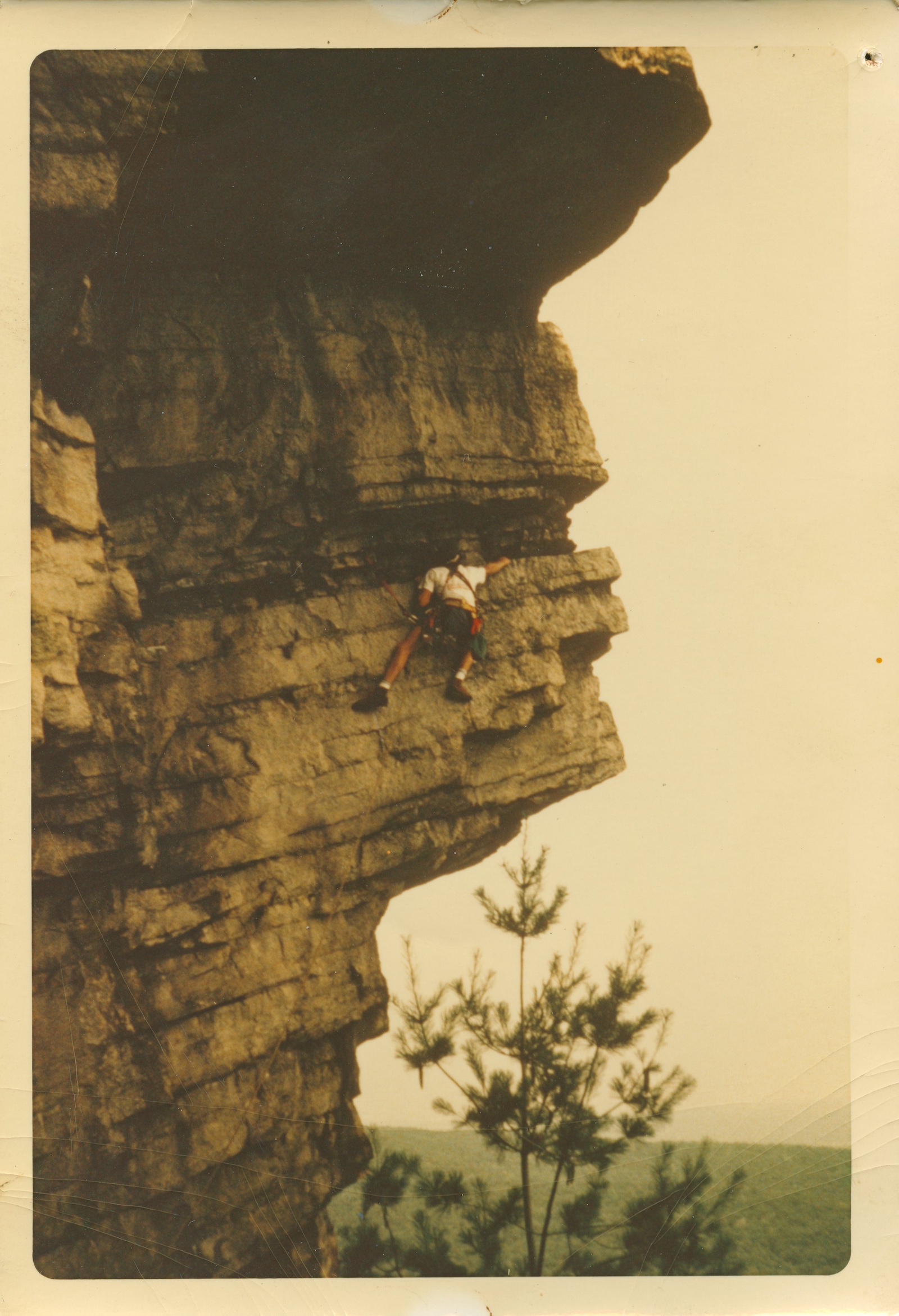
Before Black Diamond Equipment became the most trusted name in mountain sports, there was Peter Metcalf: a teenager from Long Island hitchhiking to the Gunks every weekend, a dogeared copy of Mountaineering: Freedom of the Hills on his nightstand, and a conviction that the mountains were where he belonged.
In this conversation, Steve and Peter trace the full arc of that conviction — from his early apprenticeship years through a harrowing 13-day first ascent on Mount Hunter, where hallucinations, extreme cold, and frostbite tested everything he had. That experience forged a lesson Peter would call on again in 1989, when he organized a team of fellow climbers to buy bankrupt Chouinard Equipment out of collapse — using retirement savings, high-interest loans, and a shared sense of purpose — and rebuild it into Black Diamond.
What emerges is a portrait of someone who applied the logic of alpinism to every domain of his life: patient apprenticeship, commitment without a visible outcome, and the willingness to keep moving when the only way to live is forward. This is a story about climbing — and about becoming.

Read the Companion Essay:
Exploring the poetic soul of the mountains.
Voice of the Mountains explores the mental and emotional adventures found in discovering who we are and what we’re capable of. Here we engage in self-reflection, humility, and embrace the beauty and struggle of the alpine experience equally.
Transcript:
Steve House: You might not know the name Peter Metcalf, but you absolutely know his legacy. If you’ve ever clipped a black diamond carabiner, buckled one of their helmets or gripped an ice tool that made you feel just a little braver than you really are, then you’ve touched something that Peter helped build. Long before Black Diamond equipment became one of the most influential brands in mountain sports, and long before Peter became its CEO, he was an obsessed climber, a dirt bag with a dog-eared copy of Freedom of the Hills, sleeping in a little tent up in the bugaboos, hitchhiking to the gunks, and working his way through his apprenticeship as an alpinist by tirelessly climbing rock all summer and ice all winter.
In 1980, he and two partners set out to climb a new route on the formidable Mount Hunter in Alaska. They launched up this massive wall with nothing more than a rope, a rack, and the packs on their back. They expected their climb to take six days, and it took 13 on the descent they experienced full on out-of-body hallucinations, and one of them sadly lost all his fingers to frostbite.
The story of that climb is raw and real, and it’s a lesson in leadership under pressure and entrusting your partners. It’s a story about choosing unknown transformation over the status quo, and it’s a story about choosing to climb until they crossed over onto Sun Sue’s death’s ground, where the only way to live is to continue to fight.
A few short years later, Peter found himself facing a very different life or death situation. Chouinard Equipment, the legendary climbing company, started by Yvonne Chouinard was bankrupt. Most people would’ve walked away, but Peter did not as the general manager, and against all outside advice, he organized a group of fellow climbers, not venture capitalists or bankers, climbers.
Together, they scraped together the money and he convinced his workforce to roll all their retirement savings into the collateral that they used for the loans, loans with frighteningly high interest rates and loans that they needed to survive. Peter will tell us what he learned in climbing his mountains and how those lessons shaped everything that came after for him.
How risk in the Alpine prepared him for risk in business, and how humility, honesty, and a shared purpose can build something that truly endures. This is a story about climbing. Yes, but more than that. In the true spirit of uphill athlete, it is a story about becoming. My name is Steve House, and this is Voice of the Mountains.
Steve: If you’re enjoying the show and want to take the next step in your training, join our newsletter and receive a free four week sample training plan. Head on over to uphillathlete.com/letsgo, and once you sign up, you’ll instantly get a link to try out some of our most popular training plans. It’s a great way to get a feel for how we train our athletes for big mountain goals.
Check it out atuphillathlete.com/letsgo. That’s uphillathlete.com/letsgo
Steve House: Welcome Peter. Thank you so much for being here today. I really appreciate you.
Peter Metcalf: Thank you Steve. I, I appreciate the opportunity.
Steve House: So why don’t you start us off just by telling us a little bit about how you got started in climbing, because as you know, and I know in our audience knows when you started climbing was not the more mainstream sport that it is today.
Peter Metcalf: Yeah, I was very fortunate. Life is more serendipitous than most of us. Give it credit. And I did what most kids did in the mid 1960s in America. And I was just outside of the city. I’d been born in this New York City and it was just outside of the city. And I joined Boy Scouts and serendipitously the scout troop that I joined, we heard it was a good troop and I liked doing things outside.
Happened to have two co troop leaders who had, and were doing some backpacking, skiing, canoeing. And one of ’em had done some rock climbing. And so my introduction to really, I mean not hiking ’cause I could hike around in the woods, but my first overnight backpacking trip I was 11, was up in the Catskills, camping on the summit, a slide mountain and the scouts just with my enthusiasm for it and what the scout leaders saw and did, learned how to went backpacking numerous times and then got into skiing with them.
And then Tomans Ravine, um, as a young kid. And then one of the scoutmasters, who had done some climbing, invited me and one other kid, when I was 14, to join him on the Appalachian Mountain Club, and he began a rock climbing weekend in Strong Goss because he just saw me scrambling all over the place.
And I went up there for the weekend. I went through the intro program, and this was the spring of 1970. I was 14 at the time. And it just hit me the, this unique activity I, I, I loved being outside and I saw it as a skill to learn, learn because I love being in the mountains. But there was something about this artian, bohemian, outsider, eclectic group of people.
And it was a small group of white-collar, blue-collar people that just spoke to me like it suddenly dawned on me, these are my people. And I was a kid at this time who was being raised on a dire on TV of the Little Rascals. And I thought, okay, I’ve discovered spanking the gang, John Standard and Rich Goldstone and Dick Williams and all, there they are.
That’s my, that’s my gang.
Steve House: That’s your people. Yeah, that’s so, it’s as much about the people that were climbing and having not climb, started climbing that earlier. But I mean, climbing has homogenized some in some ways. Right. In terms of the, the participation and the people that I see doing it. And not that that’s a bad thing, I think that’s a good thing and a natural thing, but I think people who don’t, didn’t climb in the seventies don’t remember just how out there of a, how, how fringe of an activity rock climbing was.
I mean, there was basically no technology around it, right? There was, there were no cams. There were ropes that were very rudimentary. I mean, you probably didn’t even have a harness to start with. You were probably just tying in with a bowling on a coil. I would, I would guess. And so very,
Peter Metcalf: No, it was bowling. And then rapidly learned that, hey, a bowling and a coil a heck of a lot more comfortable when you fold in a bow.
Steve House: than just a straight bullet. Yeah.
Peter Metcalf: Unusual. And when I came back to Long Island, just outside of the city and told people what I did, nobody understood it. Like, oh, you’re rock collecting. You are what? And um, but it was okay. I mean, and, and, and to the point you made about it was the people who attracted me. But there was also, I loved being outside.
I had done some fishing, a little bit of hunting and many different things, but I didn’t have a vehicle to channel that love of the outdoors in a, in a, I needed, I needed something that could soak up my thinking, my need for activity in some focused, skillful way. And I tried many different things. And, at the end of that weekend, it just hit me that I think it’s climbing.
I think this is my vehicle to love, to enjoy and, uh, just, just enjoy and cultivate my love for the outdoors and the mountains and the wild places.
Steve House: Well, as someone who I believe we both know, Kyle Lefkoff once told me, like his theory is that if you have the climbing gene and you get exposed to climbing, your life has changed. And it’s just like you, you’re, you’re on that path now and there’s nothing you can really do about it. It, it’s taken over your fate and, and directed you in that direction.
And that, that gene lays dormant in many, many people, maybe sometimes for their whole lives because they never get that serendipitous exposure that, that you had through the Boy Scouts. I was also in the Boy Scouts Troup five 14 in La Grande, Oregon, and was a big part of my childhood as well, so that I really love hearing, hearing that.
Peter Metcalf: Yeah, that’s, I had not heard that, uh, from Kyle, but I love that description and I think it’s very apropos. I think at the time as they got serious about it, I think some people would’ve been. Less gracious and said, it’s a, it’s a terrible addiction and it’s ruining your life and all of your friends, you’re gonna end up to nothing
Steve House: Yes. Yes. That’s, that’s the flip side of obsession, right? Because it could also be addiction. So
Peter Metcalf: The point. I just add that as I tried to introduce some of my good friends in Garden City, I became in some households with parents, Pisana and grata. I was the kid who was ruined attempting to turn their kids into delinquents, taking ’em to the Gunks.
Steve House: Yeah, yeah, yeah. You know, I was so lucky in that way, like with my upbringing personally, that my parents supported it and loaned me a car when I was 16, so I could go, in my case to Smith Rocks in 1986 and things like that. And, uh, not everyone has that, uh, that support. And so that’s, that’s really, really great that you are allowed to express that and follow that.
Peter Metcalf: yeah, I fully agree with that. You know, when I saw the, I had accepted and taken my parents’ support of this for granted until I saw the reactions of other parents, and I think I’ve reflected upon this. I think it was the fact that my parents were two immigrants to the US who came here. My mother was a survivor of the, uh, German Holocaust survivor and came in her twenties to America after the war.
And my father though American, was born and raised in China and exited when the bombing got too intense at the beginning of World War ii when the Japanese were bombing what was Canton or Guangzhou and came back with his mother alone with nothing. And life for those two people. Uh, my parents was an adventure, not by choice, but they were born into adventure and I think what they saw was they provided me with a safe home and a good basis, but wanted me to have.
Enough independence to experience the world in the way that they had. And though I didn’t have the benefit of a car, they were very willing. This is their, the sixties, late sixties and early seventies. You could hitchhike, you could take the jump on the train, take it into New York City, which we would do, take the subway up to the George Washington Bridge, walk across the George Washington Bridge and start hitchhiking on the Palisades every weekend.
And that was the weekend routine. And they were very supportive of that.
Steve House: Yeah. Yeah. We don’t encourage our teenagers to like hitchhike across the state these days despite all the additional connectivity we have. Right. Like, I mean, there was payphones and things like that with the technology. So I, I know you, or when I think of your climbing personally, and, you know, I’ve known you for decades now, I think of you as, as an alpinist.
So how does, how did, what was your journey like from going to the Swan Gunks to, you know, going to, to big mountains, um, in Alaska and elsewhere? You know, how did, how did that, what was that path like at that time?
Peter Metcalf: You know, I would first let me respond and say yes, I guess at the end of the day, I would have a point in my life. Definitely called myself, first and foremost, an alpinist over a rock climber. But I will say throughout that period of time, I was incredibly passionate about rock climbing. I just wasn’t at the highest levels.
But I so enjoyed it. And it was what I did, the majority of my climbing along with the winter ice climbing and mountains. But when the weather was warm, I loved to rock climb. And so then to answer your question, the journey to that was the diet of books that most of us who got addicted to this sport in the late sixties and early seventies had, it was.
I Chose to Climb by Chris Bonnington. It was the Hard Years by Joe Brown. It was One Man’s Mountains by Tom Patey. I mean, and what I saw in all these, in all these biographies or autobiographies that I was reading, and the people who introduced me to climbing at the ONGs, the AMC, they were all mountaineers.
You know, alpinist wasn’t used so much at that point in time in America. It was in Europe. Um, but all of them were quickly telling me like something to the extent of, you gotta get these skills. And in the summer here at the Gunks, it is so hot and so humid, you gotta get the hell outta here. So what you do in the summer is we go to the Tetons and we go to the Wind River ranges, and we go to Canada and things like that.
And I thought, oh wow, this sounds pretty cool. And, and but in reading the, those biographies and hearing this, you realize, oh, there’s a huge apprenticeship here. How do you become a mountaineer or an alpinist? Like, what do I need to do to go climb mount ropes in or go to Canada or Alaska? And you know, again, fortunately, this community of people I was surrounded with were including people who had done first as offense already in Alaska.
I mean, that was the a c at this time. And I got a hold of the Boyd Everett exhibition planner, you know, Boyd Everett was on that American Anaperna trip. Um, but I guess my point was, what was really interesting about this only being 14 was that I had never done in my life at that point in time, anything big.
You know, at that age, you’re, you’re carefree, you’re running around, you’re doing whatever. And climbing, combined with reading these stories and go, yeah, I wanna do those things. I wanna go to Alaska, I wanna go to Europe, I wanna go to Laugue. I wanna do the Rene Pillow. I wanna, I think someday, but whoa, those, that’s a big deal.
But you’re hanging out with people say, yeah, it’s a big deal, but there’s an apprenticeship you go through. So you’re gonna go, you go rock climb here, you’re gonna learn to lead. Then you gotta learn how to do winter camping, and then you’re going to learn step by step by step. And it was really, I think that has affected the rest of my life in that you can look at a goal and you immediately know how to break it down into all of its components.
Okay. It’s a step-by-step set of components. It’s just like, it’s not, you know, I think about the cover of Outside Magazine a few years back, or 10 years ago, and thinking how much the mentality has changed from 19 69, 19 70, 71, Shalong Gunks of here’s the apprenticeship in the years that you’re gonna invest in this if you wanna get to this goal, but you can do it to Seven Days To Greatness.
How you can become a great alpinist in seven days, or a great alligator wrestler or a great whatever. And it was much more the, that step by step. But it was the fact that, number one, I love the mountains. I love the wild places, I love challenges. And reading these stories of Bonnington and Pat and, um, Don Willens and then Anna per South Face of Haston, and, and well, Bonnington wrote it, but that is sent by Don Willens and, and Haston, who were the people who submitted it was like, I gotta do this.
I, I, I don’t know. It was just part of the, part of that gene that Kyle talks about, and it was, okay, what are the steps and how am I gonna do this step by step?
Steve House: Yeah, I, I feel like Boy Scouts itself taught me that because you would have these lists, like, you know, here’s the next le you know, and it, it was, it was, you know, the Boy Scout handbook in many ways, for me was sort of this, it was a path. And it was like, do you do this? You do this, you qualify for this, you gotta wait this many months.
You have to assume this level of leadership within your team. And, and it’s like, okay, I could follow this list. I, you know, and then, yeah, you look back four or five years later and you’re like, you’ve learned all of these things. You’ve become, and I think that, that’s so interesting because I, there is, and what you said with outside there is absolutely this tension between, you know, this mentality that you’re describing where you are working for a long term goal to, to become something that is going to take years versus, want to be that.
It’s, those are different, different, uh, you can be an alpinist perhaps in seven days, by some definition, but you’re not, you haven’t become a new person through that process. And those are very different things.
Peter Metcalf: Right. It’s not been a metamorphosis. And you know, I had never before thought about what you just said about the Boy Scout, the handbook. But as I think about it, I, when I was done with my copy, it was so dogeared and I think like you, I read that thing, it, it sat by my bed every night before going to, before it was, it was when I, I read until I fell asleep and I quit reading it and using it when I got serious enough about the climbing a year or two after I started.
And then that book was replaced by something else that became very dogeared, but it had hard cover. It was called Mountaineering Freedom of the Hills, which showed you everything from how to do Ty inter traverses to tension traverses to CVAs rescue. And I would read that every night and go, okay, what am I gonna practice this season?
Steve House: Yeah, yeah, yeah. That’s, it’s, I, I did, did the same. I still have my Boy Scout handbook somewhere, and it’s, it’s, it, it’s literally like, just disintegrated and it’s just a, a, a, a, just a bunch of pages, you know, you like a, like an agent text or something. But, um, so, so you still haven’t answered my question though, like, you heard about becoming a mountaineer, going to big mountains, going to the Tetons and the Canadian Rockies in Alaska, and Of course, yeah.
You’re 14, so, you know, you’ve got a, you’ve got some growing up to do as we all do, but at some point you made your way up to, to Alaska. And what was that, what was that path like? Who did you meet along the way? Who did you bring with you along the way?
Peter Metcalf: So, you know, again, life is serendipitous. Starting at the Gunks, one’s very fortunate, a lot of serendipitous acts. But, so I started in the spring of, of, of 1970 and climbed again in the fall. And that fall just by fluke, you know, when there was no internet and we would have three channels on tv. That fall was a TV show, uh, uh, a one-hour documentary.
And I, I don’t recall what it was called exactly, but it was a documentary on nolls, national Outdoor Leadership School in the Wind Rivers and Paul Petzel leading a 35-day wilderness mountaineering course. Really well filmed, showing people self resting on snow, rock climbing, climbing peaks. And I watched this halfway through it.
It was in the evening, I’m yelling. We we’re in a small little house on the outsides of Queens in nasa. I’m yelling to my parents, mom, dad, come in here. You gotta see this. I gotta do this. Check this out. My parents caught a little bit of it and go, well, if you can figure out how to get there and do it, you know, whatever, do that.
So anyway, I. That wasn’t cheap. I mean, I think cost nothing in hindsight, but it still was a lot of money to save up. But I had with my brother a little lawn business and they said, Hey, you can save up and do it. And I sent out for the course material, got the materials applied for their alpine guide course, got accepted in early June of 1971, went west for the first time, flew out to Denver.
I, oh, I had a lie on my age ’cause it required you for that course to be 16 and a half and I was 15, so I lied. I figured that that know I was pretty rabid and did that five week course. But that course was pretty incredible at that time. Pet Salt, you know, who’s a legend taught, was on it for the first 10 days and then he out bidding everybody a fair fa, while farewell and you head off up north towards Gannet Peak and that whole area, which, you know, climate change has unfortunately affected it, not for the better, but back then it was one heck of a wild glaciated pet place.
And because it was the Alpine Guide course, they wanted to teach you more about leading and real technical climbing in the mountains they had hired. And he walked in that we met him for five days in and around Gat Peak. Somebody who just before I went out there, I had read about. Because at that time the coolest publication that you could read about climbing was called Ascent.
And it was the annual sublime, beautiful, long form journalism magazine once a year of the Sierra Club. And there was an article in there written by Royal Robbins on the first descent of TISA Act, in which he wrote both his part and a guy named Don Peterson’s talking about Don Peterson is the young Turk up and coming and constantly challenging him on the route and not listening to his.
Paternalistic wisdom and experience and they fought all the way up that route. It was just a amazing article and I had read it probably five times. I was like fascinated by it. So who walks in to the organic peak base camp Don Peterson looking every bit as tough, hard as Robins making out to me. And I was like, oh my God, this I am going to be rabid and just like do anything he says and be with him.
And fortunately in this course, you know, five weeks in the wilderness, that’s a long time. Um, a lot of people were kind of burned out and since it was voluntary, only two or three of us said like, yeah, yeah, I wanna do this, I wanna do this. So we did a bunch of climbing with him. We actually did a new technical route, organic peak together.
But I mean, just hearing his stories and climbing with that guy. By the time I left Noels, I really felt like I had definitely come up a level. And one of the young guys who I really hit it off with, whose name escapes me at the moment, but doesn’t matter. And I said like, as the course was ending, have you ever climbed a Grand Teton?
And he said, Nope. And, but I’d love to. And I go, well, so would I, I think we, we know enough, let’s go up there.
Steve House: And so the two of us, as soon as the course ended, I had no deadline to get home, um, until school started after Labor Day. So as soon as the course ended, we grabbed our gear and said, man, we’re mountaineers now.
And hitchhiked up to the Tetons, got to Jenny Lake, camped out there, and then started like investigating, okay, what’s the root in this and that. And just somehow in the process realized and talking to people, they’re like, you know, you kids, I mean we were 15 before, you might wanna do the ex Exim Ridge, you might wanna get a little bit more instruction.
So we walked into the EXIM office and talked to Glen Exim about it and he said, yeah, you know, we have this advanced. Rock climbing class that teaches more about leading, more about placing pro with a guy named Herb Switzerland, who as it turned out, did the first ascent of the Black ice coor. And so we hired, we, we signed up for that class and got another day of leading instruction with Herb who would have you then jump off his stuff on traverses and evaluate you.
And then Herb said, you know, one more suggestion. No, no, nevermind. We finished that thing. Sorry, I, it was the one day, but we finished it with also a climb of Baxter and at the end of that Herb said, you know, I think your kids could do it. And so we went up and yeah, climbed the exim. We’re lucky to have lived through it because we didn’t start at 3:00 AM Um, we weren’t the fastest kids in the world and I learned a lot about afternoon thunderstorm.
So we got up near the summit in a raging thunderstorm with, I had long hair, frizzy hair standing out, sparks flying between the car. Few carabiners we had, and I should add that, I think we did that route with like three or four runners, five or six carabiners, like three peons and one Moac nut. Um, and or, or I had Peter
all you
Peter Metcalf: and my Black Beauties, but we did that, came down, did a little bit more stuff and then I hitchhiked back east to get home.
But that fall, the next great thing was I got back and I’m not in doing anything with the A MC anymore, but those people I had met through the A MC were people I was doing some climbing with. And one of those people was a wonderful guy who has since passed. Guy Waterman who had been one of the instructors and he had two sons, scooter who had three, one had passed Scooter and um, Johnny Waterman and. He said that Johnny was a really good climber and he and a, another climbing partner of his, he was out west, a guy named Life Patterson, were the following summer, summer of 72, putting together two week long mountaineering courses. And they had this two week course they were putting together to climb Mount Robson by the cane face.
And it was glaciated to learn a lot about, more about glacier travel, this sort of thing. So I convinced, um, three of my climbing buddies from the Gunks who were my age, like we should go do this, got connected with them, signed up, did it, and then hitchhiked up to the summer of 72. I mean, and that I should add that winter we’re doing a little bit of, um, mountaineering in, in the White mountains, but not ice climbing or anything, um, snowshoeing over overnight camping or rock climbing and this kind of thing.
But anyway, in the, um, summer of 72 hitchhiked at New York City up to Montreal because at that time for 35 bucks you could go all the way out to the West coast on the Can Trans Canada train. And we did research and they actually had a whistle stop at Mount Robson station. So in the middle of the night, after three days of travel, the train guy, the conductor, agrees to tell the, the, the engineer to stop the train.
We pile off at Mount Robson station next morning, run into Johnny and Lafe and go packing into, uh, Berg Lake at the base of Mount Robson. And when we get there, we run into a guy named Warren Blesser, who was well known at the time, had just done a new route, east Ridge of McKinlay or something. But definitely I’d read and heard of him, and Leif knew of him and his partner had just twisted his ankle.
And was walking out and Leif was there, left with his dog, his Alaskan Malam, but looking for a climbing partner. Said, Hey, can I join you guys? And Leif said, well, I got these three kids who I’m teaching to climb, but if you wanna join us, you’re welcome to. And Warren said, sure, let’s do it. So anyway, the next two weeks we spent doing, working our way up, first climbing, splendid in the helmet, working our way up across onto the dome, climb the cane face.
I should add, someday these photos, I gotta publish. A w Warren kept saying his dog will turn around at some point and not follow us. And it kept following us, so we had to keep feeding it. But when we crossed the SHR onto the cane face, it leaped across the shr onto the ice, and then it couldn’t reverse it.
So we climbed the cane face, leading it and placing screws. And this is 1972. And this just part of what we’re learning about ice climbing. I got to do my leading at all. But this dog is like front pointing with these long claws up, and every time he tries to turn around, it can. And uh, anyway, we, I’m digressing a little.
This is a phenomenal story. We, we make it to the summit of ropes in, which is really cool, like Alaskan Peak with its ice fluting and stuff. And you know, you did that Emperor Face route. Um, but at this point now the clouds are blowing in and it’s visibility is getting low and in and out of the clouds.
We keep hearing that well before we can see it, we’re hearing these whistles blowing one whistle, then two, one whistle, then two. And then as the clouds blow clear for a moment, we see down below a team that turns out to be a. Four Japanese climbers who had come up the other side, the ledges route or whatever the, the standard route is, and they had just made it to the, the base of the pyramid, and they’re solely working their way up. Anyway, that section, as you know, is not that steep. It’s probably only 30 degrees or so. The dog goes through the clouds moving very quickly, gets ahead of us if we descend down to that team, and suddenly you hear the whistles just go nuts. And you realize when we, the team, they thought it was a apparition, a wolf coming down to eat them. It was pretty phenomenal, you know, at this point in time’s getting late. And the only way down with us is we’re gonna wrap the cane face and, but the dog can’t repel. So we take turns putting the goddamn malam and slings and repelling with a
Steve House: huge dog. That’s amazing that it was calm enough.
Peter Metcalf: phenomenal adventure. But what was very cool about just what learning was that the ca the north face, not the emperor face, the north face of Robeson, had only been climbed once under snow conditions by Pat Callis, and I forgot whom. And Johnny and Warren and Leif had all wanted to do it under ice conditions. Leif unfortunately that morning was not feeling well and said, I’m gonna, I’m gonna stick around in the dome. But he, he said to Johnny, if you and um, Warren want to try it, go do it. And said to us, guys, you guys are learned enough, you can follow ’em over there. I mean, you’re not gonna do it obviously, but you wanna follow ’em.
So anyway, we did that and got to witness the first ascent of no ice, real ice conditions of that climb. We all came down and actually then afterwards, still had enough time every two weeks and did a new route on Whitehorn in a day. Um, well,
Steve House: Beautiful
Peter Metcalf: could have been a day, but all of us, I mean, it was coming down in the dark.
We didn’t have headlines, just little flashlights. And the three of us who had never done an unprepared biv WAC before, kept saying to to, to Johnny and Lafe, let’s do a biv. Wh we gotta learn how to biv wh and um, finally they capitulating and said, all right, you wanna be miserable. I understand what it is to do an unprepared biv, wh up high, let’s do it. And shivered through the night, never slept a moment, put every stitch on, lay on the ropes and learned what it was like to biv wh and got down, walked out. And then after that it was a great trip and decided, all right, we still got two weeks left, hitchhike down to the bugaboo and had a great eight or nine days in the bugs.
And got to do everything from the standard roots and bugaboo and snow patch to the cross McCarthy on snow patch. Pretty good roots for the day. And also messed around with some Canadian climbers we met who were trying to do an aid route on snow patch and got to belay and actually try to do a, a few moves with them.
But anyway, it was, it was phenomenal. And then ultimately hitchhiked home at the end of the summer. And at that point, with that experience, I realized as did some of my other climbing buddies from the Gunks who had had similar experiences, we, we need to do something bigger now. We need to go to Alaska.
We’re ready. And my a MC buddies that fall said, yeah, you guys are ready, so what are you gonna do? I go, Hmm, not sure. And did the reading, did the research, and determined that what we should do is. Not, uh, not the highest peak. Some we shouldn’t, let’s not do something on Logan or say The Lives or McKinley, but let’s do a new route somewhere and let’s do it on a peak that’s 15, 16, 17,000 feet somewhere.
And we just started reading, finding books, and we came across a book by called The Cloud Walkers by Patty, somebody or another. And in it he talked about doing the second descent, or the first descent of a beautiful peak called Mount Fairweather in Glacier Bay National Monument. And when we read about it and then went to the Alpine Club, you know, we’re in New York, so it was easier to get into the American Alpine Club’s headquarters at the time of their library.
Realized, wow. That thing had only had, I think one other ascent at this point in time. And it looked like there was multiple ridges that had not been climbed, that were technical. We wanted to do something technical. And so, you know, doing the research, he found out, oh, Brad Washburn up in the Museum of Science had this amazing archive of, from his aerial photography days, photographing every Alaskan peak.
And that he, he would allow you to come up there and go through his books if he made an appointment. So early in the winter, early late in the fall, we contacted the office and a asked if we could come up there and look at photos of Mount Fairweather. And they said, sure. Made the appointment. So we’re in there a bunch of, at this time, yeah, 17-year-olds looking through this stuff.
And who walks through the door? Brad Washburn and Brad says, Hey, I heard you guys were coming up here and we’re interested in Fairweather. Let me tell you about Fairweather. Have you seen my book Bradford or Mount Fairweather? And I said, what? And he goes, here’s a copy. And as it turned out, Brad had actually, when he was at the Harvard Mountaineering Club.
Um, had tried to do the second, I guess at that time would’ve been the first descent. Yeah. Before carpe of Mount Fairweather. And what they did was they took the train, cross country, took a boat up to Juneau or into Tuya Bay and started and were on the mountain for 30 or 40 days and failed to do it, weather conditions, all this sort of thing.
But I, I share that only because, uh, uh, uh, I’ll jump back to that. Um, and then Brad looked at the photos with us and helped us and they said, well, there’s, that ridge is undone. That ridge is undone. That one looks really cool. And he goes, I would go do that one. You guys can do it. I mean, you’re gonna be college kids in another year.
I mean, yeah, go do it. Um, so anyway, with that inspiration in those photos and the Boyd Everett Expedition planner, we began playing the trip. How much gear, what fixed ropes, how much rope did we need? How many pickets did we need? And fortunately, one of my climbing buddies, I think it’s safe to tell the stories.
Dad was a head janitor at one of the schools, and he lived in Brooklyn. In Brooklyn, was able to put a requisition in for a whole bunch of 60, 61 T six aluminum t bar for something at the school. Just happened to get cut up and drilled by us into pickets. Um, but you know what’s interesting is here, reading Brad’s book and how he got there in the gear he had, it was just shocking how between 1930 something in 1973, the methodologies, the gear, the stoves, the leather boots, the coated nylon in oil cotton had not changed.
I mean, it was almost the same. No walkie talkies. No, I mean, I mean it was really so similar, the trip and it turned out to be pretty phenomenal. We, in, instead of training it, we took a. Packed up. One of the buddies had a, a Volkswagen little, you know, the, the typical camper van. And in 1973, left high school, early in mid-May, drove across country, the four of us with 30 days worth of food, all the ropes, gear, everything we needed.
So we didn’t have to buy a single thing. And then drove up, drove to Prince Rupert, got on the ferry boat and then told people, I’m kind of joking, but on the boat, we just slept on the deck and people would see us with the gear tying, making our wands, cutting nylons, sealing it, taping it, gluing it to bamboo sticks, and people wanna know what we’re doing.
We finally realized, because we didn’t have much money, like we’ll tell you about it, but if, if, if you could bring us a hamburger or a, or some food, it would be really helpful. And everybody was happy to feed us these board tour on the boat. Um, and then we got, so we got to Juno, pulled off there, pulled into Ken Loken, he was the pilot’s office, walked in and I think we called our, I forgot what we called our expedition.
We came up with a name. Everybody had a name for their expedition, and we walked in and said, we’re their so-and-so expedition. And Ken Kin’s, administrative assistant secretary, et cetera, office manager, looked at us and said, do your parents know you’re here? You are the expedition.
Steve House: Yeah,
Peter Metcalf: That’s us.
Steve House: yeah. We were expecting actual full grown adults,
Peter Metcalf: Yeah, yeah, exactly.
Steve House: bunch teenagers.
Peter Metcalf: So anyway, Ken flew us into Latu Bay and we spent 28 days on the mountain, um, and had a phenomenal time. But you know what I, I skipped a most amazing component of this story, which I gotta tell you. So at this point in time and, um, the, you know, the American Alpine Club, but still has it now, but back then I think it was more significant was there were these Boyd Everett mountaineering grants for young people to do new route up in Alaska.
So we applied for those grants to the A a C, and we got it, I think it was 150 bucks each, which was very meaningful at that point in time. But because of that, of course, everybody at the a c knew that. Um, so people there knew that. And another part of the story that I forgot to tell you earlier was, so the previous year I told you, we went to the Bugaboos at, during those eight or nine days, we were at the Bugaboos.
When we were the last day or two, we were there down, this was before the Big hut was there down into that camp area where the, the, the, the igloos were, was walking this old guy. And we look at him and, and think, I’ve seen photos of that guy before. And we walk up to him and just start talking to him. And, and, uh, I just asked him like, Hey, where are you coming from?
And he goes, uh, someplace in the vows. And he go, well, anyways, it Fred, Becky, and Fred at this time was a whopping 48 years old. I just thought like, this is a old guy here. And anyway, so we chatted to him for a while and this and that, and told him a little bit what we had done. Okay, so done. So now, fast forward, so we’re working on this trip to Fairweather, picked out the route, applied for the grants, we’re told we got it.
I’m at home one night at home, it’s my parents’ home phone rings and my mother yells to me, goes, Hey Peter, it’s phone calls for you. Somebody named Fred Becky, and like, huh. And I grabbed the phone and go, hello. And it’s Becky. And I go, yeah. And he goes, this Peter aff. I go, yeah. And he goes, oh, good, I’m glad I got you.
And he goes, yeah, we heard about, we heard about you. Got you, you and some of the kids trying to do this new route and Fairweather it’s way above you. Like, what? And he goes, oh yeah. Like it’s way above you. And I go, well, uh, well thanks for the advice, but we’re keen to try it anyway. And he goes, well, you guys were trying to do a first ascent, right?
And he goes, and we said, yeah, yeah. Well that’s what we’re trying to do. And he goes, well, it won’t be a first ascent. And I, I said, what? And he goes, because we’re gonna beat you to it. I’m going in there with Greg Markov, Jim Wickwire, and De Jasky, and we’re hot shot climbers and we’re gonna have done it by the time you get there.
And so I said to him, well, that’s okay, um, because we won’t know you’ve done it. And if we have heard you’ve done it, we won’t have read anything about it. Oh, feel like a first descent to us, and that’s all that matters. We’re looking for an adventure. And he argues for a while and then end of story. And so when we get there, who’s, who’s in Ken Loins Hanger?
Jim Wickwire. Doja Gersky and Greg Markoff. But who’s
Steve House: were tr who were truly like the big muscle of the mountaineering
Peter Metcalf: were the big dogs and no shit. They were the big dogs. They’re like, whoa, but who’s missing? Fred? Becky. And he is like, where’s Fred? I just start talking to him, where’s Fred? And they go, he’s laid, he got stuck on some peak in the Bella cooler range and we’re waiting for him to show up here.
Steve House: Oh.
Peter Metcalf: And he said, oh, well I guess we’re gonna get in before you.
And they said, Hey, look, you don’t need to worry, but it’s no competition between us and you kids. And if, for that matter, you shamed us into deciding that if you thought you could do this, we looked at it hard. We, we, we are experienced, we’re gonna do something much bigger. So we’re gonna go do the first traverse of Quincy, Adam, just a group of peaks there, do a harder route, et cetera, et cetera.
Which was like, alright, touche. Good. But I mean, it was great. So we did get flown in first and right there, but, and initially, you know, we’re fearing loads, we got 30 days worth of food, ropes, et cetera. And we ran into ’em on day one, day two down there, and then they disappeared and we didn’t see them and we summited.
And during our climb there was a massive earthquake and thank God where we were on the ridge because every face in that circ of every peak, fully avalanche. And we’re wondering, where are those guys? I hope they’re okay. Anyway, you come down and I think we came down towards the landing site, working our way through the glacier on day 26 or 20, day 27.
And God, amazing enough, there they are. We can see them in the distance working their way down through their loads. And they got out a day before us and they succeeded. We succeeded. But it was an incredible experience and that, I guess is the, the journey to Alpinism in Alaska. And then of course my appetite for Alaska was now turned on.
Steve House: Yeah. And you know, I mean, I think any Alpine that you talk to has threads of this story in common, whether it’s, you know, the people they met, you know, the, the, the things that happened. Yeah. Just, just so many. I think about my own. Trip. My first trip to Alaska, we went up there. We thought we were gonna climb Mount Hunter, Mount Forker, and Denali, all on the same trip.
We went in with, like, we didn’t have much money. So we, we, we only, we went to Costco. This would’ve been 1991 or two, and we bought Macaroni and Cheese and Top Ramen. Those were our two meals. We had food for 45 days. Um, but it goes without saying, we climbed to nothing, right? Like, but we had, but we, but we tried a bunch of stuff.
We got our butts kicked, uh, by weather, by conditions, by our own lack of skills. And, you know, met people who I ended up knowing for my entire life. Just both, both climbers and some of the characters that reside around TAA and, you know, run their flight services and all of the other infrastructure up there.
The, the climbing rangers. I mean, everyone’s got these, these stories and you, you don’t realize as a young person, when you step into these theaters, you really do step into history. Like you step into live history that’s being written by your being there and these other people being there. And, and I mean, these are our shared as our shared history and culture.
Uh, and, and there’s so much that’s familiar with, with, with your story that me not not having known any of this from you personally, but so much of these threads are, are, are familiar.
Peter Metcalf: Steve, that is so well, well said. And I’ve, I’ve thought about that myself in that perhaps that’s why for our generation, this history was so powerful and why we read all these books and biographies because it was tangible. We met these people, the we, the legends, we got to actually hang with and be around.
And it wasn’t elitist. You just, it just what you learned from their presence and seeing them was just so powerful.
Steve House: Yeah. Yeah. So you, you, I think it was, correct me if I’m wrong, but two years later went to climb Mount Hunter by a new route with, uh, was that, was that 1974? What?
Peter Metcalf: No, it wasn’t. Yeah, but you, you, you got a good part of this down. So two years later, I go to do a new route in 1975 on Mount McKinley, we called it Reality Ridge, the Southeast Ridge of the South Spur. And it was with several of the same people who I had done fair weather with three the same, uh, two of the same, and one new partner, a partner that I had met in the fall.
I, I spent the, um, fall of 74 in the spring of 75 living in the Valley of 70 Valley. So yes, I was a rock climber. Um, and one of my valley partners from the fall of 74, who then we went back and spent, lived there in the spring of 75. But yeah, we got hooked in Alaska and began looking at let’s do something on McKinley or Logan or St.
Elias. And came across this, the reality, what we called reality, where the southeast spur the southridge and decided like, okay, let’s go do this guy and let’s do a capsule style instead of leaving a bunch of ropes, you know, this is still before things are being done. Alpine style up there, the gear was still not that good.
It was better than, than it was two years earlier. Um, and so what we ended up doing was driving the Alcan that time up to Alaska. But first I spent the, the spring living in the valley, and my buddies picked me up in California at the valley with my other climbing partner, and we drove up there with all our gear.
Again, this is one hell of a story too, in my buddy’s 1966. Black full sides Dodge Cort. We ripped the back seat out, put on top of it. He had found through army surplus, some old US Army Antarctic sled that could be airdropped down into Antarctica. And his dad, who is the janitor handyman, was able to do some welding and turn it into a giant roof rack, a roof container that we could, this is before tooling and all these things.
Put gear there but ripped the back seats out, loaded up food and gear in the back of the car, light Eva’s oats on it. So two people could always be sleeping in the back as people drove. Loaded up the trunk and the photos of this car is just amazing. And then like a tugboat, lashed, extra tires onto the front of the car like bumper guards and drove the alca.
It was still dirt up to tna. Got flown in and did this new route on McKinley and did kind of a circumnavigation because what we did was we had 10,000 feet of rope that would pull the polypro on reality original until we got to the top of the South Ridge. Then we buried it in a crevasse deep down. And then from there, I think we had a ferry one or two more loads.
We went into Fair Basin and then up out of Fair Basin up into, it’s really I guess the west, the um, the Mulrow route and over to Denali Pass. And then the weather wasn’t so good. So down to the high camp at 17 two, did the summit and came down to Hiner route, down to base camp and that was 45 days. Uh, it’s a long time to be in mountain without a shower or anything else.
Amazing
Steve House: Completely self supported too. It’s not like you had, I mean, that, that’s, that’s a, that’s a pretty significant achievement, just keeping yourself supplied with food and fuel and everything you need to survive in Alaskan conditions. For, for, for, what? Six weeks?
Peter Metcalf: Yeah. Yeah. 45 days is a long time. Yeah. Fearing all our own gear and loads and food and pulling ropes out, re-fixing ’em, pulling ropes out, refix ’em and all of that. And uh, I think our theme song at about the 30 day mark became Paul McCartney’s, if I ever Get Outta here. Um,
Steve House: Yeah.
Peter Metcalf: uh, but great experience and, but well in TNA both waiting to get flown in.
I think we had to wait that time, five days, even though at times it looked really clear and I think it was, but I think, um, cliff Hudson was backed up and we always say like, I can’t get you into that part of the roof right now. I can’t get you in. And, but on those clear days, as you know, having been spent a lot of time in Tona on a clear day when you walk down to si sit a river that runs through town and you look over at the range, there’s the range and it’s just makes of Slack jaw.
And there’re the, the big peaks, you know, the obvious ones are obviously Forker, hunter and McKinley. And I kept looking at Hunter and from Tona, the central R of the South face, it’s like a gigantic walker spur. And I looked at that thing, I thought that is one of the most aesthetic lines I have ever seen and asking around.
Nobody knew if it had been cl, nobody thought it had been climbed. And I just thought, well, if it hasn’t been climbed, that’s my next objective. I mean, even before I got home and when we had gotten back to New York, I um, you know, obviously did quick research, like no, it hadn’t been climbed. So immediately I began scheming on, okay, that’s the next objective we’re gonna go do, and we’ll do it in 77.
I have to go to college for a year or two at least. I did the, uh, seven and a half year college program, year on year on year or year and a half off, year on, year and year a half off, and started scheming on that trip and, um, planning on that trip to do that. And by 77, um, in the spring of 77, went off to do that.
However, this was now a totally new one person from my previous to Alaskan climbs, and then two new people, people I had climbed with, not in Alaska, no real Alpinism ragging in Aldo, Colorado. Um, a few other places, but they had each done ice climbing and some alpine roots here and there. They seemed like good super fit people and they seemed game, and it was up to me.
I organized it and figured out, okay, things are starting to be done. The first routes have been done. Alpine style in Alaska. I think the way to do this route, and it’s a, you know, there’s a lot of technical climbing, low down in that route. Hard rock climbing and aid climbing. What we’ll do is on the lower part, we’ll bring some loads up, fix the lower part, leave the ropes, and then we’re cut loose and then go alpine style first, get to a certain point, then go alpine style.
We drove all the way up there again, and the first signs of problems began on the drive. As you know, that’s a long drive in a little vehicle packed to the gills. And you can already begin to sense this group of people, unlike my other two climbs, where we had spent so much time training together, like doing a winter traverse of the white mountains together.
Uh, camping together. I, I mean, we had done a lot together and suddenly realizing, wow, there’s something called group dynamics here. And began just sort of learning more about everybody’s skill and we get flown in and, you know, when you get flown into the base of a big peak like that, especially if you’ve never been to Alaska before, it can be a so a soul searching moment as you start up one of these big roots.
And as it turned out, one, one, my partner from the two previous Alaskan trips, who was a really good climber, had amazing route finding ability and all had been in school, working on his, he’s already, I think, had already graduated at this point, but working on his PhD now and just doing a lot of studying and not climbing a lot and was not what I’d call super fit, though very capable.
His insights and wisdom are impeccable. Um, but his fitness was not great, and he seemed hesitant to really commit another partner who had never been to Alaska before, the only one who had never been to Alaska before. Um, I was looking at all this and being pretty overwhelmed by the whole scene and starting to think like, maybe this isn’t for him.
The third person who I’d never been done any serious alpine climbing with this ragging who had done one route in Alaska before, um, was rabid about, let’s just do it. Let’s just do it. And to lack some judgment in my opinion. And the chemistry is, we were on this route for five days between the people was not working.
So I had one part, one partner who’s like, I’m done. I’m, I’m, you guys do it. This is not for me. My partner who is very experienced. I’ve been these other two routes with but not super fit at this point in time. And very concerned about decision making. So the other person’s very rabid. Uh, enthusiasm is almost, and I have to agree with him a little bit irrational on some of the things you were saying and like, this is a good way to get killed.
And then thirdly, just this idea of when are we gonna cut free of these ropes once you start climbing with fixed ropes and say, we’re gonna go for it. You look at your kit. No, it’s like, just questionable. And I guess I’ll make a long story short, it was, was clear this wasn’t meant to be the approach of trying to do it in a mixed style.
A team that had not climbed significantly together, the human dynamics of that team. Um, it just wasn’t gonna, it wasn’t gonna come together. And I also realized then at that point in time that not a single one of us there had the experience to do that root alpine style. It was too big, too technical. And though I had done two roots in Alaska, it was in that style.
And though I had done plenty of alpine climbing, I’d never done what I’d call a big alpine route in the Alps or Canada, you know, multi-day route. And so we flew out and there was a lot of disharmonies. You can imagine after all the effort and money sacrificed in time. But even as we are driving back down to aan, not talking to one another, um, you know, luckily I got dropped off in the Canadian Rockies and still had a pretty good summer of climbing in the Canadian Rockies with one of the people.
Um, but I did realize, I’m gonna go back, it’s probably, it won’t be a year, it might be two years, but I need to spend at least one full season in the Alps. Just some of the great North faces, you know, Matterhorn Walker, spur, Bonti pillar, just bigger roots, multi-day roots and just feel really good about climbing multi-day roots with my partners.
And so the next two years I ended up climbing in Europe for two summers with uh, hosted different partners, doing those great route and really getting great experience and decided, okay, 1980 we’re gonna go and picked, I was, it was gonna be a team of four. Um, no, it was gonna be a team of three, sorry. It was Charlie Fowler who I’d been climbing with in the Alps, Glen Rando, who I had done a ton of climbing with and had just done a new route year earlier in Mount Huntington and me, and then Charlie fell in love and decided he’s not going.
So somebody else who I had not climbed in the Alps with, but I had done a lot of rock climbing and ice climbing with as Head Glen was Pete Athens. So talked to Glen and said, I’d like to invite Pete. Did some more climbing together and game on. And it was up to me to sort of organize, okay, what’s the style?
How long’s it gonna take? ’cause I’d been there before and planned the trip out. And anyway, did that, and that’s what Ultimate got us to in the May of 1980 to Tona and the Toci at the base of Mount Hunter to try it again.
Steve House: Mm-hmm. Mm-hmm. And with a totally different, what was the group dynamic on that trip?
Peter Metcalf: It was phenomenal because I had, yes, I think sometimes you don’t know what you don’t know until you know it. And what I mean by that is you sometimes take things for granted. So my first two Alaskan trips. Dynamics were great. We had spent time together and just, and I just thought like, yeah, you climb something with people, like we get along, we get along, we, we do.
It’s, it’s all good. And then on that first hunter adventure, I realized among some of the other reasons we failed that no, it’s not a given, that people are going to in these very stressful, very challenging situations that they’re gonna mesh and bring out the best in each other and support one another.
So that was something I was highly cognizant of with this team, um, in what we needed to do this. I also recognized at this point, having been there once and been on it and backed off of it, that this was going to be the most, up until that point without question, most serious climb in my life. And it was a climb that I also realized and explain to Glenn and Pete is just something we might not come back from.
And, and it’s not that we had a death wish, it was just that this was important enough to me and I wanted to communicate that to them, that this was gonna take everything we had. We had to be our best. And even with that, the outcome was not guaranteed, nor is are coming back. And I remember at this point, because I had, I won’t go into details, I had already had, now several partners killed climbing and people I knew well.
And so I had to go through that experience. Actually, the previous summit in Shaman, one of my, my climbing partner from Fairweather was killed and went through that experience of having to tell his wife, call his dad, meet them at the airport, and go through that trauma. And I think my realization at this point in time was also that not only do we have to accept our own. Risk factors in this, but we have to understand that there may be other people who are going to be affected if we get killed. And we need to make sure those people know what we’re doing and why we’re doing it.
And we accept the risk and understand that so they can accept that. And I actually wrote a letter to my parents and said, do not open this letter. My brother saved it. Explaining that to them. I said, open in case of problems or something like that. I think I gave it to my brother and explained it to him
Steve House: Mm-hmm.
Peter Metcalf: it.
Um, so I just shared that because we, uh, I wanted to be sure they, and all of us understood what we’re getting into and why it was such a, the dynamics was so important and the training and thinking through every piece of gear we had, um, and testing it beforehand and making sure that this was right.
Steve House: Mm-hmm. Mm-hmm. Mm-hmm. Yeah. And, and you, you chose Glenn and Pete rather, I don’t know what the right term is. Uh, deliberately, almost surgically. Like, you know, I mean, obviously Charlie, I, I snickered a little bit when you said Charlie fell in love, having known Charlie as well, like, sounds, sounds like a typical Charlie story.
Charlie fell in love and, uh, rest in peace, Charlie. But you know, when with Glenn and, and Pete also, you know, just some of the, some of the best, both, some, you know, the best climbers in, in, in the game at that time, and you, you chose them, you set the table with these intentions and awareness that takes a lot of. Self. Yeah. That takes a lot of self-awareness and you have to be, I think, pretty vulnerable with what that means, right? Like you have to be honest about what the, what, what you’re actually talking about. You’re actually talking about life and death and as you said, affecting how that affects other people, what you’re choosing to do and why you’re choosing to do it.
Those are a lot, that’s a lot to, uh, lay out.
Peter Metcalf: Yes, it’s really well said Steve. And I would also add that, you know, I actually, at that point in time, Pete was not the climber. He became, I think Hunter really was a giant stepping stone to his becoming the great climber he became, because up until that point he had left into Alaska and both Glenn and I recognized, I had climbed with him, by the way, the previous summer in the Alps, we had done the American direct on the, on the drew in, in three or four days and several other longer multi-day route.
And so at this point I was definitely much more experienced than Pete. Um, but he was strong. And to the point you just made is that it’s not only experience, I mean technical ability is really, really important experience. But I, I would add that if I’m having to choose between experience and thoughtfulness and awareness and chemistry of the team.
I would choose the ladder. And what I knew with Pete, having been through some challenges on, on the climbs we did, the guy is very thoughtful. He has humility. He knows what he’s willing to admit when he can’t do a lead, and he’s willing to tell you when he can. Um, and to your point you were saying earlier is that in the team dynamics, what you have to, you have to have a hundred percent confidence in the competency of your partner, and you have to have a hundred percent confident that there, there’s enough absolute brutal honesty with your partners that they’re not gonna take the lead in a, in a situation like this where you can’t fall if they’re not up to it, that they have to say, I’m just not up to this.
Or like, Hey, I’m up to this. They, I’ll, I’ll do it. And they just have, they have to be able to say anything and everything that’s on their mind that’s gonna perfect affect their performance in a realization that, you know, this is really a cliche that, but it’s so true. It’s like you are only as strong as you weak as a member.
And if somebody’s not healthy and well, or you’re not taking care of your team or your partner, you’re screwing yourself. Um, so there’s all, those are such important dynamics in working with a team of people to get things done. And you are looking for humility and, uh, a lack of hubris in people so that they’re so honest and acknowledging their fears, their concerns, and that you can talk through things and find a com a, a solution and everybody can agree with it and not fight over it.
Steve House: Right, right. Yeah. And around this same time, I’m not exactly sure on the, on the timeline here, you got involved with a young company called ARD Equipment. You wanna tell us how that came to be? Because you know, you are best known to many as. I don’t know, uh, what the right title of it for you was if you were the, the founder of Black Diamond, because you did reincarnation art equipment as black diamond equipment, and then you led that company for decades, uh, until its eventual, uh, sale and then remain involved to this day.
With that, with that company’s been an incredibly influential, you know, company doesn’t do it justice, but it’s, you know, black Diamond itself in part through you and, and all the others that worked on it. The, you were in, you shaped our culture, you shaped our conversation. You, you shaped our vocabulary in many cases.
You, and you’ve absolutely shaped the technology that we all used. So I want to get into that, but I would wanna hear how you got into that and how that came about.
Peter Metcalf: Thank you for those very gracious comments, Steve. I, I appreciate them. So, you know, America is a place to be a professional climber in the 1970s into the early eighties is very, was very different than it’s today. And so I continued after Hunter climbing as, as full-time as I could. I mean, I, I ultimately did finally get a degree from cu.
I, I did like my academics. Um, I didn’t know what I wanted to do other than I wanted to climb and I wanted to work as little as I could and climb as much as I could. So I lived as frugally. I, I didn’t own a car. Um, I. Until I went to work for Yvonne, and it was 1982, I finally bought a car and I was like, I, I think I need one.
Um, but the goal was climbing and I survived. Doing what climbers in that period of time did was I worked out rebound often. I did a little illegal guiding. I worked as a helping out at the climbers ranch, some at the Alpine Club. I spent two winters throwing chain with Mike Munger and Angus Theurer on drilling rigs in Wyoming.
Uh, in the winter I was a chain hand on wildcat rigs and, you know, it was reasonable money and, uh, but not great work. And I realized, and also I should add that in the, um, I went back, spent some time in the valley again, and some of the weekends, Fred, Becky would come up and I would do some climbing with Fred.
But I share all this because I realized that by, and by 81, I was starting to think like, this is not a good long-term sustainable model. And I was looking at Fred candidly and going, I wanna have more of a career than Fred. I got, I, I I need something besides just climbing and working on rigs, working outward bound, picking up work.
That’s, that’s not a future there. Um, I need something more. And so this is 1981 and, you know, I’m traveling, climbing with, you know, what I call the more serious climbers of America at the time. And a few of them are starting to get these, this new job, which I’d never heard of is called sales Repping. And it seemed like they could keep climbing and they had own cars and they would just stop by all the retailers I knew.
I knew Bob Kalp, I knew Gary Neptune. I could go talk to those guys and they’d just show ’em some product, talk to ’em about product and get orders, go to the next shop, go climbing for a couple days. And I thought that might be an interesting way to break into a career. I got a degree in poli sci and an economics minor, but that looks pretty good to me.
And I, I could keep climbing. So I just started sending out letters to people I knew at companies that I had hustled free gear from, uh, for expeditions that I was aware of this, you know, here’s who I am, you, well, you know who I am and I’m ready to start getting more serious about working. And I think I would be a great rep and corresponded with all of ’em and whatnot.
And one of the companies I sent a letter to was, I didn’t know Yvonne, um, but I had met him, but he didn’t know me, but I knew people who knew him, and I knew that two, the people I, I’d run into Henry Barber and another guy climbing, uh, Howard Sloan, who were, uh, reps. And I just said, okay, I’ll mention those guys.
And sent the letter off
Steve House: about, sorry to interrupt, but we’re talking about Yvonne Sheard, who founded Sheard Equipment and Patagonia.
Peter Metcalf: yes. And so started corresponding about a rep job. And I got a, and Patagonia, Chris McDivitt, who was the, at the time, general manager of Patagonia, replied and said, um, Yvonne says he is interested. We’re interested. We’ll talk to you. Why don’t you come to Chicago? There’s a trade show in Chicago at this date and interview.
And I just wrote back a letter. At the time, I didn’t tell her I didn’t have a car, but I didn’t have a car and I didn’t have any money. And I’m like, I’m not going to Chicago with, to the interview for this job. And then another opportunity came up somewhere, but at this point climbing was working really well and it was gonna be a sacrifice to go somewhere to interview for the job.
And I just blew it off. I didn’t even respond. And I just, at this point, so now we’re at the spring of 1982 I got contracts that somewhere with that rebound, I fly up to Alaska in May with Glen Randall. We do a bunch of good climbs on for and, and McKinley. I’m like riding high. Like I’m not even at this point thinking about repping right now.
I just delayed my future. But when I get back from Alaska in late May or early June, there’s a letter waiting for me and it’s from Chris McDivitt and she begins with, this is the last letter you will ever receive from me. That’s quite a beginning.
Steve House: Well, I.
Peter Metcalf: And she says that Yvonne last year split his companies up and it at this, up until 1981, there was one company and it was the maker of, it was shard equipment and it had Patagonia clothing, it had equipment climbing hardware and GPIW, which was a retail store and a mailer operation. And what the latest said was, we split companies up. I’m running Patagonia. Um, somebody else is running GPIW retail. Yvonne thought he was running ARD equipment, but it’s become clear to me and him that somebody needs to run it. And at this point, the company is sub million dollars and it’s declining. And you cannot tell the history of global climbing without telling the history of ARD equipment, whether you’re talking about big wall climbing and peons, or free climbing hex and stoppers or ice climbing with the, the rigid crampons and curve pick tools.
But Yvonne had begun really focusing by the late seventies and Patagonia, and by 1982, that company hadn’t even done a catalog in a couple of years. Wall country was crushing it with its rocks and now, uh, uh, friends and shown equipment was going backwards very quickly, but the reputation was strong. You don’t ruin a reputation like that, um, very easily.
And I should add that to me and many people of my generation, when I received. The 1972 Schade Equipment catalog, which was not a catalog, it was to us in my generation of climbers, what Mao’s Little Red Book was the cultural revolution. This was something that, yeah, it sold some gear, but it told you how you used the gear, it told you how you dress.
It told you what your ethos were, what your ethics were, what your morality should be. It it showed you how to dress, how to act, how to behave. I mean, this was a template. I mean, it was like Yvonne was the angel, Marani Maroney bringing the golden tablets to the Mormon. I mean, it was this powerful, and I share that because I had become, you know, just a, I was a full-time climbing bum.
I had reduced my worldly possessions down to literally a single hall bag. I didn’t own a car. And I had that catalog in there, that catalog I had, I still have it today, 50 years later. Um, so to me, when this letter comes and I’m told that Yvonne is looking for a general manager and that he looked at my resume again and said, give that guy a call and let’s interview him.
I thought, alright, stop everything. This is, this isn’t a rep job. This is to go work for the guy who wrote the little red book. And so I immediately called Chris. As soon as I got that letter, I just stopped read it and get on the phone, call the phone number. Chris picks up, you know, Patagonia’s a million dollar company.
It’s a tiny place. I go, Chris, this is Peter Metcalf. I just got your letter. She goes, who? I go, Peter Metcalf. She goes, Peter, who? I go, Hey, this is the letter I just got. He goes, oh, yeah, yeah, yeah, yeah, yeah. She goes, and I’m expecting having this nice conversation. She goes, you gotta talk to Vaughn, not me, but he is not here.
He’ll be here in five or six days and or on this date, call at this day between these hours on this date and talk to him. And I go, okay, I’ll do it. And immediately my brain really gets into, gets focused. I want a shot at this job. This, this is like the chance of a lifetime. And so I hop on my bike and start riding out to all the retail stores I know Gearing nep to, and I know Bob Cult.
Bob, tell me about equipment. What’s good about it? What are you seeing? I mean, I knew as a climber where I was perceiving what was happening, but tell me about their service. I wanna know everything you can. And then I went up to Low Pro Low because a friend of mine, buck Tilly, who I’d climbed with was the sales manager of Low Pro Line there and talked to him.
I went around anybody who was in the industry getting as much info and knowledge as I could about what that company was up to and what was doing. And then of course, I had my own ideas on Geer, having used Sheard Geer for a long time and where it was at. And then I sat down and put together a two-page letter to Yon saying, this is why I want this job and why I think, um, even though I have never run a business and and whatnot, I, I think you could train me.
I think I’m the your guy. And for the first time in my life, threw down, rode my bike over to the FedEx office, threw down what was a lot of money, 25 bucks to mail somebody a letter so he would have it when I called. And so then this prescribed date called him up and said, um, Hey Yvonne, it’s meet Peter Mc.
And he goes, and I knew immediately I’m off to a good start when he said, yeah, I got your letter. That’s a great letter. Let’s talk about it. Had a long conversation with him. And then he drops the bombshell. But he goes, I can’t hire you off of a letter or a phone call. He goes, we gotta meet and spend some time together.
And I go, oh, where I go? Coming out to Ventura is not easy for me. And he said, well, I’m in the Tetons. I go, well, I got these three contracts with that rebound this summer. I’m leaving shortly. I gotta start working. And he goes, what are the dates? And I tell him, he goes, you gotta break in between those. And I go, yeah.
And he goes, well, I’m teaching an ice climbing course for three and a half days in the Teton Glacier through exim, uh, on these dates. You’re free then. And I look at it and go, you’re right. And he goes, get up here. And you tell you teach, help me teach this course and then we’ll spend the day with Melinda at the house and that’s will be your interview.
So anyway, I get that with Bound and talk, one of my buddies into who has a car, and I said, Hey, I’ll pay all the gas to Jackson on our break. And you get to meet Yon Sheard. All we gotta do is walk up to Surprise Lake and you can join in on this ice climbing course if you want. And so we do that and I do the course with him and get down to the house, spend an evening and a day with Melinda and my buddy’s waiting.
We gotta get back to tell your, to Silverton that we’re bound. And I just tell him finally like, Hey man, this is Yvonne. This has been great. And we talked about, by the way, I should say in the interview, it’s been talking about what would I do? What, what gear ideas do I have? I mean, it was a very intense interview.
And I finally just said to him, I gotta run man. Um, where, what do we do from here? And Yvonne pauses a moment, grabs her, this little piece of scrap paper, writes something on it, and hands it to me. And it’s a, an address in German. And I said, what is this? He goes, that’s an address in Germany of my, of the sales.
The guy we just hired. He’s a climber. And we just hired, we’re gonna set up business in, in Europe. There’s a trade show in Munich, Germany called Ispo in September, mid-September, and this guy’s gonna be there. And that’s how you’re gonna start. Just find your way to that address on that date, and you’ll meet this guy and you’ll start at the trade show.
And that’s gonna be how you start. And I get up and go, thank you very much. Well, I’ll figure it out. You know, it’s been two, the past two seasons climbing over there. Um, I’ll figure it out and go there and then I stop a minute and go, oh, what one question, uh, you will pay for this flight, right? And he goes, you get there, I’ll refund you.
And I go, oh, one other question. What am I getting paid? And he thinks of it and he goes, $15,000 a year. And they’re like, done. I’ll see you there. And there there is a, a great addition to story that it’s, you gotta hear if, if we have time in this
Steve House: Of course we have all the time in the world,
Peter Metcalf: So I
Steve House: I love, and, and having, I,
Peter Metcalf: Oh,
Steve House: I just gotta say, having no, having known Yvonne for myself, I mean, for those of you that are listening that haven’t seen Yvonne or interacted with him, you know, you’re just playing him to the letter with, with just the mannerisms and, and how he thinks and, and how he, you know, how, how resourceful he is.
It’s a scrap piece of paper. It’s not like he doesn’t have, you know, it’s not prepared, it’s in his head, but he’s making all the right decisions. So please, please go on.
Peter Metcalf: well said. That is so, so true. His intuition is unbelievable. Um, so jumping in the car with my buddy and we had head, head south to, to, uh, Silverton and as soon as we get to Silverton, our base camp there had a payphone. I jump on the payphone and I call one of my good climbing buddies who I knew had just spent the previous.
Six months climbing in Europe and had done a bunch of great routes, picking up partners there, climbing with some really good European climbers, had done a, a, a new route on the troll wall, blah, blah, blah. But one of the reason I called him was he also has money. He’s from a good family and he always had time to take off and money.
So I call him up and go, Billy, you not gonna believe this. I just got hired by Yvonne Sheard to become the new general manager of Sheard Equipment. And I just gotta be at this address in Munich on this date. I have almost three weeks to climb in Europe between my last Outward Bound course and what I gotta be there.
Let’s go. And he goes, I’m in. He goes, let’s, let’s do it. So we fly, of course, fly over to Munich, rent a car. I think it was Munich. We flew to, I can’t recall anyway, rent a car. And I said, let’s go to Sham. And, ’cause I was most familiar with, have two seasons in Sham and knew a bunch of route I wanted to do, we get there, start off well, doing a couple of really good routes, and then the weather turns to shit.
And after a couple days in the rain, buy ride bikes, ride over to Martina in the rain and this and that. And Billy goes, you know what? Let’s get the hell outta here. We don’t have that much time. And he goes, last year I spent a bunch of time over in the Dolomites over by cell to sell a pass area. Let’s go there.
Weather would be, odds are good that the weather would be better. That’s a fricking eight hour drive across the Alps. Don’t even check forecast, get there. Pitch my, what was the predecessor to my first product idea for Yvonne? Um, my mega made, which was the old ALP Sport Design, McKinley Tent from Fairweather McKinley, and pitched that.
And we get under it and it rains for two days, but then we get a forecast next morning, it’s gonna be clearing. So we think about what route to get on, looking at the guidebook and come across this route, ah, this middle Luci route. With the direct variant, right at a cell, it’s like an eight pitch cool looking line, not a long approach.
Let’s go do that. So we get up really early, it’s not raining, but it’s sock in. Let’s just go do it. So we go off to the root and the weather’s definitely breaking now. So I get on the first lead and I’m just getting to the, I just got to the belay and I’m just putting in my anchors and suddenly I hear below me, there’s a commotion below me.
And the next thing I hear is my partner Billy, Billy Feige, saying, oh my God, you’re not gonna believe this, but the dude you just hired to be your new general manager is at the top of this lead. And then he turns his head and says, and Hans Watson, whatcha doing here? So you’re not gonna belie, I mean, so this is like out of the Twilight Zone, think of the size and scale of the Alps, just the Dolomites, how many tens of thousands of roots there are.
Who’s there? Yvonne Sheard and s Martin Gatz, which is the guy whose address I have, who’s the new German distributor, Patagonian Sheard equipment. And Billy in his six months of climbing, had run into him the year earlier, climbed with him for a couple weeks and ended up staying at his house where my address is. And so, I mean, it’s just so bizarre and serendipitous. But what was so great about it was then we spent the next two weeks climbing altogether. We climbed into Dolomites, um, then we went up to the faults. I mean, it was amazing. And you know, for me, since I’m gonna be now running Sean Equipment and working with Yvonne to have had these weeks of climbing together, crashing on people’s floors.
Um, and then with, um, Hans Martin part of the time, it was just an incredible entree into. Getting introduced to Sheard Equipment, Yvonne Sheard and Hans Martin, and the people Yvonne knew and the trade shows. It was a pretty incredible start.
Steve House: Yeah. And I, one of the things that I think is really interesting about this having, you know, myself worked at, at Patagonia for many years as an ambassador for that brand. And, you know, there was a, there was a time where people’s work identities and personal identities were highly separated for the most part, right?
Like traditionally, like, that’s how my parents grew up. That’s how, like culturally, that’s how we were. One of the things that was always different at Patagonia is that was not the case. Because even when I got hired on as an ambassador in the late nineties, we went to Yosemite with Yvonne and Melinda and a couple and Ron Ka and, you know, Dean Potter and Steph Davis.
And we went, we rented a cabin and we went walk for walks in the woods and talked about the philosophy of climbing and, and, and cooked meals together and slept, you know, we all were sleeping on the floor in the living room. And, and, you know, that’s very, very atypical, especially at that time of, and, and now if you fast forward to the current day, I mean, maybe because of remote work, it’s shifted, but that has become much more common culturally for people to integrate more of themselves and do things.
Now we call it team building, right? I know there’s a whole industry around like getting people together in the outdoors to like sleep on the dirt, sleep in the dirt and, and, and, and create a better work environment. But Yvonne, I think was, again, as you said, his instincts were always so good. You know, he would always say like, I’d rather hire, I, I at least heard him say many times that he’d rather hire a climber and teach them how to.
Still in the blank than the other way around, because then he had, uh, common ground and cultural, cultural fit, and you really carried that, that through as you, you know, created, uh, the culture at Black Diamond. I mean, I was around at Black Diamond many times over the decades, and all those people that were there were climbers.
I think every great climber and at least in the United States worked for you at some, some point. Was that a conscious thing that you engineered aft that came out of your experience with, with working, starting with Sheard?
Peter Metcalf: Yes, absolutely. And I just wanna say that you’re absolutely right about the Chouinards and because it was the first real business I ever worked at, to me what was among so many things that were so compelling about it were just those attributes. That there wasn’t a bifurcation between your workday, your friends, your social life, your, your passions.
It was all one, it was seamless, right? And so the desire to follow that, that’s what I knew in creating bd, but there’s a lot more to the BD than just that. Um, was, was just a very natural thing to do. And I should add that it was years later I read that Warren Buffet quote that I thought captured this what you just said.
So well from a business person, which is culture eats strategy for lunch every day. And that was something Yvonne understood so early on in starting his businesses is that, and I, I think it was something that we talked about earlier, just what I learned on my failure in Mount Hunter and through climbing was that the culture, the human dynamics, how people get along and that you’re a team.
You’re three people sharing a single body, a single spirit, a single soul, and that’s how you succeed and find joy and success and happiness.
Steve House: Hmm. Yeah, that’s so true. And one of the things that I think that in my experience carries through is when you are in the mountains doing these things, uh, it’s very vulnerable many times, right? Like as you said, you have to, you have to, you have to speak up when you can’t lead the pitch, you have to speak up.
When you don’t feel well. You have to ask your partner how they’re feeling. You maybe have to step up and take the lead when you didn’t really want to. Um, and there’s a certain intimacy to that and being able to, that, that translates very well to the, in my experience, the work environment to being able to say like, Hey, uh, this is going on for me.
You know? So if I feel a little, I don’t know, edgy today, then it’s just because it’s not because I don’t like your idea about, I don’t know the catalog, it’s because maybe, you know, my dog’s sick or whatever it is. And, and that, that seems to like reveal or reduce a lot of the friction for people.
Peter Metcalf: Yes. If you could be that open and not feel like there’s gonna be any retribution or recrimination because of that, that’s really healthy.
Steve House: Yeah. You talked a little bit about how, you know, this moment of when, you know, and this is I think, unique to the time that you were climbing, where we were transitioning away from like lot, fixing the entire route to pure alpine style a sense. And that was very common. Even, even when I was younger, we used to fix the first two pitches and, and so on.
That was like a very common practice then. And you know, and then you talked about that. Cutting the, cutting that tether and, and heading up on the root. Can you describe a similar experience that you had at Black Diamond that you, that felt similar?
Peter Metcalf: Yeah,
Steve House: there’s some really good parallels in business and in and in climbing and in life.
Peter Metcalf: I, I fully agree with you and I would say with a hundred percent confidence. If it wasn’t for my experiences on Mount Hunter, there’d be no Black Diamond today because the creation of Black Diamond was the business version of something as out there as Mount Hunter where the chances of success were very small in the end because we didn’t talk that much about Mount Hunter.
But that was quite the epic in the end to to, to succeed in that route and alive and get off of it. Um, and I would say that to your point that, you know, two things. First is an alpinism as an business entrepreneurship. If it’s not, um, something like with a bunch of venture capital and whatnot, it you in situations of serious consequence, both put you in situations of serious consequence. Um, and secondly. There is an incredible tension between the need to prepare, organize, strategize, um, and the need to just cut loose and go for it. Or as Patton once said, you know, the minute the, the door of the, the land, the landing craft opens on the beach and you’re being fired upon everything you know has just fallen by the wayside.
And that’s not quite true. But it’s, you, you do everything you can to prepare and then you gotta start being agile and improvise and whatnot. ’cause you’re gonna have to deal with the situation in front of you. Um, and, and I’m sorry, I, I now forgot the specifics of your question.
Steve House: Oh yeah, no worries. Um, so did I, to be honest, I was just following along with, um, the, trying to connect the, the kind of commitment of, of launching, uh, leaving your fixed ropes behind, leaving your safety behind. And is there like a story from the history of Black Diamond that is sort of analogous to, to that?
And you started to talk about how, you know, black Diamond wouldn’t exist without the hunter climb. So, um, yeah. Is there, you know, I know that there are a lot of, there were a lot of, um, high stakes moments in the history of Black Diamond that you moved through.
Peter Metcalf: yeah. I mean, I think to your point, it’s what people have to realize is that the transition from she equipment to Black diamond was not quite as seamless as people think it is. I mean, what happened? And, and to tell that story, you really have to understand that. There was a big bang, it’s what I call the big bang. There was a big bang that hit America’s outdoor industry in the latter part of the 1980s.
And it also hit the sports, um, of climbing, backcountry, skiing, mountaineering. And when I see the Big bang, it was the confluence of several big social demographic and legal trends. One was the creation and birth of what we call tort law. And up until the mid 1980s, tort law, IE the ability to sue a landowner, whether it’s the government or a private individual for the fact that you got hurt on their property and you can claim attractive nuisance, that they didn’t block you, they didn’t warn you, um, whatever didn’t exist.
The fact that you could sue a playground manufacturer for putting a jungle gym in that, you know what, that was just too much of a hard surface. You should know that a kid could fall off that and get hurt. The fact that you could sue the manufacturer of a ladder, and if you stood in that very top thing that’s made out of cheap shit aluminum and it looks like it can’t support a mouse and you stand on it, well, nobody warned me.
I couldn’t stand on it. Um, so you had the Revolution Tart law, and Charlotte Equipment went and I mean many companies were being sued out of existence. Football, helmet, manufacturers, playground manufacturers. Um, the list is go is endless. And that’s where we see all these warning stickers on things when it comes down to the, the outdoor industry.
Schade equipment received in rapid succession, a series of very serious failure to warn lawsuits. They never claimed that the product failed, but they claim that the product failed to perform in the situation it was being put to, that the user wasn’t properly educated, that the user wasn’t properly warned about the limitations of the product.
And that’s because up until that point in time, we all assumed that. The person buying this gear or equipment would only be buying it because they had gone through the apprenticeships that you or I and everybody else up until that point in time had. And so as a result, insurance premiums went through the roof.
Companies are receiving lawsuits and losing them that are causing them to file for bankruptcy. Concurrently, you’ve got land managers changing situations, beginning to ban things like climbing. Um, you have ski areas that, if you remember 1980s Colorado or Utah, there’s that your lift ticket said, do not, if you ski outta bound is illegal to ski outta bounds of any area.
And if you do, you’ll lose your ticket. You will spend one night in jail and you will be fined $500. That was when $500 was probably like $5,000 now. Um, so we had a se and then we had an explosion in the numbers of people beginning to do these activities. There was a lot happening. And at this point in time, there were no user advocacy groups.
There was no Winter Wild Lands. The access fund was not even created at this point in time. There was no, uh, I think, uh, American White Water, um, these groups didn’t exist. And there wasn’t even an OIA at this point. I mean, the, the industry hadn’t even organized a trade group at this point in time. And so this was a huge wake up call.
And so 1989 was the year the access fund was formed, was being formed out of the American Alpine Club. Some of these other groups came later. But as a result of all this, and I should add, there’s one other thing that was going on here that is parallel to but discreet from. So, you know, if you wanna put the, the, the birth date of Black Diamond legally, it’s birth, it’s creation, it’s founding 1989.
That is correct. If you want to talk about when was it really founded, when was the ethos and the values in the beginning of it? It was 1982 when I was hired because Schade equipment had been going backwards for a couple of years. No catalog, no new products. It was a becoming an also run, and I don’t say that with any disrespect for Yvonne.
He was just now focused on Patagonia and not climbing very actively anymore. Um, so what I was tasked with was first graciously being exposed to how Chris McDivitt was learning, building Patagonia and being able to be part of that management team through Yvonne’s guys, the guys running the shop, learning from him.
He was so gracious and open, he and Melinda being there, but it was up to me to, as Yvonne said, on day one, okay, we haven’t done a catalog in years. You better do a catalog. We don’t have any new products. You had a bunch of new product ideas. Figure out how to get ’em made. You know, this is Yvonne’s approach.
He’s like, I, these are the things that have to be done. Do ’em, and here are some resources for you and people to talk to. That’s how I met my wife too. She was the art director of Patagonia and had to do a catalog. Um, so, but in that process it was like, okay, I’m intuitive too, but I’m also analytical. And so I looked at like, okay, why was the 1972 Schade catalog, what I described earlier, what did it do?
And I described it for you what it did. Okay. We need to start doing catalogs that once again, both a firm and celebrate your decision to become a climber or an alpinist because there is some sacrifice involved. It’s a zen kind of activity that we do. We, this is our life. It’s not just a sport, it’s our lives.
And how do we celebrate that? How do we affirm that? How do we, before there was a lot of fancy magazines and internet, et cetera. How do we make it a yearbook so everybody will want it? And so we will have the same value to the climbers moving forward that the 1972 catalog had for me. Um, how do we bring sch equipment forward with new gear innovations?
Um, that made it the company, it was in the, from the sixties and seventies through the innovations, and I saw it as, for me, it was, and those who are hiring, I started, I began to, as I start growing the company, I had permission then, okay, you could start hiring people. And so who was it? I wanna hire, I wanted to hire my friends, meaning climbers.
People that I had climbed with or knew of, we’d interview and talk through and start building a community of climbers because that we didn’t really exist over at Patagonia so much anymore. Um, and, and so that started there. Um, and it was also a realization that we had to really move the forward with the sport to me and those who I was hiring the future, the golden years, because I was, you know, I was 20 something, I was 27 when Yvonne hired me.
The golden years were still at the windshield. They weren’t in the rear view mirror. And at the moment, a little bit for Yvonne, with all due respect, the golden years were a little bit more in the rear view mirror. And he had a high set of ethos, his values and such were, that didn’t really believe in sticky rubber bolt, chalk shamming devices at the time.
I mean, he moved forward with it over time. But a lot of what was starting to happen in then the, in the, in the mid eighties and late eighties. As sport climbing took place. And if you certainly remember those debates, the, the hang dogging and the great debate that the Alpine Club had, we all went there together.
Yvonne, Melinda, myself, people from, uh, Chouinard. Um, but as a result, and Yvonne gave me and the people I hired and my, the marketing director I hired, Mariah Kraner was absolutely brilliant, um, at capturing these ideas that I had and how to manifest. I did the first couple of catalogs and then I hired her.
Um, but as a result of this, it was also something that was not overly pal palatable for Yvonne. He wasn’t happy with it because as he said, gosh, this company is moving in a direction visually, image wise, gear wise, product wise, ethic wise, embracing sport, climbing, the clothing, this gear, I don’t really believe in it.
And so it’s challenging for me as Yvonne Chouinard, it’s my name on this company. So this was a, a source of great strife between myself, Mariah, me, and Mariah with Yvonne, which I respected and knew it was a real problem. But then you add to this what I call the big bang that hit the industry, all the challenges and then the lawsuits hitting, and suddenly our insurance premiums went through the roof beyond what this company could afford.
And it also was the fact that Shanel Equipment was part of this corporation of Patagonia now, which was become a much, much bigger company. Um, and, uh, lost the great Pacific Island worked was now the mail order and retail operation was much, much bigger. And it was clear to any good attorney that somebody might be able to pierce the corporate veil and attack Patagonia, let alone literature on equipment now, which I had grown to two $5 million in revenue and I think it was a leading company first period once again.
Um, but between that. Yvonne’s sort of own beliefs about where the sport was and what I was doing with Mariah to capture that, that leadership position. And then, gosh, the risk, and then the lawsuits. And now it was not profitable because of the size of the insurance premiums. He had it. And he finally decided in the spring or late, early, early spring or the end of the winter, or it was early March of 1982, he filed it for bankruptcy and just said, we gotta, it’s over.
It’s not worth it anymore. And he said, I want you to put together a plan to liquidate the assets as quickly as possible with the least cost to the company, but you can spend a couple of weeks first trying to find a buyer, if you can find a buyer, otherwise we’ll just liquidate it as quickly as possible.
So I got working on that, met with a few different people on entities, and people looked at it and just laughed, why would anybody wanna buy this? This thing is losing money. You can’t get insurance for it. Um, there’s all these lawsuits, there’s no future here. And I thought about it and had an epiphany and realized, wait a minute here. I’m not about to just surrender and, and make a mockery of my last, what was eight years worth of effort in rebuilding this company into the leading climbing equipment company. Again, I hired so many of my community at this company. Now we have a, a good number of people, the community’s depending on us and what we’re doing as far as innovative gear, the catalog.
And I said, I don’t wanna make a a, I don’t want the legacy over that. I, and, and my generation have been raised on, have shown equipment to go to nothing. More importantly, if this company disappears, who, what is gonna champion the issues of great importance to a fellow community of, of mountain sports and infusers climbers, LP and off peace skiers?
Because I’ve gotten the company into off peace skiing and telemarking and not a European company. All the, any, um, the distribution companies in America for the European companies, they’re just distribution companies. The European company wouldn’t give a shit about what’s happening in America. If they can sell their gear, fine.
If they can’t, well it’s not that big of a market. And since there was no access fund at the moment and there was no real industry organization, it was just being created. To me, it was, this wasn’t about looking at a group of consumer potential consumers and saying, what can we sell to these people? It was looking at a, my community and saying, what needs do they have?
What services do they need to have provided and we’re gonna provide them? And because then in creating a business, so to me the epiphany was, we gotta, I gotta create with my team. I’ll lead it a brand new business and we’ll, we’ll be the buyers. We’ll buy the assets outta bankruptcy, and this business will be created to champion the issues of great importance to a fellow community of technical mountain sports enthusiasts.
And to champion the issues of great importance, which I defined as good, safe, innovative, high performance gear. It was to continue to affirm and, and celebrate your decision to be a climber and to champion the access to and preservation of the Mountain Canyon crag environment that we also love and our sports and activities are absolutely dependent upon.
So that was the vision. And I shared that with employees and I just said to them, look, I don’t have any money. Very little. I’m not paid that much. You guys I know don’t have a lot of money, but don’t leave. I mean, we’re, I’m gonna go to the ARDS and ask them if they were giving me time to figure out how to create this new business with this vision.
And we can refine it together if you wanna stay. And I, I bring this up because already Patagonia was starting to recruit some of the better people outta the company to work for Patagonia
Steve House: Mm-hmm.
Peter Metcalf: because they didn’t think there was any future. And stay, come on guys, stay. I wanna start a new business. It’s gonna take some time.
I’ll figure it out. Gimme some time to do this. And so one, the chouinards agreed to gimme some time. I said three months. It turned out to be about eight months of hell. Um, and they almost didn’t happen. And a number of employees left. ’cause they didn’t, they lost faith. But over that time, I also realized that what we learn in climbing, that, you know, at the end of the day, achieving a summit is meaningless if we don’t do it in a way that matters.
And so that what I said to everybody was the style in which we do this is every bit as important as whether we achieve it or not. If we fail, but we are doing it our way. It’s okay. And I had to share with them that I began talking to investment bankers and realized that’s not gonna work because they don’t want control.
I began talking to Rich well to do investors and they all wanted control, or a small group of people and they wanted a liquidity moment. And so one by one opportunities were going by the wayside. But the one thing that inspired me at the time was that, if you have to remember, this is the 1980s. Um, go back a little bit in history.
This was the era of that famed. Leveraged buyout artists, Michael Milliken and Ivan Bosky. And I was reading these stories. At this time I’m learning about business. I was, I didn’t add to, I was going to night school, going to getting the MBA at night and weekends at the Drucker Center and uh, Pasadena. So I’m reading these stories about these guys who’ve got millions of dollars but are doing billion dollar buyouts leveraged deals.
So they thought, Hey, if guys with a few million can buy billion dollar entities, why can’t a group of us come together with a couple of tens of thousands and buy a few million dollars worth of assets, which is what we needed. And I, anyway, and that was the, the theory I had. And it was trying to figure out how do you do that?
And then I read about, um, what was it, the Samuel Adams bureau company doing the first stock offering to the public, not going through the Wall Street way. And so it was a matter of trying to figure out all these components. And this is where the, I think the, the apprenticeship of climbing really weighed into the approach I took, which was the understanding was, hey, you can be a beginner climber and ultimately figure out how to do big new roots in the great ranges.
You just gotta break it down into components, right. And master that. I had to figure out, ’cause short equipment was an independent business. It was a part of lost aero. We were not responsible for finance, accounting, credit, real estate, computer systems, any of these things. We are responsible for new product development, design, manufacturing, sales, marketing and shipping.
So I had a master these other things, but it was fit. Figuring that out. Unfortunately, because of climbing, our climbing community consists of such a eclectic and broad range of people, and people loved share equipment. And so I took upon me to call all my friends and acquaintances who are investment bankers, attorneys, um, in private equity, just picking everybody’s brain about how I, I need to know about this area.
I need to know about that area. And it was amazing to me how gracious so many people were with unlimited amounts of time at no charge. ’cause they wanted to help us. They wanted to see us succeed. I had just read a book by a guy named Jack Stack, the great game in business and where he did something similar.
I mean, he was my inspiration. It’s Springfield Remanufacturing was part of international harvested that they filed, put in the bankruptcy rebuilding engines to diesel vehicles. And he did a leveraged buyout with employees and, and resurrected this thing. I called him outta the blue. The amount of time that guy gave me, there would be no, without him, there would be no black diamond.
I called the
Steve House: Hmm.
Peter Metcalf: defense
Steve House: not a climber. Not someone. Not someone in already in your Rolodex. You just cold called him.
Peter Metcalf: and just said, Hey, this is what I’m trying to do, but it’s related to what your book says. I wanna do this here. And that’s your connectivity. Like, wow, I did this. You can do it. Or calling somebody at, at bell helmets, at motorcycle helmets and that kind of thing. Say, here’s what’s going on. You guys are still in business.
How did you do it? And the guy on his own nickel coming out to visit me and talk to me, I mean, it was one by one. And so not only did we have to create a, a brand new company to buy these assets, but I. There was no point telling people like, Hey, invest your life savings your a thousand dollars if we’re gonna be sued out of existence.
So I also had to organize the industry. So I call up Dan Duch at REII call up all my competitors at Misty Mountain, at Petzel at of Make Pacific at SMC, at Blue Order and say, you guys are all gonna disappear, just like Sharon Equipment got put into bankruptcy. It’s just a matter of time, but we can organize and this is how we’re gonna do it.
I’ve talked to the guys at Bell, I’ve talked to these insurance guys, come to Ventura and let’s meet and I can get REI there. And we got organized and I, and everybody came together. And you know, one of the things I loved about the industry then especially was that if you ever saw the film Cheers a fire about two British at the early 19 hundreds, roommates, best friends who are competing for a spot on the Olympic Track team or something like that in Britain.
They’re the best friends, but they can compete like no tomorrow. But they’re friends. And I really felt like the industry back then because of our common love and passion for the sports of climbing and the places we do this, that we would compete, like we’re trying to kill the other guy. But we’d do it with sportsmanship and respect and we could come together in issues like we gotta, we gotta create standards, we gotta pool insurance.
So it was working with bringing all these people together and then finding an insurance agency that could come join us and insure this industry. So I did that. I organized the industry to create the first climbing standards we organized under the A STM. And when I saw that coming together, I was concurrently trying to raise money and figure out how do I raise the money to create a black diamond and then keep the employees involved.
All of that was going on and keep the chouinards at bay so that I could keep operating, um, before I had the financing in place. So all these things were going concurrently and, you know, there’s absolutely no guarantee of success. As a matter of fact, the 90 days I kept having to extend and right when they, they were getting ready to pull the plug and the press releases were already all written.
’cause I got hold of them, people leaked them to me, you know, paddled down with the CEO at the time just saying like, Hey, we gave these with all due sadness, we’ve had to pull the plug in. These guys, we’ve burned through enough cash. We gave ’em as much support as we could. They couldn’t do it. And so we are liquidating, blah, blah, blah.
But at the, at the literally the 13th hour, the deal came together by figuring out a way to create what was I, I, I had never seen it done before, but an attorney helped me figure it out after I kept, what do you call it? Spitball. And one idea I thought of after another, and he goes, that one could work a kop.
You couldn’t do an esop. Which I don’t, I think we have time to get into why, uh, you can’t do a, a ESOPs don’t work in the leverage forum because your investors keep getting diluted. So you’ve got outside people who take all the risks, they’re not gonna end up in a good place. But a lot of the people at ARD had 4 0 1 Ks, not a lot of money, but we could roll all their 401k money into an opening equity position within the new company with no tax ramifications.
And I just told all the employees, you wanna be hired in the new company. I’m not saying you have to do this, but there’s not gonna be any new company if you don’t. Our role in what I have is probably more than you guys. A hundred percent I’ll put into this. I’ll put in all my savings into this. Um, but you guys gotta do it too.
So we had that, um, I approached Michelle Bial, who is the supplier of our ropes, and said, we’re, you’re not gonna have us anymore, and let’s just. We exist, you wanna invest. And I, I hit a lot of suppliers, but Michelle did. He said, I, I’m in, if you can, you can pull this off now. Weda, our Japanese distributor and one of Japan’s most famous climbers, and one of the greatest people I’ve ever met in my life said I’m in.
And then we had a little mailer operation. And you know, I’m doing all this after I realize we can’t go private equity, we can’t go investment banking, we can’t go with a deep pocketed person. So I go to Jordy Mar, who ended up running our ski line and our Scarpa business, but he was running mailer at the time.
The tiny business, you know. But this is back in the day when you had like big computer printouts and know I said, Jordy, you talk to every customer. This is before the internet too, if you go back
Steve House: All
Peter Metcalf: far. And I said, you talk to people, I go print out everybody who has bought from the company more than two to three times in the past year.
Go through that and highlight the people that you’ve talked to have a relationship with, and you think they got some money and I want at least a dozen names. I’m gonna start call calling. And that’s what I did. I just started call calling people, going, Hey, this is Peter Metcalf. I’m the general manager of Sean Equipment.
I’m sure you heard it went da da da, but hey, I have an opportunity for you. You’re a climber, you believe in the company, da, da da da. And three of them went for it, including one Phil Duff, who was the CFO of Morgan Stanley. He became our senior board member, a lifetime board member, a dear friend, such a great board member and influencer.
And he went in, he was one of the larger small minority investors. But, uh, I’ll just digress a moment. And he, we had a great talk. Several of them finally said, okay, I gotta meet you. I can’t, I can’t put money into this if I don’t meet you. So he said, fly to New York. I’ll do it. And then I realized, Hmm, better have a suit.
I don’t own a suit. Lucky my brother lives in New York City and said, Mike, let me one of your suits. And I put that suit on, go to the drive a conference room at Morgan Stanley where you got a waiter with white gloves serving you a coffee. And I sit down and Phil looks at me and goes, you know, I really wondered if you’re gonna wear a suit or not, because I didn’t know if you were just a climbing bum or you knew so you were a little bit more like borrowed that suit. Um, but there’s this, there’s so
Steve House: You did you, you didn’t, you didn’t tell him that it was your brother’s suit?
Peter Metcalf: No, no, I did, I did years later, absolutely. When we had really good friends. Um, but it all came together, you know, I should say the 12th hour I got the employees to commit, putting it together and then the debt financing, which I thought because of all the leverage deals I could get if we had at least a certain amount of equity.
But because all the deals now and the time this took from March of 1989 to now we’re in November of 1989, all the big leverage deals now are going bankrupt. And so the window of opportunity I started, I hired a, a financial advisor just to introduce me to banks and help me pr put the numbers together in a way that bankers could understand, because I’d never done that before.
So a guy named Jim Salki, just an amazing individual who really believed in what we’re doing. And I had a amazing attorney, was serendipitously found Jim Top pka. These two guys, there’d be no black diamond, Adam. They just fell in love with the, the quixotic. And it was quixotic dream and vision and just said, this is crazy, but you’re too compelling not to get involved.
And Jim, in the end actually became an investor too. Um. But, um, the window was closing on this, and finally it looked like it was just shut and there was nothing. And so on my own, I went down to la, started hitting just commercial finance companies. Had one meeting, believe it or not, this company was truly called private commercial finance company, company.
Oh, Scrooge. It was from Dickens something, Scrooge and something, and, um, oh, Jacob Marley or something. It’s like, oh my God. And I, I said, what are your interest rates? And they said, 21%. And I, my jaw dropped. And I go, isn’t that illegal? And he said, no, we’re licensed in North Dakota, like a credit card company.
It’s totally legal.
Steve House: Oh
Peter Metcalf: And I said, that ain’t working for me. Anyway, finally found a commercial finance company who agreed to do the deal in LA at interest rate of 12 and a half or 13% with a point to originate. And I said, no, but I’m not giving it a personal guarantee. I said, I’m not even gonna be a 10% owner. I have 38 employees who will be owners. I have a dozen outside people who are gonna be owners. I’m not giving, I can’t give it a personal guarantee. And they finally said, okay, we’ll, we’ll do the deal.
I drive. So everything’s set. Oh, and, and on the equity side, the outside guys, I said to them, for you to invest in, ’cause I wanted to control the remain internally is you have to buy two units of subordinated, the venture for every unit of equity. Everybody bought in the same price. Outside employees. Me, nobody got free stock.
Nobody got a, a lower price than anyone. We were all equal in God’s eyes here. Nobody had a advantage. But the outside guys said no to the two to one, but agreed to one to one. Even though he was paying interest rates, if you remember in 1989, were very high. The, the bench would pay 15% interest, interest only twice a year, and money redeemed at five years.
And when it came down to liquidity, I, people ask me, is this philanthropy or is this investment? It’s totally investment, but I’m not gonna commit to it. A liquidity date could be 10 years, could be longer, but it is an investment. That’s why employees are putting in, I’m putting in, I can’t, this is not philanthropy.
And so got the deal done. So the last night in November, early November, I go down to LA to sign all the papers and these guys at the commercial finance company with their gold chains hanging around their neck with their open shirts, say, sign all the papers, and then go, oh, yeah, forgot two things. The uh, success fee.
It’s a point, a point of what you’re barring. And I said, oh no, we got it. It’s, it’s the origination fee. Oh, no, no, no, no. That’s the origination fee. This is success fee for the team. Here’s a split. And I go, you gotta be kidding. You go, there’s no deal if you don’t sign that. So I sign it. And then you go, oh yeah.
And one other thing, you know, we were really torn over this personal guarantee, we gotta have it. I said, you gotta be fucking kidding me. And they said, no, we gotta have it. And at that point, you know, it was so much at stake and I thought about it and thought about all the commitments people made. I realized what the hell, I mean, I’m still young.
My, I don’t have that much equity in my house. I had talked this through with my wife and she was willing, as I said, if we have to just leave town in my old Volkswagen, we, we still can start over, right? And she goes, we could. So I signed it.
Steve House: Wow.
Peter Metcalf: But talk about, I mean, just like Mount Hunter, when you, we didn’t talk about it fully, but that moment where you realize on day three you can’t go down anymore, the only way to live to do the Root and Live is up Upward Bound.
And my attitude at that point was the only way to not give up everything I have, including my house and to realize his vision with all the employees is move forward and succeed.
Steve House: Yeah. And I mean, if you’re willing and have time, I would love to go back to the, the Hunter story because there, you know, it feels incomplete to not hear that.
Peter Metcalf: Yeah. Yeah. I mean, yeah. I’m gonna lay if you wanna do that,
Steve House: Yeah. Yeah.
Peter Metcalf: I mean, so yeah, go ahead.
Steve House: there’s really these, there’s so many things going through my head, listening to you and, and, and I have so many questions, but I would like to hear the, the Hunter story and, and connect. Connect that.
Peter Metcalf: Yeah. Okay. So yeah, the two are really, really related. I mean, I kept falling back to that in so many ways. Um, so in Hunter, you know, one of the decisions we made, I suggested others agreed with was that, look, this route is big. It’s gonna have hard climbing on it. We’re doing an Alpine style, I don’t think, and you have to remember, so the gear today was different than it is today.
Um, let’s, I think we can do it in six to seven days. And in my mathemat and was like, look, look, I did the walker spur a day and a half with Charlie. This thing’s twice as big, but it’s Alaska da da da. That’s why I think we can do it. And not taking into account the type of climbing and some of the horizontal movements on the spur. Weather and this and that. And I also said like, look, there were, at that time the quality of tents in the weights didn’t w it was just too much. And so my suggestion was we just do open bies, we did ’em in the Alps. Um, everything was open. We have a biv wax sack, they’re these biv wax sacks now with little wands.
We call them the hoop coops. And I said, but you know, if, if, if we can, but usually we, hopefully we can dig a snow cave and if we can dig a snow and if, if you can’t dig a snow cave, then you couldn’t have probably put a tent up. And if you can’t dig a snow cave, there would be no tents. So it’s just gonna be an open vivy.
So we, we we’re not having tents, so this is the gear. And um, we start the route and we get flown in quickly in the morning. We wake up, it’s not totally clear, but it’s adequate. And we start off in the root and the sun comes up. And to that point, we stood up the entrance gully and I’m feeling pretty cocky.
So cocky, I was, uh, I had a little bit more hubris maybe back then. Not a lot, but a little bit. I just stayed to the guys as I’m leading. You know what, we’re, we’re gonna nail this in six days, no problem. And I take a package of WASA rib bro and throw it in the Bergstrom and go, off we go. And it was more like, like breaking a bottle of champagne, kind of.
It’s like we’re going. And, um, anyway, by that first evening in our biv wac, uh, it’s already starting to snow lightly at this kind of precarious spot. And, um, anyway, the first couple days we’re not making as quick progress as we hoped. It’s just the nature of the climbing. And then we get to this rock head wall with its aid climbing or whatnot and have some bies on it.
But that’s okay. But yeah, it’s clear this is gonna take probably more than six days. So let’s cut our rations back a little bit. We get over it and, um, weather looks okay again, early May. And then start climbing onto these fluted. This is for the origin. It’s hard to explain. I mean, you know what I’m talking about.
Climbers would who’ve been to Alaska, but this spur has these amazing, just about almost vertical fluting. And so you traverse the ridge a bit, but then you just have to get into the footings and go up ’em away, get as high as you could, and then traverse again, as far as you could, you know, maybe 80, 70 degrees.
And they’re all aerated. And, um, you know, you couldn’t get anchors in ’em. It would, nothing would hold a screw. So you just climbing very, very carefully and then at the top you often find something to, to get a good belay in. But it became clear, and that’s probably day four or five that we’re doing that.
But then the weather turns to shit. I mean, it’s just horrific bad weather. And we keep climbing these fluting in the worst weather I’ve been climbing in. And we keep going and we finally in the dark and we’re climbing until like two or three in the morning and in early May it does get dark as, you know, in Alaska.
And finally get to a place where we can dig a cave. Um, and we dig in and finally crash. And in the morning wake up and I said, guys, we just gotta start talking about this right now, where we’re at. And I said, does anybody here believe that we can descend this and go, I don’t believe we can descend This let’s, we gotta talk about it.
I mean, this what we’ve climbed over the last 20 hours, I think we’ll kill ourselves trying to descend this and everything else that we’ve been up. And I said, I think at this moment, let’s look at the photo we have. We had the, my washburns photos in our pack. Look at where we’re at and look at this route.
And I just said, look, we, I know we’ve been going slow then we have thought we would, we’ve cutting our rations. We can keep cutting ’em. We look good in fuel. We’re comfortable here in this cave, but I think the only way we’re gonna succeed and, and, and get out of this place, it’s, it’s, we’re we’re going up and we had a good talk about it.
And it was pretty sobering. But, and, and as a team, we all looked at each other and said, yep, it’s, we gotta do it. And you know, at that moment it was also
a, it was a tough decision to come to, but it was suddenly liberating. Because as you know, on a route like that, you are always spending a certain percentage of your men mental energy, which is also physical energy. Constantly think about, okay, to get down, where’s the line? What’s the line? Looking at your gear, what are we leaving, what do we have?
How do we do this? And the moment you decide like, there’s only one route here, it’s up. You’re suddenly like no energy whatsoever will ever be expelled now on anything but succeeding in going upward. So that was a, a really important epiphany. And then the other revelation, I think
Steve House: day, which six day
Peter Metcalf: I should have re-read Glen’s book on this to know, but I think it was about, now it’s not quite day six, it was probably about, it was probably day five.
Steve House: Yeah. And how many more days to finish the climb and get down
Peter Metcalf: you know, the six or seven day route took 13 and a half days.
Steve House: yeah.
Peter Metcalf: Yeah. And it is so, you know, at this point it also became clear that, you know, Pete had brought up the point, I realized earlier on that Glen and I, he goes or something about, Hey, we’re not moving as quick as we thought we would. How do you, how do you and Glen feel about that?
And Glen and I looked at him and said, like. We’re strong climbers, we’re fit. You think anybody could do this faster than us? And Pete said, no. I go, there you go. We’re we’re climbing competently and well. So no reason to, to do anything but move forward. And you realize in high. So like, that’s a very stupid bit of logic.
Just because nobody could do it faster than you, um, doesn’t mean you’re gonna succeed.
Steve House: Yeah.
Peter Metcalf: But it, it, it was one of these, the, the erroneous decisions made at the time. I don’t regret it in hindsight. Um, but, uh, I guess the point I was making next was, you know, it was a realization at that point when we looked at how much of the root was left, there was still a lot of the root left. And, you know, the conclusion we ca I came to was after that one long day in the cave. And we just talked about it. Just said, you know, this pa the last 20 hours was really horrific. Think about the climbing we did and the weather we were in. And look, we are here. We, we’ve got some food, we’ve got water.
We’re dry, we’re talking, we’re actually making some jokes. How could tomorrow, how, how could today, once we start outta here or tomorrow be any worse than yesterday? Impossible. And it reminded me of a quote I read later of Galen RAs that was at the heart of the Alistic experience lies optimistic expectation.
The belief that tomorrow has got to be a better day than today. And that sort of, the attitude was that in a little bit in reverse, it was like, Hey, even if tomorrow’s as bad as it can’t be worse than yesterday and we got through yesterday. So let’s get that out of our minds after what we’ve been through.
We can go. Number two is we just take this a day at a time. We can’t lose sight of the bigger picture, but let’s look at this photo and let’s get an idea of where do we think we should be. What’s the climbing? And then let’s focus on today that, and then we’ll worry about the rest when it comes and let’s just get the rations down.
And I shared that because that was certainly the attitude with, with this I was doing Black Diamond was just one huge challenge after another. Well, let’s just, what’s the big picture? What are the components? Let’s just deal with this one right now and then we can come to the next one and how can tomorrow be any worse than today?
Um, and then, then the next one was that, you know, what we talked about earlier was on this route. As you can imagine, there were days here now where certainly there were times when somebody didn’t feel like leading or didn’t feel strong enough to get out in front or was moving really slow, and you decided to say, you’re doing fine, Pete, but you know what, let Ghislaine or I lead right now because you’re just not going fast enough or vice versa, and let’s have that.
No hard feelings, nothing bad about that. Um, and then checking in on one another, your feet called in the, in, in the who’s, who can dig the cave right now and who’s gonna do this? Or your feet are freezing, put ’em in my chest right now and I’ll, and somebody else can melt the snow for the water. Who’s got an old teabag that we can share?
I mean, it was just things like that that we’re sharing. But, um, there was a, it was experiences like that. And then there were these moments that of just, um, uh, absolute elation. Like there’s a section near the end of the Spur that was called the Happy Cowboys, which was this double cornes long, like 165 foot pitch.
And I remember getting up there and I said, I’ll take the lead. Um, and got up there and I looked at the thing and go, oh my God, this knife edge double corners thing, because the only way to climb this thing is. To jump up on it and straddle it like a, a, a horse and just takes your tools and keeps smashing away the cornices and hope you don’t go with ’em.
And if you can get an anchor good and work your way across it, and if you can clear it and clear it, then the other guy should be able to get across. And I remember getting across it and just letting out the biggest organic yell and hoop of elation, which was, I can’t believe it. I’m alive.
Steve House: Yeah,
Peter Metcalf: mostly that. And, um, anyway,
the weather got increasingly worse. And if at this time as it turned out, nobody was getting up anything. Everybody that we met when we got down to the Hilton, including Sheard, had been on the glacier at the time with Ridgeway. Charlie was down there with his girlfriend.
Um, tackle was there. Nobody was getting up anything. And of course, we wouldn’t be on this route if we could have gotten down, but it really was the worst weather I’d ever been in, let alone climbing in. And, um, on the final day to get to the summit, plateau of Hunter was one of those days. It was just beyond the pale of trying of weather.
Glenn was on this final lead that I thought would take us, we knew would get us to the, um, to the plateau. He just had to get through the cornices at the top and halfway through it, you know, we’ve been rock climbing in our gear and this and that. His crampon breaks and he gets a screw in and he’s hanging from the screw trying to f somehow fuck with his cramp on and strap it on or this or that.
And I am literally at this point in time, freezing to death. And I just look at Pete and I say, Pete, keep him on belay. I’m soloing. Don’t worry about me. I’m, I feel good about my climbing, which I did. I’ll take off, but you ke I’ll check on Glen and see what I can do for him and then I’ll keep going. So I get up to Glen and see Glen messing with his cramp.
I go, Glen, how you doing? And he’s hanging from the scurry going, I’m almost here. I’m just gotta get this cramp unstrapped on. It’s hard. My hands are like numb and I’m looking at him and like, fuck man, get, get, get the gloves back on. Let me help you a little bit. And he does, but man, his fingers look white, but I didn’t think much of it.
I just get ’em on and warm ’em up and then I lead on and um, I think I scream something down to Pete about try to get me on belay if you can. And I get up to the top and I’m just trying to move. And this overhanging cornes, I’m just, I thought I was gonna just lose all my strength. That last move and I had this epiphany suddenly dies on the final move onto the summit plateau.
He, he his arm give out trying to smash this cornes. But again, over, we get on top, we dig in, you know, go for an hour or two to a point where we could dig in, dig the cave, get in there again, it must be like three in the morning. And I think we’re okay. And Glen’s mu mumbling about his frostbite, but doesn’t say anything anymore.
It’s gonna be okay. Wake up in the morning in the cave. Glen goes, we got a problem here. We’re on the soy plateau. And he pulls his glove off and it’s, oh my God, the black and blue blisters around. All his fingers are gigantic and he can’t manipulate ’em at all. At all. So it’s like, guys, you’re gonna have to help me get my harness on, get my gear on, and this and that.
And at that point we realized, okay, it’s up to the two of us, uh, Pete and I, and we’re down now to a couple of i two, two ice screws. Um, or something like that. And anyway, the weather’s still terrible and I think you, you’ve been a hunter, but, so you gotta go finish getting across the plateau. You gotta find the west ridge, which we’ve never been down.
The West Ridge, you know, it’s, it’s not trivial to down climb that thing, especially to haven’t been up it and you’re weak and haven’t had any food for days. And, you know, we had a first aid kit and we popped a dexedrine hoping for something to kick in and almost nothing kicks in. It’s like, this is not good. And you know, our, our sleeping bags are down to nothing more at this point than two pieces of nylon with two frozen ice blocks it down. Um, and it’s just, I got frostbite my feet for sure and so does Pete. And so we, we head down and, you know, fortunately this is enough clearing at times to find our way down and we’re lucky.
And then we, um, get to that head wall on the West Ridge where you’ve got like six pitches of real ice climbing, like, I dunno, 65 or 70 degrees. And so what we do on these things, it’s like, okay, number one is I’ll lower peak down to the end of it. You put a good screw in anchor, then I’ll lower Glen to you from this anchor.
I got one screw of my tools in, I’ll just solo it down. But you gotta have it at least one screw at each anchor. So I’d down, I’d soul down, climb each, each pitch. But I remember as I’m doing this, this is where like I had this amazing, like, you know, at this point we’re out a long time without food, I’m just wasted and I suddenly have this outof body experience.
Like there’s another me outside of me, like a spirit watching me talking to me. Literally. Like, it’s crazy. Like there’s somebody there talking me through each pitch to hang in there, don’t worry about it. You gotta do it. It was really bizarre. Um, anyway,
Steve House: full hallucinations at that point.
Peter Metcalf: yes. And so it took, uh, then it was. Another bivy down below that was a two.
And finally on day 14, we were down on the, finally get down to the glacier, just crawl all way back up to the ca help of the landing site. We’re walking, we just looking like shit. I didn’t know how bad we looked. Get to the site. And as it turned out, you know, Charlie was there with his girlfriend, uh, Jack Tackle, uh, mark Udall, I mean a bunch of our people who knew us.
And people look at us and go, oh my God, everybody thought you guys were dead. Because everybody knew we were up there. You know, the community was still small and the hi there is like, the guys weren’t hunter, no sign of them for, they were a week overdue and they pop us a beer and give us something to drink and we’re, and we look bad and nobody, no plane because of the weather has gotten in there for four days.
And, but the word is, hey, there’s a clearing. Two planes are coming in and tackle is one of the guys, I’m giving up my seat for you. And everybody agreed is like, you guys, you’re first out, we’re giving up the seats. And so in two separate planes we got on. I got on one, Pete and Glen got in the other, it was amazing, was on the way out.
You know, if, if the ceiling drops, there’s only certain ways out for the, the pilots and the, the first, and I forgot the names of this, it’s been too many years, but the first pass is, is Hudson’s getting to it, it shuts. And he goes, okay, next pass. And then veers the plane around and he is heading to the next one and it’s, it’s closing quickly.
And the other guy’s in the plane are like, oh my God, are we gonna make it? And I’m like, at this point I don’t give a shit anymore. Like, whatever happens, happens. And he just gets through it. We get down there and, um, get into town, say hi to a few people. Then hire somebody to take us immediately down to Providence, to, to, to, to anchor to the Providence Hospital, to check in for frostbite and spend some time there.
Um, yeah. And get the
Steve House: for one shot and second shot are the names of those passes,
Peter Metcalf: Yes. Yeah, exactly.
Steve House: and they’re named
Peter Metcalf: So that was
Steve House: option is first shot, second one is second.
Peter Metcalf: So that was Hunter. But you know, from that, we’ve talked about many of the lessons learned about humility and compassion for the individual. Breaking any big climb or goal down into its components. Keeping sight of the big picture, but focusing on only what you can do each day so you don’t get overwhelmed by the situation.
And don’t freak out. Stay calm and work on what you can do. Stay positive. Look after your partners. Have them look after you. Um, seemingly simple things, but things that most people don’t. I think today consider
Steve House: When you told the story about, you know, taking Chenard equipment and, and leading it for a num, what was it, seven years and then transitioning it into Black Diamond. I mean, you at least told some of that story. You know, when you’re on Mount Hunter, you’ve got the Washburn photo and you know where you are.
You can identify the features on the ridge and you know, we’re halfway up. We have this much food, we have this much fuel in, in this, trying to, trying to take Sard equipment and, and turn it into Black Diamond and do a leveraged buyout of the assets and retain talent and all of these things. You had no, you had no map, you had no photo.
So how did you navigate that level of uncertainty?
Peter Metcalf: it was. More of a braille method, but there was a photo, meaning I had to paint the, I had to paint the, the painting, meaning I knew there were components, right? Just like you have a photo, if you get the photo, then you can zero in or, okay, what are the segments of it? So, I mean, I recognize that unless I understood what are the components, I wouldn’t know how to approach it.
And so goal number one was to look at, at this book, spring Free Reman, Jack Stacks book, the Great Game of Business. I’d read that and talk to him like, what did you do? How did you do it? What are those components? Um, I’ve been in business school and, you know, believe it or not, the business plan, it was serendipitous.
I was just taking a strategic planning class at Drucker Center when this all happened. So, you know what? Let’s make my, my strategic paper for the term, the business plan plan for Black Diamond, and it got the help of a professor and all these people I could call and talk to who knew various components of this, talking to, um, the insurance guys or the at bell helmets or, um, like I said, Jack Stack or others.
And it was one by one. I could get the components, finding a good attorney who could tell me what I was missing and go, yeah, I, I’ve helped people form businesses. These are some of the legal elements you gotta be aware of. Um, getting a financial advisor goes, Ugh, let me walk you through what the process is.
It’s recognizing, just like you do in climbing, Hey, I’ve never wall climbed before. You read about it and then you go, I gotta find a really good wall climber to tell me, walk me through what all the components are, and then you can start teaching yourself or getting the help for each component. And when you think you’ve put together, I was putting together, this is again before computers are big at all.
I still have ’em now. The biggest binders that you could have gotten at Staples that were like six inch backs. I just had like all the, um, dividers, it kept making sections like, okay, new section, new section. Putting in the information I’m getting, okay, my picture keeps getting bigger and bigger. Or if it was a, a tapestry, it’s getting richer and richer of what the components are.
And I finally, I think, had enough to go, okay, we’re ready to move forward and we’re gonna keep adding color and details to the photo as we go. And then we’re gonna have to improvise because we’re gonna be hit by things that don’t work.
Steve House: Yeah. And one of the things that I think people that I’m hearing is you don’t see the whole thing at once. You, you build it piece by little piece because I think it’s still quite remarkable that you were able to, that, that you were able, I mean, you had enough of this vision in your head, like it’s not paint by numbers.
I can’t, I’m not thinking of the right analogy, but you knew we need to get from here to an independent, profitable business over there, and it’s going to look somewhat like, like this. And then you’re, you’re discovering the pieces you needed as, as you went along, but you were still able to have that full vision.
And when people, especially maybe, maybe I’m biased, but today people are so focused on the moment to hear the now the news cycle, the, the drama of the day, and you’re able to. I don’t know if what the right word is. Elevate perhaps your, your time horizon to look at a plan that, you know, I mean, optimistically you said it was gonna be 90 days and it was eight months.
Optimistically, you said it was gonna be seven days and it was 13 and a half. I mean, this, this is a, this is one of the enduring traits of Alpinists, right? That they, that they’re optimistic, uh, they go for it and it actually is probably half as their estimates are, are off by a a hundred percent oftentimes, but you still got out there and, and put that all together.
So how did you bring people along for that? Like, you had, I don’t know, 34 people or something involved, or, you know, you had your employees, you had invest, you had all these different constituencies. You have a vision, but it’s not completely painted even for you. And you’re asking people for their money, for their life savings, for their, for their, for their retirement funds and asking for their trust, asking them to follow you into this, into this whiteout, for lack of a better word.
How do you, how do you paint that for them? How do you do that?
Peter Metcalf: it’s, it’s a very good question and I think that where you begin, backtrack a moment and just say that, you know, I think what is so crucial is if you’re a starting something, are you doing it because you’re trying to make, make money or, which is not very compelling to anybody unless it’s a bunch of people in tech, like, let’s see how quickly we can do this and go public and get the hell out and make a buck.
You know, that’s, that’s not a, that’s not very compelling. And to me, as I, I shared, creating Black Diamond wasn’t about getting rich. I mean, creating Black Diamond was my, my thinking was if we could get to 5 million and break even and make a difference, right? It was make a difference for a fellow community of users through Gear Champion the issues of great importance, access preservation, a affirmation celebration of your this success.
And this was the, why are we doing this? This is why we’re doing it. This is why we’re gonna sacrifice, this is why we’re gonna take risk. And I don’t want anybody to losing money, but there is some risk here and how to say that, but. If we all believe in this vision, other people gotta believe in it, and we’ll figure out, A, we just need to figure out how to get there and we will make or figure out a way to make it at least self-sustaining and we’ll figure it out.
But for that group of people, depending on what level they were at, that is what they needed to know was why. And so, as I said, I’m reasonably analytical on some of these things. So to me, the time that I put in was on the vision. Why are we doing this vision, mission, and what I call the 10 commitments of this company, which is the style in which we accomplish this goal.
Is every business important? It’s what we accomplish. And what I mean by that, it was like, what the 10 commitments, we will share the success of the company with all employees. We will be a truly global business. And there’s a reason behind each one of these things. We will be a fierce but highly ethical competitor.
Um, we, we will champion the access to and preservation of mountain canyon crag environments, things like that. And it was putting that together and sharing that with everybody and go, this is, if this is, if this has resonance to you, then I ask you join. And I will, myself and the management team will figure out the, the other components and depending on who the people on the team had to be involved in more and more.
And then some aspects would, nobody else had to be involved in me because I think the role of a leader is not to shield people from the overall risk factors and the concepts, but they do need to shield from every, from some of this. And I didn’t wanna hide,
I’m trying to say this. Yes, I was not fully transparent with everything, but I did not, when people put their money in before I could access that money’s put into a, um, escrow account until we had everything there. And then we were ready to push the button, sign the papers, doors open. And I, I had everybody aware of what we had to do to succeed.
I said, we don’t have cash flow to go more than two weeks in the negative and day one. This is how we’re gonna do it and this is where your salaries are gonna be. And this is why, I mean, I gave classes with on, on how we even finance. I had the commercial finance guys come in because the way we borrowed was we could borrow against inventory, we could borrow against raw materials, we could borrow against accounts receivable and we could get a fixed line on some of our assets, which were minimal.
But we had zero borrowing capability on WIP work in process. We’re a manufacturer. So I explained to people the minute that we are putting product into work that day, it’s like figure year on a 50 mile run across the desert and you got one liter of water, make it last and get across that desert. ’cause when that leader’s gone, you’re gonna be dead.
And so, ’cause we can’t, we can’t have more than this amount of money in there. So everybody learned basic accounting and that was not my idea. That was Jack Stack’s idea. The great game of business. Make sure that people understand the dynamics of your business and what it’s gonna take to be successful and stay in business so they don’t lose their job and they don’t lose their money.
Um, so it was, it was tiered is what they knew. But the most important part for them to know was there was risk. This is why we’re all doing this and we’re in it together as a team. I don’t get anything better than you do, and I’m with you here a hundred percent through the way.
Steve House: Hmm, hmm. Yeah. And I have to say, from my observations, I mean, that was certainly felt, you know, over the, over the years. I mean, you were, you were always there, uh, in the, in the office, always working. And that leads me to a question I want to ask you. You know, I don’t know if you know this, but you know, well probably you do, your work ethic was legendary.
How much work, how many hours you, you put in, how hard you worked, and you know, at least in the, in the, I saw you in the Salt Lake offices, not prior to that, in, in, when you were in Ventura, but you know, your office was a glass wall. Like everybody could see what you were doing at any,
Peter Metcalf: tank, Mariah called it.
Steve House: yeah. What did you call it?
The fish tank?
Peter Metcalf: called the fish tank.
Steve House: Yeah. You guys were worked in the fish tank and so, and you were always in there. You were always working. At what point did you and perhaps Mariah and others, realize that sheer force of effort alone couldn’t scale Black Diamond to fulfill it? The goals that you had set out for it or.
Peter Metcalf: I, I think I knew that the moment I started.
Steve House: Yeah.
Peter Metcalf: I think Mariah knew that too, that it’s, you know, I, I, I would call it, I mean, I think I recognize that black diamond was going to be the ultimate entrainment, the climb without end, that we would never arrive. You know, my vision for the company separate from the mission and separate from the why was to be one with the sports we serve, absolutely indistinguishable from it.
That we were going to continue to be a. Or to be an integral part of the community that when you thought of climbing alpinism and backcountry skiing, you thought black diamond. And when you said black diamond, you’re obviously talking about climbing alpinism and off peace skiing and that we would never arrive at that.
We’d never arrive anywhere. It would be a process of constant climbing and it would take huge efforts. And at the moment, one was tired of that huge effort was the moment it was time for you to leave. And I share that because one of the initial debates here was that the management team that I put together, who is my management team at Chenard, separate from above us, was Mariah Kraner, director, marketing, VP of marketing and Image and design.
Look, Meredith Sarin, the production logistics and HQ Quack who ran manufacturing. And their first idea was like, let’s, let’s make this a partnership. I said, no, we’re not gonna do a partnership. One thing Yvonne taught me early on, ’cause Yvonne had a partnership with Tom Frost, and at some point that fell apart.
I’ll just leave it that way. Um, I said, partnerships don’t work. I know that for a fact. And that this is not gonna be a partnership. This is gonna be a company, a corporation, and we’ll have a board of directors made up of investors and you. But you serve at my pleasure and I will serve at the pleasure of the board.
You’ll be both below me and you’ll be part of the group above me. But that way if I determine it’s time for you to go, I can make that decision. And likewise, when the board determines this company is no longer moving forward in the right way, they can determine that and have me leave and. I bring that up because to your point, I knew it was gonna take big effort and I think in this role, in the roles especially of a senior team, you gotta give it everything.
I don’t mean it it, you can’t have a family, you can’t have a life. But it is not, it’s not 40 hours. It is, and I say for me and I and Mariah too, especially it, it was our lives. I mean, but it was also our community. So it didn’t make it hard. Climbing had defined who we were. This community, so was I. There was a period of time there where Clark Akami, who was one, the CFO and the, I got, I brought in about four months after we started.
I didn’t have a finance guy when we started. I couldn’t find one. Um, but Clark was a climber and he was my climbing partner. But I didn’t get out a lot for a number of years ’cause I had to be at the office. But Clark once said, when somebody said, so you’ve been climbing with Metcalf because Yeah, I have.
But I’ll tell you this sightings of Metcalfe to Craig currently are rarer than Elvis sightings.
Steve House: Yeah, yeah, yeah, yeah. There’s a, the, a myth about balance, right? Like when you and I, I think the same thing about, you know, when I was climbing full-time, I, I had no balance in my life. I was only focused on that. And now at this phase of my life, I’m only focused on what I’m doing now and. You know, I, I think that there is a myth about, you know, being able to do three or four things at a time in, at one time period in your life.
Well, and for me it doesn’t, doesn’t
Peter Metcalf: Yeah. I mean, to your point, just to reinforce that back in that period around Hunter, I came back to New York at some point for a week. I invited Christmas or something. And just between where I was focused on planning a trip and training, my brother said to me at some point, we’re pretty close. We, he talked, frankly, he was there and he goes, you know, this climbing thing has turned you into such a fucking asshole to the family.
I mean, you, he goes, you know, you’re here for the holidays and all you’re focused on is not the family, but your stuff. And I, I, it, it stopped me in my tracks and I said, Hmm, I don’t mean to be, it just, this is this, this is my life. And I don’t mean to be this way. I guess it’s who I am, but I will try to do better right now because I’m here.
And yes, starting the company, I mean, even when I got to Sheard, it wasn’t initially, but as I saw what the opportunities were and what that company could become, it rapidly within a few years started to become a monomania part of my life. And you know, I think, you know, if you ask my three kids and my wife, how many kids did I have?
They’ll tell you four. And without question, black Diamond was the favorite child. And it’s true. You know, it’s just, it was, it was, and I love my kids and they know that.
Steve House: yeah, yeah. So much about alpinism and about so much about alpinism and businesses, about making really hard decisions with incomplete information, and in climbing we talk about having intuition, having a sense of things. You know those good old, should I go up or down signals that we share with our partners in running Black Diamond.
Do you have similar intuition or is, is it all analytics for you?
Peter Metcalf: No, no. It’s very much intuition. Um, because as, as I shared, you know, creating Black Diamond was such a quixotic dream and so many people. Just said, you can’t do it. I mean, in this community, you guys have no money. You know, some of the banks I went to looked at the, the thing and just said, you know, I can deal, I can understand getting behind a deal with warts, but son, this is the artichoke of warts.
Every time you peel back a layer, you gotta a bigger and bigger wart. There’s nothing here that’s worthwhile. And so, but you have to go with their, this idea that, no, I, my intuition tells me this is doable. I just feel it and know it can be done. It’s just figuring it out and we’re gonna do it. Um, and then, you know, in cl in, in, in big hard climbs, you know, you often come across as, you know, better than I, some challenge of some sort of, of root finding, of technical climbing or some mixed thing.
You first thought, thought is like, this is impossible. And then you look at it a moment and go, no, this is impossible. This is, I just need to figure this out and I’m gonna turn the impossible into the possible. Or say it differently. You know, that happened in Hunter and when I got to Black Diamond, I’ll just have to say both in, start trying to start it, but then after the doors open, there was three, what you’d call existential moments that looked like and game over, you know, disaster hits.
And each time we were able to metamorphos that disaster, that ex existential moment to be taken down into a moment of absolute opportunity that actually made us much, much stronger and better because we flipped it. You know, I, so my cliche at BD after the first year was like, you know what? Disasters are nothing but situate opportunities in drag.
We just have to figure out where the opportunity is. And we did that so many times that those disasters made us so much stronger. And I think like in climbing, every time you, you are challenged to your very limit, you come out of that and go, you know, that was the best climber in my life. I made that, I became a better climber because of that.
And that’s why I’m climbing is to discover what I’m capable of and what I wanna do, and to get to that edge and just feel so fucking alive and in bus, in, in, in. And so that’s, I know I’m digressing from your point about intuition, but it’s to look at something and go, you know, they use another cliche is I think we, I initially and my team grew with me to look at things that aren’t, and instead of saying, how come looking at things that aren’t and saying why not?
Okay. There was no like business like Black Diamond that was committed to this being a public service, so to speak, but was a for-profit business that we’re gonna champion this issues. Um, and you know, my attitude before anybody had talked about mission-driven companies was not that, Hey, if we do good as a business, we can do, if we do well as a business, we can do good for the community.
My attitude from the day one was like, look guys, if we do good for the community, we will be rewarded by doing well as a business. And that’s, that’s intuition, right? Sometimes the people you hire is intuition. The decision to, to move to Salt Lake when no other business was here and everybody I said, we’re moving to Salt Lake, looked at me and go, it’s no outdoor business.
Is there that place you don’t wanna move to Salt Lake?
Steve House: Yeah. At that time, salt Lake had a very rough reputation as being quite industrial, and it was not mean. Now the, it’s the center of the outdoor industry in, in the
Peter Metcalf: There wasn’t, there wasn’t one outdoor company here. And people, you know, businesses do better when there’s an ecosystem of other like-minded companies. And even, you know, the climbing community, when I told Johnny Woodward, Johnny was Mariah’s husband, and Mariah like, Hey, you know, I, I, I’m serious. I think this Salt Lake City area is actually pretty good and crush.
And I explained why and John, but there’s no climbing. And I said, Johnny, I, I know you’re getting into sport climbing, but there’s af. And Johnny looked at me and goes, that pile of chass. And you know, that people don’t realize how much this, this place both as a place to live and reside to all have businesses that was transformed to the, for the outdoor industry in which I all humility side will take full credit for.
Because I worked that so hard because I realized that was important for our brand to be associated with a place. I said, I wanna relocate this business out of Ventura to a place where location will reside on the asset side of the balance sheet and be a creative with our vision to be one with the sports we serve.
Absolutely indistinguishable from them. And I said, we’re not a surf company so we’re not staying here in Ventura. And because I saw what that did too, really, Patagonia is May, is the how much effort it took to be also relevant to climbing. And that Yvonne shortly got into other activities versus climbing.
’cause he was in Ventura and he explained this all to me. I mean, we’ve had so many discussions even then by first came there. So it was like, and we were so leveraged and had so little money and so few resources and I wanted to hire only climbers and skiers. So I, I saw this place as a place that they could afford, that they would love and that we wouldn’t have to bifurcate our lives.
You know, in a place like Ventura is you have to make a decision every day. Do I stick around and work? Do I spend the weekend with my family if they’re not climbers or my kids, or do I get to climb? And in Salt Lake I saw Innsbrook. It was like, Hey, we can all do this. We can do a Dawn patrol and be at work at eight.
We can do something after work and be home with our family at 7:00 PM We can be out Saturday morning and be back with the kids in the afternoon. And this would be part of our lives, our community, our friendships. And I saw this with the PE in businesses in Italy and in Europe too. This integration of community life activities, friendships.
Steve House: Yeah. Yeah. I like that, that it resides on the positive side of the balance sheet is, as I think you put it, that makes, you know, people don’t think about it that way. And you were, what, 20, 25 years ahead of, I don’t know, Tom’s shoes or some of these other kind of very, uh, very buzzy mission-driven, mission first companies.
I mean, this is again, where, you know, the ARDS intuition, and I wanna always credit both Yvonne and Melinda in the, in this, that they were way ahead of their time in their understanding of how, how valuable that could be.
Peter Metcalf: Absolutely. Absolutely. They weren’t always super analytical and breaking it down into component or talking about it. They did it. They let the walk speak for them.
Steve House: Mm.
Peter Metcalf: then because I was starting a business and didn’t have the wherewithal to do it on my own and be and needed the employees to buy in on this, I realized that you had to analyze it, break it into components.
Then explain it and articulate it and, and communicate that to everyone so they would get behind it.
Steve House: Yeah, and probably more than once
Peter Metcalf: Yeah. I think that these things have to be living and that, you know, some of the things I talked about, um, not only were they living, but to give you an example, like we did strategic planning every year, and I wouldn’t bring all employees into the strategic planning, but I would bring a huge amount in every year for the beginnings to talk about it, review ourselves, and I’d always create a, a, a report card and say, how are we doing?
And hold up the mission statement, the vision statement, the 10 commitments. Are we being true to these? And then those were posted all over. And any strategic plan actions, you could look at that and go, are we being true to that? Are we living those things? Versus, you know, companies that bring some consultant in for a week, do all that, write all that shit, and then they’d file it away and they file a cabinet never to be looked at again until somebody asked for it.
And they dig at it out and go, I think it’s here.
Steve House: you sound exactly like Yvonne Chenard. Would you say that, which is the highest form of compliment
Peter Metcalf: Thank you. I do take it as such.
Steve House: Good. Good. If you could sit across from your younger self cap, you know, in El Cap Meadow or at the Patagonia offices in 1982, what would you, what would you tell him about, you know, about self-worth, about your identity, about career, about climbing, about life?
Peter Metcalf: I,
let me answer that with a preface at first, which was, is. Because I had a lot of friends from school and, and, um, yeah, college who many of ’em were cl climbers who climbing didn’t define their lives. It was a big part of it. And then they’ve got their careers going. Many of them prior to me getting to Charlotte equipment and finally doing something with it would express concerns like, God, you know, we really like you and just hope you do okay.
And we don’t, I hope we don’t have to support you. And I think a lot of people looked at myself and people like Athens and Glen Randall and, you know, that whole tribe of us. Oh, you guys are awesome and, and iconoclastic and doing what you do. But I, I hope you do okay. And I, I think the advice I would give to people as I look at how we’ve all done, we’ve all done great and have had wonderful, joyous lives.
Is that be true to yourself? Believe in yourself, follow your vision and it, and more quixotic it is. That’s fine. Understand that there isn’t magic that is out there and that, but if you have something, every human being is, is, is at the right place at the right time. They just either don’t know it or they don’t seize it.
So be aware and when know it, follow your heart. And when an opportunity comes to be aware enough to take advantage of it. And that, for example, for me, that was when Yvonne, when Chris sent me that letter, last letter, you’re getting from me, it’s like, that’s it. I got it. And then you have to seize it. And so many opportunities come, like the opportunity to start Black Diamond came out of a disaster, right?
To talk about turning disaster into opportunity. There’s liquidate these assets. I don’t have a job. What am I gonna do? Um, it’s like, no, what’s my community gonna do? This is a wonderful opportunity, but you gotta seize it. And I should say that moment, I just had a kid born, uh uh, my third kid was just born at that time.
It’s like my, I mean, the shit that was going on in my life at that time, it was like, this is not the time to leverage everything and try to start something. But my heart said it is right. And it was being aware enough and having the support of people around you that are going to at least sign off on it or support you.
So it’s be true to yourself. Know who you are. Don’t capitulate to others just because, but be aware enough of what you, what you’re looking for. So when it comes, you can really seize it. And opportunities don’t come at great times. And then you have to apply yourself a hundred percent, right? I mean, you have to apply yourself.
Steve House: Yeah. Yeah. It’s quite a, it’s quite a story, uh, you’ve written, I, I have to say, uh, with, with all, all of this, and, you know, I was really drawn, having known a lot of your story, I was really drawn to bringing you on here because I, I. First of all, you know, you, and there’s your generation, like your generation of clients.
I sort of think of, you know, the ARDS as being, you know, one or two generations ahead of you. And then there’s, there’s you and guys like John Windsor and, and Russ, Russ clone. I mean, there’s so many of you who, like you said, had amazing lives and also were climbers and, you know, and, and had careers and did incredible things.
And I just, I just look up to you guys and as a group and I, and you really inspire me to try to find, seize those opportunities that I have at this time in, in my life and, and say, okay, those guys did it. They figured it out. I don’t see the whole picture yet, but ideas aren’t born fully formed. I know that that’s how they did it.
That’s a lesson of Patagonia, a lesson of Black Diamond and so many others. And, you know, I just, I just have to follow my intuition and, and try to put it together and, and look at this in a big enough timescale that it actually can work. It’s not a matter of, of months. And, you know, you set it so beautifully when you were talking about the feeling you have after having done a great climb that pushed you to your limits and made you feel alive and, and expanded who you are, expanded who you knew yourself to be.
And if you look back at, you know, the early days of transitioning Chenard equipment into Black Diamond, you said yourself earlier, it was eight months of hell. But that eight months of hell, just like those 13 and a half days on Mount Hunter, I. Change you. Right? And that’s, that’s the same, I it’s the same.
I just heard this over and over again in your story, the story of in applying yourself and having a vision, having pulling all these pieces together, which is very difficult to see and do, and coming out someone better and someone new and someone expanded and now you’re doing incredible work in, in other areas with conservation.
And we didn’t even that. We’ll have to, we’ll have to save that for another conversation another day. But I, I just think that there’s so many threads here that you pull together that inspire me. And this story will truly inspire the, the community when they get a chance to listen to it.
Peter Metcalf: Thank you, Steve. That’s really beautifully well summarized and I, I really appreciate it. I just wanna add one element to what you said, which is both, in creating both is for me as a climber and in getting the sheard and trying to reinvigoration art in creating black Diamond, there was never a, it didn’t begin with like, as I shared with bd, we’re gonna be a great company.
It’s just like, we just need to make a difference if it’s 5 million. But you go through these steps both as a climber and, and creating a business that at the end of an, say five years, gathering everybody together and go, wow, look at what we’ve achieved and now we can stand on what we’ve achieved and go, but look at all the other needs.
Look at all these things that we should be, we could do and the community needs us to do and we should do. And you do that. And then three years later, if you get there. You, you, it’s a constant rebirth. I always said like, our strategic planning was three years of evolution, three to five years of evolution and a one year of revolution.
And every, and there was these chapters where you just suddenly look at what you’ve done and go, wow, if we wanna keep this exciting and bold, we need to look at where we’re at and go, wow, what are the needs? And if there’s a, a recreation process goes on. And then when you’re all done, you can look at back at it and go, wow.
You sort of connect the dots, oh, this led to this, and well, there is something kind of special there that wasn’t, I didn’t start there. But you look back at it and you can reflect upon it and go, that was really pretty cool.
Steve House: yeah, yeah, yeah. You could never imagine being there in the beginning, but when you sort of go through step by step, you’re there. Yeah. And I’ve often, as you have, I’m sure, had that feeling at the top of a big root, you know, like, wow, look where we came from. That was, I can’t believe that we just climbed, you know, all the way up from the valley and here we are.
Peter Metcalf: Yeah. The, the, the, yeah. And you’ve done some amazing climbs, like, geez, but the, the, I guess, but the, the similarities are so powerful. I like to call it alpinism and entrepreneurship. The qualities, the humility needed, the, the everything about it. The approaches are so parallel and akin to one another. It’s uncanny.
Steve House: Interesting. Yeah. I wanna follow up with you on that one last question, Peter. How do you want to be remembered? This is not a, not an easy question, and
Peter Metcalf: I, I would like to be remembered as somebody who did his best to make a difference for. A community of technical outdoor enthusiast and those who love the wire places and was a good friend.
Steve House: Yeah. Well, it’s been a real pleasure to have you on and to be able to, to talk to you. I have, I’ve not known you well, but I’ve known you for a long time and always been a big admirer, and thank you so much for being here. So thanks,
Peter Metcalf: Well, thank you Steve, for the opportunity. I mean that, um, it’s a real honor and I will now flip that on you and say, I have followed your career and just been slacker and in awe reading. They count your climb. So you’re one of my heroes. So we do this with you. It’s just such a treat.
Steve House: great. Right. Well that was, that was another chapter in my life. Now I’m on the, I’m on the, the Game of Business chapter now and, and trying to, uh, learn from learn from the greats here. So thanks for your, thanks for that.
Peter Metcalf: A pleasure. A pleasure. Thank you,
Steve House: Thanks so much, Peter.
Steve: One of the most common questions I get is, “How should I get started with training?” Well, they say the first step is the hardest. So, let’s make that easy. We are offering free 4-week samples of our most popular training plans for mountaineering, trail running, climbing, and more. Go to uphillathlete.com/letsgo to sign up for our newsletter and you will not only get monthly insights on training for uphill athletes, but you’ll also get a sample training plan. It’s totally free, so why wait? That’s uphillathlete.com/letsgo