
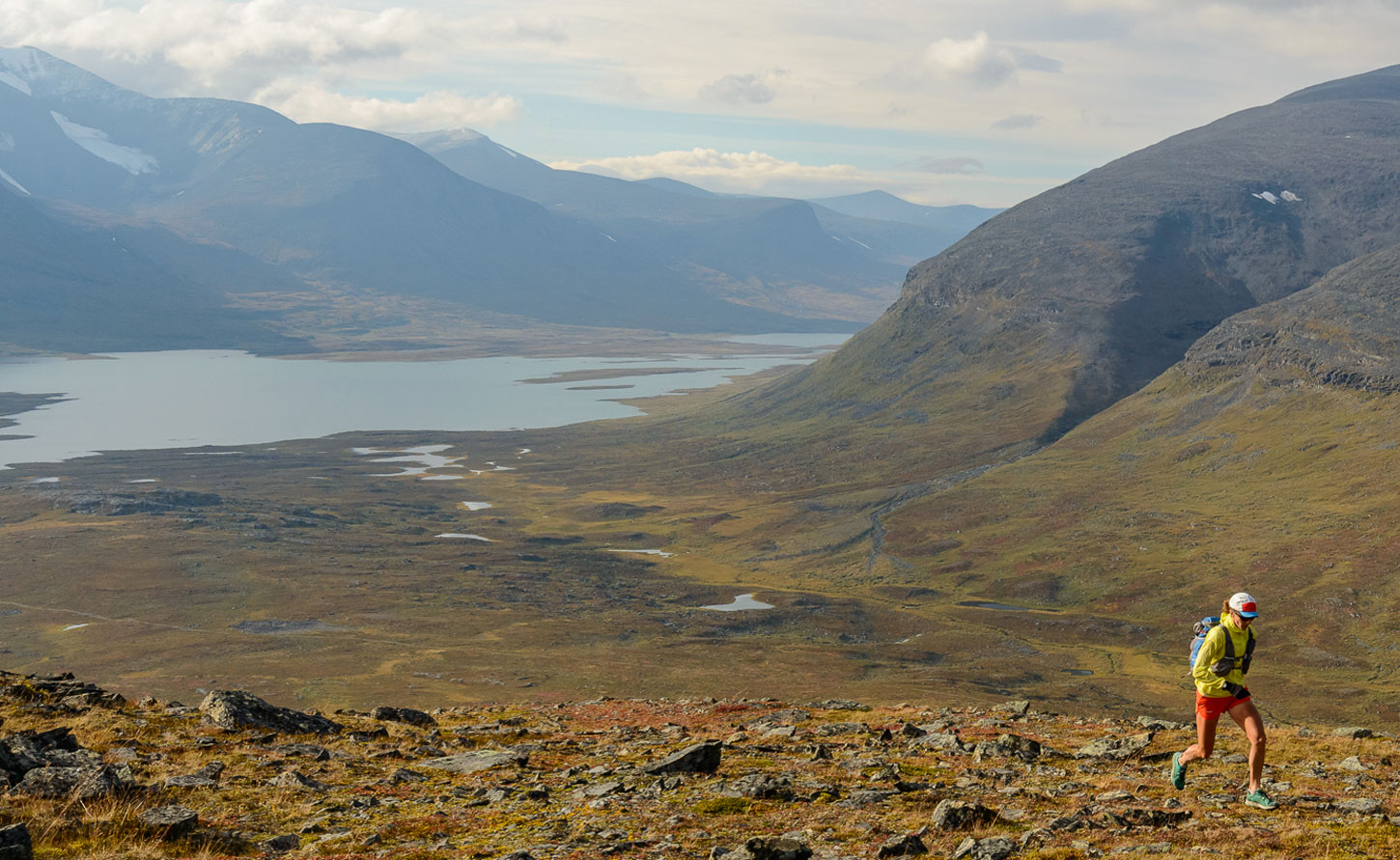
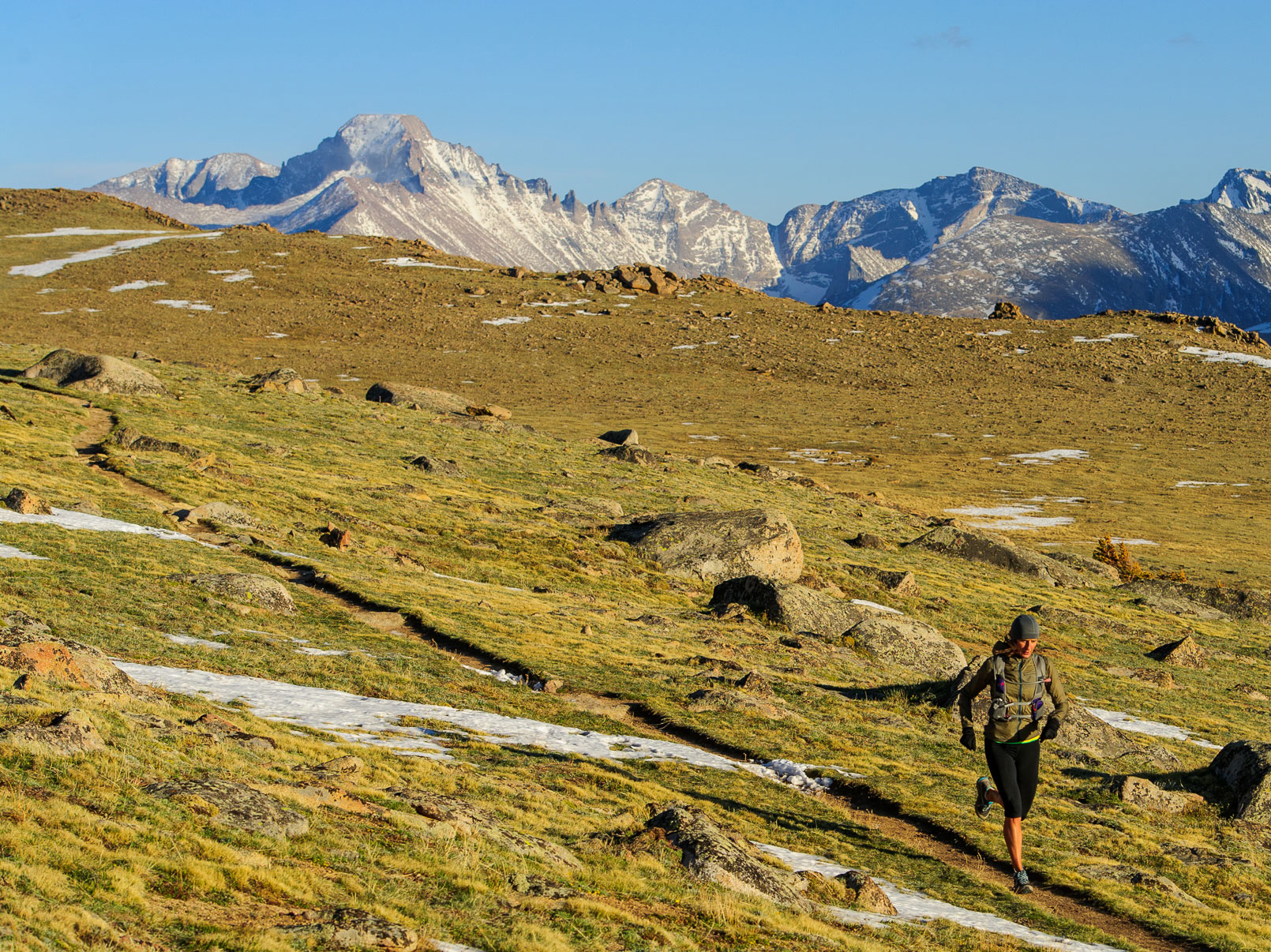
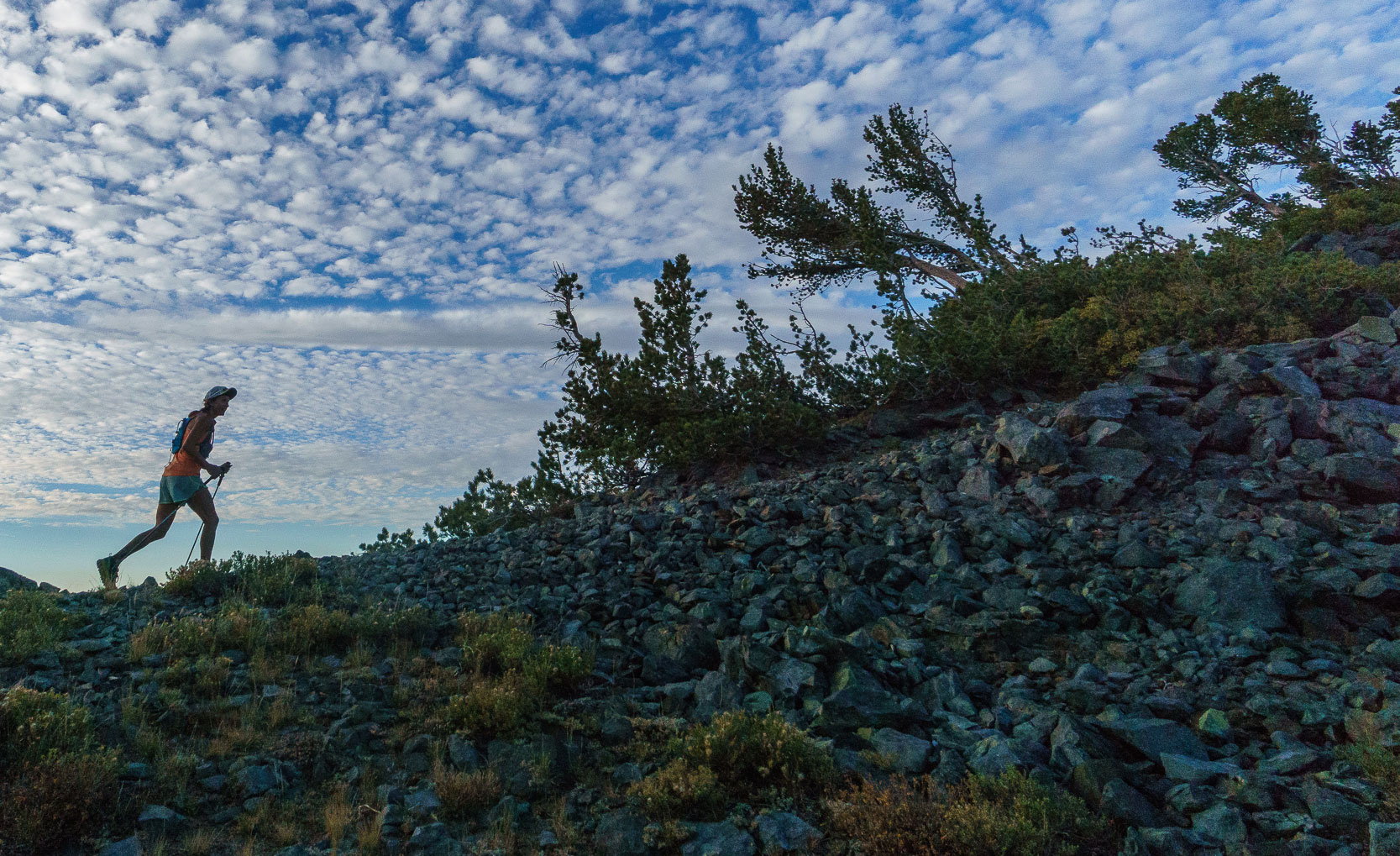
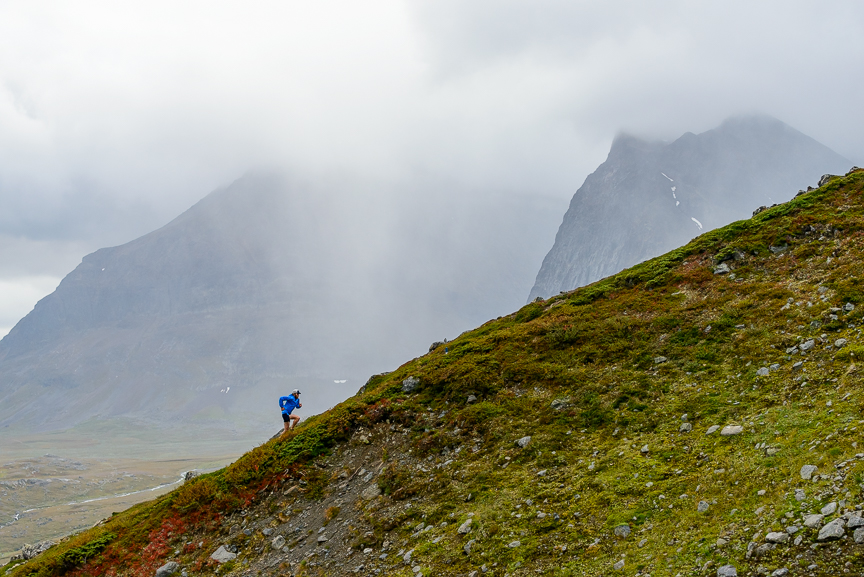
In 2000, at the beginning of her life in ultrarunning, Krissy Moehl said she wanted to run the day she dies. A quarter century later, she tells Steve House it still holds true. Krissy has won UTMB twice, directed the Chuckanut 50K for more than two decades, and coached runners at every level. Here she and Steve trace what that one sentence has asked of her over 25 years. It starts with a run no coach assigned, on an exchange in Ecuador. It runs through a Seattle running scene she describes as being raised by a pack of wolves. And it includes the first Ultra-Trail du Mont-Blanc in 2003, which she finished walking the descents sideways and backwards in a plastic garbage bag, and won.
Much of the conversation is about learning when to stop and what to measure. In 2009 Krissy cleared a space on her shelf for a Western States trophy, finished second, and spent six hours in the medical tent. Eight weeks later she won UTMB, running it her own way. She describes the fury of learning at 40 that her menstrual cycle had shaped her training since she was 13, and how she now raises the subject with the athletes she coaches. She also defends the runner who stops at mile 80 and calls it a failure. Steve, now 55, brings his own struggle with the belief that his value was his output. Krissy offers a different measure: running as the place she goes to know herself.
Two summers ago she returned to the 100-mile distance at the High Lonesome 100, underprepared and moving through perimenopause, with her partner’s two young daughters on her crew. Asked what kind of athlete she wants to be in fifteen years, she answers in three words. And asked how she wants to be remembered, she reveals that for five years she has been quietly moving toward work as a death doula.
Exploring the poetic soul of the mountains.
Voice of the Mountains explores the mental and emotional adventures found in discovering who we are and what we’re capable of. Here we engage in self-reflection, humility, and embrace the beauty and struggle of the alpine experience equally.
Steve House:
I want to run on the day I die. Krissy Moehl said that in the year 2000 at the very beginning of her life in ultra running. And she said it to me again, just now, a quarter of a century later. She said, I’m now closer to that than I was then, and it still holds true. Then at the very end of our conversation, she told me something I did not see coming. For the past five years, slowly and deliberately, Krissy has been moving towards work as a death doula. The woman who wants to run the day she dies is learning to sit with other people through their literal death. I have been turning these two ideas over and over in my head ever since, trying to understand how they belong in the same life. If you don’t know Krissy, here’s a little taste of that life. In 2003, she ran the inaugural Ultra-Trail du Mont-Blanc on her honeymoon in a thin windshell and a plastic garbage bag. She walked the final descent sideways and backwards. And she won. Six years later, she won the UTMB again. She had learned the sport of ultra running in Seattle from a crowd so steeped in distance that she calls it being raised by a pack of wolves. She has directed the iconic Chuckanut 50K for over 23 years. And she turned professional ultra runner when very few women could make a living at this. And at 48 years old, she has a brand new shoe sponsor. I have known her for 20 years since we both worked as Patagonia ambassadors, and I have looked up to her the whole time. I most want you to hear is what 25 years of holding that one sentence has taught her. Listen for why she did not quit on Mont Blanc. Listen for what she says to a runner who set out to run 100 miles and stopped at 80. And listen for the story about the race she ran for a trophy, about the space she cleared on her shelf before the start, and how she spent six hours in a medical tent at the finish line. Listen for the fury she felt at 40 when she learned that her menstrual cycle had been shaping her training since she was 13 and nobody had told her. If you coach women or if you are a woman who trains, this part alone is worth the listen. And listen for her story of two young girls who, late in a 100 mile race, were wiping down her face and handing her snacks. Some people call running an escape. Krissy has a different word for it, and I think it is one of the best things anyone has said about why we do this. I asked her what kind of athlete she wants to be in 15 years, and her answer was three words. A moving one. I’m Steve House. This is Voice of the Mountains, and my friend, Krissy Moehl.
Uphill Athlete:
Whatever your next big objective is, there’s a version of you that’s ready for it, and a version of you that shows up simply hoping for the best. Uphill Athlete coaches build personalized plans around your specific goal, your life, and most importantly, your physiology. No pre-built programs here. Real coaching from people who understand mountain performance. Whether your objective is 12 weeks out or 12 months out, the best time to start is right now. So, go to uphillathlete.com/getready and let’s get to work. That’s uphillathlete.com/getready. Let’s go.
Steve House:
Krissy, I want to start where a lot of runners don’t really start these conversations, which is before your kind of running career. One of the things I remember we shared was we’ve both been on student exchanges and you were in Ecuador, and I remember a long time ago when we both worked at Patagonia that you told me about a run that you had taken in Ecuador and how that had been sort of this very… It was like the first run you did when you weren’t competing and worrying about splits and all of this stuff, and it was sort of this very freeing, liberating experience to be there and just sort of run without expectation. And something sort of broke open in you. There’s some part of me that feels like that exists for me in climbing and skiing as well, and it feels like I’m always trying to get back to that. Am I remembering this conversation right? Do you still remember what I’m talking about?
Krissy Moehl:
Oh, totally. Yeah. I guess the thing that stood out in that moment is there wasn’t a coach that told me to go for a run. I had gone to Ecuador and I’d been battling an injury. I ran cross country and indoor track and outdoor track for the University of Washington and all through high school, so I’d always had a coach. When I went on my exchange, I didn’t run for the first two months because I was injured and I didn’t have anybody telling me how to get back. Just one day I put on a sports bra and shorts, I don’t even know if I had actually brought running clothes, and went out the door and was gone for two or three hours. The max I’d ever been allowed to run was 90 minutes because I was an 800 meter runner, and I was gone, I would guess, two hours. I came home and my host family was freaked out because I’d been out, you know, white girl, sports bra. What are you doing? And as I think back on getting into ultra distance running, that was the kind of the changing moment. I didn’t know all of that in the moment. I just knew that I had done something very different under very different circumstances. And I loved what it represented, and then that carried forward into a lot of steps after that.
Steve House:
And it sounds like it was something that was just for you. It wasn’t for anyone else.
Krissy Moehl:
100%. Yeah, good point.
Steve House:
No expectations. When you came back from Ecuador, you ended up working at the Seattle Running Company, and I remember us talking about this because, I don’t know him as well as you do, but Scott Jurek was there, Hal Koerner was there, Ian Torrence, McCoubrey. There was a pretty remarkable running scene in Seattle at that time, and it was kind of coalesced around Seattle Running Company. Did you realize that you kind of walked into sort of a cauldron of something special at that time, or was it just every day? It was a new day.
Krissy Moehl:
When I left, I was working for the Foot Zone, and when I came back, the store had been bought by Scott McCoubrey, and he’d hired Scott Jurek as one of his first employees. So I just went back in begging for my job back. I had another year of school and loved working up on Capitol Hill and in the running scene. Little did I know, and I don’t know that we as a collective even knew, what that time represented as we were going through it. It’s very obvious in hindsight, the hub that created and all the things that have since launched from that group of people. I will say it felt very special, family or familial. There was a lot of great energy around that time that you maybe could have called out had you had a little bit of hindsight, but with hindsight, definitely, just right place, right time, right age, in my case right gender, like female in the very male populated sport and world, to have the mentors that I did. I feel really lucky.
Steve House:
Yeah, I can imagine that you would have no idea at the time. These things are very obvious in hindsight, but all the things that you as a group were going to do hadn’t been done yet. They were just maybe conversations or maybe ideas that hadn’t been hatched in any way. You guys were just selling shoes, doing your thing, enjoying.
Krissy Moehl:
Yeah, and Jurek won his first Western States, and he went on to win seven. So talk about a mark in time, right? What’s this cougar trophy sitting on the counter? And then there was seven within the decade, so kind of cool.
Steve House:
And what year were you in?
Krissy Moehl:
That would have been, I came home from Ecuador in 2000. I went ’99 and 2000, is that right? Gosh. I ran my first ultra in March of 2000 at Chuckanut 50K. So that was ’99, I came back and then worked the fall. Started working back at the store in the fall, and then we all ran Chuckanut in March. Yeah.
Steve House:
And was that the first time they had Chuckanut, which is now your race that you operate?
Krissy Moehl:
It was started in ’93. So in 2000, the race directors had been doing it for seven years and then they let it go at 10 years and I took it over in 2003.
Steve House:
Okay. So I wanna, something I’ve been thinking about, and you’ve sort of set it up with this story. You kind of came back from Ecuador, and when I came back from my exchange, I felt very changed. I felt also a little bit isolated because of that change, of what I had been through. You were really young, early 20s, and as you said, a different gender than most of the people in that community. In one sense, you were very much held by this group that you met, and then in the other sense, you’re also very much an outsider. Am I projecting?
Krissy Moehl:
Yeah, because I never felt like an outsider. I felt very brought in and cared for. Everybody was so curious about this sport, and the few that had some information were so game and willing to share it, and I wasn’t the only female. There were women that came through the Seattle Running Company and ran with us on Thursday nights. Maybe not all of them would go on and compete and those kind of things, but we had quite a collection of people come through that. I feel really lucky that I have not necessarily felt like the outsider in sport. Wherever I’ve gone as a runner, whether through my Montrail days or racing days, because I’m a runner, I get to settle into this subculture wherever I’ve gone. My passport is great representation of that. Even when I don’t speak the language, we get to share time on the trails.
Steve House:
Yeah. I can say the same about climbing. I’ve been to so many amazing places and gotten to know so many amazing people because of that. That passport of being of that identity, it’s its own kind of passport into its own kind of world.
Krissy Moehl:
I’m curious what it was, though, that felt that way for you coming back from an exchange. Can I bounce that back to you?
Steve House:
She turns the tables. Yeah, it was really difficult to find people when I came back. I was 21 and I’d been climbing in the Alps, then the next year I went on an expedition to the Himalaya, and here I was, it was really hard to find other climbers, especially my age, that had similar interests and were doing the same things. Where I found that eventually was the guiding community in Bellingham, at American Alpine Institute, where I worked from 1991 until 1999. That became kind of the center, my center of gravity, my nexus of partnerships and friendships that grew out of climbing, was the fellow guides, because we all coalesced in that location for the summer to work on Mount Baker and the North Cascades. And then in the fall, we all go to Red Rocks or Yosemite, or in the spring we’d all go to Alaska together and climb, and so that was kind of the melting pot for me. But it was hard to find. It was not easy. And I wonder if running, because you have the races, the events. I also didn’t work in a shop. I was in college. I don’t know, maybe I didn’t get myself into the right place, like you seem to have.
Krissy Moehl:
Yeah, well, maybe there’s just a difference. And like how running has changed even in the last five years where it’s just that much more approachable. I would say running’s more approachable than high alpine, even to this day. Longer distances in the running world are becoming more approachable, but it wasn’t until I was 35 that I realized that 20 miles a day was a lot. I was so ingrained in this community that 20 miles was baseline, and then I had a really funny moment when I was like, oh, I was raised by a pack of wolves, essentially. I have a very different interpretation of what baseline or minimums or whatever is when it comes to the running world.
Steve House:
An easy run is. Yeah.
Krissy Moehl:
So I got to believe that the alpine world is like another level of that. Like, wait, you go vertical? How does that work? Yeah.
Steve House:
Yeah. And I want to kind of self-correct a little bit because I brought up gender and there’s obviously an incredible history of women in running. But I think one of the things, at least from my perspective, that was different for you is around ultra running and women in ultra running. Ultra running in 2000, in this era, 25 years ago, 27 years ago, was very different than it is now. I’m actually going to jump to 2003 because I want to talk about the inaugural UTMB, the Ultra-Trail du Mont-Blanc, which you ran and won and also walked the last 30 miles. And there was not a lot of people doing that. You probably looked a lot different than the average person that was running that race, I’m guessing.
Krissy Moehl:
Yeah, there’s two canned comments that come up for me. Bathroom lines were always so much easier than anywhere else a female would go. The women’s line would be longer than the men’s. And I also acknowledge that those early 2000s grew up in a very binary world, binary sport. There wasn’t an understanding that we’ve grown into, thankfully, but that binary world also comes up in language and the way I speak about it, because that was the experience at that time. The other one was when I ran Hardrock in 2007. The average age, and just generalization, was 47 white male. And I was almost 30 years old, and female. It didn’t match that at all. I just remember those kind of callouts to how different the early 2000s and even into the teens looked, and especially compared to now. And then I went and did one of our local events just after COVID, and now here I am at least in my 40s, and yes, female. But I went to the starting line and everybody was in their 20s and there was all sorts of gender representation. I was like, wait, this completely flipped to where I’d been the outlier, and now I was again the outlier, but in the reverse role. I thought it was kind of a fun call out.
Steve House:
That is really interesting. Is that because there are just more people in the sport, or more younger people relative to people in their 40s and 50s?
Krissy Moehl:
Yeah, I think the sport has gotten a lot younger. Representation is growing. I wouldn’t say it’s fully there, but it is different than it was and shifting. There’s groups and support and people you can talk to that look like you, which is fabulous. I hope more and more. Yeah.
Steve House:
Yeah, I agree. So take me to this last 30 miles of the first UTMB, or however many miles it was, you can tell me. I have this experience with, particularly climbing, where sometimes it just feels like inevitable. I know I’m going to get there. Almost like I look at my watch, I’ve got this much longer left. And then there’s other times where I feel like I’m clawing my way and it’s in doubt to the very last second. What was your experience like in that first lap around Mont Blanc?
Krissy Moehl:
Right. And that’s the longest I’d ever run. It was supposed to be 100 miles, but with the severe weather that swung. That was the year 2003 that they’d had that massive heat wave. And then, I believe it was still the last weekend in August, it might have been early September, they had a massive shift in weather. I was just recently married at the time, it was actually the honeymoon trip that the Montrail footwear company I was working for had sent us on. And we went over with, I think, a Houdini jacket, which you remember that one from Patagonia, and had to buy gloves and a beanie from the store and wore a plastic garbage bag. Just dealing with the weather in a very unprepared way. I know way better now, and the gear’s gotten so much better than it was back then.
Steve House:
There was no required equipment list, probably.
Krissy Moehl:
Oh, no. And the race was very different that first year. You could stop at any one of the towns along the way. So instead of the set races that they are set up to be now, it was one lap around and you could either stop in Champex or the first one. I always forget the name of the first one. I feel horrible. Then Courmayeur was mile 50, Champex-Lac was about 100K, and then the 30 miles back to the finish. Just because I’m so freaking stubborn, I decided to go all the way around, where people had taken probably the smarter or better taking care of their bodies decision and stopping before the weather went really south on that last bit. But I was still very young in the sport and dealing with IT band issues, and as you noted, had to walk. I was great power hiking uphill, but I had to walk sideways and backwards downhill. That last bit has, I think, about 7000 feet of gain in the final 30 miles. So there’s a lot of gain and loss and descent that was done. And then I caused the dorsiflexion to stop, and so my left foot was kind of dragging. It was kind of a mess. But stubborn definitely got me through.
Steve House:
Is that what you think about when you think about those hours? It was stubbornness. Why not quit? Why go through that?
Krissy Moehl:
I honestly have a better understanding for stopping now than I did then. At that point, if I said I was going to do something, I did it, and I would also say it was driven by curiosity. Stubborn, yes, to push through, but what happens if? I didn’t know, and now I have a better sense of what happens if. It could mean I don’t run for six months, and that’s not something I’m willing to sacrifice at this point. But because I didn’t know, I let curiosity lead that to maybe figure it out.
Steve House:
And for those that don’t know, you also won by, I think, like six hours. So you had…
Krissy Moehl:
I was definitely looking over my shoulder.
Steve House:
You were, yeah. That’s a big margin in any kind of race. You might just not know it because there probably wasn’t all the tracking we have now.
Krissy Moehl:
There definitely was not any tracking. Anybody that came over my shoulder, I was looking to see if they were in my category. Are we racing this out here? Do I have to try and figure out another speed going sideways?
Steve House:
So now take us through that next sort of decade, a little bit of how racing specifically evolved for you. At least from my perspective, I remember that win and that race, and then we met shortly thereafter at Patagonia and became friends. How did racing develop for you from that point?
Krissy Moehl:
I feel like Montrail was a job. I got to jump into this running community, and I remember Ian Torrence. I’d only done one ultra at the time that I got hired by Montrail, the only trail running brand at the time that kind of took ownership and had a sponsored team and put dollars and product towards that world. I took it as an opportunity. And then I’d show up at these races with a bag of shoes and a tent to do my job. Everybody was going for a run for, what, minimum five hours, maybe 24 depending on what distance? So I go run with them and turns out I was also talented in this long distance stuff. I was an 800 meter runner. What did I know about long distance? But it kind of just became because I was around it. And then once I stopped being in denial of what I was capable of, I think racing became a bigger part of how I engaged in the community, how I viewed myself and what I was capable of, what lines I was able to push, what challenges I decided to take on. And again, like I said, raised by a pack of wolves, surrounded by this community, like, oh, you’re not really an ultra runner until you run 100 miles. Statements that were like, what? You wouldn’t even say that now, but back then that’s what kind of drove a lot of it.
Steve House:
What was the belief that you had at that time, in that period, not necessarily 2003 or 2009 exactly, but in that period, what was the belief you had during that time that you no longer hold as true? What is something that used to be a truth for you that you have since decided was a useless belief? Some beliefs serve us and some don’t, right? Was there an assumption or a belief, either about yourself, about your abilities, about others? Particularly, I think there’s so much curiosity, you hit on it. You said you were curious if you could keep going, you wanted to see what would happen. And there’s something sort of, as you also acknowledge, self-destructive about that. It’s going to mean you’re not going to be able to run for, I don’t know, six months, there’s going to be maybe long-term damage to your body or who knows what. What has changed?
Krissy Moehl:
Something very unrelated to running necessarily is the first thing that came to mind as you kept talking. It wasn’t about being damaged or unable to run, it was what could I do to keep doing the distances. There was one race that I pushed through when I now, in hindsight, knew I shouldn’t because I took a different mental approach, but up until that point, that was the Western States of 2009. But those first whatever, eight years, I always ran in this learning mindset of, learn from that to be able to do it better next time. And that meant changing things, experimenting with nutrition, training differently, adding… I was, even back then, doing weightlifting alongside running, even though I’d learned it in high school and I’d seen it benefit. People weren’t talking about it, but I would spend time there to be stronger, getting my VO2 max tested. What could I do to push that level? I had a lot of curiosity to make sure that I didn’t hurt myself. I knew then I wanted longevity. I said in 2000 I want to run the day I die. I’m closer to that now than I was then and it still holds true. So I think something that is not in my real life, the rest of my life, my running is very much so my real life, but I don’t count myself as a patient person. I think running has taught me a lot of patience because of the priority for longevity. I’ve had to hold it. So is that why I don’t have it in the rest of my life? I don’t know. But I’ve been able to transfer what I’ve learned running to life, and it necessarily didn’t come the other direction on that one.
Steve House:
I have this theory, again coming from the perspective of a climber, that if I go back 30 years to the climbing community that I kind of came up in, we really had to figure everything out for ourselves, or a lot of it. And what I’m hearing you describe is that you were also figuring a lot of things out for yourself. You just listed a bunch of things that you were curious about, figuring out whether it was training or shoes or nutrition or whatever. Weightlifting, strength training. Is there too much infrastructure today? Are there too many answers? Is there too much knowledge? And how does that change the experience, or even attract a different person? Would it still attract you today like it did then, if you were now 21 years old?
Krissy Moehl:
That’s a really good question. Yeah, I’ve often said I’m really thankful I came up when I did. I love the era of the sport that I got to experience and how much has been added throughout, and being a part of the transfer of information, like writing a book and having that published in 2015 and it still holds muster in the community as a resource, even with as much as there is online and training plans and all of that. I don’t know the answer to that because I’m also 48 instead of 21, and who knows? I do know that I still love the first time ultra runner. My coaching, my race directing, a lot of it is around that introduction and sharing of the community. I feel kind of protective of that space as well because I want that curiosity to be there. And so with it, maybe this is what you’re leaning towards, with as much information, do people come in thinking they have it all figured out? And maybe, counter to that, what I love about the sport is it will always hand it to you. Even if you think you’ve got it all figured out, that’s when it will flip and your digestion will change and the food you used to work won’t work anymore, or the environment or the weather. It will always humble and teach. At least in my experience, even having, I think back to that reference to Western States, 2009. I thought I could go race that in some new realm, and I went so far as to clear a space on my shelf for that trophy. I never approached a race that way before. It’s always been about community, exploration, seeing what was possible, and then maybe the competitive, duke it out would come in the final miles, not from the starting line. And I paid for it. I was in the medical tent and I finished and I was second place. It was the best lesson I ever learned of, this is not how I want to experience the finish line, six hours in the medical tent with two IVs and an ambulance being called and my mother staying up all night. It’s like, that part’s not for me. That’s not what I do.
Steve House:
Let’s not do that again.
Krissy Moehl:
But again, I’m not gonna do it that way. I’m gonna learn, and then turned around and won UTMB eight weeks later doing it the way that it always served me.
Steve House:
Hmm. I think it’s so interesting that we’re a part of it, both of us. We’re talking about training, we’re coaching, and in my episode with Mark Twight last winter, we talked about how he had a great phrase, the duty to remain, was what he said, the duty to remain within the community, to pass on your knowledge, wisdom, whatever we want to call it. We don’t need to make it out to be anything more wonderful than it is, but it’s earned wisdom, and we can bring a lot of value, and these sports are so young, right? You were in a golden age of ultra running. And maybe I wouldn’t call myself being in the golden age of climbing, but in some ways there was certainly some, it was an incredible time. And I remember like you, grateful that I was there at the time I was, and not earlier, not later. And I think that’s so interesting, and I wonder what it’s like for people now. And I’m so glad I didn’t have Instagram when I was 20 or whatever, right?
Krissy Moehl:
Yeah, totally. All the social media parts. The one thing I would say is a huge positive, especially coming from the minority representation, is it doesn’t feel as minority anymore. I was learning from people that did not look like me, whose bodies did not process things the same way mine does, and then having to experiment and see what worked. There’s more relatability within the resources now because there’s a broader spectrum of who’s represented. And so I think that’s a bonus to having the growth, that the people coming in have something closer to themselves that they can start with and then learn from and move forward.
Steve House:
Hmm. I want to approach the next subject a little differently. And I’ll go first with something for my own training life, because I think one of the things that we can probably both agree on is that I trained for a couple of decades in a system that was designed around male physiology, which is part of what made it work for me, from what that was by default. But one of the useless beliefs that I’ve had to shed is that my training knowledge was fully universal for everyone. And you’ve done some really interesting work and been a really interesting voice in this space. I think that has made me a worse coach than I could have been, because I had assumptions that I didn’t even know I had, if I go back five, 10 years. I just want to open the door for you to describe what it’s been like to realize that you were inside of a system that had not been designed around you and your body. And specifically, when you look back at however many decades of your training experience, your coaching experience, your data, your experience on all these races, what would you like to have known then that you’ve since earned and learned? Specifically around us.
Krissy Moehl:
Yeah, being a female in a male dominated, if you go binary, sport world, what made me aware of it, I think, is probably part of it and explains the first emotion. It was infuriating. I was so mad that I did not have the understanding or the information that my period, my cycle, every month was a huge factor in my training. So when I hit 40, I got really curious about what that time was. All I knew was the word menopause, like a woman that didn’t have a cycle anymore. That’s what I knew. And how was that going to affect my life as an athlete? In just a general search, even like Google, whatever, there were very few resources, articles, people talking about it. And then I found this book called ROAR by Dr. Stacy Sims, co-authored by Selene Yeager. Reading that, there was this tiny little chapter in it about perimenopause. And I was like, well, what’s that? I didn’t even know this part existed. But reading ROAR, I learned all about how the cycle had been impacting my training since I started bleeding at 13 years old, and I was so mad. All I’d been told is that one week a month you go deal with it. And actually, I learned for myself, it’s different for every woman. That’s my strongest week. I come back online at that point. The couple weeks leading up to that, in hindsight reviewing how things were going, I’m actually stronger in those first two weeks. So anyways, mad, angry, but then now being in the perimenopause shift amongst a surge of information, it is a hot topic now. I’m actually very thankful and so curious about the young girls that I’m helping raise. What will their experience be like going through this space? How much more information will they have? How will that better their experience with whatever activity they decide to do? So there’s a lot of gratitude, because even some friends of mine that are not even a decade older than me went through it without information, went through these big changes. So I think it spanned backwards. There was anger for those younger decades of myself and what else could I have done as an athlete had I known. And then gratitude for, well, goodness gracious, thankful I’m of the Gen X generation that’s got resources and the shoulders they’ve stood on to be able to take this research forward and show curiosity and learn and put the resources back into the female side of education. So yeah, I’d be really interested as a male coach, one, you got to shed those beliefs, because you’re not going to have that anger that’s going to trigger it, right? It worked for you. It was designed for you. And then how do you shift your coaching? At that point your best bet is probably to learn from your female athletes.
Steve House:
100%. And to be honest, for me at least, it started from a place of I was even afraid to ask my athletes about their cycle. Of course, I talked about that with maybe my partner, in my personal life, but there was this boundary and I felt like it was very hard for me to get over to have that conversation. It took a while, but thankfully I had very understanding female athletes who were like, oh, I’m so glad you asked, let’s talk about it. And then we just had a normal conversation and I could adjust my coaching. And I really have to thank the other female coaches I work with at Uphill Athlete. They’re the ones who brought all this information in and exposed this whole blind spot that I had, and it has since gotten me very interested because it’s like, wow, I know nothing about this. There’s a lot to it.
Krissy Moehl:
It also makes me wonder what’s changing in the whole aging athlete, I do that podcast series on Trail Runner Nation. We’re in the surge of information for women. Men are changing too. There’s stuff changed, and do we really just let you go into this beautiful sunset? There’s got to be stuff. Have we just protected all of this? That sounds like a healthy, happy word around it, but have we just shunned all of this in denial, or what else could we learn?
Steve House:
There’s a lot we don’t know, that’s for sure.
Uphill Athlete:
Hard work alone doesn’t get you to the summit, but smart work does. A lot of athletes are grinding without a real plan built around their body and their goals. Uphill Athlete Coaching changes that. Our coaches build a personalized training structure around your life, your objective, and most importantly, your physiology. Stop guessing and start progressing. Go to uphillathlete.com/trainsmart to get matched with a coach. That’s uphillathlete.com/trainsmart.
Steve House:
I have this theory about perimenopause, and I want you to kick holes in this. The science didn’t exist at all. How is this affecting the young athletes that are coming out, female athletes that are coming up now? What is the thing that they are most commonly unaware of about how this affects their body and how it impacts their training and racing? Are there some common threads in terms of the knowledge gap or the understanding gap that is missing?
Krissy Moehl:
I would say, in the last five years, what I’ve observed is that same thing that made me infuriated, the awareness piece. Still kind of the, I don’t know if it’s necessarily shame, but some feelings around whether we can talk about it or not, and whether it’s a topic that can be broached. So even just like you just described it from your perspective, that’s not uncommon. Can you trust that the person that’s on the other side of the conversation can receive this information? It’s still not common, and it’s more and more, like I said, over the last five years. So I would say I’ve even changed how I broach it. Instead of hesitating or whatever, I’ll say, hey, I have this opportunity to track your cycle and I’m learning a lot, is it something that you would be interested in? As opposed to before, I’d be like, if you’re comfortable talking about this, you know, I would dance around it a little bit. So even that’s changing and shifting. So I guess broaching the topic is a big one, and finding somebody’s comfort level with it, and then just keeping the conversation going. I was definitely taught to just deal with it and move on. You’ve got cramps, you’re tired, whatever it is, you deal with it and move on. And that’s still something that I think any cycling female has to deal with, whether they’re taking birth control or not or trying to get pregnant or going through perimenopause. So much of it is about, okay, yeah, that’s just something, rather than this is a big part of what’s going on in this physical experience. How do we bring that more to the forefront to understand our day, our training? Why something that we ate yesterday worked and three days from now won’t, all those things could be beneficial.
Steve House:
The technology I wish existed that would help us with this is a way to look at real time hormonal measurements.
Krissy Moehl:
Levels, yeah.
Steve House:
Levels. That would be, that’s all got to be tied into that world. So I have a theory. I want you to tell me if I’m being too dramatic, but if I think about this gap that has been missing, and I think about particularly athletes of your generation, and as you said, the generation or two even older, there was a lot of potential left on the table because the physiology and the training systems and everything had not been designed around female bodies. Am I being too dramatic, or do you think that’s true? Is that going to be a lever that is going to enable more female athletes to engage more successfully, more productively with their sporting careers?
Krissy Moehl:
I think so, and what I would put a layer on top of that is that the same generation was also told to starve our bodies. Females were supposed to be a certain size, and the detriment from not fueling a female body, period, is so horrendous on top of changing hormones. If that was in puberty, and we’re not fueling, or the changes that go throughout our lives, if there was at any point we weren’t sustaining the body, there’s consequences downstream. So I think that’s also, hopefully, being shed more and more. It’s still out there, but that being shed, to support the system as it goes through these hormone shifts, is a huge benefit. Somebody that could learn, do not starve your body ever, and the benefits they will have over the decades by following that, versus somebody that spends even a couple months in fuel deficit, and what the repercussions could be. There’s never one thing, right? There’s all the pieces, and I feel like that was a big part of, probably even earlier, but in my world, the 80s, 90s, and early 2000s, a female had to fight how much they fueled, whether it was I want my body to look a certain way, or somebody’s going to criticize me for eating the thing that has a bad connotation. Oh, the damage that was done from that. Also very infuriating for me.
Steve House:
Yeah, and there’s been so much, eating disorders have played such a big role in climbing as well.
Krissy Moehl:
I bet.
Steve House:
Yeah. And going back, not just for females. I have friends who are my generation, especially the ones that went really into the sport climbing direction, where it was really like, the lighter you are, the more powerful, and so they would live on potatoes and starve themselves to be as light as possible. So much damage. One of them in particular has lifelong chronic illness because of it.
Krissy Moehl:
If anything, we could learn from it. Do bone density studies on these people, how many broken this, broken this, or brain health. If we could learn from it. Yeah.
Steve House:
I want to transition us to something I’ve been thinking about, and you already mentioned it, so it’ll be an easy transition. I’m 55, I’m still kind of recreational climbing and skiing. You’re in your 40s, you’re still running, you’re still doing events. You’re a race director, you have a brand new sponsor this year, a new shoe sponsor, as I understand it, with Keen. This is pretty amazing. And one of the useless beliefs that I had to shed was that my value was my output as measured in terms of the summits and the routes and the first ascents. When I was around your age now, my late 40s, and my body started changing, that belief got really loud in my head. I had some injuries, there were really strange injuries, I had a really bad toe injury and I couldn’t rock climb, and my body was kind of reacting, breaking down, if you will, to a lot of the things. I couldn’t output the things I could output before, so I didn’t feel I had any more value. I’m still kind of rewriting, rewiring this belief. How is that for you? And a little plug for your podcast about aging athletes, I think it’s Trail Runner, but you guys talk about our trail. Sorry, Trail Nation.
Krissy Moehl:
Trail Runner Nation.
Steve House:
Trail Runner Nation. Yeah. How is that? Even on our pre-recording conversation, you were sort of expressing wonderment at how you’re still just back from Japan, shooting photos for the catalog next year, and who you are in your 40s. That wasn’t something that was on the map for any of us, really, I think 10, 20 years ago. How’s that working out? Where is your head?
Krissy Moehl:
I feel, yeah, I’ve been told, I think the thought has been put in my head, especially in this last year as these things have shifted and continued. I’ve seen it as, when I get to forks in the road, and it looks like life could go in a couple of directions, running keeps being the path in some form or another. I remember when I left the Conservation Alliance in 2010, it was towards running and trying this life as a professional athlete. That same narrative, but told from somebody looking at me, what it gets said back to me as is, Krissy, you’ve always done this. You’ve always done the part that there wasn’t a path to show you. Very few people and even less women were sponsored athletes in 2010, to try and make a go of a financial well-being. My excuse was, well, if I’m eating beans and rice in the back of my Subaru, I’ll be all right. I like that idea better than having a house and knowing the comforts of what that brings. So yeah, I have that kind of narrative in my head, even in this situation. Of course you are. Of course you’re trying the thing that nobody, you don’t have that vision of what it was, the path to follow. You’re curious enough to see where it could go. Which I resonate with both of those. I see it as, when I have a path to choose, running has been the choice. Some form of whether that’s coaching, race directing, sponsorships, and other relationship pieces, or that reflection of, yeah, give it a go. You’ve got the tools for that. You have the tools to be a pioneer or to figure that out.
Steve House:
I think that’s the right framing, and I love that idea. You have the tools, there’s a toolbox, you’ve got them, you’ve used them, you know how they work. One of the theories I have is that as a younger climber, I didn’t know how to handle disappointment. It didn’t matter what the cause of the disappointment was. It could have been bad weather. It could have been a million things, some of which were controllable, some of which just weren’t, and as an older person, I’m much better at holding that. How does that look from where you sit? Do you think that’s something that younger runners struggle with? Because I think there’s so many parallels in running, sometimes, like you said, you just have a bad day or your digestion doesn’t handle a fuel that worked last race.
Krissy Moehl:
I guess the thoughts that come up are, there’s lots of different ways to handle disappointment. I don’t know that any of them are wrong, necessarily. If you take it hard, I’ve heard a lot of people say they have to go back. I’ve got that monkey on my back. I didn’t finish X race and I got to go back until that monkey’s off my back. I didn’t have that approach. I tried to take the learning, or figure out the why, or what happened, so that the next time I go, hopefully there’s a different outcome. I don’t choose the same path that led to the disappointment, or however you interpreted that, if it was failure or if it was a learning moment. I’ve seen a lot of different ways of handling that situation or emotion. One person could call it disappointment, another one could call it failure. I think I’d rather go the disappointment route. Yeah, that sucks, but I don’t think I failed because I learned something. But that same person’s opinion of failure is also very valid, because they said they were going to run 100. They only did 80. Eighty is still a really long way to go, and I don’t know where you put “only” in front of the word 80. But those opinions are all valid, and then it’s just working through how you kind of step forward.
Steve House:
One of the kind of things that happened in my climbing that helped me with this a lot was actually a sort of humorous incident that I had with my friend Marko Prezelj, when we were climbing in Peru, and we were walking out and we had not climbed the mountain we wanted to. We met somebody at the trailhead that we kind of knew from the hostel or whatever, and they looked at us and they were like, were you successful? And I started to say no. But then Marko just sort of looked at him, looked at me, and he was just, in his very thick Slovenian accent, was like, and so what is success? It was such a good reframe. It was like, well, we’re fine. We’re here. We didn’t get hurt. Yeah, the weather, conditions, there were external factors that prevented us from doing what we would have liked to have done. And then this became a running joke, these inside running jokes that you have with your friends, we used for years. You could take that down to the microscopic smallest level of, did you dump the dinner out of the tent when you were trying to pass it to your tent mate or whatever, was that a failure or success? You could kind of make fun of it and make a joke out of it. And we thought for years that we were going to make a funny mountaineering film about this idea, what is success. But I think it was super helpful to reframe failure as being a movable goal for me.
Krissy Moehl:
Yeah, and I think maybe that’s something I try, I don’t know what triggers it and that might be something worth me digging into, but to help clients realize, even when they go into a race as prepared as they can, they’re like, do you think I can do it? I believe in you. There are so many variables. I have always thought once you get over the marathon distance, it’s really hard to know what’s going to impact. It could be food poisoning, it could be your kid gets sick the night before, it could be your flight gets delayed, it could be you chose the wrong snacks. There’s so many variables that factor in beyond what you can say. I mean, you got this, I believe in you 100%. But I’ll say you’ve got the tools to deal with whatever comes up. You have those kind of pieces to be able to MacGyver your way through, pivot when something comes up that wasn’t on the plan. To me, that’s maybe a measure of success. How do you deal with what you can’t control? How do you choose to deal with it? Because the quicker you can pivot towards moving forward, I think the better the experience. Maybe you’ll learn more if you don’t pivot as fast, but more lessons will come up.
Steve House:
Maybe. I want to put a pin in this because I’m going to commit now that we’re going to have this conversation again in 15 years.
Krissy Moehl:
Right on. Okay.
Steve House:
To this topic of aging and being athletes and having a new sponsor at 47 or late 40s, what kind of athlete do you want to be in 15 years? How do you see that?
Krissy Moehl:
A moving one. Yeah, 15 years. I will preface it by saying I let go of the five year goal a long time ago. I was definitely raised with the, okay, you’re going to do this and set a goal and then you’re going to accomplish it, and you’re going to set a goal and you’re going to accomplish it. And my life has unfolded in such a beautiful way without that. I wasn’t blinded by the goal that I had to do this said thing by… So that is kind of influencing how I answer the question of where will I be in 15 years? I know I want to be moving. I know I want to be healthy. I know I want to be engaged in my community. And however that gets to unfold, there’s so many other pieces that have to play into having that happen. But I think that’ll be a driver and it’ll be a choice when those forks in the road come up.
Steve House:
Yeah, I think it’s interesting. You did a really great interview, a podcast with Quinn Brett.
Krissy Moehl:
Just recently.
Steve House:
Yeah, just recently. It’ll be a while. This won’t be released until the fall, and we’re currently speaking in April. That segment that you did with her really felt to me like it connected with a lot of the themes that I’ve been kind of digging around in with Voice of the Mountains. Her body changed, but not in a gradual way, in a very abrupt way. I never met her, but I have many mutual friends in the climbing community, some of whom were very close to her. Just tell me a little bit about her story and what you’ve taken away from that.
Krissy Moehl:
Just an awesome spirit, and that was even prior to getting to have her on the podcast. I have not met her in person. In fact, the first face to face was on that podcast. I became aware of her through Instagram. We both said we wouldn’t have wanted Instagram in our 20s, but a benefit to it is these opportunities to meet people and know about people. Climbing world versus running world, there is overlap, but would I have got to meet her? She just happened to pop up in my Instagram feed, algorithm, and then when I posted, actually Patagonia posted about my journey with perimenopause and utilizing the 100 mile race that I did two years ago to tell that story, the experience at the High Lonesome 100, the text was a lot about how the body’s changing, and she made a comment about, imagine perimenopause on top of disability or something. And I was like, let’s talk, yes, I want to imagine, let’s talk through. We had a quick phone call and then got her on. So that’s the history on that conversation, and we’ve done a little bit of email follow-up since. She’s definitely someone that I would love to keep in touch with and continue on the journey to understand how she continues to process these changes and what comes up in that body and what she’s experiencing. I guess maybe I’m just leading the listener on to go listen to that episode and learn about Quinn.
Steve House:
I’ll just say that Quinn took a big climbing fall on El Cap and was paralyzed to a large extent, and I don’t remember the details of her injuries, but she’s had to overcome and continues to work through a lot, and she’s still part of the community, which I think is also amazing.
Krissy Moehl:
Totally. And she’s in that non-profit Unite 2 Fight Paralysis, and they’re doing amazing work to bring more awareness to able bodies that move in different ways, and how do they get to participate in the outside world, and not just getting across the street, but going down a mountain trail or up or however. Yeah. I think that was a big…
Steve House:
The places the rest of us take for granted, sort of.
Krissy Moehl:
Exactly. Yeah. Accessibility.
Steve House:
I want to talk about the High Lonesome because, and you just mentioned it, it’s a perfect segue. You set out to run a 100 mile. You hadn’t done that in a few years. I’m not sure exactly how long. Take me to those first miles, first whatever, 10, 20 miles of that, where I would think that’s where you really start to notice how your body might be different or changing or the same. Take me back to that experience.
Krissy Moehl:
I would say it had been six years since I had run competitively. I ran the Gaoligong 165K at 41 and the medal went around my neck and I was like, I’m done. And I think COVID layered in there as well, a couple years later, put a good gap between competitive Krissy and, I don’t know if it’s necessarily recreational, because I still have drive, and there’s too many descriptors that could be thrown to why I run. My partner has two young kids. They were very young when I met them. And it felt really important to me for them to know this part of Krissy. It felt important to me to check in on my relationship to the longer distances. And I was also really curious, as a coach, of the reality of having young kids in my life and training alongside it. I coached people through it, but how do those realities play out when your sleep’s interrupted or there’s germs coming through the house that living as a single female I didn’t have to deal with before? A lot of those realities were really brought to life that summer. The longest run I did was 20 or 25 miles in about four hours on my local trails. I never got to test my equipment, my nutrition. I did the bare minimum. And where I think you’re getting, you thought maybe the first 10 miles, it was the 10 days right before the race where I had crises hit of, holy cow, I am not prepared. I am in Colorado. These mountains are over 10,000 feet. I live at sea level. What am I doing? And I had to really call on the 20 years of previous experience to convince myself that I could do this. It took about three days of just really working through a lot of emotional pieces that piled on there, and I was also acclimating at the time, so I’m sure that was part of it. Those things all came to play. I really did a great job for the first 50 miles, which is probably what I was trained for, of fueling and pacing and enjoying the day and really taking it in and feeling like, okay, I know what I’m doing here. And then my GI literally went to crap. And so I had to use a lot of previous years’ understanding of how to move forward and really lean heavily on my crew. Those two little girls showed up in such a big way, wiping down my face and having snacks. It was really sweet, being that vulnerable too. The whole situation, knowing, I think there was a frustration of level of preparedness, but I also went into it wondering what it would be like, what does it look like when you are living this life alongside these big endeavors? So yeah, a lot of that all came to play. And then the part that I’ve talked even more about is the perimenopause shift alongside it, and the hormones and emotions. My period started during, I think at mile 80 of the day, and it wasn’t supposed to be that. Everything hit that could. And it was just kind of a surrender, if you will, to, all right, what else? Kind of, all you got? Come on, bring it. Yeah. And then even through all of that, those final miles climbing in, I still love it, the damn sport. I can’t quit it. I love it. Yeah.
Steve House:
Well, I think one of the most important things any of us do is get to impact kids in a positive way, and what a thing to show them.
Krissy Moehl:
I share with them. I’m not showing them anything, but I love to share with them.
Steve House:
You showed them some things, I’m sure. I’ve been struggling with that around my own climbing with my kids, because I can’t show them. I can’t take them to the Himalaya, go up a big alpine face. I can’t even do that by myself anymore. And so I’ve been trying to tell them stories, and that’s been really fun. Actually, sometimes it’s work to think of them, because now they ask me for them. We’re driving somewhere and they’re like, tell us a mountain story, Dad. I’ll have to think of one. And they know a lot of my friends and climbing partners by name, and they’ve met some of them. But I think it’s really important for me that my kids see me working hard at things. That was very important to me as a kid. I grew up around a lot of really hard-working people, and I was just like, oh man, I was compelled to also work hard, and I think that’s one of the most valuable things you can have in life, that ability.
Krissy Moehl:
Sports teach it.
Steve House:
And you taught it to those girls. You showed it to them. You absolutely showed them that. What a thing to be wiping the mud and sweat and everything else off your face, have all those things going wrong. It doesn’t get much more bare and vulnerable than that.
Krissy Moehl:
Yeah, and the revealing of themselves, how they can show love to someone or care for someone, I think there’s a lot of that interaction that just equals humanity, right? In community, and whether it’s familial or how the sport takes care of each other, takes care of its own kind of thing.
Steve House:
Yeah, we take care of each other. I like that framing. So you’ve talked about this career, and you’ve always had these options to follow the running and sort of map your life, if you will. You map your life around it as a young woman, and ultra specifically, the way we talked about. And now as a coach, race director, learning and helping others learn about how to better integrate training for female athletes, aging athletes that are continuing to want to participate in running and ultra running. What is that next map? I tried to get you to say it with this 15 years, but what do you think that road looks like? What would you want to say to yourself 10 years from now? What would you say now to the Krissy 10? That’s going to be my age in 10 years. Or is there a story? Or is there someone you want her to become? Or not become?
Krissy Moehl:
Yeah, that’s probably something I could spend some more time on. I am very present. As much of a planner and spreadsheet person as I am, my energy is also very present. And so that future planning, thinking, that’s not as much in my wheelhouse as one might think.
Steve House:
I don’t think it’s so much planning. I think it’s the presence of the you of the moment you’re going to be in 15 years. What is that present going to be like, or what do you want it to be like, or what do you want to say to it?
Krissy Moehl:
I guess energetically, I hope it’s very similar: curious, figuring out how to keep moving, how to stay engaged in my community, the things that motivate me now. I see that being a constant. I’ve always said that running’s always been a constant in my life. It has seen me through all the changes that life throws at me, whether that’s work, relationships, family, decisions about how to make a financial income, all the pieces. Running has been that piece that I can go to and know myself and know how I’m going to move in and through the world. So I guess that’s a big reason why it’s been a priority to have patience and ensure longevity, because I do have more tools now than I did before, so that if I had an injury in running, it was not that, I mean, some people call it an escape, I think it’s the answer. If I need to go figure out something, I’m not escaping. I’m going for a run to work towards whatever it is I’m working towards. There are times in your life you really physically can’t, and maybe those are coming more and more as I get older. So I’ve had to develop those tools. But it’s worth that priority. I’m not answering your question because that is not, as I explained before, my energy is very present, to the annoyance of my partner at times.
Steve House:
That’s an answer too. Just thinking it through out loud and hearing how you think about it, or not think about it, is also an answer. I’ve ended every Voice of the Mountains with the same question, and that is, how do you want to be remembered?
Krissy Moehl:
Oh, have you given that a lot of thought?
Steve House:
Oh, no, flipping it on me. I’ll tell you my answer after you tell me yours.
Krissy Moehl:
Okay, you do have one. How do I want to be remembered? Something I have not spent a ton of time on.
Steve House:
Yeah, as you were talking earlier, I was like, hm, this is gonna be…
Krissy Moehl:
Krissy’s not going to have that answer.
Steve House:
I mean, nobody has that answer, to be fair. That’s kind of the beauty of the question, it catches people off guard.
Krissy Moehl:
Yeah, how do you want to be remembered? Well, I actually am working in, it’s a shift that I’m intentionally taking, but very slowly over the last five years and still slowly moving forward, to move into and work in the death doula realm. I’m very fascinated with the end of life phase. It’s not something I’ve got to witness a lot. My grandparents died very young. I didn’t grow up with death as a part of my life, and COVID made it very evident that this is something I need to, and want to, do. If ever there was a calling, running might be the first one. Death doula would be the second, in terms of how I feel and how it hits my body in a way that doesn’t necessarily make sense, but I am aware of it. And so I think that question is more relevant because of that work, more so than my own experience of myself, but just working with people that are there, thinking about what will or how will they be remembered. And that helps drive my actions today. So I don’t necessarily, intentionally, want to be remembered a certain way. But I also know that by living in intention, that feels positive, truthful, connected, I won’t be at a place where I look back and wish I’d done anything different. I think that’s what I don’t want, is to be in hindsight going, gosh, I could have handled that better. I hope the presence and energy I have now keeps me on a path that I feel confident in the decisions I make at any point so that they’re not regrets. So if that’s the answer, it’s like, a person that lived without regrets. There you go. She made decisions consciously in the moment that were driven by values that she can be proud of, ongoing. Yeah.
Steve House:
That’s a beautiful answer. That’s a beautiful way to put it.
Krissy Moehl:
Thanks.
Steve House:
I think it’s a bit of a trick question, and the reason I think it’s a trick question is I think that none of us will be remembered. Maybe a few people will be remembered for 10 years, 20 years, 40 years. How many people are truly remembered beyond two generations, like the names that are in history books, perhaps? But I think getting over that, when I was younger, I felt a lot of pressure that I had to do something that felt important. My whole ego, my whole sense of self was built around whether or not I was doing things that I thought were important. Eventually I had to realize that none of it mattered, and that nobody was gonna remember me, and that also was very free, and allowed me to operate with much more freedom in the sense of, I don’t have to care about what other people think. And as soon as I didn’t have to care about what other people think, I could think completely for myself, and I could just be like, this is the way I think the world should be, and this is who I think should be in it and be in my life. I’m not going to be able to control it for 7,000,000,000 people. I can control it for the 100 people I know and the few 1000 that are in my maybe big circle. And then I can try to build that. My part in trying to build that, trying to create the world. And I think that’s one of the pieces that I’ve been thinking about with this whole Voice of the Mountains series, one of the underlying thoughts and beliefs that I have, is that people like yourself and all the other guests that have been on here all have so much to contribute beyond our sport, to the community, to the world, and a lot of it comes from the power of our sports, from the power of learning how to do really ridiculously hard things over and over again. And what that takes and what kind of person that builds, what kind of character that builds, and that we sort of, I hate to say this, but deserve a better, a louder voice in the world that we live in. We always think of ourselves as being fringe or on the outside, but we’re not. We’re in the center of it. We’re in the middle of it. We just keep ourselves small, and that undersells the value that we have to bring to making the world, not necessarily better, but as we think it should be in our vision. Which I happen to also think is better. But I’m open to the fact that not everybody’s gonna agree with me on what I think should be better, and that’s fine, but I don’t care what they think.
Krissy Moehl:
We all have different opinions.
Steve House:
And that’s fine, and they shouldn’t care, and this is a very non-judgmental aspect of that, which is very freeing. So I think that…
Krissy Moehl:
The same, yeah.
Steve House:
I’ve known you for so long and I’ve always just looked up to you for all of the things that you just said, going through life with so many great decisions, so strong character, just showing up for others consistently in so many ways as a positive force. You’ve been a great friend to me at times, and I really have appreciated that, and I’m just so happy to be able to continue to stay in touch and bring your voice to my little athlete community. Thank you so much, Krissy. Been a pleasure.
Uphill Athlete:
I spent a lot of years in the mountains learning what it actually takes to reach really hard goals. And one of the biggest things I learned is that you don’t have to figure it out alone. Having a coach changes the way you train, but more than that, it changes the way you think about what’s possible for you. That’s what Uphill Athlete Coaching is built around, not just building fitness, but building the belief that your objective is within reach and giving you the specific science-backed path to get there. Our coaches have guided athletes from their very first alpine routes to the top of the world and at every level in between. If there’s something you want to do in the mountains, go to uphillathlete.com/believe and let’s figure out what you are capable of.