
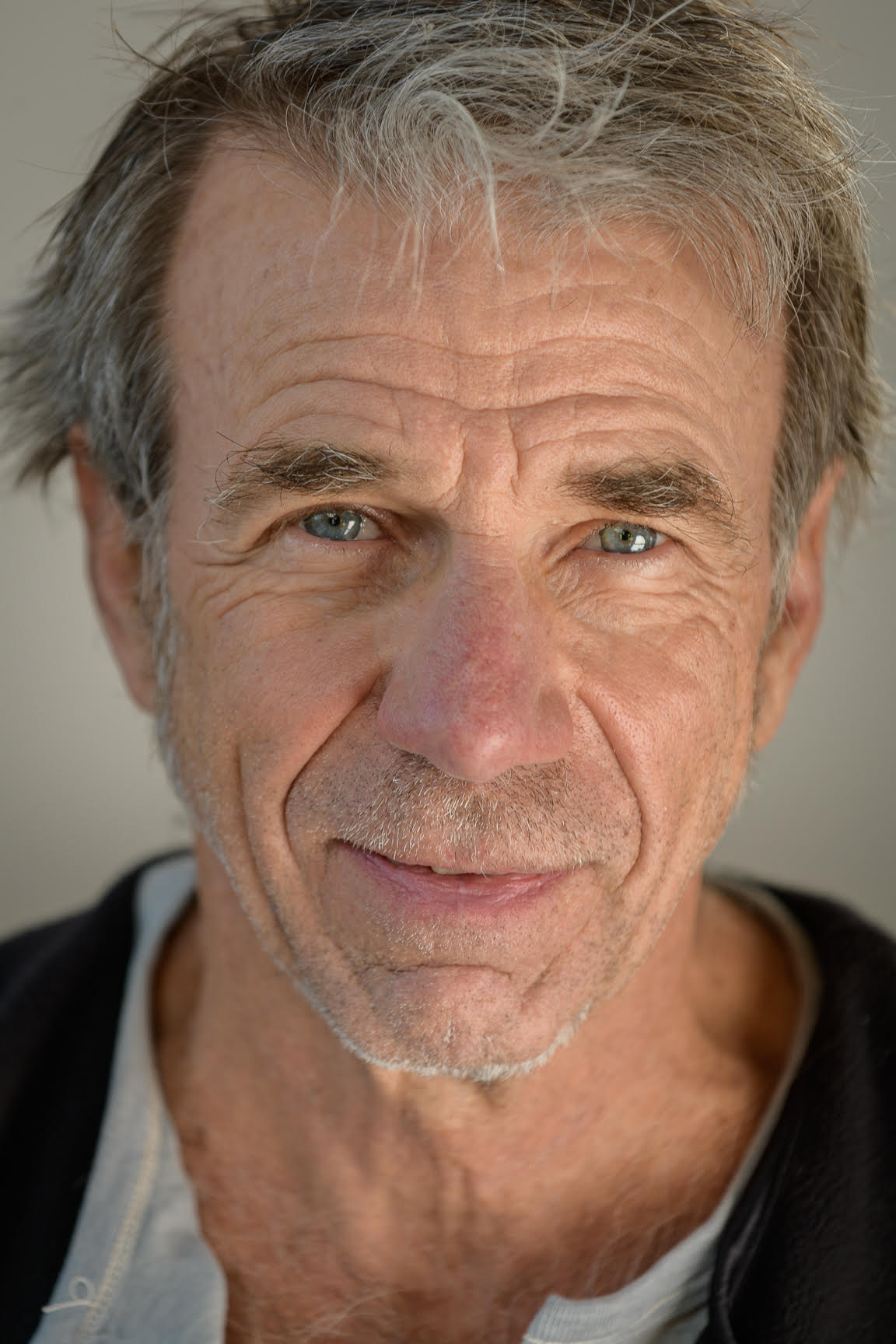
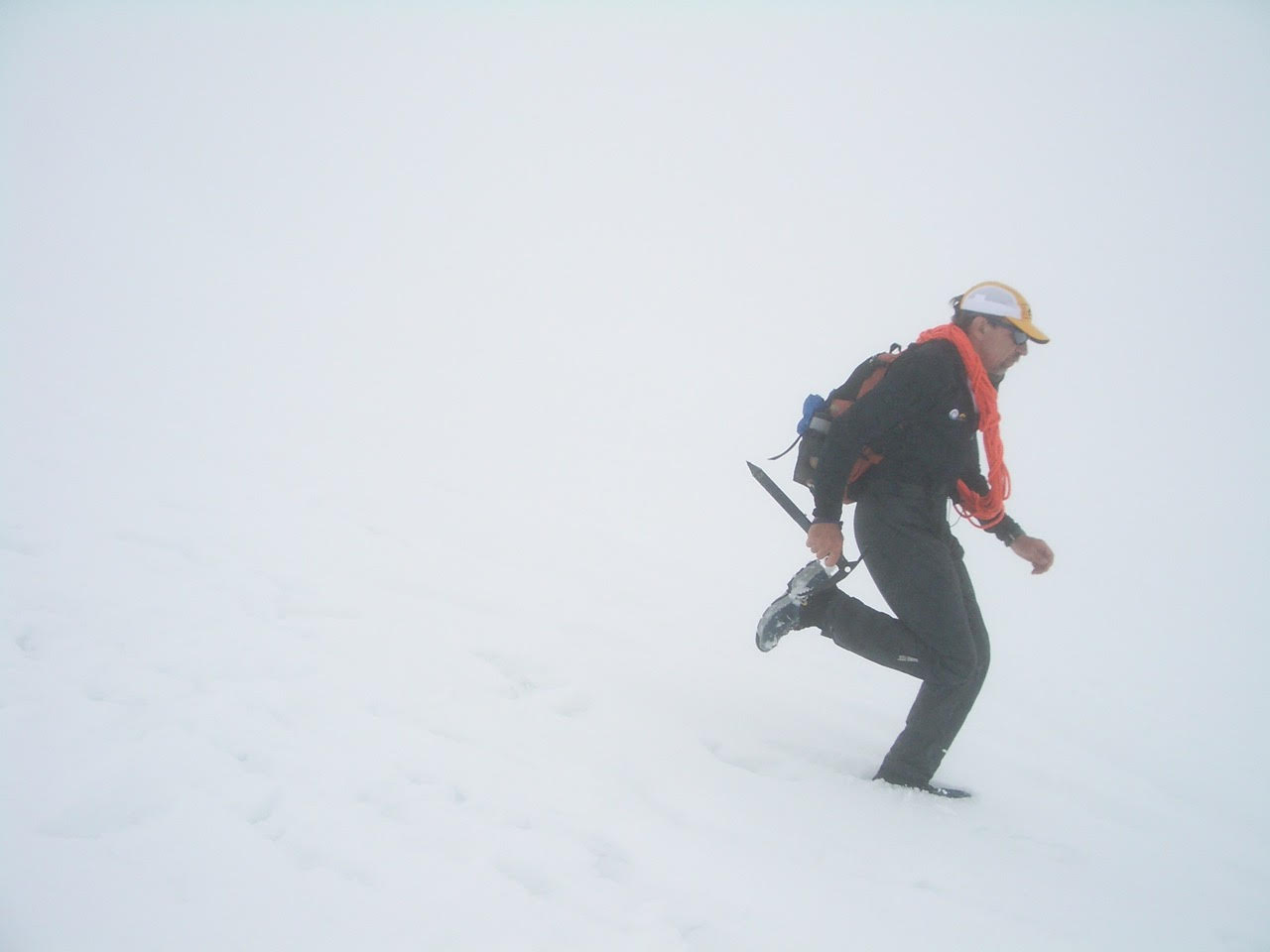
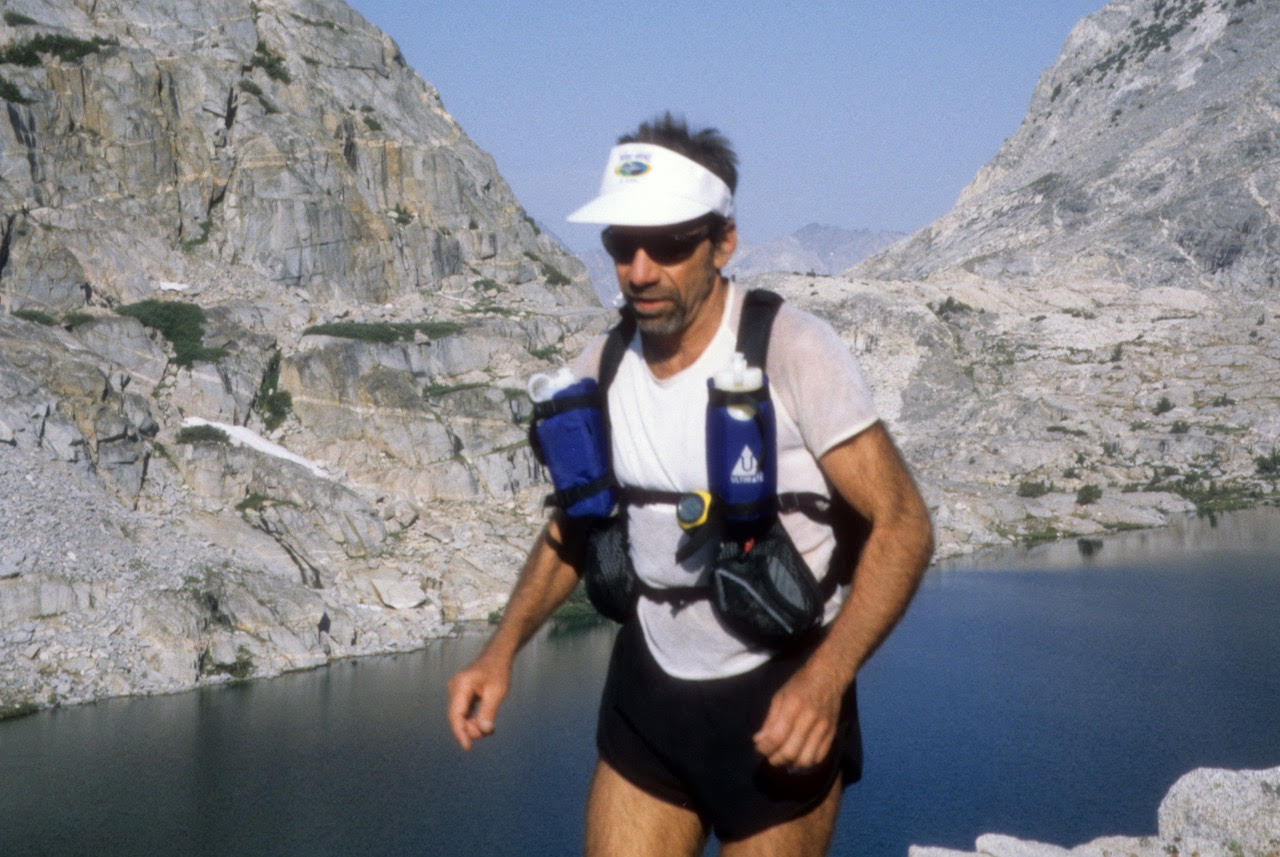
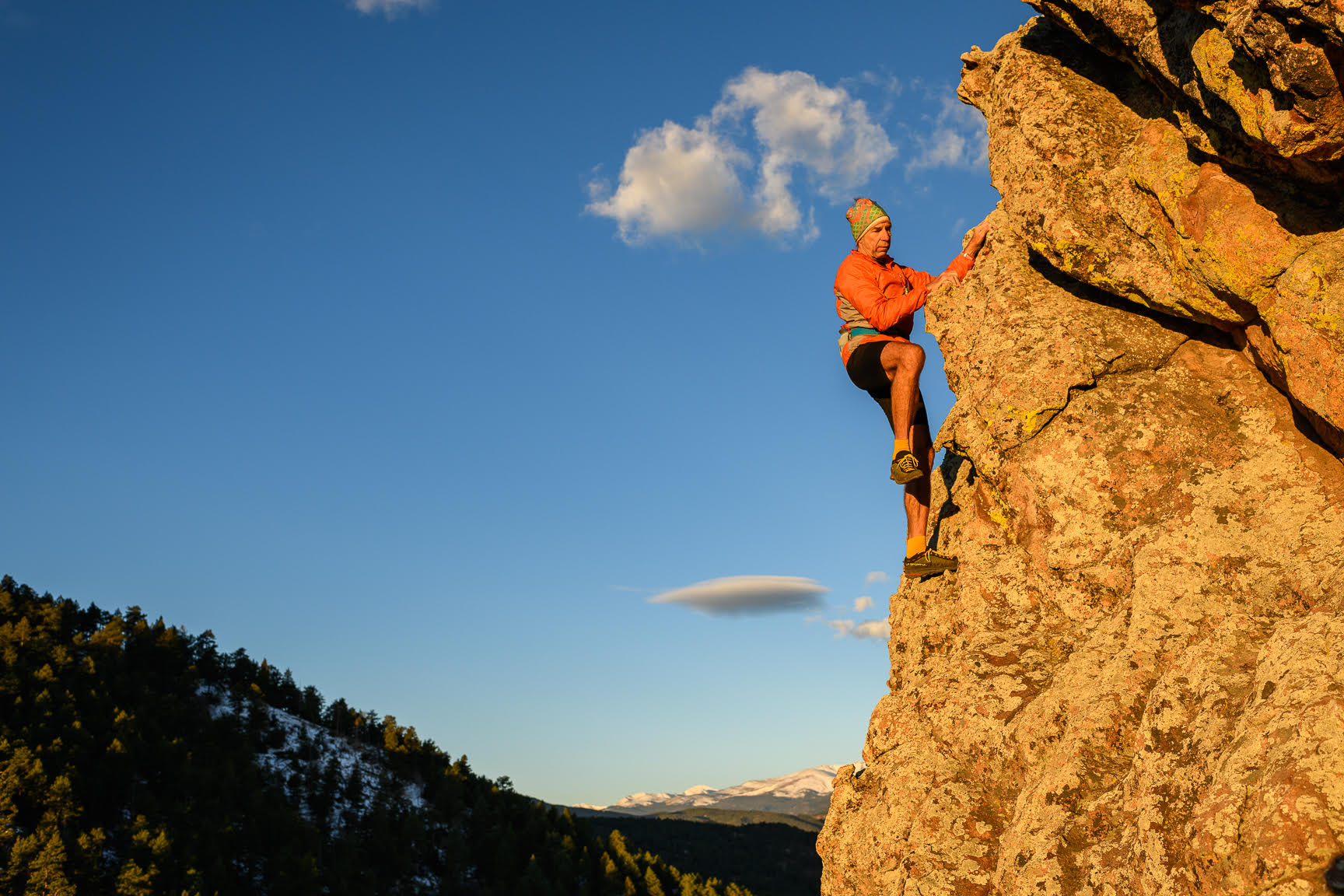
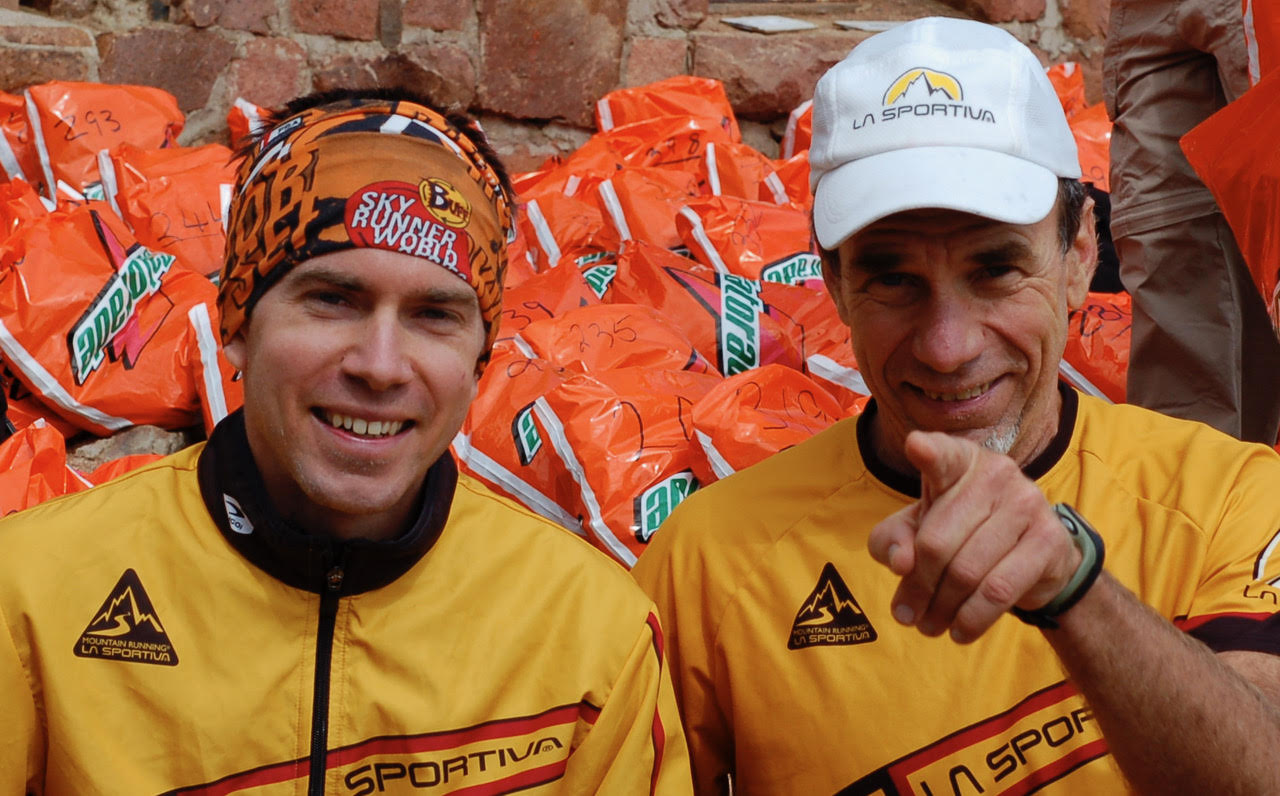
Steve House talks with Buzz Burrell, ultrarunner, mountain athlete, and the man who coined the term “fastest known time,” about a life spent doing remarkable things with no one to tell. Buzz goes back to 1969: at 17, he quit his high school’s grinding track program and ran 38 miles from Kalamazoo to Lake Michigan with no food or water, drinking from lawn sprinklers along the way. He calls it the day he learned he could choose something and make it real.
The conversation follows a career of being early. Buzz describes climbing and running in Boulder’s 1970s scene, running Pikes Peak without entering, managing one of the country’s first natural food stores, and running one of Colorado’s first certified organic farms in Paonia. With partner Peter Bakwin, he pushed the multi-day format on the Colorado Trail in 1999 and the John Muir Trail in 2000. When he couldn’t find any record for the JMT, he chose the humbler phrase “fastest known time” out of respect for the athletes who may have gone faster without telling anyone. Buzz and Steve also talk about how climbing and ultrarunning borrowed from each other, why the competition and the camaraderie of ultrarunning can live in the same “big tent,” and why U.S. national parks, which don’t allow races, helped make FKTs popular.
Buzz also tells the story of the 95% blockage in his left anterior descending artery, the “widowmaker,” which doctors repeatedly missed because his fitness numbers looked so good. His lessons: athletes need their numbers recalibrated, endurance training gives no free pass on heart disease, and if something feels wrong, go to the emergency room. The episode closes on labels, legacy, and “follow your bliss,” and Steve asks Buzz to set his Midwestern self-deprecation aside and own his part in building the sport.
Exploring the poetic soul of the mountains.
Voice of the Mountains explores the mental and emotional adventures found in discovering who we are and what we’re capable of. Here we engage in self-reflection, humility, and embrace the beauty and struggle of the alpine experience equally.
VOM S3 E3 – Buzz Burrell (Episode v02)
Voice of the Mountains with Steve House
OPENING
Steve House: Somewhere in the mountains. Someone is doing something remarkable today. And they have no plans to tell a soul. They will come down, eat dinner and go to work in the morning. And what they did will be known only to them. My guest today has spent his life making room for that person. In the year 2000 before he ran the John Muir Trail, Buzz Burrell went looking for the record, and he couldn’t find one. He knew that the people most likely to have done something extraordinary, like run the JMT fast, were the people least likely to have told anyone. So after his run, he declined the word record and chose a much humbler phrase. The fastest known time. The word known is a bow to everyone who may have gone faster. And yet chose silence. Buzz was one of those people long before he named them. In 1969, at 17 and fed up with the coach’s rules, he walked out his door in Michigan and ran 38 miles west to Lake Michigan with no food and no water, drinking from lawn sprinklers along the way. There was no one to tell. He says that was the day he learned he could choose something and make it real in the world. And near the end of our conversation, a man who had spent 90 minutes deflecting every compliment. Finally let himself be known. Buzz calls a mountain a topographic prominence. He calls the best trail he has ever run. The next one. And once the goals and expectations fall away, he says. What remains is simple. He moves. And he is going to keep moving. What would you walk out the door and do tomorrow? If there were no one to tell. I’m Steve House, and this is Voice of the Mountains.
Steve House: Whatever your next big objective is, there’s a version of you that’s ready for it and a version of you that shows up simply hoping for the best. Uphill Athlete Coaches build personalized plans around your specific goal, your life, and most importantly, your physiology. No pre-built programs here. real coaching from people who understand mountain performance. Whether your objective is 12 weeks out or 12 months out, the best time to start is right now. So go to UphillAthlete.com slash get ready and let’s get to work. That’s UphillAthlete.com slash G-E-T-R-E-A-D-Y. Let’s go.
INTRO
Steve House: Welcome, Buzz Burrell, to Voice of the Mountains. It’s such an honor to have you here. You’re the man of, you know, you’re just one of the legends of ultra running, a trail running, mountaineering, rock climbing, whatever. All of all of these sports. Thank you for being here.
Buzz Burrell: Steve, well, you are the legend, and I’m the person who hasn’t died yet. That’s my claim to fame.
Steve House: Yeah, well, I guess it’s it’s mine too, and I think it’s a pretty good one. I gotta stick with it. I just gonna ask you a few quick questions. What is the best trail you’ve ever run anywhere in the world?
Buzz Burrell: The next one. Sorry, that’s my stock answer. You have to pardon me, but fundamentally, I mean, I’m known as a runner. I do other things as well, but fundamentally in my own mind. I’m an explorer. I’m an adventurer. So my favorite trail is the one I haven’t done yet. so pardon me.
Steve House: Yeah. So maybe this answers the next question then. What is the most underrated mountain range of the United States?
Buzz Burrell: Wow, that’s really an interesting one. That’s a that’s a heck of it because I’ve been around a few places in the United States. Obviously, I’ve raced from New England and Southeast, Pacific North, cetera, et cetera, et cetera. Right now, I am living in Moab, Utah. And so I’m just gonna dumb it down, say the La Sals, Spanish for the salts, which is outside of Moab, Utah. And I think the highest no, the most remote, no, they’re the steepest, no. What are they? Well, they’re out my back door. And so at some level, you know, I think maybe you relate to this, maybe the listeners relate to this, but at some level, it’s what works for our lifestyle, what works at a day-to-day level. It’s what feeds our soul could be our favorite mountain range.
Steve House: Hmm. Hmm. And the La Sals are amazing, really, because it’s so beautiful and peaceful out there. And it’s sort of unexpected. You, you see them from lots of places. You can, you know, you can see them, you know, when you’re traveling on I 70 towards Grand Junction, or away from Grand Junction, you can obviously see them from Moab, you can see them from Telluride on a clear day. You can see them from so many places. And they just kind of look like these nondescript cones, and you’re not really, it’s always kind of hazy over there because you’re looking at them so far away, and then you get in there and there’s these gross magical groves of aspen and meadows and little streams and wildlife and Man, blissful place.
Buzz Burrell: And the Spanish fort, the salt. And that’s how they were named. So you’re out there in this desert. You know, it’s a desert and you look out there and they’re white. And so the original explorers a slot. Well, that must be salt. It’s not salt. It was snow, and they were not accustomed to seeing snow in the desert.
Steve House: Hmm One more. Which athlete, living or dead, would you most like to go on an adventure with?
Buzz Burrell: Steve, man, you’re, you’re, you’re, you’re laying down some serious questions.
Steve House: Oh, we’re just getting warmed up, my friend.
Buzz Burrell: Okay, I, you know, I’m, I, I, box a little bit. So I’m almost going to answer Jessie Diggins.
Steve House: Okay, yeah. That’s a great answer. I bet that would be an amazing. Yeah, she’s incredible.
Buzz Burrell: Yeah, the… Right. And of course, I, you know, I’ve done stuff with, with a lot of people. I couldn’t say Kílian. I mean, I mean, Kílian is a generational athlete, literally a once in a generation athlete, but of course, I couldn’t come close to keeping up with him anymore. I can’t keep up with Jessie Diggins either, but on the other hand, I could have this interesting conversation and hear about, you know, her journey and how she’s worked it out with some of her issues. And I like, I’m just gonna bump over here a bit, Steve. I like strength. I like power, you know? ultimate runners, kind of these skinny, scrawny people kind of jawed, you know, for 24 hours straight, but I kind of like that power type athlete.
Steve House: Hmm. Yeah. Yeah, she is very strong. insanely strong. Yeah, incredible. And I’ve been trying to get her. On Voice of the Mountains, but, you know, there’s a little thing called the Olympics in the way and some other stuff, but still working on it.
WHAT IS A MOUNTAIN?
Steve House: I have been thinking a lot about, what mountains actually are to people like you and me and are they a place we go, a place we live? Or is it more like a language we speak? And even in some cases, a common language? So, I’m gonna start there. What is a mountain to you? Not what you do on one, but what, what it is, what is it, for you?
Buzz Burrell: A topographic prominence. Steve, I’m sorry to be such a rotten guest with my, out of these box answers and probably breaking the boulder. I think it’s supposed to be poetic, you know? And in my 70s, I’m supposed to have this deep wisdom, but a mountain to me is a topographic prominent, sorry. Because no matter where you go, there you are. That’s what I’m saying. You’re gonna bring yourself with you. And so in a certain sense, you know, we get to go to these places that inspire us. We can have some fun. Hopefully we learn and grow. But it’s kind of internal wherever we are. And I do have to say, you know, I go to the mountains a lot, but I’m a desert guy also. I like the water. I did a kayak race just 5 weeks ago. So I do a lot of different things. So again, I’m primarily an adventurer. I like to be outside in nature and all you, whatever means of conveyance that is most appropriate.
Steve House: So we need to broaden the definition here, because to me, the, you know, having spent a lot of time in the Utah desert. It’s the mountains. Like, it feels like there’s, it feels very alpine climbing, actually, when you’re heading up, you know, the lightning bolt cracks and, you know, managing rope drag and dealing with off with and like everything that it can throw at you. So, If, if it’s all internal. Then why is that and how is that different than the, when you’re not on a mountain river? Or in a desert? Aren’t, is that also internal? Like right now, is it the same experience?
Buzz Burrell: Well, well said, because I’m sitting here in this chair. No, it’s not the same experience. Although talking to you, Steve, is kind of exciting. And so this is just as interesting as a lot of voting.
Steve House: Well, you, flattery will get you everywhere, Buzz, but I guess.
Buzz Burrell: So maybe it’s a similar… I hope so. I see what you’re saying. So another way of putting it is what are we doing? To dance with gravity. I mean, that’s one way I’ve often looked at it. Um, and if you’re going uphill, you’re really feeling gravity, going downhill, you’re really feeling gravity.
Steve House: If you’re going down a river, you’re feeling gravity.
Buzz Burrell: You are. And I think there’s little different ways because I’m out and this is the big thing for me because I do a lot of canyoneering. My favorite little ways to add context to this. If you’re climbing. If the weather turns, you’re not feeling it, something isn’t right, you bail. Baling’s a total thing. Get the heck out. Wrap off. Retreat. I mean, right? This is a total thing. And canyoneering, once you pull the rope the 1st time, there’s no bail. You’re going. you can’t go back. So it’s sort of an interesting difference there. And so I somehow I don’t really have agrophobia, have a little bit of agrophilia. I kind of like heights. I sort of feel exhilarated being up, but I might have a little claustrophobia. And so I’m dropping into a slot, maybe a May West slot, if you will. That means it’s a tight squeeze. I can kind of get a little sketch. I’m kind of my eyes kind of get a little wider. Oh, this is getting interesting. And of course, as you know, from kayaking, it’s the same thing. once you make the drop, you’re going down. There you go. And so I find water to be a little intimidating also. Well, somehow, maybe it’s just me. I feel kind of comfortable in the mountains.
Steve House: Hmm. So the mountains are more comfortable for you than the the commitment of the canyon of the river.
Buzz Burrell: For me, I mean, everyone feels this differently.
Steve House: Oh, we’re talking to you. Yeah.
Buzz Burrell: If a person doesn’t like heights, they’re not going to feel that way at all.
Steve House: Yeah, yeah, yeah, yeah. But I mean, we’re not talking about everybody. We’re talking about you and, you know, one of the things that I hear you saying is like, you know, to bring it back to mountains is comfort. Uh, a little exhilaration, the sense of being exposed or up high. Um, This is, this is a internal experience, as you said, but it’s one imposed by the environment to some degree.
Buzz Burrell: Correct. So I drove back east, let’s say, Michigan. I’m from Michigan. I love Michigan. And so I cut my chops in this place called New Hampshire. you’ve heard of it. The White Mountains, where you’re a lot. Yeah, where a lot of people have come from. And your trails, where you’re going, you’re going up the screen beds to a certain degree. You tell you get above, you’re just kind of pushing up these mossy rocks with rains, there’s water coming down it. And then I moved to Boulder, Colorado. They go to the University of Colorado. So I walk out the door and just a little hike. You can go anywhere. I was like, wow, this is different. And so suddenly the mountains took kind of different meaning for me, it took on this aspect of spaciousness that I could go anywhere. And so I felt this immediate comfort of going up high because you can say, wow, I can go there, I can go there, I can do whatever I want. I can look out there. I can go there if I want to go. And sometimes on the water and canyons in the desert, you can’t get there from here. It’s tighter. And so I think the mountains for me, just personally, are a little more spacious.
Steve House: Yeah. Well, that sounds like freedom, right? Like, I can go there. When you’re in the bottom of the canyon, you can’t, you’re not free to do that in a sense, yeah, which is a, which is a classic feeling, you know, that we all, we all experience.
THE 1969 RUN TO LAKE MICHIGAN
Steve House: Let’s connect back to, you know, Kalamazoo, Lake Michigan. 1969, you decide to run 38 miles from Kalamazoo to Lake Michigan. No food, no water, no drop bags, no cell phone. This was 1969. People didn’t talk about ultra running. I don’t even know if that was a term. This was probably one of the, you know, 1st sort of alter distance, you know, things that you personally did. What was kind of going on in your head? What made you think about like, hey, like I can I can run 12 miles more than a marathon?
Buzz Burrell: Well, Steve, thanks for dredging that one up. Actually, that is a fond memory, and it is a milestone in my life. So it’s a very appropriate thing to bring up. I appreciate that, Steve. Thank you. I was an active runner track across country in high school. And at that time, the longest distance was 2 miles. 2 miles isn’t that far. I think it’s all relative, but the time was considered far. And so I just wailed away. And so you, I’ve written 2 books on training, one of, you know, Kílian, Scott Johnston, and he’s incredibly smart people as are yourself. And so I think you’ll get what I’m saying when our training program consisted of running intervals on the track every day. That’s all we did. So you’re kind of going, hmm. And one day.
Steve House: Yeah. And the listeners too, will know what that means. Like, hmm. That wasn’t too smart, but yeah, it was 1960s, whatever, and yeah, it’s logical, right? Like if you’re gonna have to run fast, you must have to run fast in trading. So like, that’s that’s the old, old, oldest kind of trick in the book, the 1st.
Buzz Burrell: Right. And so one day, and I was in high school, this is, you know, I’m 17 years old. I ran 30 repeated quarter miles on the track. And this is a sender track. And then our district meet was that Saturday. You come to the district meeting, you know, I can hardly walk. you’re like, duh. Uh, you know, again, you could read into where this is going. And so I said, this is stupid. I hate this sport. I quit. And then they go to the next meet. doing really well. wow, this is great. And so then the coach, coach could have used a little coaching himself, I’m not making this next one up, Steve. We did wind sprints, which was going. Upstairs, the 4th floor of our school building, and sprinting from one end of the building to another 110 times in a row. Oh my god. to develop speed. Of course it sort of had the opposite effect. So, you know, they come to the, you’re now the regional mate, and I saw him getting all pissed off. You know, I hate the sport I quit. And so all of a sudden I’m kind of going, you know, I like to run, but it’s time to step out of this game. You know, that’s everyone else’s rules. And so the example you brought up here, Steve, really is major milestone in my life, because after 3 years of working extremely hard, high school tracking cross country, you being extraordinarily dedicated, and having a little bit of frustration in there, I said, I’m out of here. It’s time to follow my own path. It’s time to follow my own heart. I like Lake Michigan. It’s this big body of water. It had this mythical symbology to me if you get my drift. It’s like the top of the mountain in the distance. It’s this big body of blue water. So I just walked out the door. I said, I’m going west. And so I did. I just ran west. Like I said, no food, no water. That wasn’t like, let’s not take food or water. It’s like, I don’t care. And you’ve done this before. I’m looking at your resume. You’ve done the same thing before. It’s not a matter of trying to dispense or prove a point. It’s just who cares? I care about what’s in my heart. I care about my spirit. The rest of it, who cares? And so, you know, about 7 hours later, I drank out of, you know, lawn sprinklers make it there. and made it to Lake Michigan, and it was like revelatory. It was a milestone of my life. So what did it mean? It meant to me, freedom. I had self defined my life. This wasn’t about the number, this wasn’t about the time, this wasn’t about an external of any kind. This is entirely internal that I could choose to do something and I could manifest my choice in the world. And suddenly I was free. It’s like I can do anything I want. College, who cares? Everything else. Who cares? I can manifest my dreams in the world. And so that was a meaningful run to me.
Steve House: Hmm. That run teach you that you have power. Do you have agency? Is that what it is it that fun? Was it that fundamental?
Buzz Burrell: Oh, absolutely. I think agency would be the term that would be used today.
Steve House: Mm-hmm, mm-hmm. Oh. Was there anyone in your life that kind of pushed back on that at that time, or did you just not care, or, I mean, or, I mean, even if you didn’t care, Were there people that were like, what are you doing? You’re crazy. Like, did they give you negative feedback on that?
Buzz Burrell: No, not really. But maybe I’m identifying a certain personality type. Maybe people were, and I didn’t notice.
Steve House: Mm-hmm. How about the opposite? Did were people supporting? That? Do they say celebrate that in any way?
Buzz Burrell: Not really, you know, you know, pre-social media, pre-internet, pre- uh, runners world that I don’t think existed at that time. Bob Anderson’s 3rd runners world somewhere in there. Not sure when. So, no, there’s no positive feedback. It’s all intrinsic, as they say. This is something that was meaningful to me.
Steve House: Mm-hmm, mm-hmm.
Buzz Burrell: I will say, I will say I need to get a ride back.
Steve House: And we’ve talked about.
Buzz Burrell: And so a young woman from a high school classmate drove there and picked me up. And she later became my wife. So it had some meaning to it.
Steve House: Uh-huh, uh-huh. I see, it’s wonderful. I mean, that support.
Buzz Burrell: Definitely.
Steve House: For sure. Yeah, that’s that’s that’s so interesting.
BOULDER AND THE EARLY RUNNING SCENE
Steve House: You know, you mentioned, uh, what was it, runner’s role or something. When did you 1st realize other people were doing similar things like that? Was it when you got to Boulder or later or how did take me back to that time in 1969 or the early 70s or whatever it was. You know, now, of course, like, we go to Chautauqua on a Saturday morning, how many runners are we going to count, you know, in 5 minutes, right? Just. But, wasn’t always like that. Well, take me back.
Buzz Burrell: Right. You’re completely correct. You’re into something of a vacuum. I was in Michigan, and I go out and do, you know, 10 mile runs on the road, and also I picked up on trails at that time too, just funky, undesignated trails and things of that nature, and then I moved to CU Boulder, and fall of 1969, and all of a sudden there’s this whole scene. Then, I went from high school tracking cross country to college tracking cross country, which was the next level. It took me a while to kind of connect with other people who were doing what I was doing. My 1st connection, if you will, was to take a climbing class. And I think you’re going to appreciate this, the climbing class was taught by Cleve McCarty. Who was the author, co-author of High Over Boulder with Pat Ament. So, a lot of credibility there. So that was that was kind of fun. And we did things that I don’t think they would do nowadays. We went in the Folsom Stadium at CU, not Folsom, the CU Field House, and how he got permission or didn’t get permission. You know, in those days, permission was sort of a questionable thing. And we went up to the rafters to learn to repel. We repelled off the rafters in the CU Field House down to the gymnasium floor. So, you know, that’s how we learned climbing technique. And it picked up on, you know, Boulder is an act of climbing locations. People of the rainforest, of course, Royal Robbins came there to visit, et cetera, et cetera. So it’s a real happening climbing scene, which I appreciated. And the running thing didn’t really, I wasn’t really connecting with that. You know, I’m sure people were doing this, but I didn’t really connect with that. A little fast forward at this point, if I could, Steve, because I had last in Boulder about a year and a half or so, and I moved to the western slope of Colorado, small town called Paonia. And I operated an organic fruit farm there with my wife. That’s where my 2 children were born, home delivered in our house and the farm in Paonia. And then one day I was reading the Grand Junction Daily Sentinel, the Sunday paper, and picked this up and there’s an article on Rick Trujillo running the Pikes Peak Marathon. Oh, wait. So there’s the light bulb. You know, I was kind of done with running. It sort of boring, climbing, you know, I didn’t think I was that good of a climber. Still not that good of a climber. But running up mountains, all of a sudden, boom. I get it. Okay, this is this is it. This is what I want to do. And so I didn’t know how to enter, didn’t know anything into what was going on. And so my wife and I just got into our little, uh, AMC pacer that my wife’s older brother had given us. We just drove down to Manitou Springs. We didn’t know what was going on. Threw out our sleeping bags in the parking lot of the, of the railroad, of the Pikes Peak incline. Just threw them out in the paved parking lot next morning. People are milling around. Okay, race happening. So I just ran up and down Pikes Peak that day. I didn’t enter. And I felt kind of bad about not entering, so I didn’t need any food on the age stations. Kind of a syndrome there. Speaking of being really a slow learner, I’m joking. But that’s how I that’s how I connected with it. And gotten into climbing, you know, kind of not that good, and it was an ex-runner, but running up mountains. Okay, that was my jam.
Steve House: So Pikes Peak Marathon or early mid 70s, how many people are showing up for that?
Buzz Burrell: I think it was 250.
Steve House: Oh, that’s more than I would have guessed.
Buzz Burrell: Yeah, no pikes, I think the 2nd oldest marathon in the country. I beat way back in the 1st marathon that allowed women.
Steve House: Okay, okay.
Buzz Burrell: So Pikes Peak has major credibility. So, you know, keep it up there in the pantheon somewhere.
Steve House: Yeah, all right. How many people run into now, do you think?
Buzz Burrell: Gosh, I think, well, they certainly capped it, you know, years ago, and they, they, too. So now there’s, as of 20, 25 years ago, on Saturday there’s an ascent only. You run up and stopping to a bus back down, then Sunday you do the round trip, the marathon. And I think they’re both capped at a 1000, but you keep, man.
Steve House: Yeah, yeah, yeah.
ORGANIC FARMING BEFORE WHOLE FOODS
Steve House: So, you know, this, it’s, it’s interesting you mentioned Paonia, having lived in Ridgway for a little over a decade, traveled through there many times on my way to the Roaring Fork Valley, or, you know, to the black, you know, not quite, but like go through part close by there on the way to the north rim of the Black Canyon, which is one of my favorite places. And being there in the 70s, organic farming, I mean, Silent Spring came out in 1970, right? So, like this is also something that is, I mean, correct me if I’m wrong, but it must have been kind of a new thing. Like, did people even know what organic farming was in 1970. I mean, obviously it’s the oldest form of farming in some sense, but It didn’t have the label or the brand or the little green stickers in the grocery store, on the organic produce, or any of that. infrastructure. What was that like? How did you you come to that?
Buzz Burrell: Right. Well, 2 things there. What was that like? Well, it was scrappy. Because nowadays, you know, look at the price. You go to whole paycheck, and organic apples, you know, $3 a pounding up, and we were selling our certified organic apples. I was the 1st certified ordaining firm in the state of Colorado. And this was done through Rodale Press, by the way. It wasn’t US Department of Agriculture. And it was, we were selling Apple’s for ¢25 a pound. And we, it was called a roller. This is literally the term. I owned a 2 ton truck, not a flat bed, but a box truck. We just loaded up with apples and I gets some part of the turn, but literally some hippie was passing through and just looking for work and said, drive east, stop at every store. Don’t come back till don’t got no more apples. and it’s called a roller. And so you just send someone out on the highway in some direction and say, stop at every store, sell what you can and come back when you’re done. So let’s say an immature industry. This is before John Mackey coming out of Texas, Austin, Texas, 3rd Whole Foods. This is before a lot of these big chains. And so it was very, very early.
Steve House: Yeah, yeah. very early. I’m am I picking up a theme with you? You’ve been early on a few things here, buzz. So.
Buzz Burrell: Definitely, I think, by the way, I should say before I left Boulder, I was working, I was the manager of the 3rd natural food store in the country, called the Green Mountain Green. The 1st was a New Age Natural Foods in San Jose, Fred Rohé, and the 2nd was Paul Hawken, and Erewhon Natural Foods in Boston. We were the third.
Steve House: Wow. And and what was the, talk to me a bit. These are a lot of transitions. Like you’re, you know, you’re, what are those transitions driven by? Is this the explorer that’s like explored that and?
Buzz Burrell: Yeah, I think I had my own private one liner, which is, I think of stuff. I mean, I mean, just, I don’t really try. It’s just how it works. I see what’s coming next. I see what needs to be done, and I do it, and I make it work, and I’m successful to that degree, that I get bored, then I quit, and so all this comes along and makes a ton of money. And so I’m kind of thinking, man, I really had to stick with one of these. Because every time I’ve left one of these industries, other people come in and just made bank. And so I started to think, gee, I had a, I didn’t just stick it out a little bit longer. But I have an extremely low threshold of board.
Steve House: Mm, hmm. Which, you know, I’ve been accused of the same thing, so I’m just gonna call you out that like, that is not a fault.
Buzz Burrell: Well, good. Well, thank you for supporting me in this one, Steve, I appreciate it.
Steve House: Yeah, I think there’s a lot of people that would listen to this. It would also, you know, you know, we could be very narrowly and intensely focused on something and then when that well runs dry, it’s like, there’s no water left in that trough, we’re done. Frank it, drink it all up, drink it all up. So I get it. I hear you, I see you. There’s some other things, but I want to go to.
COLORADO TRAIL WITH PETER BAKWIN
Steve House: I want to get back to kind of moving through the mountains. And we can call it Redding. We can call it mountaineering. we can call it freedom. We can call it whatever you want. But, you know, one of the other things that I was reading about was your Colorado Trail. Run with Peter Bakwin, am I? I saying that right? And you guys attempted to run the whole trail basically as fast as you could from start to finish. It’s roughly 300 plus miles. I don’t know, 330 miles, something like that. I don’t remember.
Buzz Burrell: Not close to 500.
Steve House: Oh, okay, it’s much longer than that. So, at one point, Peter gets hurt, he can’t, he can’t proceed. you are able to continue and and you finish it and it’s like 12 days or something that, you know, now we call this, I don’t know, what do people call this now? I don’t even know. Is that ultra running? Is it an FKT? Is it fast packing? Um, You know, like when, when those guys go and do the, the Appalachian Trail, FKT attempts is, what is that? I don’t know how we categorize these things or is it just freedom? So what was, take me to that experience and with Peter and like, what was that? I mean, what year was it, 1st of all?
Buzz Burrell: That was the year 2000, wasn’t it? Or maybe it was 1999. Well, that’s weird.
Steve House: Yeah, I thought it was much early. Okay. Should we start with the John Muir Trail? Maybe that was earlier because I’m also, I’m afraid my homework is not as perfect as I would like you to think, believe it is.
Buzz Burrell: The Colorado Trail was the 1st year and the JMT was the 2nd year. was the year after that. Yeah, so I think. Right.
Steve House: Uh-huh. I found in my notes, 1999.
Buzz Burrell: It’s in CT. Trail. It was 1999 and the John Muir Trail was 2000.
Steve House: So take me take me through that. 486 miles.
Buzz Burrell: There you go. Right. Peter Bakwin is a great friend and a great person. We teamed up. We were partners in a number of projects. Steve, you know what it’s like to have a good partner. I mean, it’s, it’s, make all different… Right.
Steve House: That’s a superpower.
Buzz Burrell: So people, I’m just going to digress a little bit because I just have to say this. you hear about safety. what, your 1st aid kit, your whistle or your signal flare or whatever it is, it’s ridiculous. I mean, the 1st thing, 1st 2 things about safety is one, leave early in the morning, too, have a good partner. Everything else is sort of details. And Peter Bakwin, I had a great partner who’s physically strong mentally and emotionally strong as well. So I had to just have to call that out right now. Because for backcountry trips. we have to see that.
Steve House: And I think that it’s, it’s important that you call it all out, like, emotionally strong is just as important as the physical strength, right? And especially in these endeavors.
Buzz Burrell: Right. So we’ve been doing a few things, and so you question about terminology. We just called it multi-D. Um, ultra running, technically, just means any distance along of their marathon. Marathon is 26.2 miles So if Ultra is Latin for more van. So anything more than 26.2 miles is an ultra marathon. to make it breaking down a little bit better, then we would call it multi-day, because otherwise, we’re not doing this nonstop. is pretending to break at night and so forth, and I would call it a multi-day, an FKT, a fastest known time. That’s if you’re going for a particular time, the fastest time. And so that’d be a further way to differentiate. And so we were going in the back country. We like being the back country. That’s something that separated Peter and I out from a lot of other ultra runners as we both were experienced in being outside in general. And so we said, hey, let’s do the Colorado Trail, Denver to Durango. And we did that. Peter had a little injury, then we got really bad weather toward the end, and then we all got food poisoning. So it was kind of the last day was on fumes. But, you know, it was we put our mark on the wall.
Steve House: Hmm, hmm. What does that mean, putting your mark on the wall?
Buzz Burrell: Well, we were significantly faster than the fastest time it had been done previously. I think it was like 17. So in a way, and I think I can say this, Peter and I put multi-days on the mail. Because 17 days. No, that was good, but they weren’t working at it, if you see what I mean.
Steve House: Yeah. Yeah. How many miles are you doing a day?
Buzz Burrell: Well, so 486 divided by 12. You know, that’s 40, So, um, something like that.
Steve House: Yeah, so an ultra marathon every day through the mountains in Colorado. Self- self-supported to some extent to the large extent.
Buzz Burrell: Oh, this was supported, which means we had, um, actually Peter’s wife, parents driving a little teardrop camper around. And so at the end of the day, we would they’d meet us. So we would be mostly by ourselves during the day and we met at the end of the day. So we were not carrying sleeping here of any commade. We were carried here for the day. , which is a lot different.
Steve House: Yeah, yeah, yeah, yeah. But you’re running 40 miles a day through the mountains. you know, so that’s very high altitude, you’re crossing multiple ranges. That’s a, that’s a, so, what was that? impetus. Like, where did that grow out of? Like you said, you knew people had done it in 17 days. Like you said, that that’s reasonable. again, you can just do the math, right? 480 divided by 17. Yeah, I mean, that’s a lot of long days, but, you know, if I walk 4 miles an hour, for, for, 10 hours a day, that’s 40 miles, but really, I, it’s going to be something less than, like, you could kind of like talk yourself into, into these things. But there’s a, there’s another. Like build that has to happen. To think that you can do it. Like, we can do this in 12. We can do, like, you set off, like, they met you. You said, we’re going to meet you here, and there’s 40 miles of trail every day between me and like it was intentional. It wasn’t an accident. You just didn’t run until like you got tired and then stopped for the night. So like, what is that step that makes you believe that you can do that?
Buzz Burrell: I don’t know. And I’ve never thought of that. So it’s a lovely question. The thought never occurred to me what you just asked. What I was cognizant on, Steve, is my spreadsheet. I think, I think, this is the 1st use that I’m aware of, of the detailed spreadsheet. I was really into it. So I had the distance. I had divert, and everything mapped out, and water stops, and so I had pages and pages. And so I calculated using these little equations of how long each section was going to take us. And sheets are a thing. I’m still using them But I’ve never heard of anyone doing that. So that’s what we did. But how do we think we could do that? I don’t know. I think we did a practice, like a month in advance. We went from Denver, on the CT, on the Colorado Trail, um, up to Kenosha Pass, which was 70 miles. We started 1st light and we got there, you know, before it got dark. You know, 70 miles and so, you know, we’re kind of fit. You know, we were pretty good at this. We want.
Steve House: Yeah. I think that that’s, that’s a great breakdown, and I think that this is one of the things that uh, people who, uh, don’t do 1st that would maybe go do the Colorado Trail today in 12, 12 days. They have that comfort of knowing it’s been done. And so they just, they put the 1st, Let’s say in climbing, obviously, it’s like the 1st ascent on this pedestal. And really, when you talk to people, it comes down to almost always it comes down to a logical argument. Like you’re not, you’re, you’re, you’re a smart guy, you have really, you’re really capable with reasoning and organizing and planning, and you just start applying yourself to the, to solving this problem, and you just break it down into all these component parts. Like, where am I going to get water? How far? Oh, you know, day 13, or, you know, whatever, that’s not 13, day 13, day 7 is going to be really hard with the water because we’ve got to go like this really long stretch, so we need extra, like, I mean, you just, you get down really into the gritty details. And, you know, today somebody just goes and reads a trip report online somewhere or reads it at a guidebook and they have that information. It’s all been discovered And and you just had to do that extra work to kind of make it up. And I think that that’s, that is really the, it’s not that much more complicated than that most of the time, doing new things.
Buzz Burrell: Right. You’re totally correct. You do have to have the skill set, though. The broader skill set.
Steve House: Yes. You do have to be fit enough to run 70 miles in one in one, you know, sun, one course of the sun.
Buzz Burrell: People have that. But do they understand weathering? Can they read a map? Because this is, you know, there’s no such thing as digital. You know, we’re in here on pieces of paper and plug them out of our pocket. And so this, as you know, from being a mountaineer, Steve, you had monster cardiovastro capacity, but that would be selling your skill set really short. No way that encompassed we were. And so for what we’re to a certain degree, we had a broader skill set.
Steve House: Yeah, yeah, and you needed that, yeah, for sure. Yeah, I’ve often said that alpinism is the decathlon of climbing, because you have to be pretty good at everything, but you’re not the best at any one of those. those things, you know, pretty good rock climber, pretty good ice climber, pretty good big climber, pretty good at altitude, like, but you have to be the complete. Um athlete, which is what I found so interesting about it. And I can understand how it would be so interesting. I think that that’s what are the things that’s so cool about how we progress as athletes through our lives is you do acquire these skills as you go, you and you acquire things like partners. And then it’s like, wow, I’ve got this person. And you don’t, like, I’ve had that question. I’m sure you’ve had that question from so many people where people are sitting at the beginning of their journey and they’re like, how do I find a partner? I mean, you just go start doing the thing and it just, like the serendipity, you know, when you, when you, when you, when you start moving in, in the world with intention, things start, Coming into your slipstream that you need and it just, it unfolds, and that’s one of the lessons, I think, of, of, these sports, that, it’s that what you discovered on that, whatever it was, 38 mile run to Lake Michigan, is like, you know, things started lining up behind you to make that, that possible. the continuation of that possible. I think it’s so interesting And it’s, yeah, I think I think a lot of people overthink it gets too stuck in their heads.
Buzz Burrell: You walk the path.
Steve House: You walk the path, yeah. Yeah.
JOHN MUIR TRAIL 2.0
Steve House: Let me talk a little bit about, and I guess we need to step back in history now to uh, John Muir Trail.
Buzz Burrell: That was a year after the Colorado Pray.
Steve House: Okay, sorry. So now let’s go to, so it’s 2000 now. You guys, the John Muir Trail, how is it different than the Colorado Trail? What is interesting? What kind of a project is this? How many pages in the spreadsheet? Like, how does this evolve?
Buzz Burrell: Right. This time was, this was a 2.0. Multi-date 2.0. The 1st one is like, oh, wow, can we do this? what’s it like? And when you look at our food and clothing and shoes is, wow, primitive. I mean, it’s like, really? So we did a little bit of an upgrade for the JMT, not a lot, but for us it was an upgrade. And now we said, hey, we can do this. Let’s let’s throw down on the JMT. Let’s go for some four. And so in the Colorado Trail, it was like, okay. Colorado Trail, it’s like, okay, you know, this is going to have a good time. Let’s knock this off. If the JMT, there have been a precedent. Um, people with a lot of credibility, Blake Wood, outstanding ultrarunner from Los Alamos, and Tim Twietmeyer, multi-winner of the Western States 100, they had preceded us on it. Hmm. And I was looking at this and said to Peter, you know, I, I think we can do this because they, you know, pardon the terminology, they were kind of fast packing. You know, they had a little more support. They had to bring a little more stuff. And I think what weird definitely weren’t better runners than Tim Twietmeyer, Blake Wood, definitely were not. But we were better in the bat country in my opinion. And so we could kind of do a little more of a throwdown. And I’m going to refer to alphanism right now because we look at ultra runners and they’re doing this, this, and that and going, wow, that’s so hard. Compared with what the elpinists are doing. No, we’re sitting on the couch. I mean, this isn’t hard. I’m going for, okay, 24 hours on a trail, right? You know, if you if you, you know, sprain your ankle, you just sit there for 10 minutes and someone’s going to come by and help you off, if not, you know, a helicopter’s going to come in. I mean, you’re really supported in reality, well, the alpanism that you’ve done, Steve, no, you are totally altered by yourself, and so we’re not in that category.
Steve House: Hmm.
Buzz Burrell: But we are influenced by that. Let’s say we borrowed a little Steve House, like 10% of Steve House.
Steve House: Uh, you’re too too generous, I think, but, because that, it went both way, like when we were, uh, just to turn that tables on that, like, in 2000, Mark Twight, myself and Scott Backes climbed the Slovak Direct in 60 hours, the biggest face on Denali, South Face, most difficult route. At the time. And we had been taking inspiration from things like the race across America on bikes. Like the ultras had become a thing, like there, you know, the Wasatch 100, you know, and, you know, I remember when I used to be sponsored by Black Diamond in the mid 90s and one of the product developers, Andrew McLean, ran the Wasatch 100 and I was like, what is that? What did you do? Like, I’d never heard of it. And then we start like, oh, that sounds kind of like what we’re doing, but just different. how do you eat? How do you drink? How do you train? Like, we had those conversations. So there’s, absolutely, it was cross pollination.
Buzz Burrell: love it. I love it. As Alex Hutchinson’s book, The Curious Limits of Human Endurance, and it is curious. I mean, so borrowing back and forth is a wonderful concept. Thank you for bringing that up. And so we were able to just go out there and say, we’re the 1st 48 hours. We’re just going dull. You see what I mean? You’re the Sierras. It’s not that bad. We’re not on the Rupal Face. You don’t forget that crap or what kind of nutcase would do that. Pardon me a little in joke there. And so you’re in the Sierras. it’s not that bad. So we we kind of did this little bivvy for 3 hours, you know, the 1st night. We just kind of lay down and pull on your puffy jacket and then get up and keep going. And so we were able to take it to another bottle. And ever since, and that’s the standard, you know, that’s what people do, up to that time, it’s more like a fast pack where you go during the day, and then you camp and sleep, and you start again the next day, and we took it into a multi-date. ultra run going really fast and light. Now as a standard procedure, like you said, people see that the bar has been set. know how to do it.
Steve House: Mm-hmm. How does how did it work at that time? Were you calling Tim and these other people who had experience there and asking them questions?
Buzz Burrell: And so that’s what I’m proud of really on the JMT.
Steve House: Were they giving you information? Was there that supportive, collaborative? Thing or was it more competitive? Like you’re keeping it a secret because you don’t want them to find out because you want to do this thing 1st in this certain way that you see can be done. What is that like? What is that landscape at that time?
Buzz Burrell: Definitely not competitive. Definitely cooperative, but non-communicative. Did you see the distinction? Who did this? Right? How do you even know? There’s the the magazines, you know, runner’s world? I don’t think so. They’re not covering that stuff, et cetera. And so there was, what’s the, you know this from climbing and mountaineering. There’s this little circle of friends who might communicate privately, sideband. So that’s all we had. And this segues into something maybe you’re going to ask me anyway. you know, the concept of the fastest known time.
Steve House: Hard work alone doesn’t get you to the summit, but smart work does. A lot of athletes are grinding without a real plan built around their body and their goals. Uphill athlete coaching changes that. Our coaches build a personalized training structure around your life, your objective, and most importantly, your physiology. Stop guessing and start progressing. Go to uphillathlete.com/trainsmart to get matched with a coach. That’s uphillathlete.com/trainsmart.
COINING THE FASTEST KNOWN TIME
Buzz Burrell: I mean, okay, pardon me, Steve, I want to, you know, jump, jump ahead here, but this, this,
Steve House: No, it’s, that’s the segue right there. Yeah, no, I, I, because this, this experience… Didn’t have a label.
Buzz Burrell: Right. It didn’t have a label. And the tongue had been used before by a friend of mine named Bill Wright, an obscure website that, I think it’s gone, I’ve never been able to find it since, but it came to the forefront in my mind because the reason the question you just asked, what was the fastest time on the JMT? There’s no way to tell. And so I worked at it. I research it. I called anyone, everyone I knew, and it was actually hard to figure out, literally couldn’t figure it out. JMT is possibly the finest long trail in the world. I mean it’s 223 miles. It doesn’t cross a road 223 miles. There’s no other trail outside of you, Arctic or wherever that does that. Go to the Alps and walk for 223 miles. No, that’s Yeah, you’re, it won’t look like that. Let’s put it that way. And so, what was the deal? And so that’s when I started thinking, wow, it’s not really a record. This is literally the fastest time that is known. That’s all it was. It was just pragmatic. trying to be honest. We had to acknowledge. maybe someone else had done it faster. It was literally the fastest known time. So my own frame of reference. That’s when I started using the term.
Steve House: Mm-hmm, mm-hmm. And I like that I, when I 1st heard the term, I immediate, it’s such a, I was afraid it was going to be fastest record or like, that kind of thing, but it was known time sort of has a certain amount of deference to it. Like, and and it’s sort of, like, scout’s honor, you know, um, And and and now, of course, We live in an era where everyone is GPS tracked and strawed and posted online and there’s still that humility baked into the word known. And I think that that’s really important.
Buzz Burrell: Well, thank you. That’s totally my opinion as well. Deference, I love it, Steve. That’s the way I look at it. It’s the acknowledgement. Someone might have ghosted it. Right? Ghosting is a total thing. People don’t, people go out there and, you know, you and I both know hard women and hard men or just doing, shall I say it, badass things and they don’t care. They’re just out there doing it. All of a sudden you run into them. You’re doing what? You just did what? And, uh, sure. So let’s just call it the fastest known time just to relax a little bit.
Steve House: Yeah, yeah, I love it.
RECORD CHASING VS THE SPIRIT OF FKT
Steve House: I wanted to ask you how you feel and maybe I know, but now this idea of fastest known time has become, for some people, a form of record chasing or breaking. Maybe it’s, you know. Maybe we can be cynical. And the good thing about being old, like I am and and you’re, I don’t know your status with sponsors, but I don’t have sponsors anymore. And so I can, I can just be, speak honestly, and cynically sometimes. Maybe people are chasing exposure for their sponsors because that’s part of their job. Maybe it’s visibility. Maybe it’s likes or hits on their website or whatever that is. But what do you, what do you make of that part of the FKT? And this is one, gets to the core of something I’m really interested in understanding about ultra running, that as an alpinist, I, I struggle to understand, is that, is the balance between running races and timed events and, and this supportive nature of the community, that, even at the most competitive events, still. exists and a fundament- there’s a fundamental level of sort of, I would say, sportsmanship. That, you just don’t see, uh, very often, and I wish I could figure out what that essence is and bottle it up and like, you know, spread it around a little bit more in the world, but how does that, what is that? What is that piece in the running community in this part of the in the ultra running community that, that, that can hold both of these things at the same time? Can hold the ghosting, the FKTs, and the deed to like run at a lineup at a start line line at 6 o’clock in the morning and and and the gun goes off and like try to place 1st or top 3 or top 10 or whatever your goal is. Talk to me. I don’t get it.
Buzz Burrell: This is interesting. He’s coming from the world of mountaineering. That you’re, that’s for, if I may, if I may say so, is a little more on one in that spectrum. The purity, the word purity has got to come up, the support of mountaineering, I think. Yeah. ethical, right? Ethics are massive in this particular sport because you can fly helicopters. I mean, obviously, so what the heck? And so that’s intrinsic. And of course, pardon me, 1st speaking to you, we’re far more knowledgeable than I am, you know, Lito Tejada-Flores, he wrote this epic essay, Games Climbers Play, and this is, oh, man, this informed me. It still does. And so I’m just going to call this out, you know, put in your written show notes or something. This is still a foundational part of my cosmology in that we invent the rules so that we can have fair game and we can learn and grow. But it’s all done by ourselves for ourselves. It’s not exactly intrinsic, extrinsic. And so, Mount Mary’s been predominantly in one end of that, while running is not running is full on the spectrum. You just in the Olympics, right? I mean, you or forget the Olympics, if you win the world marathon majors, you’re probably from Kenya if you did. You just bought your village. I mean, literally. You bought your entire village if you won the New York City marathon. So it’s full on. It’s for real, 100 K is not peanut to anybody. et cetera, et cetera. And it’s a big tent. We’re all in the same tent as runners. And so when you go to ultra running, like you said, it’s become quite professional, it’s become quite commercial, and 95% of the ultra runners don’t care. Yeah. So it’s very, it’s very funny. So I’m a podcaster. I may mention, if you don’t mind, The Buzz is what my podcast is called. And so there’s this little juxtaposition of, okay, am I supposed to have a conversation with a famous person who just went out there and, you know, jogged 100 miles without stopping and a really fast time, who can’t carry a conversation in a bucket. Or do I want to have a conversation with someone who’s got something on the ball, who’s got some meaning and some wisdom to impart, things like that? And you know, it all exists under the same big tent. FKTs, races, and then 95% of the people say, you know, F this. I’m going to go out there and have a good time with my friends.
Steve House: Mm-hmm, Mm-hmm, Mm-hmm. And is it because the 95% know they or feel they can’t compete? So they just choose. And they probably can’t. Yeah, yeah, yeah.
Buzz Burrell: I mean, Frank Shorter, I had my 1st guest on me a podcast, epic quote. Um, We talked to him, and he’s a smart guy. You know, graduate degree from Yale. So, you know, secret of success, you know, da da da da da. He said, I chose my parents carefully.
Steve House: Yeah.
Buzz Burrell: And your coach, your trainer, and we like to say, do this, do this, do that. But at some point in time, you know, genetics, you’re either going to be there or you’re not. Now that doesn’t mean you can’t enjoy the heck of our women and be a healthy morning life, not at all. Everybody can do that. But are you going to win Western States 100? Well, your parents have about 50% to say whether you can or you can’t.
Steve House: Yeah, yeah, 100%.
A SPORT WITHOUT WINNING
Steve House: I think one of the things that, and I’ve said this on this particular Voice of the Mountains channel of our podcast numerous times, but one of the things that I think is so wonderful about mountain sports, and I’m just, I’m, I like to think of a mountaineer personally is anyone who travels through the mountains. I mean, from your definition, it would probably even include canyoning and kayaking. Right? Because like I include skiing, rock climbing, like all of that like kind of falls under running through the mountains, alpinism, mountaineering. And so, if you, So, we just have this way of, accomplishing these incredible things without needing to win. And I think so much in our society, particularly as, as North Americans, in particularly, those of us in the United States of America, is focused on, like, we, we’re, we’re, this idea of competition being the thing that always brings out the best in people is drilled into us. And I think it’s patently untrue. There are instances where that’s true. I mean, you can’t have a football game or a baseball game where there’s only one team and nobody’s going to, like that’s not going to be, like you, there are certain sports that are created, but, but, Our personal lives, even in business, even in, You know, so much of sport that’s outside of that narrow, like, who’s going to be the Super Bowl champions or the world masters marathon champion or when the New York City marathon or outside of these very elite events. There’s a lot of people doing some, a lot of really amazing things in a very supportive way and just accomplishing and experiencing things that actually, I think, are the same things that people experience at the very top level. I don’t, I don’t think my experience, if I go running in Chamonix is any different than, you know, someone, uh, someone who’s just faster. Like, they’re still in the same place. They still breathing the same air. They’re running on the same trail. They’re absorbing the same view. They’re, when the wind is hitting their, their face in the same way, the sun burns burning their skin in this, you know, like all the, you know, we’re, we’re human in our fundamental experiences. This is the same. I think that’s so magical.
Buzz Burrell: Your experience is better. Because it’s quite possible that the elite athlete, a professional athlete, you’re not feeling the wind in there here. They’re looking at throw watch. Because they’re thinking, oh, I have to meet this split because I don’t meet this split that I’m falling off my training goal because they’re getting a little uptight. You’re not, because they have a standard to hit. I’m not saying everyone’s like that. You know, you’re, you’re, one of your guests on the podcast, of course, has been Kílian Jornet, who’s, you know, next level. And, you know, he looks, everyone looks at him going, wow, look at him. He’s just having fun. Well, yes, because he’s the best. I mean, he is. He embodies these qualities brilliantly. What a spokesperson. What a marquee for the sport. It’s just ridiculous. He checks every single box. But part of the reason he’s so relaxed. he’s probably going to win. Yeah.
Steve House: Yeah. Yeah, it has one of the highest VO2 maxes ever recorded. That doesn’t hurt, right? Like, you know, the genetics part of the training history and all of that. Like, yeah. I think that’s true. I think that is true. And but do you think the experience of like, you know, if a 100 people line or however many people line up for the UTMB finals in Chamonix in beginning of September, end of August, does everyone there besides the top 10 have the same experience?
Buzz Burrell: Mm. Right. Well, again, I think, um, you have the spectrum. I’m gonna use my term again. It’s a big tint. Everybody is welcome. You find your place in it. And I think the key with community is not homogeneity. It’s not being all the same. No, community is diversity. So people are going to come into this tent with different goals and different perspectives. That’s what you want. True healthy community is diverse people in different attitudes.
Steve House: Yeah, 100%.
FKTS FOR EVERYONE
Steve House: Is there a FKT in the recent years in your mind embodies the spirit of what you originally meant by the term FKT?
Buzz Burrell: Wow, that’s interesting. Interesting. Can I give you a little longer answer rather than the one, you know, you know, Peter and I, and the rules. And there’s things like supported, self-supported, unsupported. And so one thing that you reminded me of, they’re all the same. What is not better? And so that was something that we sort of established. And so my answer is, what does it mean to you? What did this bring out in you? And I think I’m now reminded of this woman who was, I think she was in the Navy. I forgot what it was, but she’d just been working her butt off for like 3 years and she got out and she ran the coast of California in like 20 days or something by herself and just figured out as she went. And I kind of liked that. It’s like, yeah, that’s uh, she just, she’s had this amazing experience of liberation and self-manifestation and doing something that was meaningful to her. You know, it’s not over there. You don’t have to go over the Alps. You don’t have to go to the malls. You know, Kílian, of course, came here, here me in the United States, Western United States last year, did this fantastic FKT. Just incredible times on that, which is wonderful and terrific, but people are finding FKTs in their backyard and something that they identify with. So pardon me for kind of dithering on your answer.
Steve House: No, no, please, please do there. You know, you started a website. was it FKT.com or and then you later sold that to Outside magazine. The whole, this, in the beginning, when you started that, there weren’t that many people submitting FKTs for that many different trails or peaks or that kind of thing, I’m guessing, but it really sort of exploded there, you know, especially during COVID. What was that like? What did that, what did that tell you about running? runners?
Buzz Burrell: Well, like you said, a few things happen. You know, it was a pandemic, no races, but you can still do FKTs. so all of a sudden, okay. But another interesting thing, of course, Steve, you live in Europe. But for people who aren’t familiar, there’s a big difference. With the United States. I’m just going to say, this is very interesting. The coolest roots in the United States cannot be raced because they’re in a national park. National parks won’t allow competitive events. In Europe, that’s not true. So you can go to Eiger Trail 101, Grindelwald, Switzerland. And you’re walking in, uh, Grindelwald. And like, wow, you know, they shut down the highway, you know, the tourists are having to go around and, you know, you can’t drive through the locals, you know, basically stopped in their tracks. And I said to my friend, how did they get a permit to do this? And he said, They’re the people who issue the permit. You see, municipality is putting on the race. That doesn’t happen here. Somehow in the United States, we don’t have mountain culture. This is a big deal. No mountain, which was people like you and me, were in this podcast. We’re just, hopefully we’ll see each other personal, have a good time together, but it doesn’t really exist outside of our little niche of our circle. on the Europe. It’s a thing. everyone’s down with it, the mayors, the governor. I mean, I did well to race in Lapunya, France a number of years ago. And the mayor comes up on the award state to give her ribbons. Unthinkable, and the United States would never happen. And so coming back to FKTs, yeah, you can do Yosemite, you can go to Rocky Mountain National Park. You can do render, render, rim in the Grand Canyon, one of the best rim, you’re in the rim of the Grand Canyon, one of the best rails in the world. period. I’ll just look at anyone in the eye and say that. You can’t race it. I mean, it can happen. By the way, you used to be able to, weirdly enough, up until 35 years ago. And so that’s how FKT’s one of the reasons they came into the forest because you can do cool stuff. And lastly, going back to something you and I mentioned about 45 minutes ago, the skill set, All of a sudden, the skill set blows up with an F. If you’re running a race, someone’s going to say go that way. The course is marked, there’s age stations, someone is, someone could be pacing you. They don’t want you to do that in Europe, by the way, but United States, pacing is the total thing. They can run with you, they can hold your hand. Okay, this is all good. It’s a big tent, like I said, in an FKT. No, no, none of the above. You gotta be able to navigate. You got to select the route. You gotta follow it. you got to know the weather, et cetera, et cetera. And so you get this other class of runners who’s looking for the next thing besides just cardiovascular fitness. Kílian, of course, loves FKTs, because he’s a mountain guy. The guy’s brilliant in the mountains in all the skill sets. There’s people like that.
Steve House: Yeah, yeah. Mm-hmm. So true.
SURVIVING THE WIDOWMAKER
Steve House: Take me to 2023, you just came back from World Masters, Mountain Running Championships in Mariara, and you started experiencing tightness in your chest, and you went and did some tests, and your wife insisted you go to the ER one day, and they did a coronary angiogram and revealed a 95% blockage of your left anterior descending artery. The LAD, the widow maker. What was going through your head?
Buzz Burrell: Yeah, it’s called the widow maker for a reason, because that’s the art of supplying blood in your heart. And so if you lose that one, you know, you got a few minutes. Um, what was going through my head? Well, 1st of all, it was a long buildup. It’s kind of a longer story. Just I try to crush it down. By the way, you can find my story on UltraRunning Magazine, which is normally…
Steve House: Yeah, I would link to that in the show notes because it, that article got read and and passed around a lot and it was very, very important piece of writing, actually. I wanted to bring that up, but yeah.
Buzz Burrell: Thank you, thank you. And I said, you can’t publish this unless you take it out from behind your payball. So anyone can read it, UltraRunning Magazine. And so I detailed, I went for, I think it was 45 days. I’m knocking on the door, said, hey, something’s not right here. And they’re doing all these tests. You know, got EKGs. heart rate, blood pressure. My blood pressure is 110 over 77. I got a heart rate of 48. And they’re saying, get the hell out of here. You know, you’re totally healthy. I can jog up the flag of stairs to go and see the cardiologist. That’s because at 5%, I’m better than they are, right? This is kind of the 1st heads up. As an athlete, you have to recalibrate all their numbers. Because otherwise they’re going to miss you. And part 2 is as an endurance athlete. You got no free pass. That turned out to be wrong. Somehow we had this, you know, Cooper Institute and so on and so forth, that if you had very good cardiovascular fitness, you were immune to cardiovascular distress, totally wrong. Totally wrong. You are definitely healthier, definitely have a better life and does not prevent or feel stimosis. So you have to watch out and diet and other factors and be tested and so on and so forth. And then lastly, I guess, um, you got to keep knocking on that door and if in doubt, you walk into the bloody emergency. You know, I knocked on so many doors and they kept kicking me out. You walk into the emergency room and they think, well, maybe you’re dying. They’re gonna run the test. And so they ran the test and then the cardiologist on call walks in and said, you’re not leaving the hospital tomorrow morning, I’m going to do an angioplasty. Ew, okay, what a relaxing night this is going to be. But the medical industrial complex is horrible at prevention, but really good at fixing issues. So they they come in through your wrist, which is totally creepy and unbelievable. They come into your heart and they open up your artery, put in a stent, which is this little tube to make it bigger, and they pull their little device out and you walk out of the room. It’s just, it’s nuts how well it works. And you’re not even under general. I just mentioned this, Steve, because it’s mildly music. They give you 2 drugs, one of which is fentanyl. And you never out, but you don’t remember it. Now I see why people get addicted to fentanyl. It’s like wow, that worked well. So I don’t get addicted to fitness.
Steve House: Yeah. Yeah, yeah, yeah, yeah. Um. What does it mean? You know, we have this joke in my family about like, uh, you know, my, my parents both grew up on, you know, one on a farm, one on a ranch and, you know, they kind of come, you know, we sort of have these jokes in our family about, you know, you really don’t go to the doctor unless you’re, you’re basically like on death’s doorstep, right? Like that’s just sort of the way it is. And What does it say that you’re, you, you had, you went through all of this, you know, did the, Medical community have the blind spot because you’re an athlete? Did you have the a bit of a blind spot because you didn’t think you that that kind of, you know, arterial plaque buildup could apply to you because of your exercise habits of the previous 60 plus years? What, what, what can we learn from that?
Buzz Burrell: Of both. Thanks, Steve. I think both are terribly correct. In my end, I was still going with, you know, Jim Fixx, by way, Google this if you want, you kind of a heart attack at age 56 or something like that, that’s the author who running is super popular running. Yeah.
Steve House: I was like the one of the original running influencers is what he would be called now, except he’s, he was a medical doctor, right? Wasn’t he a medical doctor? Was he MD?
Buzz Burrell: That’s a good question.
Steve House: I think I think he was. I think he was. I think he’d written because he wrote. I remember his book, I had his book. I mean, I remember when this happened. And then, like you said, he died of a heart attack. And then, of course, everybody was like, see? It doesn’t matter, you know, all you runners are crazy. So how can I help you?
Buzz Burrell: Right. And both of Jordan, these are are crazy, but just to be extremely clear, you get no free pass of any kind by being, but running in all endurance activities definitely make you stronger, definitely make you happier, and definitely leader to a longer health span that is not in doubt. Yeah. So there’s no guarantees of any kind, but it definitely works. If you, you know, you have to you have to nuance this out a little bit. And then on my end, I believe a lot of that until I did the research, I learned a lot in the research.
Steve House: Hmm. Hmm.
Buzz Burrell: years died a number of months ago, famous climber. Yeah, he was like, your age. Wasn’t David about your age?
Steve House: He uses about 10 years older. Yeah.
Buzz Burrell: Yeah. Yeah, it’s like, hmm, there’s a lot more this going around than meets the press.
Steve House: Yeah. Yeah, yeah, that’s true.
RUNNER OR ADVENTURER?
Steve House: You mentioned a few times that you don’t consider yourself or you don’t self-identify as a runner, maybe is the way to say that in today’s language. You, you’re an explorer, venture athlete, you said, I think you like to move through nature by whatever means, makes the most sense or feels appropriate. This world loves categories and labels. What is it that somebody loses when they identify themselves with a label? Like, I am a runner, I’m an alpinist. I’m a mountaineer.
Buzz Burrell: Well, you gain something, you know, if you want to be a social media influencer, you know you got a tag. Sorry, well, snide, comment, pardon me.
Steve House: But I… We can edit that out if you want.
Buzz Burrell: No, let’s leave it in because we have to be honest. And this season of your podcast, Steve, I think you’re trying to go deeper in going into how people feel. What’s the meaning behind it? The meaning behind it probably isn’t a label. It’s probably some interior, some internal personal meaning, and as soon as you put a label on it, then you’re kind of being a little clumsy. That is, you kind of, the new, the label helps to identify something, but also by the same token, leave some things out. And so it’s a little tricky like that. And I’m happy to be called a runner. I obviously run and because of my semi-professional involvement. I work for La Sportiva, of course, Ultimate Direction, Fastest Known Time, things like that, and been in the sport, and so I’m probably best known as a runner, but in my internal environment, that isn’t really how I see myself. I see myself as an adventurer. And so for the purposes of this in-depth podcast, which is trying to get kind of to the heart of the matter, for me, it’s better just to kind of leave that a little open. You know what I mean? It’s like you’ve, like you said, about mountains. Is mountain a, as I call it, a topographic prominence or is it a place where you’re going to have that dance with gravity? And that dance can happen in a lot of different types of topography.
Steve House: And the, a label doesn’t, easily encompass all of that, right? Like it’s it’s narrow. It’s you said clumsy, but maybe imprecise.
Buzz Burrell: Yeah.
Steve House: It ties to be precise, but it’s, uh, it excludes a lot too.
THE FUTURE OF TRAIL RUNNING
Steve House: Is there something with around the culture of trail running that specifically you’d like to see changed? If you could wave a magic wand?
Buzz Burrell: Wow. That’s a heck of a question. And I think I will echo what a few other people have said. If you look at ethnic diversity in this country, it is not quite represented in many sports, and I think, running to some degree is one. And so I think we’d like to see more people? Paul, Paul, in the ultra realm, I think we’d like to maybe see a little more females. So I just have to put that on the table. Other than that, gosh, I’m I’m this old guy. I mean, I’ve been around for ludicrous number of years, you know, I’ve been doing this almost 60 years. And yet, I’m not that. Yeah, yeah, yeah, kids today. I mean, I think things are actually going pretty well. And I’m sort of relaxed about it because I’m going to say this literally. It is what it is. It’s going to evolve. And to try to hang on to the past is a bad plan. I don’t care what it is. I mean, name the topic and trying to hang out in the past is not a good plan. Everything evolves. The universe physically itself evolves. You and I are gonna die. et cetera, et cetera. And so what trail running was, wow, it’s going to continue to evolve. And what I tend to say often when people are talking about professionalization. It’s not that easy people can make money doing this. And so nowadays, the airwaves, the media, um, gets dominated by people winning races, which actually isn’t most people’s experience. So there’s a big disconnect between the media and most people’s experience. At the same time, these people are going to say, well, F you. Yeah, I guess that’s that’s me. That’s what I said when I started to run them from Kalamazoo to Lake, Michigan, when I was 17 years old. I was like, screw this. I’m gonna do what I want to do. I’m gonna find my own meeting. And I think that is the crux, in my opinion, of trail running. You know, the heck with it. I can, you know, UTMB can 62 races worldwide now, the UTMB group. It’s that’s a big presence in the sport. Okay, you don’t have to do it. You can go do something else. So we’re kind of like that flock of birds. You look up in the sky, this flock of geese that kind of go, then they’re going over there and then they go over like, what are they doing? I don’t know what they’re doing. So I think that’s what runners are like. We’re like this flock of geese, we’re migrating. No one can figure out where they’re going or why they’re doing it, but there’s something going on up there that’s probably going to be okay.
Steve House: Mm, mm.
LEGACY: FOLLOW YOUR BLISS
Steve House: That segues well to my last question, which is how does how do you want to be remembered? What is your legacy?
Buzz Burrell: Wow, my legacy. Of course, I’ve done a few things. Um, we’ve talked a little bit about that. It has, I think, has probably come out in the podcast. The word inspired, it comes up in my own mind. and that comes from spirit, you know, pardon me. I tried to be careful with my body. I’m trying to train properly. I’ve tried to learn all the new things there is to learn, all the training theory. I read all the training theory. You know, try to stay abreast of all this stuff. But somewhere in there, it’s uh, it’s intrinsic. It’s internal, and I think people see that in me, and they say, hey, this guy’s kind of a jerk, but you know, you did some cool things, and so I could probably do some cool things too. I can feel good about myself going off and finding my own place in this world. And I think it comes back to, you know, someone from my generation that had a brilliant saying. That’s Joseph Campbell. Follow your bliss. I mean, that’s that’s a zinger. I mean, it’s hard to argue.
Steve House: Joseph Joseph Campbell had some good ones.
Buzz Burrell: It’s hard to argue with follow your bliss, what to do. We’re going here. You know? So many, I’ve had 7 surgery. So many times I’m out. Actually, eight, including the coronary angioplasty, but, you know, 7 orthopedic surgeries, you know, it’s like, gosh, I never run again. You know, it took me 3 months to be able to run a 10 minute mile. And what do you do? You just let go, you let go of expectations, you let go of goals for me and I just say, who am I? What am I? I said, well, I want to move. That’s that’s who I am. It’s not an, it’s nothing else. It’s not an accomplishment, not a goal. It’s my, how I manifest in the world. I move. And so I’m going to keep moving, and I think that pretty fundamental sense might be how I am remembered.
Steve House: That’s pretty good. I love that. This is not a scripted question, but as I’ve gotten to know you in the last hour and a half, roughly. I have to ask. You know, from my perspective, I just want to say, I’m going to frame this up by saying, like, you know, we’ve had a little chat about this at the beginning, yourself, Kevin Cooney, Neal Beidleman, you know, there was this, there was this, uh, Yeah, there’s some other names that are just not quite coming to the tip of my tongue right now. And a lot of it centered around that boulder scene in the 70s and 80s and 90s and 2000s that just continually redefined. Exploration, moving through the mountains in all these different ways. And so for me, you’re one of the goats. You’re one of the original, like, grandfathers of the sport, I don’t know, that may be a term that isn’t the most comfortable, because it implies a certain amount of age.
Buzz Burrell: I’m a grandfather, so it’s a wonderful term.
Steve House: You are a grand grandfather. So then in that case, it is. So. What is the civil deprecation? What is that? what is that? What is that? Are you, there’s, there’s, it frequently comes up where you self-deprecate. And. If I could give you something, I would say that you could step into and own your accomplishments, your power, your agency. And, and, and a little bit of pride even. Like, it’s okay. And I’ve, because, I just want you to know, like, sort of man to man, that, you know, what you’ve been a part of and what you’ve helped create is literally, the room we stand in. You know, the tent, maybe that’s the better analogy is what you use, the tent, that you help put the poles up in this tent that we’re all standing in now. And you were one of the architects of the tent, and you helped arrange the furniture, and you came up with the names for, The places and the things that we do, the FKTs and the, The trails and the, And you continue to be a voice, like even now with your, you know, The Buzz podcast, and you’re doing amazing work, and, You’re still present, and, Like, there’s just, wow, I just, I just think it’s amazing Buzz. I’m just in awe of you. I love your life’s work. I love what you’ve done and I just, I want something for you. Like, I feel like that, I want you to be. Uh, I want you to know that at least you, whatever it’s worth, you have my permission to be incredibly proud of everything that you’ve done and contributed to.
Buzz Burrell: Wow, Steve, that was man to man. I very much appreciate that. as soon as you say something like that. I’m paying close attention. And obviously coming from you was your extraordinary accomplishments, which you could have been talking about you for a few hours. You mentioned Neal Beidleman, et cetera. But you said something that was really insightful, so thank you. Self-deprecation is part of my personality type, which is a way of being disarming, which is a way of sometimes not being honest. And so I think you kind of called me on that. And it’s like, thank you, Steve. I think that was insightful and sharp as you. My only defense is I’m from the Midwest.
Steve House: That’s a fair defense, to be honest. That’s probably the best defense I think you could come up with.
Buzz Burrell: You mentioned Boulder. I wasn’t born in Boulder. I’m not from California. I’m from Michigan, and, you know, like, women are good like, People are balance average.
Steve House: Yes, yes, yeah, that’s that’s a good point. That’s a good point. Yeah. And, and, and maybe some of it, it’s generational, but, you know, I, I just, yeah, I’m so grateful for everything, you know, you know, you’ve helped us build this pent for all of us, and, you know, it’s, it’s, it’s amazing. It’s absolutely amazing, and I’m so grateful. So thank you.
Buzz Burrell: Thank you very much, Steve. The conversation was absolutely delightful. If you’ll remiss because I’m looking at your resume when you’ve done it and what thoughts, you were asking me questions that someone should ask you, of course. So hopefully this podcast comes around full circle.
Steve House: Ah, yeah, yeah.
Buzz Burrell: Yeah, and I’m going to give you not more than permission. I’m going to give you encouragement to kind of flip this over because these questions were coming from a place of knowledge and wisdom. And I’d like to hear your responses to the scene.
Steve House: Well, I’m happy to uh, trade uh, recordings with you anytime. Be honored to be your guest anytime.
Buzz Burrell: Thanks.
Steve House: Thank you, Buzz.
Steve House: I spent a lot of years in the mountains learning what it actually takes to reach really hard goals. And one of the biggest things I learned is that you don’t have to figure it out alone. Having a coach changes the way you train, but more than that, it changes the way you think about what’s possible for you. That’s what uphill athlete coaching is built around, not just building fitness, but building the belief that your objective is within reach and giving you the specific science-backed path to get there. Our coaches have guided athletes from their very first alpine routes to the top of the world and at every level in between. If there’s something you want to do in the mountains, go to uphillathlete.com/believe and let’s figure out what you are capable of.